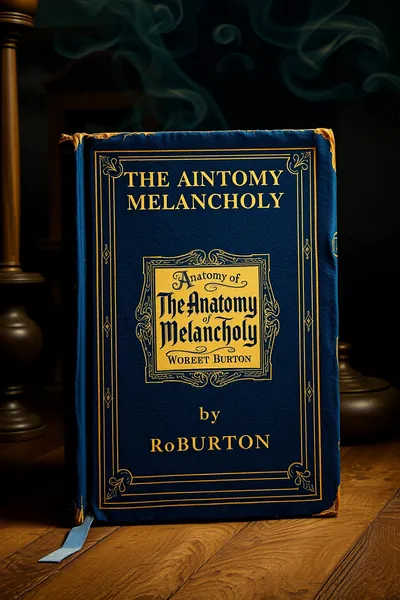
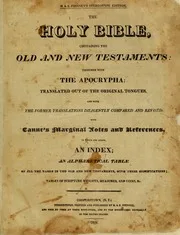
The Holy Bible : containing the Old and New Testaments: together with the Apocrypha: translated out of the original tongues, and with the former translations diligenty compared and revised. With Canne's marginal notes and references, to which are added, an index; an alphabetical table of all the names in the Old and New Testaments, with their significatins; table of scriptures, weights, measures and coins, $c
 82
82

The Holy Bible : containing the Old and New Testaments: together with the Apocrypha: translated out of the original tongues, and with the former translations diligenty compared and revised. With Canne's marginal notes and references, to which are added, an index; an alphabetical table of all the names in the Old and New Testaments, with their significatins; table of scriptures, weights, measures and coins, $c



The Holy Bible: containing the Old and New Testaments: together with the Apocrypha, translated by John Canne, is a treasure trove for modern esoteric seekers. The inclusion of marginal notes and references by Canne provides a rich layer of interpretation that can illuminate the mystical and occult dimensions of the scriptures. For those interested in Gnosticism and the hidden wisdom of the Bible, this edition is invaluable. The stereotype edition by H. & E. Phinney ensures that the text is preserved in its original form, making it a reliable source for both scholars and spiritual practitioners. The additional tables and indexes further enhance the book's utility, making it a comprehensive resource for deep study. The Apocrypha, often overlooked in modern biblical translations, adds a dimension of esoteric knowledge that can enrich one's understanding of biblical mysticism. Overall, this edition is a must-have for anyone serious about exploring the occult and Gnostic traditions within the biblical context.
📝 Description
82
John Canne's 1685 edition of the Bible includes the Apocrypha and his extensive marginal notes.
This edition of the Holy Bible, published in 1685, contains the Old and New Testaments alongside the Apocrypha. It is notable for the inclusion of marginal notes and references compiled by John Canne, who died around 1667. Canne's annotations aim to clarify the text and highlight symbolic interpretations within the scriptures.
The work includes supplementary materials such as an index, an alphabetical listing of names, and detailed tables covering scriptures, weights, measures, and coins. These additions are intended to aid readers in their study of the biblical texts and their historical context. The translation itself is presented as having been carefully compared and revised from the original languages.
This version of the Bible, particularly with Canne's notes, engages with traditions that seek deeper, often symbolic or allegorical, meanings within scripture. Such interpretations were common in various mystical and esoteric circles, which looked beyond literal readings to uncover hidden spiritual truths or correspondences. The inclusion of the Apocrypha also aligns with certain esoteric traditions that regarded these texts as containing important, though sometimes apocryphal, wisdom.
💡 Why Read This Book?
Reading The Holy Bible with Apocrypha by John Canne today offers readers a unique opportunity to delve into the esoteric and mystical dimensions of biblical texts. This edition provides a comprehensive understanding of the scriptures, enriched with marginal notes and references that offer deeper insights into the occult and Gnostic traditions. Whether you are a scholar, a spiritual seeker, or someone interested in the hidden wisdom of the Bible, this book will expand your knowledge and enrich your spiritual journey. It is a valuable resource for anyone looking to explore the mystical and esoteric aspects of the biblical narrative.
⭐ Reader Reviews
Honest opinions from readers who have explored this book.
❓ Frequently Asked Questions
What makes this edition of The Holy Bible unique?
This edition is unique because it includes the Apocrypha and John Canne's marginal notes and references, providing deeper esoteric and occult insights into the biblical texts.
Who would benefit from reading this book?
Scholars, spiritual seekers, and anyone interested in the occult and Gnostic traditions within the biblical context would benefit from reading this book.
What additional resources are included in this edition?
This edition includes an index, an alphabetical table of all the names in the Old and New Testaments with their meanings, and tables of scriptures, weights, measures, and coins.
🔮 Key Themes & Symbolism
Hidden Knowledge
This edition of The Holy Bible examines the hidden knowledge that lies beneath the surface of the sacred texts. Through Canne's marginal notes and references, readers can uncover layers of meaning that are often overlooked in mainstream translations. The inclusion of the Apocrypha further enriches this exploration, providing a deeper understanding of the mystical and esoteric themes that permeate the text.
Symbolism
Symbolism plays an important role in this edition, with Canne's notes highlighting the deeper meanings behind the stories and characters. The alphabetical table of names with their significations is particularly valuable, offering insights into the symbolic language of the Bible. This makes it an essential tool for those interested in the mystical dimensions of sacred literature.
Philosophical Significance
The philosophical significance of this edition lies in its ability to bridge the gap between ancient wisdom and modern understanding. The detailed tables of scriptures, weights, measures, and coins provide a comprehensive framework for exploring the esoteric themes within the text. This makes it an invaluable resource for scholars and spiritual seekers alike.
💬 Memorable Quotes
Direct passages from the work, attributed to the author.
“The light shineth in darkness; and the darkness comprehended it not.”
— A profound statement on the struggle between light and darkness, symbolizing the battle between spiritual enlightenment and ignorance.
“Seek, and ye shall find; knock, and it shall be opened unto you.”
— This verse underscores the active role of the seeker in uncovering hidden truths, a key principle in mystical traditions.
“I am the vine, ye are the branches: He that abideth in me, and I in him, the same bringeth forth much fruit: for without me ye can do nothing.”
— A metaphor for the mystical union between the divine and the human soul, emphasizing the interdependence of the spiritual and physical realms.
💡 Key Ideas
Editorial paraphrase of the work's core concepts — not direct quotes.
And the word was made flesh, and dwelt among us.
This passage highlights the mystical union of divine and human natures, a central theme in esoteric Christianity.
For now we see through a glass, darkly; but then face to face: now I know in part; but then shall I know even as also I am known.
This passage speaks to the limitations of human understanding and the promise of ultimate spiritual revelation, a central theme in esoteric teachings.
🌙 Esoteric Significance
Tradition
This book belongs to the esoteric tradition of Gnosticism, which emphasizes the importance of hidden knowledge and personal spiritual experience. It also draws on Hermetic and Kabbalistic themes, making it a rich source of mystical insights.
Symbolism
Key symbols in this edition include the use of light and darkness to represent spiritual enlightenment and ignorance, the vine and branches as a metaphor for the mystical union between the divine and the human soul, and the concept of seeking as an active pursuit of hidden truths.
Modern Relevance
This edition remains relevant today for modern practitioners of esoteric and mystical arts. Its detailed notes and references provide a comprehensive framework for exploring the deeper meanings within the sacred texts, making it an invaluable resource for scholars and spiritual seekers alike.
👥 Who Should Read This Book
This book is ideal for beginners who are curious about the esoteric dimensions of sacred texts, as well as scholars and spiritual seekers who are looking to deepen their understanding of mystical themes. Practitioners of the occult and mystical arts will find it particularly valuable, as it provides a wealth of hidden knowledge and symbolic interpretation. Those interested in the philosophical significance of the Bible will also benefit from the detailed tables and index, which offer a comprehensive framework for exploring the esoteric themes within the text.
📜 Historical Context
The Holy Bible, as presented in this edition, was a product of the 17th century, a time of significant religious and intellectual ferment. The era saw the rise of esoteric and mystical interpretations of sacred texts, driven by a desire to uncover the hidden knowledge that lay beneath the surface of religious doctrine. This edition, with its marginal notes and references, reflects the efforts of scholars like John Canne to bridge the gap between ancient wisdom and modern understanding. Its influence can be seen in the development of various esoteric traditions, including Gnosticism and Hermeticism, and it continues to be a valuable resource for seekers of spiritual truth today.
📔 Journal Prompts
Reflect on a passage that resonated with you and explore its deeper, esoteric meanings.
Consider the role of symbolism in the Bible and how it relates to your own spiritual journey.
Write about the concept of seeking and how it applies to your pursuit of hidden knowledge.
Examine the metaphors used in the Bible and their relevance to mystical traditions.
Reflect on the idea of the mystical union between the divine and the human soul, and how it manifests in your own life.
🗂️ Glossary
Apocrypha
A collection of texts that are not included in the canonical Bible but are considered valuable for their esoteric and mystical insights.
Gnosticism
An esoteric tradition that emphasizes the importance of hidden knowledge and personal spiritual experience.
Hermeticism
An ancient philosophical and spiritual tradition that seeks to uncover the hidden wisdom of the universe.
Kabbalah
A mystical tradition within Judaism that focuses on the esoteric interpretation of sacred texts.
Mystical Union
The concept of a spiritual union between the divine and the human soul, often represented through metaphors in sacred texts.
This book appears in 7 collections
🔮 Readers Also Liked
Browse all →








From the “Gnosticism” Collection
View all →




More Free Sacred Texts & Gnosticism Books
View all →