The Dark Night of the Soul

 80
80

The Dark Night of the Soul
Peter Beck’s *The Dark Night of the Soul* presents a raw and unflinching account of confronting PTSD through the lens of Christian faith. The author’s strength lies in his transparent vulnerability, detailing specific instances of trauma's lingering effects—flashbacks, hypervigilance—and their impact on his spiritual life. A particularly affecting passage describes the author’s attempt to pray while experiencing a panic attack, illustrating the chasm between his desire for divine connection and his body’s overwhelming stress response. However, the book occasionally feels repetitive in its articulation of despair, and the resolution, while hopeful, might strike some readers as too neatly arrived at, given the profound nature of PTSD. Despite this, Beck’s honest portrayal offers a unique perspective on faith as an active agent in healing, not merely an abstract comfort. It’s a valuable contribution for those seeking spiritual understanding within psychological struggle.
📝 Description
80
Peter Beck's 2025 book, The Dark Night of the Soul, examines trauma's impact on Christian faith.
Published in 2025, Peter Beck's The Dark Night of the Soul details a Christian individual's difficult experience with Post-Traumatic Stress Disorder. The book focuses on the internal struggle between the damaging effects of trauma and the strength derived from spiritual belief. It is not a traditional theological study, but a personal account.
This work is intended for people dealing with trauma, especially those who find comfort or face difficulties within a Christian context. Readers interested in the connection between psychology and spirituality, particularly how faith can foster resilience during intense suffering, will find it valuable. It also serves those who study personal spiritual stories and the process of healing.
The core ideas concern the contrast between psychological breakdown from trauma and the unifying power of faith. Beck shows how the 'dark night' is felt not only as spiritual emptiness but as a sign of a severely damaged psyche. The narrative highlights hope as an active force, a conscious decision and spiritual practice that helps the individual endure hardship.
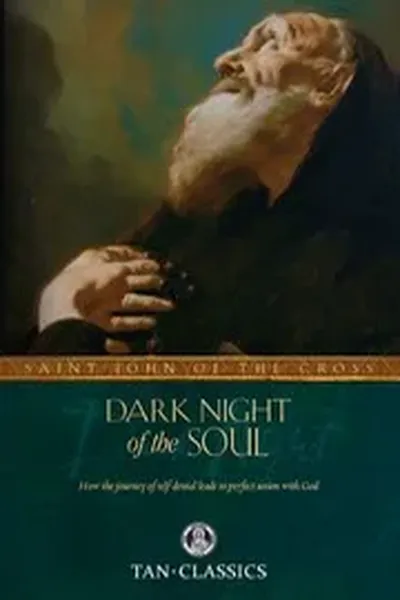
While published in 2025, Beck's exploration of spiritual desolation connects to a long history of Christian introspection. The title itself recalls St. John of the Cross's 16th-century work, which described a similar spiritual emptiness as a step toward divine union. Beck, however, updates this tradition by integrating a contemporary understanding of PTSD, grounding the spiritual narrative in modern psychological concepts of suffering and healing.
💡 Why Read This Book?
• Gain a tangible understanding of how faith can be actively applied to manage the symptoms of PTSD, drawing parallels to the author's documented spiritual disciplines in Chapter 4. • Explore the concept of the 'dark night' as interpreted through the specific experience of trauma, distinct from historical mystical accounts, as detailed in Beck's 2025 publication. • Discover practical ways to reframe spiritual doubt as a catalyst for deeper faith, informed by the author's personal journey described throughout the narrative.
⭐ Reader Reviews
Honest opinions from readers who have explored this book.
❓ Frequently Asked Questions
What is the primary focus of Peter Beck's The Dark Night of the Soul?
The book focuses on a Christian's personal journey to reconcile the challenges of living with PTSD and the hope that faith can provide for healing and resilience.
When was The Dark Night of the Soul first published?
The book was first published in 2025, making its perspective on faith and trauma contemporary.
How does this book relate to the historical concept of 'The Dark Night of the Soul'?
While referencing the historical concept, Beck's work uniquely frames the 'dark night' through the modern lens of PTSD, exploring psychological distress alongside spiritual desolation.
Is this book a theological study or a personal narrative?
It is primarily a personal narrative, detailing one individual's lived experience and his struggle to integrate faith with the realities of trauma.
Who would benefit most from reading this book?
Individuals experiencing trauma, those interested in the intersection of psychology and spirituality, and readers exploring personal faith narratives would find this book particularly relevant.
What is the author's approach to faith in the face of suffering?
Beck presents faith not as passive comfort but as an active, disciplined practice that aids in resilience and healing, even amidst severe psychological distress.
🔮 Key Themes & Symbolism
Trauma and Faith Integration
This theme examines the profound challenge of integrating a traumatic past, specifically PTSD, with an active Christian faith. Beck illustrates how the symptoms of trauma—such as intrusive memories and hypervigilance—can directly conflict with spiritual practices like prayer and worship. The work explores the potential for faith not only to coexist with trauma but to become a crucial element in the healing process. It posits that spiritual disciplines, when adapted to the realities of trauma, can foster a unique form of resilience and hope, moving beyond mere psychological coping mechanisms towards spiritual integration.
The Modern 'Dark Night'
Beck reinterprets the classic spiritual concept of the 'dark night' through the lens of contemporary psychological understanding, particularly PTSD. Unlike earlier mystical interpretations focusing solely on spiritual dryness, this work highlights how psychological wounds can manifest as spiritual desolation. The 'dark night' here is not just an absence of God's presence but a complex interplay of mental health struggles and faith. This modern context emphasizes the need for acknowledging psychological realities while still seeking spiritual grounding, offering a relevant framework for contemporary seekers.
Hope as Active Discipline
Central to Beck's narrative is the concept of hope as an active, disciplined practice rather than a passive emotional state. In the face of PTSD's debilitating effects, hope is presented as a conscious choice and a spiritual endeavor. The book details how this active hope is cultivated through consistent engagement with faith, even when feelings of despair are overwhelming. This perspective challenges the notion that faith requires constant positive emotion, instead focusing on the power of perseverance and commitment to spiritual principles as a source of strength.
Resilience Through Spiritual Practice
The work underscores the development of resilience as a direct outcome of sustained spiritual practice amidst significant adversity. Beck's journey demonstrates how established Christian practices, when navigated with an awareness of trauma's impact, can be adapted to rebuild a sense of self and connection. This theme explores how rituals, community, and scripture can serve as anchors, providing stability and a framework for recovery. It suggests that resilience is not inherent but is actively built through the consistent application of faith-based strategies.
💬 Memorable Quotes
Direct passages from the work, attributed to the author.
“My PTSD didn't erase my faith; it reshaped the landscape where my faith had to live.”
— This interpretation highlights how trauma doesn't necessarily negate belief but fundamentally alters the context in which faith operates. It suggests a process of adaptation and integration, where spirituality must contend with and incorporate psychological realities.
“The battlefield was within, and prayer was my only weapon, however dulled by fatigue.”
— This conveys the internal struggle against trauma's effects and the persistent, albeit challenging, use of prayer as a spiritual tool for resilience. It emphasizes the effort involved in maintaining spiritual practice during intense psychological distress.
“Hope wasn't a gentle dawn; it was a hard-won light wrestled from the deepest dark.”
— This interpretation frames hope not as an easy sentiment but as a difficult achievement born from struggle. It aligns with Beck's theme of hope as an active discipline, cultivated through persistent effort against overwhelming adversity.
“Reconciling the fractured self with the divine required embracing the brokenness, not denying it.”
— This speaks to the integration of trauma's impact on the self with one's spiritual identity. It suggests that healing involves acknowledging and accepting psychological wounds as part of the whole person, rather than attempting to suppress them.
💡 Key Ideas
Editorial paraphrase of the work's core concepts — not direct quotes.
Faith became less about feeling God's presence and more about the stubborn refusal to surrender to despair.
This quote captures the essence of Beck's active approach to faith. It signifies a shift from relying on emotional experiences of divinity to a more disciplined, volitional commitment to spiritual principles, especially relevant when confronting trauma.
🌙 Esoteric Significance
Tradition
While rooted in Christian experience, Beck's work touches upon universal esoteric themes of the soul's journey through suffering. It aligns with contemplative traditions that view hardship as a crucible for spiritual growth. It departs from purely dogmatic approaches by integrating psychological suffering (PTSD) as a legitimate and central aspect of this journey, bridging the gap between modern psychospiritual discourse and ancient contemplative paths.
Symbolism
The 'dark night' itself functions as a potent symbol, representing not just spiritual dryness but the disorienting, fragmented state of PTSD. Light and shadow are crucial motifs, symbolizing the struggle between despair and hope, the fractured self and the integrated spirit. The concept of a 'battlefield within' symbolizes the internal conflict and the arduous nature of psychological and spiritual healing.
Modern Relevance
Beck's work is highly relevant to contemporary psychospiritual practitioners, therapists interested in trauma-informed spiritual care, and individuals seeking to reconcile faith with mental health challenges. It speaks to modern movements exploring embodied spirituality and the integration of psychological healing within spiritual frameworks, offering a practical, faith-based model for resilience.
👥 Who Should Read This Book
• Individuals experiencing or seeking to understand Post-Traumatic Stress Disorder (PTSD) within a faith context, looking for narratives of resilience and hope. • Students of comparative spirituality and psychology, interested in how modern psychological diagnoses interact with historical concepts of spiritual trial. • Christian readers grappling with doubt, suffering, or mental health challenges, seeking relatable accounts of faith integrated with personal struggle.
📜 Historical Context
Peter Beck's *The Dark Night of the Soul*, published in 2025, emerges in an era where the intersection of mental health and spirituality is increasingly explored. Its themes echo centuries of Christian introspection, most notably St. John of the Cross's seminal 16th-century work of the same name, which described spiritual desolation as a path to divine union. However, Beck’s text distinguishes itself by framing this 'dark night' through the specific diagnostic lens of Post-Traumatic Stress Disorder (PTSD). This approach places it in dialogue with contemporary psychology and trauma studies, a field that gained significant traction throughout the late 20th and early 21st centuries, diverging from purely theological or mystical interpretations. While St. John of the Cross wrote during the Counter-Reformation, a period of intense religious reform and introspection, Beck’s work addresses a modern audience grappling with the psychological aftermath of extreme stress and violence, offering a distinct, trauma-informed perspective on spiritual resilience.
📔 Journal Prompts
The author's reframing of hope as active discipline.
The specific ways PTSD symptoms impacted the author's spiritual practices.
The symbolic meaning of the 'battlefield within' in your own life.
The reconciliation of a fractured self with divine concepts.
The author's interpretation of the 'dark night' beyond spiritual dryness.
🗂️ Glossary
PTSD
Post-Traumatic Stress Disorder. A mental health condition triggered by experiencing or witnessing a terrifying event, characterized by flashbacks, nightmares, severe anxiety, and uncontrollable thoughts about the event.
Spiritual Discipline
Practices undertaken to cultivate spiritual growth and connection, such as prayer, meditation, scripture study, or acts of service, often requiring consistent effort.
Dark Night of the Soul
A term, famously used by St. John of the Cross, describing a period of spiritual desolation and perceived absence of God, often seen as a stage in mystical purification.
Resilience
The capacity to recover quickly from difficulties; toughness. In this context, it refers to the ability to adapt and maintain well-being despite trauma and suffering.
Integration
The process of combining different aspects of the self—in this case, psychological trauma and spiritual faith—into a cohesive whole.
Phenomenology
The philosophical study of the structures of experience and consciousness. In this context, it refers to exploring the subjective experience of trauma and faith.
Hypervigilance
An enhanced state of sensory sensitivity and unresponsiveness to stimuli. A common symptom of PTSD, involving being constantly 'on guard'.
This book appears in 1 collection
🔮 Readers Also Liked
Browse all →




From the “Dark Night of the Soul” Collection
View all →






More Free Esoteric History & Biography Books
View all →