Dark Night of the Soul

 74
74

Dark Night of the Soul
Jennette Starseed’s Dark Night of the Soul offers a contemporary lens on a well-trodden mystical path. The strength of this work lies in its accessible language, demystifying a concept often shrouded in dense theological or philosophical discourse. Starseed effectively bridges the gap between ancient wisdom and the lived experience of modern individuals feeling lost or overwhelmed. The book particularly shines when describing the *feeling* of the dark night, capturing the isolation and despair with empathetic prose. However, the work could benefit from a more rigorous engagement with the psychological underpinnings of such states, beyond a purely spiritual interpretation. While the call for renewal is compelling, the practical steps for achieving it sometimes feel generalized. A passage discussing the "emptiness" as a necessary precursor to "fullness" is evocative, though its application requires careful personal discernment. Ultimately, Starseed provides a valuable, if sometimes superficial, guide for those confronting existential shadows.
📝 Description
74
Jennette Starseed's 2025 book reframes emotional distress as a spiritual catalyst.
Jennette Starseed's 2025 work, "Dark Night of the Soul," addresses individuals enduring significant emotional distress and existential questioning. The book proposes that these difficult periods are not merely personal failures but potential moments for spiritual awakening and psychological integration. It suggests that intense suffering, marked by feelings of abandonment, meaninglessness, and deep sorrow, is a recognized phase in mystical traditions. This phase is understood as a necessary descent before an ascent toward greater self-understanding and purpose.
This guide is for people feeling lost amid substantial emotional turmoil, struggling with anxiety, depression, or a profound spiritual void. It speaks to readers who sense their current hardships signify a deeper, transformative process. Those seeking to reinterpret their suffering as a path toward renewal and alignment with a higher purpose will find the book relevant. Starseed engages with the historical concept of the 'dark night of the soul,' famously articulated by Saint John of the Cross in the 16th century, updating its application for contemporary crises.
The concept of the 'dark night of the soul' has roots in 16th-century Christian mysticism, notably Saint John of the Cross's writings on spiritual desolation as a prelude to divine union. Jennette Starseed's book builds upon this historical framework, adapting it for a modern audience. It moves beyond strictly religious interpretations to include broader existential and emotional healing, positioning intense personal suffering as a phase within a larger spiritual or psychological transformation relevant to contemporary spiritual seekers.
💡 Why Read This Book?
• Understand the "dark night" not as personal failure but as a spiritual crucible, drawing parallels to Saint John of the Cross's 16th-century concept, allowing for reframing of personal suffering. • Gain practical approaches to emotional healing and renewal, moving beyond despair by identifying the core tenets of Jennette Starseed's proposed transformation. • Discover how to align with your true purpose during periods of intense sorrow and anxiety, using the specific guidance provided in the book's sections on post-transformation integration.
⭐ Reader Reviews
Honest opinions from readers who have explored this book.
❓ Frequently Asked Questions
What is the 'Dark Night of the Soul' as described by Jennette Starseed?
Jennette Starseed describes the 'Dark Night of the Soul' as a profound spiritual and emotional transformation, characterized by deep sorrow, anxiety, and a sense of meaninglessness, which ultimately leads to renewal and alignment with one's true purpose.
When was Jennette Starseed's 'Dark Night of the Soul' first published?
Jennette Starseed's 'Dark Night of the Soul' was first published in 2025.
How does Starseed's work relate to the historical concept of the Dark Night?
Starseed's work builds upon the historical concept, notably articulated by Saint John of the Cross in the 16th century, applying its principles to modern psychological and existential crises beyond a purely religious framework.
Who is the intended audience for this book?
The book is for individuals experiencing significant emotional distress, existential questioning, or a spiritual void, who are seeking guidance through these difficult periods toward personal renewal and purpose.
What is the main goal of navigating the 'Dark Night' according to the author?
The main goal is to emerge from the period of darkness renewed, whole, and more deeply aligned with one's authentic self and life purpose, viewing the struggle as a catalyst for growth.
Is this book about religious salvation or personal growth?
While referencing mystical traditions, the book focuses on personal and emotional healing and spiritual growth, framing the 'Dark Night' as a universal human experience rather than solely a religious event.
🔮 Key Themes & Symbolism
Emotional Transformation
The work posits that periods of intense emotional suffering, often termed the 'Dark Night of the Soul,' are not mere psychological disturbances but critical junctures for profound personal and spiritual metamorphosis. Starseed guides readers to recognize these challenging states as pathways toward integration and wholeness, rather than as insurmountable obstacles, drawing on mystical interpretations of human suffering.
Spiritual Alignment
A central theme is the reorientation of the self towards a deeper, authentic purpose. The book suggests that the stripping away of old identities and attachments during the 'dark night' creates space for alignment with one's true spiritual path. This process involves confronting existential questions and emerging with a renewed sense of meaning and direction.
Healing from Despair
The book offers a framework for healing from deep sorrow, anxiety, and feelings of meaninglessness. It reframes these experiences within a context of spiritual growth, providing tools and perspectives to move through the darkness toward emotional renewal. The emphasis is on emerging stronger and more resilient from periods of intense internal struggle.
Mystical Traditions
Starseed engages with the historical and mystical understanding of the 'Dark Night,' tracing its lineage and adapting its core concepts for contemporary readers. This theme involves interpreting spiritual desolation not as abandonment by the divine, but as a necessary phase in the soul's journey toward greater consciousness and self-realization.
💬 Memorable Quotes
Direct passages from the work, attributed to the author.
“The feeling of being lost is often the first step toward finding your true path.”
— This aphorism suggests that disorientation and the sense of lacking direction are not merely negative experiences but essential precursors to genuine self-discovery. It reframes confusion as a navigational tool in the spiritual journey.
“Sorrow can be the soil from which profound growth emerges.”
— This statement offers a hopeful perspective on suffering, positing that deep emotional pain, while difficult, can provide the fertile ground necessary for significant personal development and transformation.
“When the familiar falls away, the authentic self has room to appear.”
— This concept highlights the transformative power of loss and deconstruction. It implies that shedding external identities or attachments is a necessary process for revealing one's true, unadulterated essence.
“The 'dark night' is not an ending, but a profound, albeit painful, transition.”
— This interpretation reframes the experience of intense difficulty as a stage of metamorphosis rather than a terminal point. It encourages a view of suffering as a necessary part of a larger evolutionary process.
“Embracing the void allows for the filling of true purpose.”
— This statement suggests that confronting and accepting emptiness or meaninglessness is a prerequisite for discovering and embodying one's authentic life mission. It links acceptance of absence with the realization of presence.
🌙 Esoteric Significance
Tradition
Starseed's work draws implicitly from the Western esoteric tradition, particularly its contemplative and mystical branches, which explore the soul's journey toward higher consciousness. While Saint John of the Cross is a Christian mystic, the book's framing of the 'Dark Night' as a universal process of integration and purpose-finding aligns with perennial philosophy and modern psychological interpretations of spiritual crises, often found in Gnostic or Hermetic-adjacent thought.
Symbolism
The primary symbol is the 'dark night' itself, representing a period of spiritual and emotional purification, a necessary descent into the unconscious or the void before illumination. Another key motif is the 'void' or 'emptiness,' symbolizing the stripping away of egoic structures and false attachments, creating space for authentic selfhood and divine connection to emerge.
Modern Relevance
Contemporary spiritual teachers and therapists exploring concepts of shadow work, ego dissolution, and existential psychology often echo the themes found in 'Dark Night of the Soul.' Movements focused on radical self-acceptance, transpersonal psychology, and mindfulness practices that encourage confronting difficult emotions can be seen as modern manifestations of navigating these profound inner transitions.
👥 Who Should Read This Book
• Individuals experiencing profound emotional distress or existential crises, seeking to understand their suffering as a potential catalyst for growth. • Students of mystical traditions and comparative religion, interested in tracing the evolution of spiritual concepts like the 'Dark Night' beyond their original theological contexts. • Seekers of personal and spiritual renewal, looking for frameworks to reframe challenging life transitions into opportunities for deeper self-understanding and alignment with purpose.
📜 Historical Context
The concept of the 'Dark Night of the Soul' gained prominence through the writings of Saint John of the Cross in the 16th century, particularly his poem and commentary of the same name, which described a state of spiritual desolation preceding divine union. This mystical framework emerged within the Counter-Reformation Catholic Church, a period of intense religious reform and spiritual exploration. Starseed's 2025 work engages with this historical precedent but expands its application beyond a purely Christian ascetic context. It addresses contemporary psychological distress and existential angst, placing these modern experiences within the lineage of spiritual purification. While John of the Cross focused on theological progression, Starseed applies the metaphor to broader personal growth and emotional healing, interacting with modern psychological thought rather than solely theological doctrine.
📔 Journal Prompts
The sensation of being lost: How does this feeling connect to your current life path?
Reflecting on the 'soil' of sorrow: What potential growth might emerge from your current challenges?
The falling away of the familiar: Identify one external comfort you can release to make space for your authentic self.
Interpreting the 'void': What aspects of emptiness are you currently encountering?
Reading through the transition: How can you view your current struggles not as an ending, but as a movement toward something new?
🗂️ Glossary
Dark Night of the Soul
A spiritual and emotional phase characterized by deep sorrow, anxiety, and a sense of meaninglessness, viewed as a necessary process of purification and transformation leading to renewal.
Emotional Storm
A metaphor for intense psychological distress, overwhelming feelings, and inner turmoil that makes one feel lost or trapped.
Spiritual Awakening
A profound shift in consciousness and perspective, often involving increased self-awareness, a deeper connection to the transcendent, and a reevaluation of life's purpose.
Renewal
The process of being restored, refreshed, or revitalized, particularly in a psychological or spiritual sense, after a period of difficulty or stagnation.
Alignment with True Purpose
The state of living in accordance with one's deepest values, inherent talents, and the unique contribution one is meant to make in the world.
Existential Questioning
The process of grappling with fundamental questions about life, meaning, purpose, and one's place in the universe.
Psychological Integration
The process of incorporating various aspects of the self, including difficult emotions and experiences, into a cohesive and whole personality.
This book appears in 1 collection
🔮 Readers Also Liked
Browse all →








From the “Dark Night of the Soul” Collection
View all →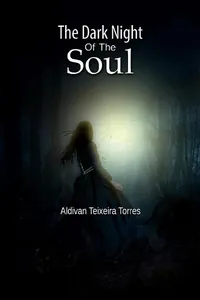






More Free Occult Philosophy Books
View all →