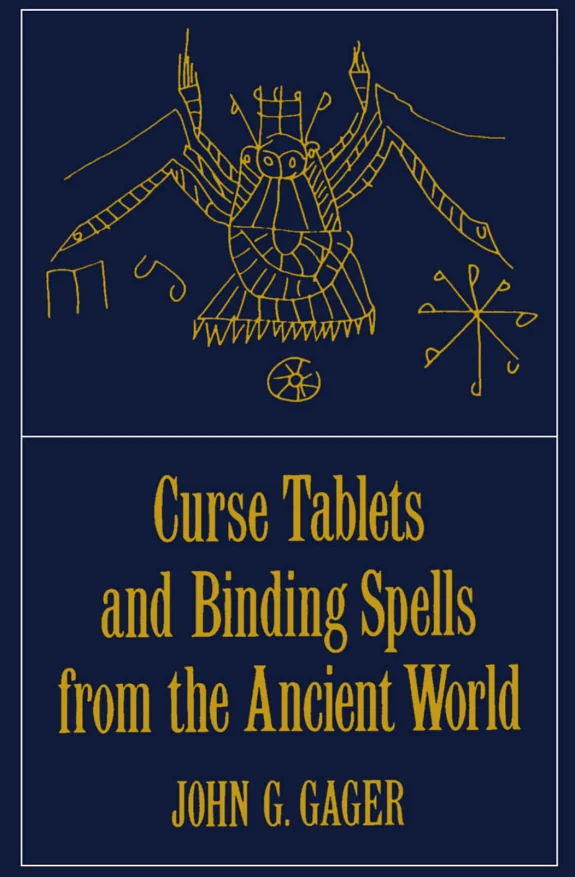
Curse Tablets and Binding Spells from the Ancient World
 81
81

Curse Tablets and Binding Spells from the Ancient World
Gager’s compilation offers an indispensable window into the operational magic of the ancient Mediterranean. The strength lies in the direct presentation of translated texts, allowing the raw intent of the spellcasters to come through. The translator’s introduction, while informative, occasionally feels more like a lecture than an integrated part of the spell presentation, a minor quibble in an otherwise monumental work. The passage detailing a curse targeting a business rival, calling for divine intervention to ruin their trade, vividly illustrates the intersection of commerce, personal animosity, and religious appeal. It’s a vital resource for anyone seeking to understand magic not as abstract theory but as applied practice. This is a foundational text for the study of ancient magical practice.
📝 Description
81
John G. Gager's 1992 volume presents the first English translations of ancient curse tablets and binding spells.
This book gathers curse tablets and binding spells from antiquity, offering them in English translation with detailed scholarly notes. John G. Gager provides direct access to the magical practices of the past, showing how individuals used ritual and writing to affect their circumstances. The texts come from the Greco-Roman world, dating roughly from the 4th century BCE to the 6th century CE. Gager places these spells within their social and cultural settings, illustrating their use in personal conflicts, legal matters, and romantic endeavors. The introduction shows how these practices were often part of larger belief systems, not separate from them.
The book discusses core ideas such as sympathetic magic, the perceived power of written words and objects, and the social role of curses and binding. It describes the physical nature of these spells, frequently written on lead or clay, and the associated rituals. This reveals a practical approach to shaping destiny and human interactions. It is a resource for students of ancient religion, historians of magic, and classical studies, as well as for those interested in the historical basis of sympathetic magic and ritual.
This collection of curse tablets and binding spells falls within the study of ancient magical traditions, often considered a precursor to later esoteric practices. It demonstrates a form of folk magic or popular religion where individuals directly intervened in personal affairs through inscribed objects and ritual actions. The focus on sympathetic magic, the belief in the efficacy of written words, and the invocation of specific entities or forces connect these ancient practices to broader currents in magical theory and application that would echo through subsequent centuries in Western esotericism.
💡 Why Read This Book?
• Gain direct access to translated curse and binding spells from the Greco-Roman world, offering a unique perspective on ancient desires and fears not found in philosophical texts. • Understand the practical application of sympathetic magic, exploring how individuals in antiquity used inscribed objects and ritual to enact change, as detailed in the analysis of tablet creation. • Discover the historical context of magic within broader religious and social structures of the period, with Gager’s introduction illuminating practices from the 4th century BCE onwards.
⭐ Reader Reviews
Honest opinions from readers who have explored this book.
❓ Frequently Asked Questions
What types of ancient spells are included in John G. Gager's book?
The book primarily features curse tablets (defixiones) and binding spells, aimed at harming enemies or compelling individuals, alongside other forms of magical petition and imprecation from the ancient world.
What historical periods does 'Curse Tablets and Binding Spells' cover?
The texts and analysis predominantly focus on the Greco-Roman period, spanning roughly from the 4th century BCE through to the 6th century CE, encompassing a wide range of cultural contexts within this era.
Where were these ancient curse tablets typically found or used?
These tablets were often found in tombs or springs, and were used throughout the Mediterranean world, including Greece, Rome, and North Africa, reflecting their widespread application in daily life.
Who is John G. Gager, the author of this work?
John G. Gager is a respected scholar of ancient religion and magic, known for his meticulous research and insightful translations of primary source materials related to ancient magical practices.
What does 'defixiones' mean in the context of curse tablets?
'Defixiones' is the Latin term for binding spells or curse tablets, referring to inscriptions intended to bind or harm a person, often made of lead or clay.
Are these spells considered 'occult' or part of mainstream ancient religion?
While often viewed as 'occult' today, these practices were integrated into the religious and social fabric of the ancient world, with individuals appealing to deities or supernatural forces for personal ends.
🔮 Key Themes & Symbolism
The Practicality of Ancient Magic
This work emphasizes that ancient magic was not merely theoretical but a deeply practical endeavor. The curse tablets and binding spells reveal individuals actively seeking to manipulate their circumstances, from securing love to enacting vengeance. Gager's translations show the direct, often blunt, language used to petition deities or supernatural forces, highlighting a worldview where such interventions were a viable, everyday option for personal problem-solving within the Greco-Roman social strata.
Sympathetic Magic in Action
The book serves as a vivid case study for the principles of sympathetic magic. It demonstrates the belief that like affects like and that objects or individuals can be influenced through a connection, often established by a physical link or symbolic representation. The meticulous inscription on lead or clay, sometimes with effigies or hair, illustrates the tangible application of these principles, aiming to bind an enemy's will or inflict suffering through a proxy object.
The Social and Emotional Landscape
Beyond magical theory, these texts offer a raw glimpse into the anxieties, resentments, and desires of ancient peoples. The spells reveal interpersonal conflicts, romantic entanglements, legal disputes, and professional rivalries that prompted individuals to resort to magical means. Gager's contextualization helps readers understand the social pressures and emotional stakes that drove people to seek supernatural aid, providing a stark contrast to idealized portrayals of antiquity.
The Power of the Written Word
A recurring theme is the potent force attributed to written inscriptions. The act of writing a curse or binding spell, particularly on durable materials like lead, was believed to imbue the words with efficacy. This collection underscores the ancient view of text as an active agent, capable of enacting will and influencing events, a concept central to many magical traditions across history.
💬 Memorable Quotes
Direct passages from the work, attributed to the author.
“The spells are often direct and intensely personal.”
— This highlights how ancient magical texts weren't abstract pronouncements but often raw expressions of individual grievances and desires, revealing the human element behind the ritualistic language.
“The inscription itself was an act of magical performance.”
— This points to the belief that the physical act of writing on a tablet, using specific materials and methods, was integral to the spell's power and effectiveness, not just a record of intent.
“These texts reveal the anxieties of daily life.”
— This interpretation emphasizes that the content of the spells provides a window into the fears, conflicts, and struggles faced by ordinary people in antiquity, offering social and psychological insights.
“Deities were invoked to exact retribution or enforce constraint.”
— This illustrates the integration of religious belief with magical practice, showing how individuals appealed to divine powers to achieve specific, often punitive or controlling, outcomes through their spells.
“The binding spell aimed to immobilize or control the target's actions.”
— This defines the specific function of binding spells, emphasizing their intent to restrict the will, movement, or agency of a person, often in contexts of legal disputes or romantic obsession.
🌙 Esoteric Significance
Tradition
This work doesn't align with a single modern esoteric lineage but serves as a foundational source for many. It provides primary evidence for practices that inform Western Hermeticism, ceremonial magic, and folk magic traditions. By presenting the raw material of ancient magical intent, it allows contemporary practitioners to draw direct inspiration and understand the historical roots of spellcasting, sympathetic magic, and the invocation of powers.
Symbolism
Key symbols include the use of lead, often associated with Saturn and the underworld, chosen for its durability and perceived connection to chthonic forces, making it ideal for binding spells. Personal items like hair or clothing fragments act as powerful symbolic links, embodying the 'as above, so below' principle by connecting the physical object to the target individual for magical effect. The written word itself, inscribed with intent, symbolizes the power of divine or magical decree made manifest.
Modern Relevance
Contemporary practitioners of witchcraft, neo-paganism, and various forms of modern occultism frequently draw upon the principles and examples found in Gager's work. The direct translation of spells for binding, protection, or cursing informs modern ritual construction. Thinkers and groups exploring animism, the power of intention, and the material nature of magic find validation and historical precedent in these ancient practices, demonstrating the enduring human impulse to influence reality through focused will and symbolic action.
👥 Who Should Read This Book
• Students of ancient history and religion seeking primary source material on Greco-Roman magical practices beyond philosophical treatises. • Practitioners of contemporary witchcraft and esoteric traditions interested in the historical roots and practical application of curse and binding spells. • Comparative religion scholars examining the intersection of religious belief, social conflict, and ritualistic behavior in antiquity.
📜 Historical Context
Published in 1999, John G. Gager's *Curse Tablets and Binding Spells from the Ancient World* arrived at a time when scholarly interest in ancient magic was solidifying, moving beyond mere cataloging to deeper contextualization. The work situates these practices within the broad religious range of the Greco-Roman world, from approximately the 4th century BCE to the 6th century CE. It engages with the historical currents of Hellenistic and Roman religions, where appeals to chthonic deities, spirits, and even the Olympian pantheon for personal intervention were common. Unlike purely philosophical or elite religious discourse, these tablets represent the 'popular religion' of the era, offering a stark contrast to the more formalized state cults. Gager’s meticulous approach provided a significant counterpoint to earlier, more sensationalized accounts of ancient magic, grounding the study in textual evidence and social function. The work became a key reference, alongside scholars like Fritz Graf and Sarah Iles Johnston, in understanding magic as an integrated aspect of ancient life rather than a fringe phenomenon.
📔 Journal Prompts
The invocation of deities for personal vengeance in curse tablets.
The use of personal effigies or objects as conduits for magical intent.
The social and economic rivalries that spurred the creation of binding spells.
The perceived efficacy of inscribed words in ancient magical practice.
The ethical considerations of employing binding spells versus curse tablets.
🗂️ Glossary
Defixiones
Latin term for curse tablets or binding spells, typically inscribed on lead or clay sheets with the intention of harming or compelling a person.
Sympathetic Magic
A form of magic based on the principle that like affects like, and that an object or person can be influenced by acting upon a related object or symbol.
Chthonic Deities
Gods and goddesses associated with the underworld, the earth, and fertility, often invoked in curse and binding spells due to their connection to death and primal forces.
Binding Spell
A type of magic intended to restrain, immobilize, or compel the actions or will of an individual or entity.
Curse Tablet
An inscribed tablet, often made of lead, used to invoke supernatural forces to inflict harm, misfortune, or suffering upon an enemy.
Magical Papyrus
Ancient documents, primarily from Egypt, containing spells, rituals, and formulae, offering parallel insights into ancient magical practices alongside curse tablets.
Invocation
The act of calling upon a deity, spirit, or supernatural power, often as part of a ritual or spell, to request assistance or exert influence.
This book appears in 1 collection
🔮 Readers Also Liked
Browse all →







From the “Incantations” Collection
View all →




More Free Esoteric History & Biography Books
View all →