The Argonautica
 82
82

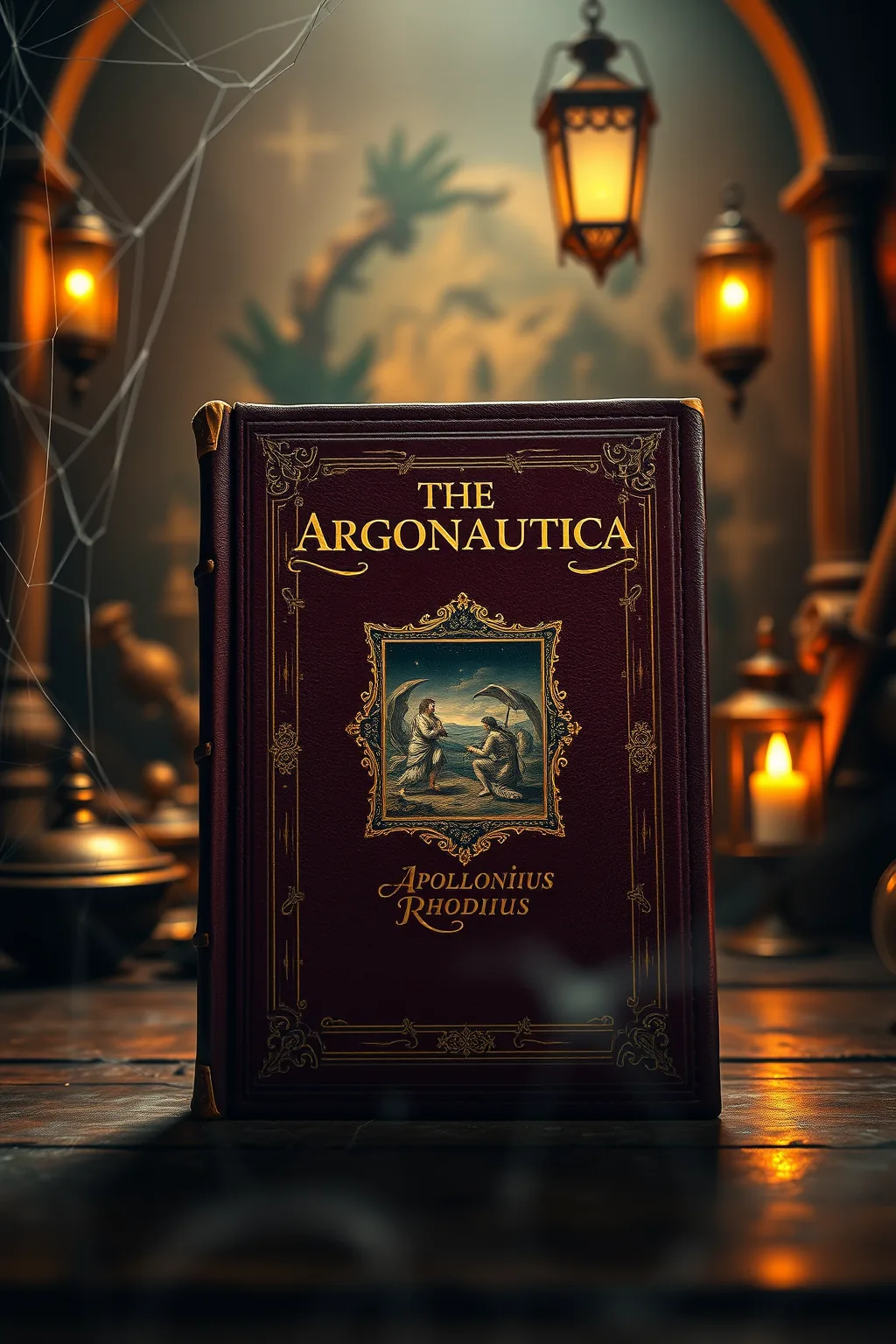
The Argonautica



By Aurelia Blackwood (Occult Philosophy Critic) Apollonius Rhodius's 'The Argonautica' is a cornerstone of esoteric literature, offering profound insights into ancient wisdom traditions. The epic's intricate symbolism, from the Fleece as divine attainment to the voyage as a spiritual pilgrimage, provides fertile ground for contemplation. The narrative skillfully portrays the interplay of fate and free will, essential concepts in occult philosophy. Its depiction of heroic archetypes and their psychological depths makes it invaluable for practitioners seeking to understand universal patterns of growth and transformation. A must-read for scholars and serious seekers alike, this work illuminates the enduring quest for self-realization through the lens of myth.
📝 Description
82
Apollonius Rhodius wrote 'The Argonautica' in the 3rd century BCE, detailing Jason's quest for the Golden Fleece.
Apollonius Rhodius's epic poem, 'The Argonautica,' recounts the legendary voyage of Jason and the Argonauts in their quest for the Golden Fleece. While appearing as a heroic adventure, the narrative contains layers of meaning relevant to ancient mystery traditions. The journey is depicted as a symbolic path, with its challenges representing stages of spiritual development. Encounters with mythical creatures and divine interventions are woven into the fabric of the story, suggesting a deeper, initiatory structure. The poem follows Jason and his crew as they sail from Iolcus to Colchis, facing numerous trials and overcoming obstacles both external and internal.
The text examines the motivations and struggles of its characters, particularly Jason's leadership and his relationship with Medea. The pursuit of the Fleece itself can be interpreted as a metaphor for attaining spiritual illumination or a sacred object. Apollonius's work invites readers to look beyond the surface of the narrative and consider the allegorical dimensions of the heroes' experiences. It touches upon themes of fate, divine will, and the consequences of human action within a mythological framework.
In the Hellenistic period, 'The Argonautica' was composed during a time when mystery cults and philosophical schools explored symbolic interpretations of myths. The poem's structure, following Jason's arduous journey, aligns with the concept of an initiatory path, where trials lead to a form of enlightenment or attainment symbolized by the Golden Fleece. This resonates with traditions that viewed epic narratives not just as historical accounts but as allegories for the soul's progress. The text can be seen as reflecting a broader cultural interest in understanding the cosmos and the human condition through symbolic narratives and archetypal figures.
✍️ Author
Apollonius Rhodius
Apollonius of Rhodes (Ancient Greek: Ἀπολλώνιος ὁ Ῥόδιος, Apollṓnios o Rhódios; Latin: Apollonius Rhodius; fl. first half of 3rd century BC) was an ancient Greek author, best known for the Argonautica, an epic poem about Jason and the Argonauts and their qu…
💡 Why Read This Book?
Discover the archetypal journey of the soul disguised as epic adventure. 'The Argonautica' offers profound insights into destiny, initiation, and the pursuit of ultimate truth. Ideal for seekers of hidden knowledge, scholars of ancient mythology, and practitioners of esoteric arts who wish to explore the mystical underpinnings of heroic quests and the symbolism of transformation.
⭐ Reader Reviews
Honest opinions from readers who have explored this book.
❓ Frequently Asked Questions
What is the primary esoteric theme in The Argonautica?
The primary esoteric theme is the soul's journey of initiation and transformation, mirroring the Argonauts' quest for the Golden Fleece as a symbol of enlightenment and divine attainment.
Who were the Argonauts in a symbolic sense?
Symbolically, the Argonauts represent the diverse aspects of the human psyche or the collective of seekers embarking on a spiritual path, each with unique strengths and weaknesses.
What does the Golden Fleece represent esoterically?
The Golden Fleece is a powerful symbol of supreme spiritual attainment, ultimate knowledge, divine wisdom, or the illuminated self, representing the prize of the arduous spiritual quest.
How does the prophecy of the one-sandaled man relate to esoteric journeys?
The prophecy signifies the fated nature of the quest and the specific individual (Jason) destined to undertake it, highlighting the concept of divine timing and the unique call to adventure in spiritual journeys.
Can 'The Argonautica' be considered a text for self-discovery?
Absolutely. The epic serves as a profound allegory for self-discovery, illustrating the challenges, trials, and eventual self-realization that accompany any significant personal or spiritual undertaking.
🔮 Key Themes & Symbolism
The Hero's Journey as Spiritual Initiation
The Argonautica masterfully frames the quest for the Golden Fleece as a profound initiatory journey. Jason and his companions are not merely adventurers but archetypal figures undergoing trials that mirror the stages of spiritual awakening. Each challenge—from reading through the treacherous Symplegades to confronting the guardian dragon—represents a symbolic death and rebirth, the shedding of egoic limitations, and the ascent towards higher consciousness. The epic reveals that true heroism lies not just in physical prowess but in the inner fortitude required to confront one's shadow and embrace transformative wisdom, echoing ancient mystery school teachings.
Destiny, Prophecy, and Divine Guidance
The narrative is steeped in the concept of fate and divine intervention, central tenets in many esoteric traditions. The prophecy concerning Jason and the one-sandaled man underscores a preordained path, a cosmic blueprint guiding the hero's destiny. The involvement of deities like Hera and Athena highlights the active role of higher powers in assisting or testing those on the path of enlightenment. This interplay between free will and destiny invites contemplation on the interconnectedness of all things and the benevolent, albeit often challenging, forces that shape our spiritual evolution.
The Golden Fleece: Symbol of Ultimate Illumination
The titular Golden Fleece is far more than a material prize; it is a potent esoteric symbol representing the attainment of divine knowledge, spiritual enlightenment, or the perfected self. Its luminous and unattainable nature signifies the ultimate goal of the seeker's journey—a state of grace, wisdom, and union with the divine. The arduous and perilous quest to retrieve it reflects the immense effort, sacrifice, and inner purification required to achieve such profound spiritual realization, making the epic a timeless allegory for the pursuit of esoteric truth.
💬 Memorable Quotes
Direct passages from the work, attributed to the author.
“No mortal man can escape his fate.”
— A stark reminder of the powerful influence of destiny in ancient thought, suggesting that certain events are preordained, shaping the lives of heroes and commoners alike, a theme deeply explored in esoteric philosophies.
“The Fleece hangs bright as a star.”
— This vivid imagery elevates the Golden Fleece beyond a mere object to a celestial beacon, symbolizing ultimate spiritual attainment and the radiant light of divine knowledge sought by the intrepid traveler.
“As when a man, after long travel, comes to a warm hearth.”
— This simile beautifully captures the profound sense of relief, homecoming, and spiritual solace that the ultimate attainment of wisdom or enlightenment brings after a arduous spiritual journey.
“For the gods love the brave.”
— A powerful affirmation of the connection between courage and divine favor, suggesting that those who face challenges with bravery are favored by the higher powers, a recurring motif in initiatory narratives.
💡 Key Ideas
Editorial paraphrase of the work's core concepts — not direct quotes.
For a god is a god, and man is a man.
This quote underscores the fundamental distinction between the divine and mortal realms, a concept crucial in understanding the reverence and awe with which ancient cultures approached the gods and the challenges of human spiritual aspiration.
🌙 Esoteric Significance
Tradition
The Argonautica resonates deeply with the Western Esoteric Tradition, particularly in its alignment with Hermeticism and Neoplatonism. It embodies the concept of the soul's journey through various planes of existence, facing trials that purify and elevate consciousness. The narrative can be interpreted through the lens of alchemical processes, where the 'Fleece' represents the Philosopher's Stone or spiritual gold, and the voyage itself is the Great Work of transformation.
Symbolism
Key symbols abound: the Argo ship represents the vessel of the soul or consciousness reading through the waters of existence; the sea itself symbolizes the unconscious or the primordial chaos; Medea’s sorcery hints at the manipulation of elemental forces and psychic energies; and the monstrous guardians represent the inner demons or karmic obstacles that must be overcome for spiritual progress.
Modern Relevance
In contemporary times, 'The Argonautica' serves as a powerful allegory for personal growth and the pursuit of meaning. Its themes of courage, perseverance, and the search for ultimate truth remain profoundly relevant for individuals reading through the complexities of modern life. The epic encourages introspection, urging readers to consider their own 'quests' and the symbolic challenges they face in their journey toward self-realization and inner harmony.
👥 Who Should Read This Book
This epic is a treasure for the discerning reader. **Beginners** in mythology will find an engaging adventure story with rich characters. **Scholars** of ancient literature will appreciate its sophisticated structure and Alexandrian nuance. **Seekers** of esoteric wisdom will uncover profound allegories of initiation and the soul's journey. **Practitioners** of spiritual disciplines will find archetypal patterns and symbolic keys to understanding personal transformation and the pursuit of higher consciousness. Anyone drawn to the enduring power of myth and the quest for hidden knowledge will find 'The Argonautica' a deeply rewarding experience.
📜 Historical Context
Written in the 3rd century BCE during the Hellenistic period, 'The Argonautica' emerged from a body of Greek epic tradition, yet Apollonius Rhodius infused it with a distinct Alexandrian sensibility. This era saw a flourishing of scholarship and a sophisticated approach to myth, where ancient tales were reinterpreted with psychological depth and intricate literary artistry. The poem reflects the intellectual curiosity of the time, blending historical settings with imaginative adventure, and exploring themes of love, fate, and human ambition. Its influence permeated subsequent literature and art, solidifying its place as a foundational text in Western civilization and a proof of the enduring power of mythic narrative.
📔 Journal Prompts
Reflect on a time you felt guided by an unseen force or prophecy. How did this influence your actions?
What is your personal 'Golden Fleece' – the ultimate goal or truth you are striving for?
Consider the 'monsters' or challenges you have faced on your own life's journey. How did they transform you?
How does the concept of 'fate' versus 'free will' play out in your own life's narrative?
Imagine yourself as one of the Argonauts. Which hero do you identify with most, and why?
🗂️ Glossary
Golden Fleece
A legendary artifact of immense value, symbolizing ultimate spiritual attainment, divine wisdom, or the illuminated self, the object of the Argonauts' perilous quest.
Argo
The ship built for the Argonauts' voyage, often interpreted as a symbol of the soul's vessel or consciousness reading through the ocean of existence.
Symplegades
Mythical 'Clashing Rocks' that threatened to crush ships, symbolizing the dangerous thresholds or dualistic challenges one must overcome on a spiritual path.
Colchis
The distant land where the Golden Fleece was kept, representing a remote or hidden realm where profound spiritual treasures or knowledge are guarded.
Medea
A sorceress and priestess who aids Jason, symbolizing the potent forces of magic, intuition, and the feminine divine that can aid or hinder the seeker.
This book appears in 1 collection
🔮 Readers Also Liked
Browse all →









From the “Transcendental Meditation” Collection
View all →







More Free Esoteric History & Biography Books
View all →