The Book of Summoning
 84
84

The Book of Summoning
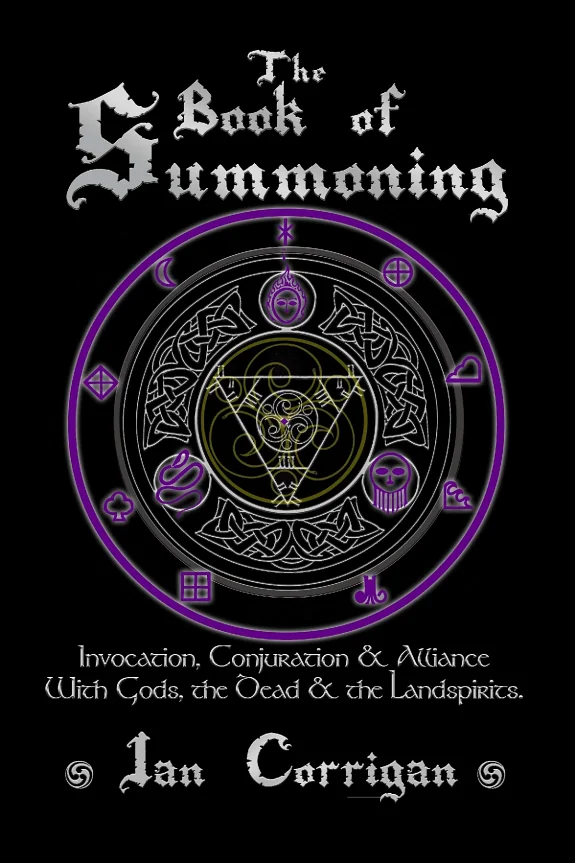
Ian Corrigan's The Book of Summoning presents a welcome and necessary challenge to the often-unchallenged Abrahamic underpinnings of Western ceremonial magic. By grounding his system in a Pagan spiritology, Corrigan avoids the pitfalls of coercive evocation and offers a methodology that feels more congruent with animistic and polytheistic practice. The structured cultic systems—Hearth, Year, and Sorcerer's—are particularly well-articulated, providing a robust framework for different scales of spiritual work. A notable strength is the consistent emphasis on respectful engagement with spirits, treating them as distinct entities rather than mere tools or adversaries. However, the book's directness might leave readers accustomed to more florid grimoire language wanting. The section "Toward A Pagan Spiritology" could benefit from further elaboration on the philosophical underpinnings of this specific approach. Ultimately, The Book of Summoning provides a coherent and ethically grounded alternative for contemporary occult practitioners.
📝 Description
84
Ian Corrigan's 2011 The Book of Summoning details a Pagan spiritology for evocation.
Published in 2011, The Book of Summoning outlines a practical system for spirit evocation based on grimoire structures but centered on a Pagan spiritology. It moves away from common angelic and demonic hierarchies, focusing instead on respectful interaction with spirits without coercion. The book establishes distinct cultic structures: The Hearth Cult, The Year Cult, and The Sorcerer's Cult, presenting a complete method for engaging with the spirit world. This work is suitable for practitioners of Pagan and animistic traditions who seek a structured, grimoire-informed approach to spirit work. It will appeal to those who prefer a methodology that aligns with polytheistic or animistic worldviews over Abrahamic angelology and demonology. Individuals interested in comparative grimoire studies, comparative religion, and forging personal spirit pacts will find it valuable, especially those familiar with systems emphasizing cyclical time and hearth-centered practice.
Corrigan's book arises during a period of renewed interest in ceremonial magic and grimoire traditions within contemporary Paganism. It distinguishes itself from earlier occultists who adapted grimoires through Theosophical or Rosicrucian lenses. Instead, Corrigan constructs a specifically Pagan framework, contrasting with the common modern practice of adopting texts like the Lesser Key of Solomon while retaining their original classifications. The Book of Summoning offers an alternative grounded in a distinctly Pagan understanding of spiritual entities and their interactions.
This work emerges from the contemporary Pagan revival's engagement with ceremonial magic and grimoire traditions. Unlike earlier occultists who filtered grimoires through Theosophical or Rosicrucian frameworks, Corrigan seeks to build a coherent Pagan system. It offers an alternative to the common adoption of grimoires like the Lesser Key of Solomon, which often retain their original hierarchies. The Book of Summoning grounds its approach in a specifically Pagan understanding of the spirit world, emphasizing respectful interaction and distinct cultic structures.
💡 Why Read This Book?
• Learn a Pagan-specific spiritology that recontextualizes grimoire methods, moving beyond the angel/demon binary as presented in "Beyond Angels and Demons". • Gain practical techniques for spirit evocation grounded in respectful interaction, as detailed in the "Hosting" sections of the work. • Understand distinct cultic frameworks—The Hearth Cult, The Year Cult, and The Sorcerer's Cult—to structure your personal or community spiritual practice.
⭐ Reader Reviews
Honest opinions from readers who have explored this book.
❓ Frequently Asked Questions
What is the Nine Moons system mentioned in The Book of Summoning?
The Nine Moons system, developed by Ian Corrigan, serves as the foundational framework for The Book of Summoning. It emphasizes cyclical time and is integral to the cultic structures presented, influencing how spirits are approached and interacted with throughout the year.
Does The Book of Summoning use Latin or Hebrew in its rituals?
While the book is based on grimoire forms, its focus is on a Pagan spiritology. It doesn't explicitly detail the use of specific liturgical languages like Latin or Hebrew, instead emphasizing the principles of respectful spirit interaction within its own developed system.
What distinguishes Corrigan's 'Pagan Spiritology' from traditional grimoire practices?
Corrigan's "Pagan Spiritology" replaces the Abrahamic angel/demon hierarchy with a view of spirits as distinct entities belonging to specific domains. This shift mandates respectful engagement rather than coercion, aligning with polytheistic or animistic beliefs about the spirit world.
Are the cults (Hearth, Year, Sorcerer's) meant to be exclusive?
The cults presented in The Book of Summoning represent different facets or scales of practice within the system. They are designed to be integrated or chosen based on the practitioner's focus, whether communal (Hearth/Year) or individual/group-focused (Sorcerer's).
Is this book suitable for beginners in ceremonial magic?
The Book of Summoning provides a structured system, making it accessible. However, its departure from common grimoire tropes and its emphasis on a specific Pagan worldview suggest it might be best appreciated by those with some prior familiarity with occult or esoteric concepts.
What kind of spirits are discussed in the book?
The book discusses spirits within a Pagan framework, distinct from angels or demons. These are entities approached with respect, understood as beings tied to natural forces, ancestral lines, or specific spiritual domains, rather than necessarily malevolent or purely benevolent forces.
🔮 Key Themes & Symbolism
Pagan Spiritology
This theme reframes the entities encountered in evocation, moving away from the traditional angel/demon dichotomy. Corrigan posits a "Pagan Spiritology" where spirits are understood as distinct beings with their own relationships and domains, emphasizing respect and negotiation over coercion. This approach aligns with animistic and polytheistic worldviews, offering a different conceptual framework for interacting with the unseen world compared to many grimoire traditions that rely on Abrahamic hierarchies. The work seeks to establish a more Earth-centered and less anthropocentric view of spiritual entities.
Cultic Structures
The book details three interconnected cultic structures: The Hearth Cult, The Year Cult, and The Sorcerer's Cult. These provide a practical framework for organizing spiritual practice. The Hearth Cult likely focuses on domestic or immediate community spirits, The Year Cult on seasonal cycles and larger cosmic forces, and The Sorcerer's Cult on more specialized or individually focused magical operations. This tiered approach offers practitioners pathways for engagement at different levels, from personal development to community ritual.
Respectful Evocation
A central tenet of Corrigan's system is the principle of respectful evocation. Unlike some historical grimoires that employ forceful commands or binding rituals, The Book of Summoning advocates for approaching spirits with care, honor, and a willingness to understand their nature and purpose. This involves avoiding threats or coercion, instead fostering a relationship based on mutual acknowledgment. The concept of "Hosting" spirits exemplifies this, suggesting a temporary, honored presence rather than mere manipulation.
Grimoire Forms, Pagan Power
This theme highlights the book's unique synthesis: it adopts the structural and formal elements of classical grimoires—their organization, operational methods, and symbolic language—but infuses them with the power and worldview of Pagan traditions. It demonstrates how ancient magical structures can be re-energized and reinterpreted through a non-Abrahamic lens. This approach seeks to reclaim and adapt the efficacy of grimoire work for contemporary Pagans and animists without necessarily adhering to the original religious contexts.
💬 Memorable Quotes
Direct passages from the work, attributed to the author.
“Spirits are approached in a respectful and careful way, without coercion or threat.”
— This statement expresses the core ethical and practical stance of the book. It directly contrasts with coercive methods found in some grimoire traditions, advocating for a relationship-based approach to spirit evocation grounded in Pagan principles.
“There are no 'angels' or 'demons', only the spirits.”
— This declaration highlights the book's departure from traditional occult classifications. It posits a unified, non-dualistic view of spiritual entities within a Pagan context, simplifying the range of the spirit world for practitioners.
“Based in the work of the Nine Moons system, it includes: - The Hearth Cult, The Year Cult and the Sorcerer's Cult.”
— This identifies key structural components of the system presented. The mention of the Nine Moons system and the specific cults indicates a structured, cyclical, and many-sided approach to spiritual practice.
“Toward A Pagan Spiritology”
— This section title signifies a theoretical exploration within the book, aiming to establish a coherent worldview for understanding and interacting with spirits from a specifically Pagan perspective, distinct from other religious or magical paradigms.
💡 Key Ideas
Editorial paraphrase of the work's core concepts — not direct quotes.
The Book of Summoning presents a practical system based in the forms and structures of the grimoires, empowered by the gods and spirits of Pagan ways.
This quote defines the book's methodology: it utilizes the established architecture of ceremonial magic texts but revitalizes them with a Pagan cosmology and pantheon, offering a distinct alternative to Abrahamic-inflected magical systems.
🌙 Esoteric Significance
Tradition
This work fits within the modern Western Esoteric Tradition, specifically the branch concerned with ceremonial magic and grimoire studies. It departs significantly from Hermetic, Kabbalistic, or Gnostic lineages by explicitly constructing a "Pagan Spiritology." While it borrows the structural forms of grimoires (often rooted in late medieval/Renaissance Christian or Jewish contexts), it reframes the nature and interaction with spirits through an animistic and polytheistic lens, aligning more with contemporary Pagan paths than older, syncretic occult systems.
Symbolism
The book likely employs symbolism associated with natural cycles, elemental forces, and ancestral veneration, common in Pagan traditions. The "Year Cult" points to solar and lunar symbolism, seasonal changes, and the turning of the Wheel of the Year. The "Hearth Cult" may involve symbols of home, fire, and community lineage. The "Sorcerer's Cult" could utilize more potent, solitary symbols related to personal power and the direct engagement with specific spiritual forces or entities, reinterpreted within a Pagan cosmology.
Modern Relevance
The Book of Summoning is relevant to contemporary practitioners of eclectic Paganism, animism, and reconstructionist polytheism who seek structured magical systems. It informs modern approaches to spirit work that prioritize ethical engagement and avoid coercive methods. Thinkers and groups focused on developing non-Abrahamic magical frameworks, or those seeking to decolonize esoteric practices from their historical religious imprints, find its methodology valuable. It influences discussions on comparative ritual and the adaptation of historical magical forms for diverse spiritual paths.
👥 Who Should Read This Book
['• Practitioners of modern Paganism or polytheism seeking a structured grimoire-based system that aligns with their worldview.', '• Students of comparative religion and esoteric history interested in how historical magical forms are being reinterpreted.', '• Individuals wary of traditional angelology/demonology in magic and looking for an alternative, respectful approach to spirit evocation.']
📜 Historical Context
Published in 2011, Ian Corrigan's The Book of Summoning emerged during a period of significant expansion and diversification within contemporary Paganism and the broader esoteric milieu. The early 21st century saw a growing interest in reclaiming and reinterpreting historical magical traditions, including the Western grimoires. Corrigan's work distinguished itself by consciously moving away from the prevailing trend of adapting grimoires through a lens influenced by figures like Aleister Crowley or the Hermetic Order of the Golden Dawn, which often retained Abrahamic or Gnostic frameworks. Instead, he aimed to create a system directly rooted in Pagan sensibilities. This contrasted with, for example, the extensive work of scholars and practitioners like Joseph H. Peterson, who meticulously published and analyzed various grimoires often retaining their original classifications, or the more eclectic approaches seen in the chaos magic movement. The Book of Summoning offered a specific articulation of Pagan spiritology within the grimoire structure, addressing a niche but growing demand for non-Abrahamic magical systems.
📔 Journal Prompts
The Hearth Cult's role in maintaining spiritual balance within the home.
Your personal understanding of "Pagan Spiritology" beyond Abrahamic constructs.
The Sorcerer's Cult: potential applications for focused personal magical work.
Ethical considerations when "Hosting" spirits versus commanding them.
Interpreting the cyclical nature of the Year Cult in your own practice.
🗂️ Glossary
Pagan Spiritology
A framework for understanding spiritual entities and their interactions that is based on Pagan, animistic, or polytheistic worldviews, distinct from Abrahamic (angelic/demonic) classifications.
Hearth Cult
One of the three cultic structures presented in the book, likely focused on spirits associated with the home, family, and immediate community.
Year Cult
A cultic structure within the system emphasizing the observance of seasonal cycles, cosmic rhythms, and the spirits connected to the annual turning of the year.
Sorcerer's Cult
A cultic structure focused on individual or small group magical practice, potentially involving more specialized or intense workings than the Hearth or Year Cults.
Hosting
A method of interacting with spirits that emphasizes respectful invitation and temporary co-habitation or presence, rather than forceful summoning or control.
Nine Moons system
The foundational system developed by Ian Corrigan upon which The Book of Summoning is built, influencing its structure and approach to spiritual practice.
Evocation
The practice of calling forth spiritual entities, often with the intention of communicating with them or directing their influence, as detailed within the book's specific methodology.
This book appears in 1 collection
🔮 Readers Also Liked
Browse all →





From the “Evocation” Collection
View all →




More Free Sacred Texts & Gnosticism Books
View all →