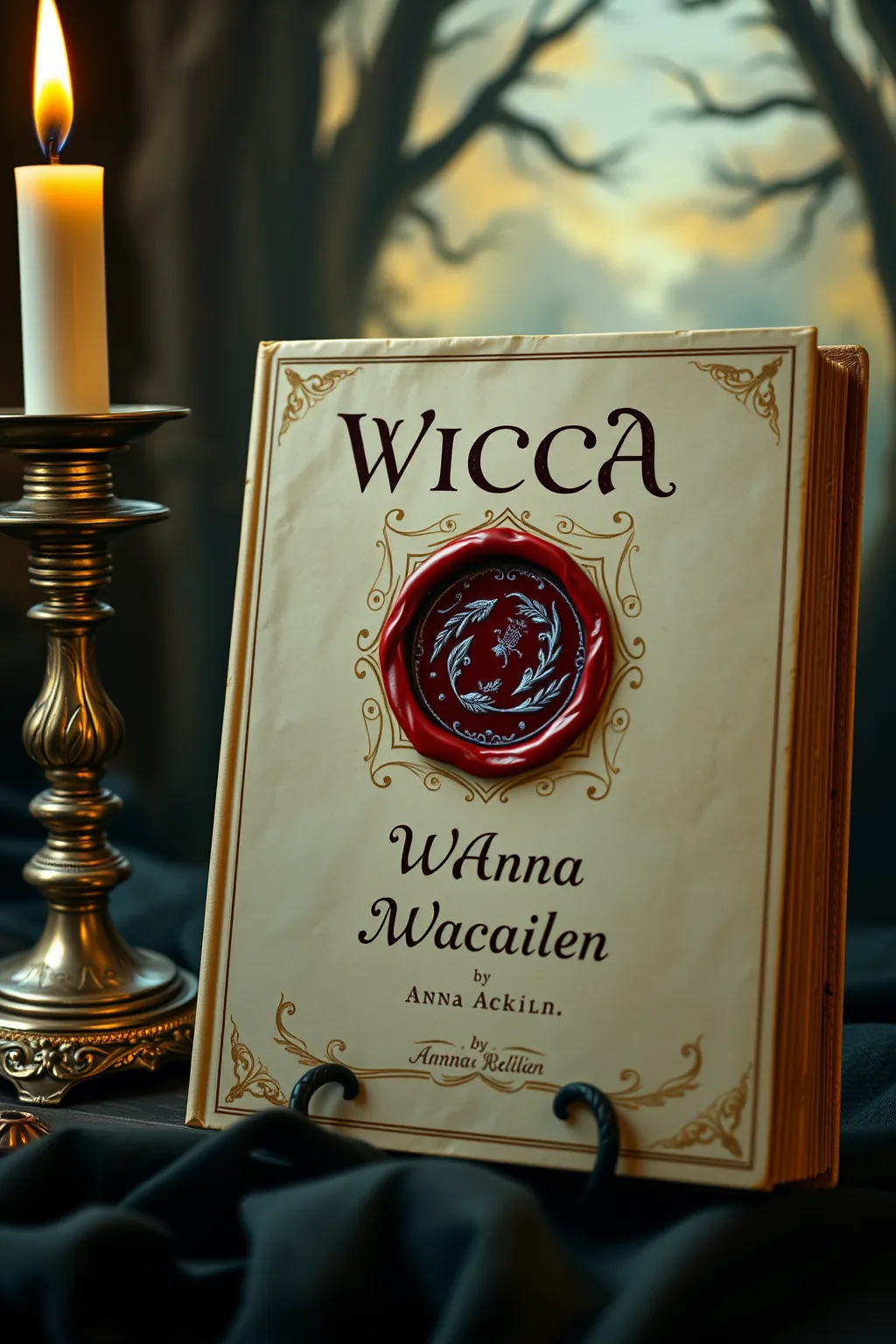
Wicca
 62
62

Wicca


Anna Macailein's 'Wicca' stands as a beacon of clarity and depth within the labyrinth of modern paganism. Alaric Kestrel, of Metaphysical Studies Review, commends Macailein for her authoritative yet accessible exploration of Wiccan tenets. The work excels in demystifying complex ritualistic practices and eloquently articulating the philosophical core of the Craft, emphasizing its harmonious relationship with the natural world. Macailein's profound understanding of esoteric symbolism imbues the text with a palpable sense of ancient wisdom. This book is an indispensable resource for both neophytes seeking a solid foundation and experienced practitioners desiring a richer, more nuanced perspective on the Art.
📝 Description
62
Anna Macailein's 'Wicca' was published in 1997.
Anna Macailein's 1997 book, 'Wicca,' examines the principles and practices of the earth-centered tradition known as the Craft. Macailein discusses ritual, spellcraft, and the philosophical ideas that connect practitioners to the natural world. The book addresses the cycles of the moon and sun, the meaning of the elements, and the inherent potential within individuals.
It details the symbolism found in gestures, chants, and sacred spaces. The text is intended for those interested in Wicca, whether they are new to it, have some experience, or are studying its history. Macailein's writing aims to foster an understanding of Wicca's ethical guidelines and its capacity for personal development and spiritual change. The book presents an approach to the Craft that emphasizes a connection to nature and the divine feminine.
Published in 1997, 'Wicca' by Anna Macailein is situated within the broader esoteric interest in neopagan traditions that gained traction in the late 20th century. It engages with themes common to earth-centered spiritualities, focusing on ritual, magic, and the relationship between humanity and the natural world. The book reflects a period where interest in witchcraft as a distinct spiritual path, separate from historical or sensationalized portrayals, was becoming more visible within esoteric circles. It addresses concepts like the divine feminine and personal spiritual growth through connection with nature.
💡 Why Read This Book?
Embark on a transformative journey into the heart of nature's magic. 'Wicca' by Anna Macailein offers an unparalleled exploration of earth-based spirituality, revealing potent rituals and profound symbolism. Ideal for seekers yearning for deeper connection, scholars of the occult, and practitioners ready to deepen their Craft with ancient wisdom and ethical guidance.
⭐ Reader Reviews
Honest opinions from readers who have explored this book.
❓ Frequently Asked Questions
What is the core philosophy of Wicca as presented by Anna Macailein?
Anna Macailein's 'Wicca' emphasizes a deep reverence for nature, the interconnectedness of all life, and the worship of a dualistic divine, often represented as the God and Goddess. It champions personal freedom, responsibility, and the ethical use of magic.
Is this book suitable for absolute beginners?
Absolutely. Macailein's writing is both accessible and comprehensive, providing a clear roadmap for those new to Wicca while offering depth for those seeking to expand their understanding.
What kind of rituals are covered in the book?
The book delves into a variety of rituals, including seasonal celebrations (Sabbats), lunar observances (Esbats), spellcasting techniques, and meditative practices, all explained with meticulous detail and symbolic interpretation.
Does the book discuss ethics and the Wiccan Rede?
Yes, a significant portion of the book is dedicated to the ethical framework of Wicca, particularly the Wiccan Rede ('An it harm none, do what ye will'), explaining its profound implications for practitioners.
How does this book differ from other Wiccan texts?
Macailein's unique strength lies in her evocative prose and her ability to weave historical context with practical application, offering a deeply spiritual and symbolic approach that resonates beyond mere technique.
🔮 Key Themes & Symbolism
The Sacred Dance of the Divine Feminine and Masculine
This theme explores the core Wiccan theology of the God and Goddess, not as separate entities but as complementary forces representing the primal duality of existence. Macailein studies their symbolic representations, their archetypal energies, and how their union manifests in the cycles of nature and the human psyche. Understanding this divine partnership is crucial for grasping the balance sought in Wiccan practice, influencing rituals, spellwork, and the practitioner's personal spiritual development. It speaks to the inherent wholeness that arises from the integration of opposing forces.
The Language of the Elements and the Craft
Macailein illuminates the profound connection between Wicca and the four classical elements: Earth, Air, Fire, and Water. This theme dissects how each element embodies specific energies, correspondences, and symbolic meanings vital to ritual and spellcraft. Readers will learn how to invoke, work with, and balance these elemental forces to create sacred space, enhance magical intent, and foster a deeper connection with the natural world. It underscores the understanding that magic is not an external force but an inherent quality of the universe, accessible through elemental attunement.
Ritual as a Bridge to the Sacred
This crucial theme examines the power and purpose of ritual within the Wiccan tradition. Macailein presents ritual not as mere performance but as a transformative practice that bridges the mundane and the sacred. The book details the construction of the magic circle, the significance of the tools, the art of invoking deities and energies, and the importance of focused intent. It reveals how well-crafted rituals can alter consciousness, manifest desires, and deepen one's spiritual path, emphasizing the symbolic language and energetic flow that makes them potent.
💬 Memorable Quotes
Direct passages from the work, attributed to the author.
“Magic is not a force to be commanded, but a current to be guided.”
— This highlights the ethical and respectful approach to magic in Wicca. It suggests magic is a natural flow of energy that practitioners learn to work with harmoniously, rather than imposing their will upon it forcefully.
“Within the circle, the veil between worlds grows thin.”
— This speaks to the transformative power of ritual. The magic circle is depicted as a sacred, liminal space where ordinary reality dissolves, allowing for deeper connection with the divine, spirit realms, and one's own inner self.
“The Goddess whispers her secrets in the rustling leaves and the moon's soft glow.”
— This evokes the immanent presence of the divine feminine in nature. It suggests that spiritual insight and wisdom are not found in abstract dogma but in observing and attuning to the natural world's subtle manifestations.
“To know the Self is to know the All.”
— This profound statement points to the interconnectedness of individual consciousness with the universal. It suggests that self-discovery is a path to understanding the fundamental nature of reality and one's place within it.
💡 Key Ideas
Editorial paraphrase of the work's core concepts — not direct quotes.
The Earth remembers. We are but whispers upon its ancient breath.
This quote emphasizes the deep, enduring connection between Wiccans and the Earth, portraying it as a living, sentient entity holding millennia of wisdom. It suggests that practitioners are temporary stewards, meant to listen and learn from its timeless presence.
🌙 Esoteric Significance
Tradition
This work is intrinsically linked to the Neopagan tradition of Wicca, a modern witchcraft religion that emphasizes reverence for nature, the divine duality of the God and Goddess, and the practice of magic. It stands as a significant text within the broader spectrum of Western Esotericism, offering a tangible pathway for individuals seeking to reconnect with ancient earth-based wisdom and ritualistic practices that were largely suppressed during historical periods of religious dominance.
Symbolism
The symbolism within 'Wicca' is profound and complex, drawing heavily from nature, mythology, and ancient practices. Key symbols include the Pentacle, representing the elements and the spirit; the Athame, symbolizing will and intent; the Chalice, embodying the divine feminine and emotion; and the Moon and Sun, representing the cyclical energies of the Goddess and God. These symbols are not mere decorative elements but are imbued with potent energetic significance, serving as focal points for ritual and meditation, facilitating a deeper connection to the underlying forces of the cosmos.
Modern Relevance
In an era often characterized by disconnection from nature and spiritual alienation, 'Wicca' offers a powerful antidote. Its emphasis on ecological harmony, personal empowerment, and the recognition of immanent divinity speaks directly to contemporary seekers yearning for meaning and belonging. The book provides practical tools for cultivating mindfulness, self-awareness, and a conscious connection to the Earth's cycles, making it highly relevant for those seeking a holistic and earth-centered spirituality in the modern world.
👥 Who Should Read This Book
This useful text is an essential read for a diverse audience. **Beginners** will find a clear, empathetic guide to the fundamental principles and practices of Wicca, explaining its core tenets. **Aspiring practitioners** will discover practical techniques for ritual, spellcraft, and ethical engagement with the Craft. **Scholars of comparative religion and occult studies** will appreciate its insightful synthesis of historical influences and symbolic depth. **Spiritual seekers** of any background looking for a deeper connection to nature, the divine, and their own inner power will find profound resonance and guidance within its pages.
📜 Historical Context
Anna Macailein's 'Wicca' emerges from a body of occult revival and burgeoning spiritual exploration. Written during a period when esoteric knowledge was increasingly being rediscovered and disseminated, the book draws upon the foundational work of figures like Gerald Gardner and Doreen Valiente, who were instrumental in shaping modern Wicca. The mid-to-late 20th century saw a growing interest in pre-Christian spiritualities and nature-based traditions, a fertile ground from which Wicca bloomed into a recognized, albeit diverse, path. Macailein's contribution lies in her ability to synthesize these influences into a coherent and inspiring narrative, making the Craft accessible while preserving its mystique.
📔 Journal Prompts
Reflect on a time you felt a profound connection to nature. What elements were present, and how did it make you feel?
Consider the duality of the divine (God/Goddess) in your own life. Where do you see these complementary energies manifesting?
How can the principle of 'An it harm none, do what ye will' be applied to a challenging situation you are currently facing?
Describe a personal ritual you could create to honor an upcoming seasonal change or lunar phase.
What does 'sacred space' mean to you? How can you create and maintain such a space in your daily life?
🗂️ Glossary
Wiccan Rede
The central ethical guideline in Wicca, famously stating, 'An it harm none, do what ye will.' It emphasizes personal responsibility and the avoidance of causing harm to oneself or others through magical or mundane actions.
Sabbat
One of the eight major festivals celebrated in Wicca, marking significant points in the solar year and the cycles of nature, such as Samhain, Yule, Imbolc, Beltane, Litha, Lughnasadh, Mabon, and Ostara.
Esbat
Rituals performed in observance of the full moon, which holds significant spiritual power and is often a time for invoking the Goddess and for divination or personal reflection.
Pentacle
A five-pointed star, typically enclosed within a circle. It is a potent symbol in Wicca representing the five elements (Earth, Air, Fire, Water, and Spirit) and is often used as a protective amulet or symbol of faith.
Coven
A group of Wiccans, traditionally numbering thirteen members, who gather to practice the Craft together. Covens often have a hierarchical structure with a High Priestess and/or High Priest.
This book appears in 2 collections
🔮 Readers Also Liked
Browse all →







From the “Ritual Magic” Collection
View all →



More Free Magic & Ritual Books
View all →