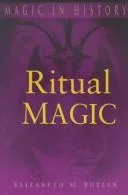
Ritual magic
 65
65

Ritual magic

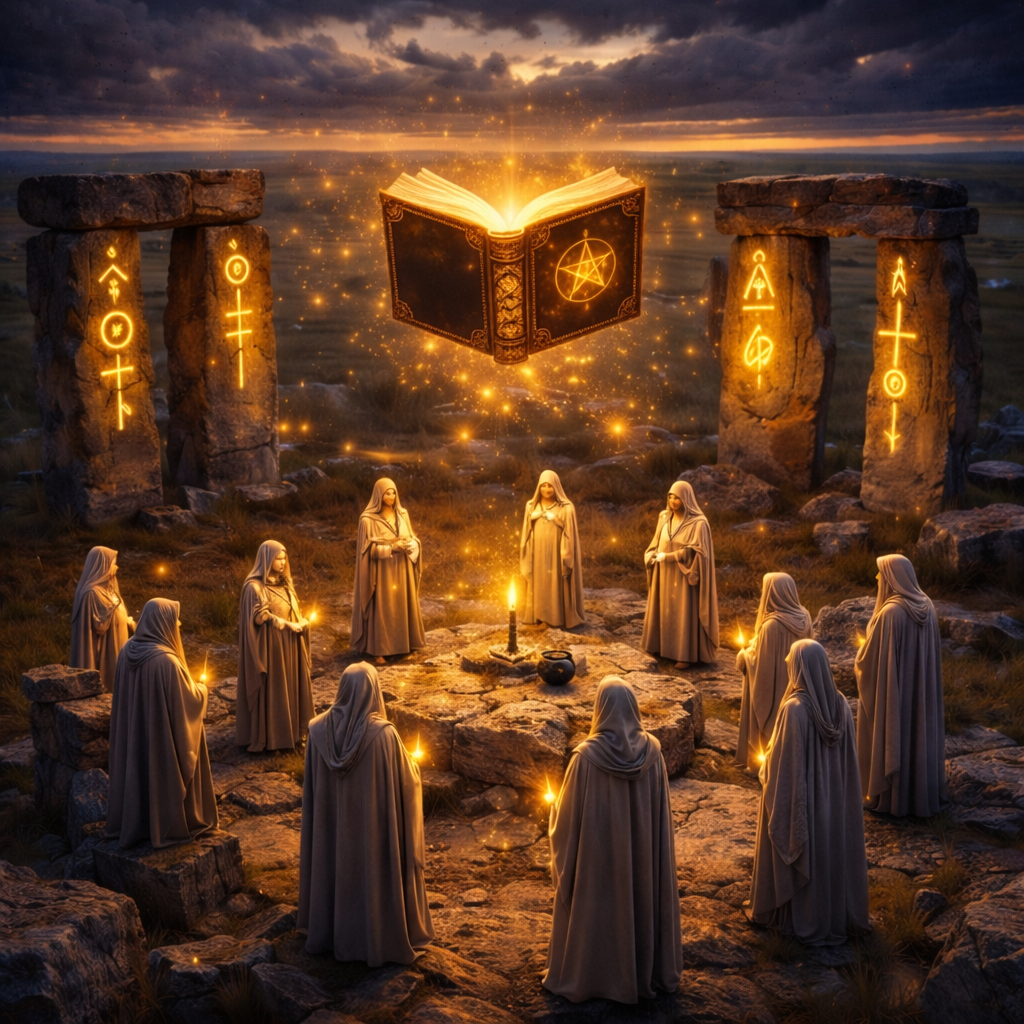

Lorelei Sage, Contemplative Literature Editor: Eliza Marian Butler's 'Ritual Magic' stands as a cornerstone text for anyone venturing into the arcane. Butler's meticulous research and insightful prose demystify complex rituals, presenting them not as mere superstitions, but as sophisticated systems of psychological and spiritual engagement. She expertly navigates the historical currents, particularly the Faustian legends, revealing the underlying currents of desire for power and knowledge. The book's strength lies in its ability to connect historical practice with enduring human motivations. It is an indispensable guide for scholars, practitioners, and anyone intrigued by the profound psychological and spiritual dimensions of ritual, offering a balanced perspective on its historical impact and esoteric principles.
📝 Description
65
Eliza Marian Butler's 'Ritual Magic' (1949) examines the historical roots and symbolic meaning of ceremonial magic.
Published in 1949, Eliza Marian Butler's 'Ritual Magic' scrutinizes the historical development and underlying principles of ritualistic practices. Butler traces the use of ritual across various traditions, showing how symbols, incantations, and gestures have been employed by individuals seeking spiritual insight or influence over perceived unseen forces. The book details how these practices function as a means for personal change and the pursuit of direct spiritual experience.
Butler's work addresses the motivations behind ritual, exploring the psychological and spiritual impulses that have driven its adoption throughout history. It considers the significance of ritual not only as a method but as an expression of fundamental human desires for connection and understanding. The book is written for those interested in the historical trajectory of esoteric practices and their role in human culture.
Eliza Marian Butler's 'Ritual Magic' situates itself within the study of Western esotericism, a field concerned with hidden traditions of knowledge and practice. The book engages with the historical lineage of magical thinking, examining its manifestations across different cultures and time periods. It approaches ritual not as mere superstition but as a structured system of belief and action intended to effect change, both internal and external.
💡 Why Read This Book?
Uncover the ancient roots of ceremonial magic and its enduring power. 'Ritual Magic' offers profound insights into the symbolism and psychology behind arcane practices. It is essential reading for seekers of hidden knowledge, scholars of esotericism, and practitioners looking to deepen their understanding of ritual efficacy. Understand the historical context of Faustian legends and their magical underpinnings.
⭐ Reader Reviews
Honest opinions from readers who have explored this book.
❓ Frequently Asked Questions
What historical period does Butler focus on?
Butler primarily focuses on the historical development of ritual magic, with particular emphasis on the period surrounding the 16th century and the Faustian legends, though her scope extends further back and forward.
Is this book for beginners or advanced practitioners?
It serves both. Beginners will find a clear, historical introduction to the concepts, while advanced practitioners and scholars will appreciate the depth of research and nuanced analysis of ritualistic theory and practice.
What is the connection between ritual magic and Faust?
The book explores the historical and symbolic connections between the legend of Faust, a figure who sought ultimate knowledge and power through a pact, and the broader practices of ritual magic prevalent during that era.
Does the book provide practical instructions for performing rituals?
While it analyzes and explains rituals, 'Ritual Magic' is primarily a historical and theoretical study. It focuses on understanding the 'why' and 'how' of ritual historically, rather than offering a direct 'how-to' guide for contemporary practice.
What kind of esoteric knowledge can one expect to gain?
Readers can expect to gain knowledge about the symbolic language of magic, the psychological underpinnings of ritual, historical magical theories, and the enduring human quest for spiritual or material power through specialized practices.
🔮 Key Themes & Symbolism
The Power of Symbolism in Ritual
Butler meticulously dissects the profound role of symbolism in ritual magic. She reveals how geometric figures, celestial bodies, divine names, and archetypal imagery are not mere decorations but potent conduits for directing magical intent and aligning the practitioner with cosmic forces. Understanding these symbols is akin to unlocking a universal language, one that transcends mere intellectual comprehension and speaks directly to the subconscious and the spiritual realms. The book illustrates how the careful arrangement and invocation of these symbolic elements can create a charged atmosphere, facilitating altered states of consciousness and the manifestation of desired outcomes.
Historical Evolution of Ceremonial Magic
This work traces the intricate historical evolution of ceremonial magic, charting its development from ancient roots through the medieval period and into the early modern era. Butler highlights the transmission of magical knowledge, the influence of various cultures and philosophical traditions (such as Neoplatonism and Hermeticism), and the societal context that shaped its practice. She pays special attention to the period around the 16th century, examining how burgeoning scientific inquiry intersected with and often clashed with deeply ingrained magical beliefs, leading to both persecution and clandestine perpetuation of these arts.
The Faustian Bargain: Desire, Knowledge, and Ritual
A central thread in Butler's analysis is the enduring mythos of Faust. The book explores how the legend of Faust, who sought ultimate knowledge and power through a pact with infernal forces, serves as a powerful allegory for the human desire for transcendence and the potential pitfalls of such ambition. Butler connects the archetypal Faustian figure to the historical realities of ritual practice, where individuals sought similar ends through elaborate ceremonies, magical invocations, and the manipulation of unseen energies, often grappling with ethical and existential consequences.
💬 Memorable Quotes
Direct passages from the work, attributed to the author.
“The circle is a microcosm of the cosmos.”
— This highlights the symbolic importance of ritualistic spaces, suggesting that carefully constructed environments can mirror universal order, amplifying magical intent.
“To know is to possess, to command.”
— This speaks to the Gnostic ideal that true knowledge grants power and control over oneself and one's environment, a driving force behind many magical pursuits.
“Invocation is the art of becoming.”
— This suggests that ritualistic invocation is not merely an external act but a transformative process, enabling the practitioner to embody or connect with the invoked entity or force.
“The name holds the essence.”
— This points to the belief in the inherent power and significance of divine or magical names, representing the unique energetic signature of beings or concepts.
💡 Key Ideas
Editorial paraphrase of the work's core concepts — not direct quotes.
Magic is the science of the hidden.
This quote expresses the core tenet that magic operates on principles and forces not readily apparent to the ordinary senses or conventional scientific understanding.
🌙 Esoteric Significance
Tradition
This work looks at the Western Esoteric Tradition, encompassing Hermeticism, Neoplatonism, Kabbalah, and ceremonial magic. It examines how these streams of thought converged to form complex magical systems aimed at understanding the cosmos, communing with divine intelligences, and achieving spiritual or material transformation through ritualistic means.
Symbolism
The book illuminates the collection of symbolism inherent in ritual magic. Key symbols discussed include the circle (protection, totality), the triangle (manifestation, trinity), divine names (power, essence), celestial correspondences (astrology as a magical tool), and archetypal figures (angels, demons, deities) which act as focal points for intent and channels for spiritual energy.
Modern Relevance
Despite its historical focus, 'Ritual Magic' remains profoundly relevant. It offers a framework for understanding the psychological and symbolic power of ritual in modern spiritual practices, therapeutic modalities, and even secular self-improvement techniques. The exploration of desire, intent, and symbolic action continues to resonate with contemporary seekers of meaning and personal agency.
👥 Who Should Read This Book
This comprehensive study is useful for a diverse audience. **Occult Scholars and Historians** will find Butler's meticulous research and contextualization indispensable for understanding the evolution of magical thought. **Spiritual Seekers** and those interested in comparative religion will gain useful insights into humanity's perennial quest for the divine and the methods employed to achieve it. **Practicing Witches, Magicians, and Ritualists** will benefit from a deep historical and theoretical understanding of the practices they engage with, enriching their work with historical context and philosophical depth. **Students of Folklore and Mythology** will find connections to the enduring power of legends and their ritualistic underpinnings. Even the **Skeptical Inquirer** curious about the human psyche's engagement with the extraordinary will find much to ponder.
📜 Historical Context
Eliza Marian Butler's 'Ritual Magic' is deeply embedded in the intellectual and cultural milieu of early 20th-century occult scholarship, a period marked by a resurgence of interest in esoteric traditions. Written in the shadow of World War I and amidst burgeoning psychological theories, the book reflects a scholarly attempt to understand the enduring appeal of magic in a seemingly rationalizing world. It draws heavily from historical texts, grimoires, and theological debates of the Renaissance and Reformation, particularly the 16th century, a time of intense religious upheaval and the height of witch trials, yet also a period of fervent alchemical and magical inquiry. The exploration of Faustian themes is particularly resonant with this era's anxieties about knowledge, power, and salvation.
📔 Journal Prompts
Reflect on a personal ritual you have performed or witnessed. What were its core symbolic elements and intended outcomes?
Consider the concept of 'hidden knowledge.' What does this term mean to you, and how do you pursue it in your life?
Analyze the Faustian bargain from a modern perspective. What are contemporary equivalents of trading something valuable for ultimate knowledge or power?
Butler discusses the power of names. Choose a name (personal, divine, or symbolic) and explore its potential energetic or symbolic significance for you.
How might the principles of symbolic interaction, as discussed in ritual magic, apply to everyday communication and relationship building?
🗂️ Glossary
Grimoire
A textbook of magic, typically containing instructions on how to create magical tools, perform rituals, and invoke spirits or deities. These were common during the period Butler examines.
Invocation
The act of calling upon a deity, spirit, or power for assistance, inspiration, or manifestation, often through prayer, ceremony, and symbolic gestures.
Gnosis
Spiritual knowledge or insight, particularly a knowledge that leads to liberation or salvation. It is often understood as direct, intuitive apprehension of ultimate truth.
Hermeticism
A philosophical and religious tradition based on the purported teachings of Hermes Trismegistus. It emphasizes the unity of all things, the importance of divine knowledge, and the concept of 'as above, so below'.
Neoplatonism
A philosophical system that emerged in the 3rd century AD, building upon Plato's ideas. It posits a hierarchical structure of reality emanating from a supreme, ineffable 'One,' with spiritual ascent as a primary goal.
This book appears in 2 collections
🔮 Readers Also Liked
Browse all →






More by Eliza Marian Butler
All books →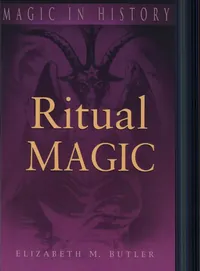


From the “Ritual Magic” Collection
View all →






More Free Magic & Ritual Books
View all →