The Books of Contemplation
 83
83

The Books of Contemplation
Mark Verman's critical edition of "The Books of Contemplation" offers a vital counterpoint to the dominant narrative of early Kabbalah. It correctly identifies and elevates the 'Circle of Contemplation' as a distinct and significant force in 12th and 13th-century Jewish mysticism. The inclusion of "The Book of Contemplation" and "The Fountain of Wisdom" provides direct access to a less-explored speculative stream. While the scholarly apparatus is robust, Verman's translation occasionally feels constrained, perhaps by the very density of the original Hebrew. A particularly striking section details the Circle's unique cosmology, which posits creation not through divine unfolding but through a form of divine self-reflection, a concept that distinguishes it sharply from the sefirotic systems of other Kabbalistic schools. This volume is indispensable for understanding the full spectrum of early Kabbalistic thought, though it demands a reader already familiar with the broader context.
📝 Description
83
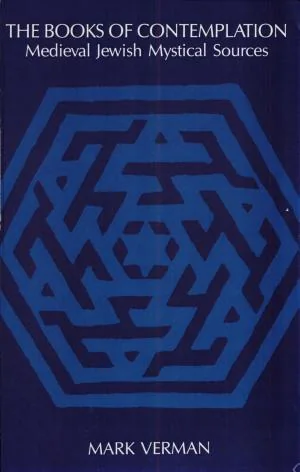
Mark Verman's The Books of Contemplation presents two key texts from a medieval Jewish mystical group known as the 'Circle of Contemplation'.
This volume collects "The Book of Contemplation" and "The Fountain of Wisdom," the primary writings of the 'Circle of Contemplation,' a medieval Jewish mystical group active around the late twelfth and early thirteenth centuries. Their theological ideas represented a significant divergence from the prevailing kabbalistic theosophy of their time. These texts provide direct access to the Circle's distinct mystical theology and speculative frameworks.
The writings focus on concepts such as the divine essence that exists beyond all manifestation, the creation of the cosmos viewed as an act of divine thought, and the contemplative methods for attaining direct divine experience. Unlike more theosophical kabbalistic traditions that detailed emanational hierarchies, the Circle emphasized a Godhead that was immanent and accessible through deep internal focus. This approach offered a more introspective path within Jewish mysticism.
Emerging in the late 12th century, the 'Circle of Contemplation' developed their ideas during a crucial period for Kabbalah. Their theological views, found in these texts, broke from the mainstream focus on emanational hierarchies. The Circle's emphasis on direct divine apprehension and cosmological speculation offered a more introspective mystical path, distinguishing them from other kabbalistic schools and contributing to later mystical thought.
💡 Why Read This Book?
• Gain direct exposure to the unique theological speculations of the 'Circle of Contemplation', a medieval Jewish mystical group active around the late 12th and early 13th centuries, offering an alternative to mainstream Kabbalah. • Understand the radical departure in cosmology presented in "The Book of Contemplation," which differs significantly from established Kabbalistic theosophy, providing new frameworks for creation myths. • Explore the concept of divine immanence and the contemplative practices advocated by the Circle, as detailed in "The Fountain of Wisdom," for achieving direct experience of the Godhead.
⭐ Reader Reviews
Honest opinions from readers who have explored this book.
❓ Frequently Asked Questions
What is the 'Circle of Contemplation'?
The 'Circle of Contemplation' was a group of medieval Jewish mystics active around the late 12th and early 13th centuries. They developed a distinct mystical theology, emphasizing direct divine experience and radical speculations on God and the universe, differing from mainstream Kabbalistic theosophy.
How does this work differ from other Kabbalistic texts?
This work presents a mystical theology that diverges radically from mainstream Kabbalistic theosophy. It focuses on contemplative speculation about God and the origins of the universe, rather than the more common emanational systems of the Sefirot found in other Kabbalistic traditions.
When were these texts originally composed?
The texts presented in "The Books of Contemplation" originate from the earliest medieval Jewish mystical writings, dating from the late twelfth and early thirteenth centuries. This places them at a crucial period in the development of Kabbalah.
What are the main texts included in this collection?
The collection primarily features two key works attributed to the 'Circle of Contemplation': "The Book of Contemplation" and "The Fountain of Wisdom." These texts offer penetrating speculations on the nature of God and the universe.
Who is Mark Verman?
Mark Verman is the author and translator of "The Books of Contemplation." His work focuses on early medieval Jewish mysticism, particularly the less-studied 'Circle of Contemplation'.
What is the historical significance of these writings?
These writings are significant because they represent a distinct and early strand of Jewish mysticism, challenging the monolithic view of early Kabbalah. They showcase a contemplative approach that predates or runs parallel to more theosophical systems.
🔮 Key Themes & Symbolism
Radical Speculation on God
The 'Circle of Contemplation' moved beyond the established sefirotic emanations prevalent in other Kabbalistic circles. Their texts, like "The Book of Contemplation," engage in speculative discourse about the divine essence itself, proposing concepts of God that are radically immanent and accessible through direct contemplation. This focus challenges the anthropomorphic and hierarchical models often associated with later Kabbalistic thought, offering an alternative vision of the divine source.
Cosmology of Divine Vision
Instead of a standard creation narrative, "The Fountain of Wisdom" and "The Book of Contemplation" explore the origins of the universe as an act of divine self-awareness or vision. This cosmological perspective suggests that the universe emerges not from divine will or emanation, but from God's contemplation of Himself. This creates a paradigm where the created order is intrinsically linked to the divine mind, a concept explored by the Circle in the late 12th and early 13th centuries.
Contemplative Practice
Central to the Circle's approach is the emphasis on active, internal contemplation as the means to apprehend the divine. The texts implicitly or explicitly guide the practitioner towards states of profound introspection. This focus on inner experience, rather than solely on theoretical understanding of divine structures, distinguishes their mystical path and offers a practical methodology for engaging with the esoteric dimensions of reality.
Divergence from Theosophy
The core distinction of the 'Circle of Contemplation' lies in their departure from theosophical Kabbalah. While other schools focused on the divine dramas played out through the Sefirot, the Circle's writings prioritize direct, unmediated experience of the Godhead. This theological stance, evident in their foundational texts from the late 12th century, provides a unique lens through which to view the diversity within early Jewish mysticism.
💬 Memorable Quotes
Direct passages from the work, attributed to the author.
“Creation arises not from command, but from divine self-reflection.”
— This interpretation captures the unique cosmological view presented in the texts, suggesting the universe originates from God's contemplation of His own being, rather than an external act of will. It points to an immanent and self-aware divine source.
“The path inward reveals the structure of all existence.”
— This statement expresses the contemplative methodology central to the Circle's teachings. It asserts that profound self-exploration and introspection are the keys to understanding the fundamental nature of reality and the cosmos.
💡 Key Ideas
Editorial paraphrase of the work's core concepts — not direct quotes.
The divine essence is not an object of knowledge but a presence to be experienced.
This paraphrased concept highlights the Circle's emphasis on direct, experiential apprehension of God, contrasting with intellectual or theoretical approaches to divinity. It underscores their focus on inner transformation and immediate contact with the sacred.
We seek not the names of God, but the silence where God is.
This paraphrased idea emphasizes the Circle's pursuit of a direct, pre-conceptual encounter with the divine, moving beyond symbolic language or conceptual frameworks to reach a state of pure presence.
The fountain of wisdom springs from the stillness within.
This quote, directly referencing "The Fountain of Wisdom," suggests that profound knowledge and spiritual insight are not externally acquired but are discovered through inner quietude and contemplative practice.
🌙 Esoteric Significance
Tradition
This work is situated within the broader lineage of Jewish mysticism (Kabbalah) but represents a specific, early branch often termed 'contemplative Kabbalah' or 'speculative Kabbalah.' It departs from the theosophical focus on the Sefirot prevalent in schools like the Gerona circle, instead emphasizing direct, unmediated experience of the Godhead and intricate cosmological speculation. It aligns with traditions that prioritize Gnosis and direct divine apprehension over structured emanational systems.
Symbolism
Key symbols include the 'fountain' itself, representing the inexhaustible source of divine wisdom and creation, often understood as the primordial unity before manifestation. The act of 'contemplation' is itself a central motif, symbolizing the active inward gaze required to perceive the divine immanent in all things. The texts also explore the concept of divine 'light' not merely as an attribute but as the very substance of creation and consciousness.
Modern Relevance
Contemporary thinkers and practitioners in fields like comparative mysticism, depth psychology, and esoteric philosophy draw on the Circle's radical speculative theology. Their emphasis on immanence and direct experience speaks to modern seekers looking beyond dogmatic structures. Elements of their cosmological thought, particularly regarding consciousness as foundational to reality, find echoes in contemporary metaphysical and spiritual movements.
👥 Who Should Read This Book
• Scholars of medieval Jewish mysticism and comparative religion seeking primary sources that illuminate the diversity within early Kabbalah. • Students of esoteric philosophy interested in alternative models of creation and the divine, particularly those diverging from established theosophical systems. • Contemplative practitioners looking for historical precedents and textual frameworks that emphasize direct inner experience and the apprehension of immanent divinity.
📜 Historical Context
The late twelfth and early thirteenth centuries marked a fertile period for Jewish mystical exploration, a time when Kabbalah began to coalesce into distinct schools. The 'Circle of Contemplation,' emerging during this era, represented a significant intellectual current that diverged sharply from the burgeoning theosophical Kabbalah centered around concepts like the Sefirot. While mainstream Kabbalists like those associated with the Gerona school were developing complex emanational doctrines, the Circle, as presented in "The Book of Contemplation" and "The Fountain of Wisdom," focused on a more immanent and speculative understanding of the divine and creation. This alternative approach, emphasizing direct contemplative experience, offered a unique path within Jewish mysticism. The intellectual climate was one of intense spiritual inquiry, sometimes leading to friction with more orthodox rabbinic authorities, though specific reception events for the Circle's work are less documented than for later Kabbalistic texts.
📔 Journal Prompts
The concept of creation as divine self-reflection: how might this alter your understanding of your own creative processes?
Reflecting on 'The Fountain of Wisdom,' what personal 'springs' of insight do you access through stillness?
The distinction between knowing God's names and experiencing God's presence: explore a moment where presence superseded definition.
The inward path as a map of existence: map a recent inner discovery and its corresponding external manifestation.
Consider the 'Circle of Contemplation's' departure from theosophy; identify a personal belief system you hold and articulate its alternative foundations.
🗂️ Glossary
Kabbalah
A body of Jewish mystical teachings and esoteric traditions that aims to explain the nature of God and the universe, and the relationship between the divine realm and the created world. Early Kabbalah emerged in the late 12th and 13th centuries.
Sefirot
The ten divine emanations or attributes in Kabbalistic cosmology, often depicted as a series of interconnected vessels or lights through which divine energy flows into creation. They are central to theosophical Kabbalah.
Theosophy
In the context of Kabbalah, this refers to systems that focus on the divine emanations (Sefirot) and the structure of the divine realms, often involving complex theological and cosmological frameworks.
Contemplation
A spiritual practice involving deep, focused meditation or reflection, aimed at achieving direct spiritual insight, union with the divine, or a profound understanding of reality. Central to the 'Circle of Contemplation'.
Immanence
The philosophical or theological concept that divinity is present within the material world and the universe, rather than being entirely transcendent or separate from it.
Speculation
The act of forming theories or conjectures about the nature of God, the universe, and existence, often based on intuition, insight, and philosophical reasoning rather than empirical evidence.
Mystical Theology
A branch of theology concerned with the direct experience of God or ultimate reality, often through mystical practices, and the understanding of divine nature derived from such experiences.
🔮 Readers Also Liked
Browse all →







More Free Sacred Texts & Gnosticism Books
View all →