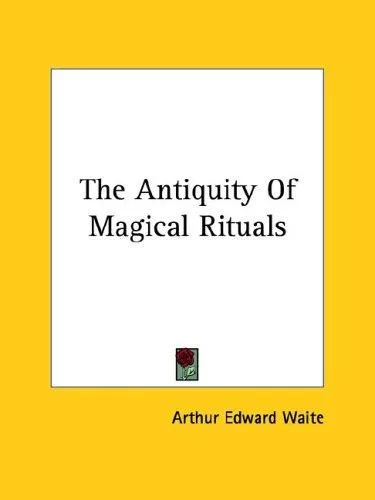
The Antiquity Of Magical Rituals
 61
61

The Antiquity Of Magical Rituals

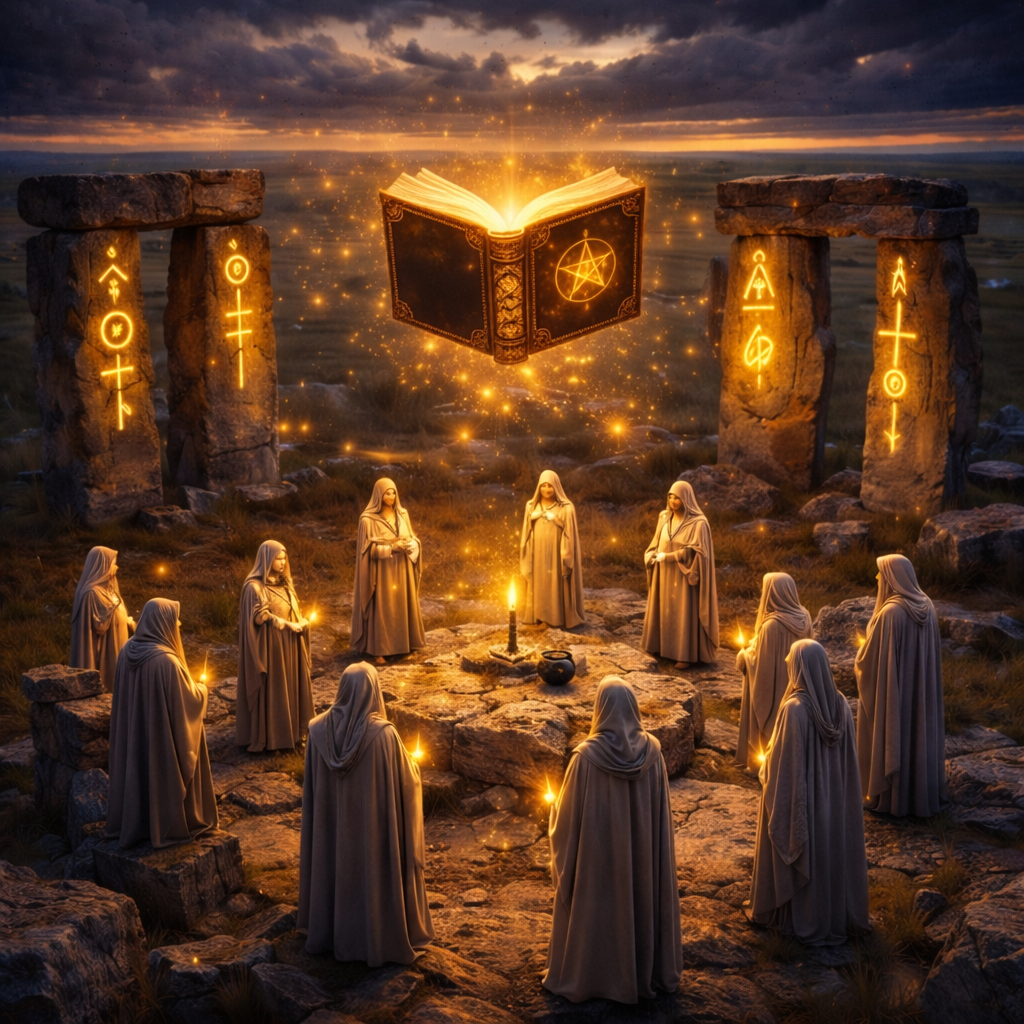

Arthur Edward Waite's 'The Antiquity of Magical Rituals' stands as an indispensable cornerstone for any serious student of the occult and comparative religion. Waite masterfully excavates the historical bedrock of magical practices, presenting a nuanced exploration of their evolution and enduring symbolism. His erudition is palpable, offering profound insights into the philosophical underpinnings that shaped these ancient rites. This work is not for the casual dabbler, but for the dedicated scholar or practitioner seeking a deep, authoritative understanding of magic's historical lineage. It illuminates the perennial quest for spiritual power and its manifestation in ritual form, providing essential context for contemporary esoteric pursuits. A truly monumental achievement.
📝 Description
61
Arthur Edward Waite published 'The Antiquity of Magical Rituals' to examine the historical origins of ritualistic practices.
Arthur Edward Waite's 1909 book, 'The Antiquity of Magical Rituals', examines the historical development and underlying philosophies of magical practices. Waite, a prominent figure in occult studies, traces the roots of sorcery through various cultures and historical periods. He focuses on the symbolic meanings and esoteric thought systems that shaped these rituals. The book aims to present magic not as superstition, but as an integral part of human spiritual development and civilization's history.
The work is intended for those interested in the historical context of magical traditions, comparative religion, and occult scholarship. It offers a detailed look at forgotten lore and the language of ancient rites. Waite's approach connects these practices to a fundamental human desire for communion with the unseen and the pursuit of transcendence through ceremony.
Arthur Edward Waite was a prolific writer in the late 19th and early 20th centuries, deeply involved in the Hermetic Order of the Golden Dawn and influential in the study of Western esotericism. 'The Antiquity of Magical Rituals' fits within this tradition by seeking to contextualize magical practices historically and philosophically, moving beyond mere sensationalism to analyze their symbolic and spiritual dimensions. It reflects Waite's broader project of understanding occultism as a complex system of thought with deep historical roots.
💡 Why Read This Book?
Uncover the archetypal origins of ritual magic and its profound impact on human civilization. 'The Antiquity of Magical Rituals' offers scholars and practitioners alike a deep dive into forgotten lore, revealing the philosophical underpinnings of ancient practices. It provides essential historical context for understanding contemporary esoteric traditions and the enduring human search for spiritual power and connection to the unseen.
⭐ Reader Reviews
Honest opinions from readers who have explored this book.
❓ Frequently Asked Questions
What historical periods does 'The Antiquity of Magical Rituals' cover?
The book delves into a broad spectrum of antiquity, examining magical traditions from ancient Mesopotamia and Egypt through to the late classical and early medieval periods, tracing their lineage and influence.
Is this book suitable for beginners in magic?
While comprehensive, the scholarly depth might be challenging for absolute beginners. It is best suited for those with some foundational knowledge or a strong academic interest in esoteric history.
What kind of magical rituals are discussed?
Waite explores a wide array of rituals, including those related to divination, healing, invocation, talismans, and ceremonial magic, emphasizing their historical and symbolic significance.
Does the book focus on practical spellcasting?
The primary focus is on the historical, philosophical, and symbolic aspects of magical rituals, rather than providing a practical guide for contemporary spellcasting. It offers context and understanding.
What is Arthur Edward Waite's perspective on magic?
Waite, a complex figure, viewed magic as a profound spiritual discipline deeply interwoven with religious and philosophical thought, often emphasizing its symbolic and psychological dimensions.
🔮 Key Themes & Symbolism
The Genesis of Ritual Power
This theme explores the fundamental human impulse to engage with the unseen forces of the cosmos through structured ceremonies. Waite traces the earliest manifestations of ritualistic thinking, suggesting that magic emerged not from mere superstition, but from an inherent need to understand, influence, and connect with the deeper currents of existence. It examines how early societies developed complex systems of belief and practice to work through the mysteries of life, death, and the natural world, laying the groundwork for all subsequent esoteric traditions.
Symbolism in Ancient Sorcery
Central to Waite's thesis is the profound role of symbolism in ancient magical rituals. This theme studies the intricate web of archetypal imagery, glyphs, and correspondences that imbued these practices with meaning and power. From the celestial alignments influencing incantations to the symbolic gestures of the celebrant, every element was charged with esoteric significance. Understanding this symbolic language is presented as key to unlocking the efficacy and philosophical depth of these ancient rites, revealing a universal grammar of the sacred.
The Philosophical Underpinnings of Magic
Beyond mere technique, Waite highlights the sophisticated philosophical and cosmological frameworks that supported ancient magical systems. This theme investigates how magic was integrated into broader religious, Gnostic, and Neoplatonic thought, serving as a practical means to achieve spiritual enlightenment or to comprehend the divine order. It reveals magic not as an isolated phenomenon, but as an integral part of humanity's ongoing dialogue with the cosmos and the quest for ultimate truth and wisdom.
💬 Memorable Quotes
Direct passages from the work, attributed to the author.
“Magic is the hidden science of the universe.”
— This statement posits magic as an underlying, yet concealed, order that governs all existence, accessible through specific knowledge and practice.
“The ritual is the key that unlocks the hidden door.”
— Ritual is presented as the essential method or tool for accessing esoteric knowledge and spiritual realms.
“Symbols are the language of the soul.”
— This emphasizes the profound, intuitive communication and understanding that symbolic representation facilitates, connecting the inner self to universal truths.
“Antiquity holds the roots of all power.”
— Suggests that the ancient past contains the foundational principles and original sources of spiritual and magical potency.
“To understand the ritual is to understand the cosmos.”
— Implies a deep connection between the structure and meaning of magical ceremonies and the fundamental laws of the universe.
🌙 Esoteric Significance
Tradition
This work is deeply rooted in the Western Esoteric Tradition, drawing heavily from Hermeticism, Kabbalah, Gnosticism, and Neoplatonism. Waite meticulously traces the lineage of magical thought and practice through these foundational currents, demonstrating how they interwove to form the bedrock of ritualistic systems. He presents magic not as a singular phenomenon, but as a complex range woven from diverse philosophical and spiritual threads that have sought to understand and interact with the divine.
Symbolism
The book is replete with analyses of potent symbols integral to ancient magical rituals. Waite unpacks the meaning behind celestial bodies, geometric figures, sacred animals, elemental forces, and divine archetypes. These symbols are presented as vehicles for spiritual transmission, mnemonic devices for profound concepts, and energetic conduits for magical operations. Understanding this rich symbolic language is crucial for grasping the efficacy and philosophical depth of the rituals discussed, revealing a universal grammar of the sacred.
Modern Relevance
Despite its historical focus, 'The Antiquity of Magical Rituals' offers clear insights relevant to contemporary practitioners and seekers. It provides a crucial historical and philosophical context for understanding modern magical systems, revealing the archetypal patterns that persist across traditions. By informative the enduring human quest for spiritual connection and power through ritual, Waite's work encourages a deeper, more informed engagement with esoteric practices, fostering a richer appreciation for their symbolic depth and psychological impact.
👥 Who Should Read This Book
This key work is essential for serious students of Western Esotericism, comparative religion, and ancient history. Scholars will find Waite's meticulous research and insightful analysis important for academic study. Dedicated practitioners seeking to understand the historical roots and philosophical underpinnings of their craft will gain profound context and inspiration. For the discerning seeker, it offers a comprehensive and authoritative exploration of magic's ancient lineage, informative the enduring human impulse towards spiritual exploration and the harnessing of unseen forces.
📜 Historical Context
Arthur Edward Waite penned 'The Antiquity of Magical Rituals' during a period of intense occult revival and scholarly interest in esoteric traditions, roughly spanning the late 19th and early 20th centuries. This era saw figures like Helena Blavatsky, Aleister Crowley, and Waite himself meticulously researching, translating, and reinterpreting ancient mystical texts. There was a growing desire to move beyond purely materialistic explanations of the world and to explore the spiritual dimensions of human history and consciousness. Waite, a prolific scholar and member of several occult orders, sought to provide a systematic and historically grounded account of magic's origins, distinguishing it from mere folklore and elevating it to the status of a profound spiritual discipline. His work reflects the prevailing intellectual currents that grappled with the nature of belief, the power of symbols, and the enduring influence of ancient wisdom on the modern psyche.
📔 Journal Prompts
Reflect on a personal ritual or ceremony you have experienced. How does its structure or symbolism connect to the ancient practices discussed by Waite?
Consider a symbol that holds personal significance for you. How might its meaning be interpreted within an ancient magical framework?
Waite discusses the human need to influence the unseen. What are your personal motivations for engaging with or studying esoteric traditions?
How has your understanding of 'magic' evolved after exploring its historical antiquity through Waite's work?
Identify a recurring theme or pattern in ancient rituals that speaks to contemporary societal or personal challenges.
🗂️ Glossary
Hermeticism
A philosophical and religious tradition based on writings attributed to Hermes Trismegistus, emphasizing gnosis, the interconnectedness of all things, and the pursuit of spiritual enlightenment through understanding the universe's hidden laws.
Kabbalah
A mystical tradition within Judaism that explores the divine nature and the creation of the universe through a complex system of symbols, numbers, and allegorical interpretations, most notably represented by the Tree of Life.
Gnosticism
A diverse set of religious ideas and systems in the ancient world that emphasized direct, experiential knowledge (gnosis) of the divine as the key to salvation, often viewing the material world as flawed or evil.
Neoplatonism
A philosophical system originating with Plotinus, building upon Plato's ideas, which posits a hierarchical structure of reality emanating from a supreme, ineffable One, with the goal of mystical union with this ultimate source.
Archetype
A universal, archaic pattern or image that is part of the collective unconscious, often appearing in myths, dreams, and rituals across different cultures and time periods.
This book appears in 2 collections
🔮 Readers Also Liked
Browse all →







More by Arthur Edward Waite
All books →

From the “Ritual Magic” Collection
View all →





More Free Magic & Ritual Books
View all →