Nostradamus - Seher der Jahrhunderte
 76
76

Nostradamus - Seher der Jahrhunderte
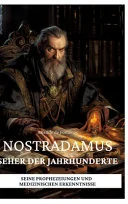
Aristide de Fontenac's "Nostradamus - Seher der Jahrhunderte" attempts to unearth the substance behind the legend of the 16th-century seer. Fontenac’s strength lies in meticulously contextualizing Nostradamus not just as a prophet, but as a physician and intellectual of the Renaissance. The book’s examination of his medical background, particularly his work during plague outbreaks, provides a grounded counterpoint to his more mystical pursuits. However, the analysis occasionally falters when attempting to directly correlate specific quatrains to historical events without sufficient critical distance, sometimes leaning into the very sensationalism it aims to avoid. A particularly compelling section details Nostradamus's alleged use of astronomical tables and alchemical symbolism in crafting his predictions, offering a glimpse into the era's esoteric practices. While the book offers a more nuanced portrait, its interpretative leaps can sometimes strain credulity. Ultimately, Fontenac delivers a detailed, if uneven, study of a figure whose mystique continues to fascinate.
📝 Description
76
Aristide de Fontenac's 2023 book analyzes Nostradamus's quatrains as Renaissance artifacts, not mere predictions.
Aristide de Fontenac's "Nostradamus - Seher der Jahrhunderte" thoroughly examines Michel de Nostredame, the 16th-century French astrologer and physician known for his prophecies. The study goes beyond basic biography to investigate the intellectual and historical environment where Nostradamus worked. It looks closely at the structure, language, and the claimed predictive ability of his quatrains, viewing them as complex literary and astrological works from the Renaissance.
The author investigates Nostradamus's dual role as a respected doctor and a questioned seer. This work is for readers interested in the history of prophecy, Renaissance thought, and esoteric traditions. It appeals to those seeking a critical but respectful look at Nostradamus's lasting impact, moving past sensationalism to grasp the man and his methods within his time. Historians, comparative religion scholars, and those studying the occult will find its detailed approach useful. People curious about how prophetic literature has shaped Western thought will also gain from its observations.
This book places Nostradamus within the 16th-century European intellectual world, where astrology and divination were common among scholars and rulers. Fontenac shows how Nostradamus's prophecies, first appearing in 1555, surfaced during a time of religious turmoil and political instability. The book discusses how contemporaries, including Catherine de' Medici, reacted to his work, and the concerns raised by religious authorities regarding heresy. Understanding this context is key to appreciating the mix of academic study and hidden knowledge that characterized his career.
💡 Why Read This Book?
• Gain a grounded understanding of Nostradamus's dual career as a physician and prophet, learning how his medical knowledge potentially informed his prophetic methods, a perspective often overlooked in popular accounts. • Analyze the structure and linguistic complexity of Nostradamus's quatrains, as detailed in the book's discussion of his specific literary techniques and use of anagrams and allegorical language. • Explore the intellectual and religious climate of 16th-century France, understanding the societal pressures and esoteric traditions that shaped Nostradamus's work and its reception.
⭐ Reader Reviews
Honest opinions from readers who have explored this book.
❓ Frequently Asked Questions
When were Nostradamus's prophecies first published?
The initial collection of Nostradamus's prophecies, known as Les Propheties, was first published in Lyon, France, in 1555. This seminal work laid the foundation for his enduring fame and influence across centuries.
What was Nostradamus's profession besides being a prophet?
Michel de Nostredame was a qualified physician, graduating from the University of Montpellier. He actively practiced medicine, treating patients during outbreaks of the plague and developing pharmaceutical remedies.
How does Fontenac's book differentiate Nostradamus from other seers?
Fontenac's work emphasizes Nostradamus's academic background and his use of astrological and literary techniques. It contrasts him with those relying solely on supposed divine inspiration, highlighting his scholarly approach to prediction.
What historical period does "Nostradamus - Seher der Jahrhunderte" focus on?
The book primarily focuses on the Renaissance period, specifically the 16th century, examining the life, work, and milieu of Nostradamus within this era of significant intellectual and religious change.
Does the book discuss the interpretation of Nostradamus's quatrains?
Yes, a significant portion of the book is dedicated to analyzing the structure, language, and purported predictive power of Nostradamus's quatrains, exploring how their ambiguity has led to diverse interpretations throughout history.
Who was Michel de Nostredame?
Michel de Nostredame, known as Nostradamus, was a French astrologer, physician, and reputed seer. He lived from 1503 to 1566 and gained lasting fame for his book of prophecies, Les Propheties.
🔮 Key Themes & Symbolism
Prophecy and Interpretation
This theme looks at the nature of prophecy as understood in the 16th century, moving beyond simplistic predictions to explore Nostradamus's deliberate use of ambiguous language, astrological calculations, and literary devices. The work examines how the quatrains were designed to be open to multiple readings, ensuring their relevance across different eras and historical contexts, and how this inherent ambiguity has fueled centuries of debate and interpretation.
Renaissance Intellectualism
The book situates Nostradamus within the broader intellectual currents of the Renaissance, highlighting the era's fascination with astrology, alchemy, and classical knowledge. It contrasts the mystical pursuits with the emerging scientific rationalism, showcasing how figures like Nostradamus navigated these often-conflicting paradigms. The text explores his integration of medical science, herbalism, and astrological observation, presenting him as a product of his learned, yet spiritually charged, time.
The Physician-Seer Dichotomy
A central focus is the duality of Nostradamus's identity as both a respected physician and a controversial prophet. The work investigates how his medical practice, particularly his experience during plague epidemics, might have influenced his worldview and his approach to understanding human destiny. It scrutinizes the societal and religious implications of his prophetic endeavors, exploring the tensions between his established profession and his more esoteric reputation.
Astrology and Esoteric Arts
This theme examines Nostradamus's reliance on astrological charts, numerology, and potentially alchemical symbolism in constructing his prophecies. The book details how he utilized astronomical calculations and the perceived influence of celestial bodies as a framework for his predictions. It explores the integration of these esoteric arts into his method, revealing a sophisticated system that blended empirical observation with occult traditions prevalent in the 16th century.
💬 Memorable Quotes
Direct passages from the work, attributed to the author.
“His medical treatises stand alongside his prophecies as testaments to a Renaissance mind engaged with both the physical and the cosmic.”
— This interpretation highlights the book's view of Nostradamus as a many-sided intellectual. It posits that his scientific writings on medicine are as significant as his prophecies, demonstrating his deep engagement with the knowledge and worldview of his era.
“The plague years forged a unique perspective on mortality and fate.”
— This interpretation points to the book's exploration of how Nostradamus's direct experience treating victims of the plague likely shaped his understanding of human vulnerability and the forces governing life and death.
“He drew from ancient texts and contemporary celestial movements alike.”
— This concept emphasizes Nostradamus's method of combining classical learning and astrological observation. It suggests his prophecies were a synthesis of historical wisdom and real-time astronomical data, reflecting a common practice among Renaissance scholars.
“Nostradamus predicted not events, but the human reaction to them.”
— This interpretation suggests that Nostradamus's foresight was less about cataloging specific occurrences and more about understanding the fundamental patterns of human behavior and societal responses to crises and changes throughout history.
💡 Key Ideas
Editorial paraphrase of the work's core concepts — not direct quotes.
The quatrains were a carefully constructed labyrinth, inviting endless exploration.
This paraphrased concept suggests Nostradamus intentionally crafted his prophecies with layers of meaning, using poetic ambiguity and complex symbolism to ensure they could be interpreted in various ways by different generations, rather than offering straightforward, singular predictions.
🌙 Esoteric Significance
Tradition
Nostradamus's work is deeply rooted in the Hermetic and Neoplatonic traditions prevalent during the Renaissance, which sought to reconcile classical pagan philosophies with Christian theology. His methods, blending astrology, numerology, and prophecy, align with the broader Hermetic impulse to understand the cosmos as a divinely ordered system accessible through symbolic interpretation and celestial observation. This book examines how Nostradamus synthesized these influences, creating a unique prophetic system that departed from purely religious or purely scientific frameworks, positioning him within a lineage of Western esoteric thought.
Symbolism
Central to Nostradamus's work are symbols drawn from classical mythology, biblical imagery, and astrological iconography. The "four elements" (earth, air, fire, water) often appear as motifs representing fundamental forces or states of being. Celestial bodies, particularly planets and constellations, are not merely indicators of time but active agents influencing human affairs, as per astrological doctrine. Furthermore, enigmatic animal symbols and abstract allegorical figures populate his quatrains, acting as keys to unlock deeper layers of meaning that require knowledge of esoteric traditions and historical allegories for comprehension.
Modern Relevance
Contemporary esoteric practitioners and scholars of Western esotericism continue to draw upon Nostradamus's prophecies. His work is often studied within circles dedicated to Hermeticism, Rosicrucianism, and various forms of divination. Modern occultists might analyze his quatrains for archetypal patterns of human conflict and societal change, seeking to understand historical cycles through his cryptic verses. The enduring fascination with Nostradamus also fuels interest in historical astrology and the role of prophecy in shaping collective consciousness, making his work a recurring reference point in discussions of esoteric history and practice.
👥 Who Should Read This Book
• Students of Renaissance history seeking to understand the intellectual and cultural landscape beyond purely political or religious narratives. • Aspiring astrologers and occultists interested in historical methods of divination and symbolic interpretation, particularly those focusing on Western esoteric traditions. • Comparative religion scholars examining the role of prophecy and apocalyptic literature across different historical periods and belief systems.
📜 Historical Context
Aristide de Fontenac's "Nostradamus - Seher der Jahrhunderte" immerses the reader in the turbulent intellectual climate of 16th-century Europe. Nostradamus published his first edition of "Les Propheties" in 1555, a period marked by the Protestant Reformation and widespread anxieties concerning political instability and divine judgment. Astrological prognostication was common, practiced by scholars and courtiers alike, though often viewed with suspicion by the Catholic Church, which maintained strict controls over divination perceived as heretical. Fontenac situates Nostradamus amidst contemporaries like the physician and occultist Paracelsus, and the Italian philosopher Giordano Bruno, who also explored esoteric traditions. The reception of Nostradamus's work was immediate and varied; while some dismissed him, powerful figures like Catherine de' Medici sought his counsel, demonstrating the complex interplay between superstition, scholarship, and political power.
📔 Journal Prompts
The physician's perspective on plague outbreaks as a lens for Nostradamus's view of fate.
Analysis of the ambiguity in a chosen quatrain and its potential interpretations.
Nostradamus's use of astrological symbolism: how might celestial events inform prophecy?
The tension between scholarly pursuit and esoteric prediction in the Renaissance.
Relevance of Nostradamus's quatrains today: do they describe recurring human patterns?
🗂️ Glossary
Quatrain
A stanza of four lines, especially one having a rhyme scheme. Nostradamus famously composed his prophecies in quatrains, which are central to the interpretation and study of his work.
Astrology
The study of the movements and relative positions of celestial bodies interpreted as having an influence on human affairs and the natural world. Nostradamus was a practicing astrologer.
Hermeticism
A religious, philosophical, and esoteric tradition based on writings attributed to Hermes Trismegistus. It emphasizes divine knowledge, the interconnectedness of all things, and the power of symbols.
Renaissance
The period in European history, from the 14th to the 17th century, regarded as the cultural bridge between the Middle Ages and modern history. It was a time of renewed interest in classical antiquity and significant intellectual, artistic, and scientific advancements.
Divination
The practice of seeking knowledge of the future or the unknown by supernatural means. Nostradamus's prophecies fall under this category, though he presented his methods as based on astrological calculation.
Neoplatonism
A philosophical system originating in the 3rd century AD that sought to synthesize the ideas of Plato with other religious and mystical traditions. It influenced many Renaissance thinkers and esoteric movements.
Alchemy
An ancient practice combining chemical, philosophical, mystical, and artistic elements. Historically, alchemists sought to transmute base metals into gold and discover a universal elixir. It often involved symbolic language.
This book appears in 1 collection
🔮 Readers Also Liked
Browse all →







From the “Nostradamus” Collection
View all →



More Free Sacred Texts & Gnosticism Books
View all →