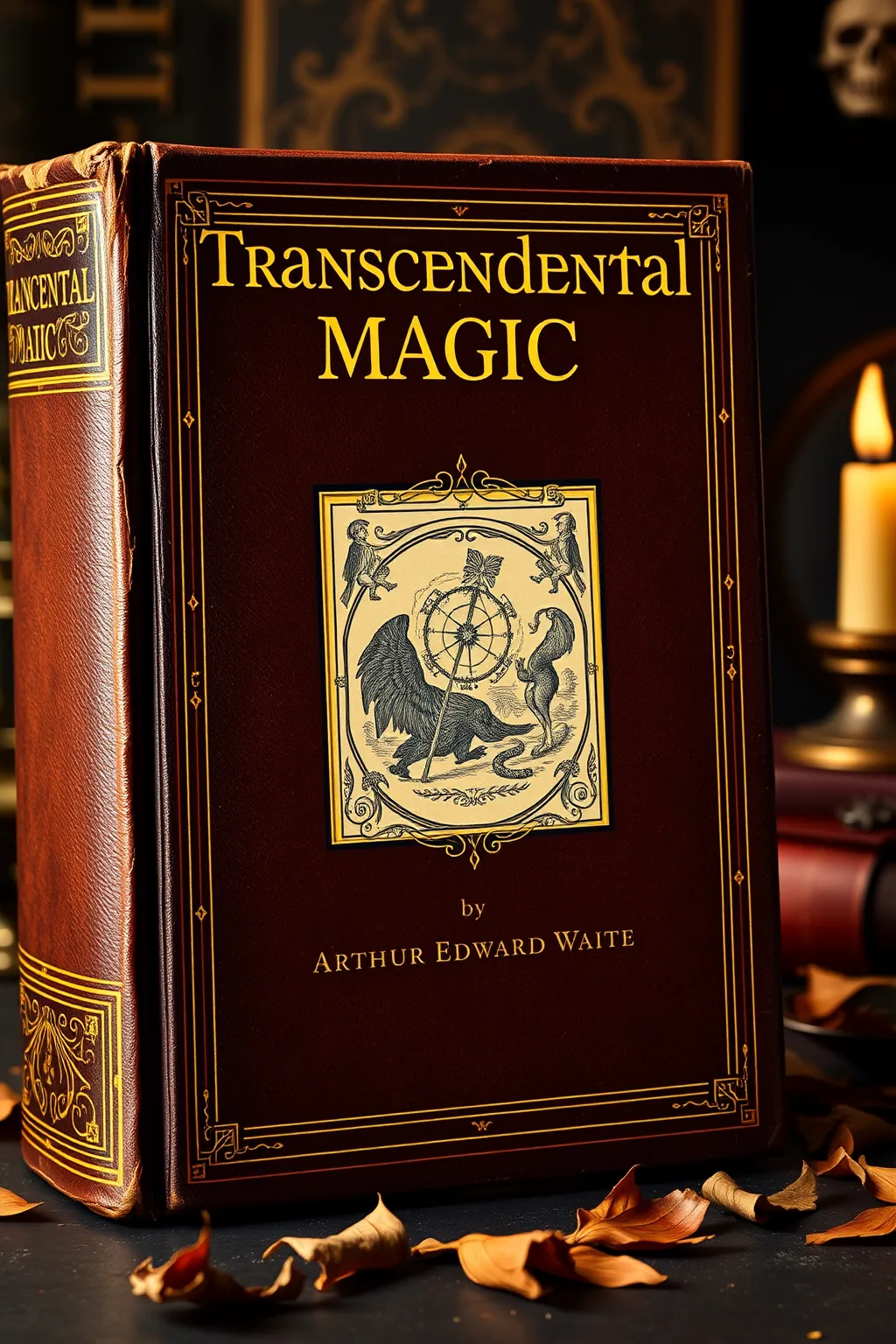
Transcendental Magic, Its Doctrine and Ritual
 61
61

Transcendental Magic, Its Doctrine and Ritual


Lorelei Sage (Contemplative Literature Editor) — Arthur Edward Waite's 'Transcendental Magic, Its Doctrine and Ritual' remains an indispensable cornerstone for any serious student of the occult arts. Waite's scholarly rigor and deep immersion in esoteric traditions are evident on every page, offering a comprehensive and authoritative exploration of magical theory and practice. He masterfully dissects the underlying philosophical principles, illuminating the symbolic language and ritualistic structures that have shaped Western esotericism for centuries. This work is not for the casual dabbler; it demands intellectual engagement and a sincere desire for spiritual growth. Its strengths lie in its thoroughness, its historical context, and its unwavering focus on the spiritual transformation that true magical practice can effect. Essential reading for practitioners, scholars, and anyone seeking a profound understanding of magical doctrine.
📝 Description
61
Arthur Edward Waite published 'Transcendental Magic, Its Doctrine and Ritual' in 1896.
Arthur Edward Waite's 1896 book, 'Transcendental Magic, Its Doctrine and Ritual,' examines ceremonial magic. Waite details the principles and practices of this tradition, drawing on Kabbalah, alchemy, and occult symbolism. He presents magic not as mere trickery, but as a serious spiritual discipline.
The work covers the theoretical underpinnings of magic, including its connection to cosmology and human consciousness. Waite discusses the importance of ritual in achieving altered states and apprehending hidden realities. The book aims to provide a systematic understanding for those interested in the esoteric, distinguishing its approach from superstition or mere entertainment. It is a comprehensive study of magical doctrine and its practical application.
Published in the late Victorian era, 'Transcendental Magic' is a product of the occult revival. Waite, a prominent figure in groups like the Hermetic Order of the Golden Dawn, sought to codify and explain magical traditions. His work sits alongside other contemporary explorations of Western esotericism, such as those by Eliphas Lévi and Papus, aiming to present a structured, philosophical approach to magic.
💡 Why Read This Book?
Delve into the foundational texts of Western occultism with Arthur Edward Waite's 'Transcendental Magic.' This book offers a rigorous exploration of magical doctrine and ritual, ideal for serious seekers, academic scholars of esotericism, and practitioners aiming to deepen their understanding of ceremonial magic. Uncover the symbolic language, philosophical underpinnings, and historical context that have shaped magical traditions for centuries. It's a vital resource for illuminating the path of spiritual development through disciplined practice and profound inquiry.
⭐ Reader Reviews
Honest opinions from readers who have explored this book.
❓ Frequently Asked Questions
What is the primary focus of 'Transcendental Magic'?
The book's primary focus is on the doctrine and ritual of ceremonial magic, delving into its philosophical underpinnings, symbolic language, and practical applications for spiritual development and occult understanding.
Who was Arthur Edward Waite?
Arthur Edward Waite was a prolific author and scholar of the occult and esoteric traditions, co-founder of the Hermetic Order of the Golden Dawn, and a significant figure in 19th and 20th-century magical studies.
Is this book suitable for beginners in magic?
While comprehensive, 'Transcendental Magic' is best suited for those with some existing interest or foundational knowledge in esoteric subjects, as it assumes a certain level of intellectual engagement and contemplation.
What kind of rituals are discussed in the book?
The book discusses various forms of ceremonial magic, often drawing from Kabbalistic, Hermetic, and alchemical traditions, focusing on the underlying principles and symbolic meaning of ritualistic actions.
Does the book offer practical spells or incantations?
While it details the 'doctrine and ritual,' the emphasis is on the philosophical and symbolic aspects rather than providing a simple 'spellbook.' Practical application requires deep study and personal initiation.
🔮 Key Themes & Symbolism
The Doctrine of True Magic
Waite meticulously outlines the theoretical framework of magic, distinguishing it from mere superstition or trickery. He emphasizes that transcendental magic is a science and a philosophy, rooted in the understanding of universal laws and the interconnectedness of the cosmos. This doctrine posits that through disciplined will, symbolic representation, and precise ritual, the practitioner can influence the subtle forces of existence, leading to spiritual illumination and personal transformation. It is a path of self-mastery and conscious evolution, guided by ancient wisdom.
The Art and Science of Ritual
Central to Waite's work is the exploration of ritual as the operative arm of magical doctrine. He dissects the components of ritual, from the symbolic attire and implements to the invocation and evocation of forces. The book stresses that ritual is not arbitrary but a structured language designed to communicate with higher intelligences and to align the practitioner's will with cosmic principles. Each gesture, word, and symbol carries profound meaning, acting as keys to unlock hidden potentials within the psyche and the external world.
Symbolism and Allegory in the Occult
Waite's scholarship shines in his detailed exposition of the wide range of symbolism that underpins magical practice. From the Kabbalistic Tree of Life to alchemical metaphors and astrological correspondences, he reveals how these symbolic systems serve as maps of consciousness and blueprints for spiritual attainment. Understanding this symbolic language is crucial for deciphering the deeper meanings of ritual and for reading through the various planes of existence. The book encourages a contemplative approach to symbolism, allowing its inherent truths to unfold within the reader's awareness.
💬 Memorable Quotes
Direct passages from the work, attributed to the author.
“The ritual is the vehicle of the doctrine.”
— This highlights the symbiotic relationship between theoretical understanding and practical application in magic; the ritual is the means by which the esoteric knowledge is actualized.
“Symbolism is the language of the soul.”
— This emphasizes the deep, intuitive, and universal nature of symbolic expression, suggesting it is the primary means by which the inner self communicates and connects with the divine.
“Knowledge is the light that dispels the shadows of ignorance.”
— This classic sentiment underscores the transformative power of esoteric learning, portraying knowledge as the essential tool for overcoming illusion and achieving spiritual clarity.
“The will, rightly directed, is the supreme instrument of the Great Work.”
— This points to the crucial role of focused intention and disciplined volition in achieving profound spiritual or magical objectives, framing the 'Great Work' as the ultimate goal.
💡 Key Ideas
Editorial paraphrase of the work's core concepts — not direct quotes.
Magic is the science of the secret operations of nature.
This quote defines magic not as arbitrary supernatural intervention, but as a profound understanding and application of hidden natural laws that govern the universe and consciousness.
🌙 Esoteric Significance
Tradition
This work is deeply rooted in the Western Esoteric Tradition, drawing heavily from Hermeticism, Kabbalah, Alchemy, and ceremonial magic as practiced by groups like the Hermetic Order of the Golden Dawn. Waite synthesizes these diverse streams, presenting a unified vision of magic as a path to spiritual enlightenment and self-realization through disciplined study and ritual practice.
Symbolism
The book is a rich compendium of esoteric symbolism, explaining the profound meanings behind various archetypes, celestial bodies, alchemical processes, and Kabbalistic diagrams. Waite interprets these symbols not merely as decorative elements but as keys to understanding the structure of the cosmos, the nature of consciousness, and the stages of spiritual evolution. He emphasizes the power of symbolic language to communicate truths that transcend ordinary rational discourse.
Modern Relevance
In an age often characterized by materialism and fragmentation, 'Transcendental Magic' offers a compelling counter-narrative, grounding modern seekers in ancient wisdom that emphasizes holistic understanding and spiritual agency. Its exploration of consciousness, will, and symbolic interaction remains profoundly relevant for those seeking deeper meaning, personal transformation, and a connection to the subtle energies of the universe. The principles of disciplined practice and contemplative inquiry are timeless tools for reading through the complexities of modern life.
👥 Who Should Read This Book
This foundational text is essential for serious students of Western esotericism, occult philosophy, and ceremonial magic. Aspiring practitioners and seasoned ritualists will find invaluable insights into the theoretical underpinnings and symbolic language of magical arts. Academic scholars researching the history of magic and mysticism will appreciate Waite's meticulous scholarship and comprehensive approach. Seekers of spiritual knowledge who are drawn to the deeper mysteries of existence, and who are willing to engage with complex philosophical concepts and disciplined study, will find 'Transcendental Magic' an clear and transformative read.
📜 Historical Context
Written during a period of intense occult revival in the late 19th and early 20th centuries, 'Transcendental Magic' emerged from a milieu captivated by ancient wisdom, spiritualism, and the rediscovery of esoteric traditions. Arthur Edward Waite was a central figure in this movement, co-founding the Hermetic Order of the Golden Dawn and actively engaging with various mystical societies. The book reflects the era's intellectual curiosity about the hidden aspects of reality, seeking to synthesize diverse occult philosophies and present them in a systematic, scholarly manner. It stands as a proof of the enduring human quest for deeper meaning and spiritual power, offering a bridge between ancient esoteric knowledge and the burgeoning interest in psychological and spiritual exploration.
📔 Journal Prompts
Reflect on the distinction Waite makes between 'true' magic and superstition. How does this distinction shape your understanding of spiritual practice?
Choose one symbol discussed by Waite (e.g., a specific alchemical symbol, a Kabbalistic Sephirah) and meditate on its potential meanings in your own life.
Consider the role of 'will' in magical practice as described by Waite. How can you cultivate and direct your will more effectively in your spiritual journey?
Waite emphasizes ritual as the 'vehicle of the doctrine.' What personal rituals, if any, do you currently engage in, and how do they connect to your beliefs or aspirations?
How does the concept of 'transcendental' magic, as presented by Waite, differ from or align with your personal understanding of spiritual or magical goals?
🗂️ Glossary
Kabbalah
A mystical tradition within Judaism that explores the divine nature and the creation of the universe through symbolic interpretation of scripture and a complex system of correspondences, often represented by the Tree of Life.
Alchemy
An ancient philosophical and protoscientific tradition that aimed to purify, mature, and perfect certain materials. Esoterically, it represents the transformation of the soul and the pursuit of spiritual enlightenment, often symbolized by the transmutation of base metals into gold.
Hermeticism
A philosophical and religious tradition based on the purported teachings of Hermes Trismegistus. It emphasizes divine wisdom, the interconnectedness of all things ('As Above, So Below'), and the potential for human spiritual perfection.
Ceremonial Magic
A formalized system of magical practice involving elaborate rituals, specific incantations, symbolic objects, and structured invocations or evocations, typically aimed at spiritual development or influencing subtle forces.
Doctrine
In the context of magic, doctrine refers to the underlying philosophical principles, theoretical frameworks, and fundamental beliefs that inform and guide magical practice.
This book appears in 2 collections
🔮 Readers Also Liked
Browse all →









More by Arthur Edward Waite
All books →
From the “Ritual Magic” Collection
View all →






More Free Magic & Ritual Books
View all →