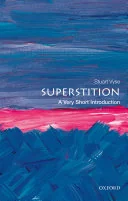
Superstition
 79
79

Superstition
Stuart Vyse's "Superstition" provides a much-needed, grounded analysis of why we still believe in luck, omens, and charms. Eschewing simplistic dismissals, Vyse meticulously details the psychological mechanisms—like the illusory correlation and confirmation bias—that solidify these often-irrational beliefs. He highlights how the fear of uncertainty drives us to seek patterns, even where none exist, a point vividly illustrated when discussing the persistence of black cat myths despite statistical refutations. The work's strength lies in its clear, accessible prose and its broad historical sweep, connecting ancient anxieties to modern habits. However, while comprehensive, the book could benefit from a deeper engagement with the specifically esoteric or occult traditions where superstition often finds its most potent expression, rather than treating them as mere subsets of general human irrationality. It offers a solid framework for understanding the phenomenon, but falls short of exploring its more arcane manifestations. Ultimately, "Superstition" is a sharp, informative study for anyone curious about the persistent power of the irrational.
📝 Description
79
Stuart Vyse's 1997 book, Superstition, examines why irrational beliefs persist.
Stuart Vyse's "Superstition" scrutinizes the persistence of irrational beliefs in the face of scientific understanding. The book traces the development of common superstitions, examining their psychological roots and how they spread through cultures. Vyse investigates the reasons individuals maintain practices like knocking on wood or avoiding black cats, even in a society driven by empirical evidence.
The work is suitable for readers interested in the anthropology of belief, cognitive psychology, and the history of folklore. It will appeal to those who question the prevalence of non-rational thought in contemporary life and want to understand its origins. Scholars in psychology, sociology, and cultural studies will find its thorough approach beneficial.
Vyse places the study of superstition within a larger intellectual history, referencing thinkers who have long considered the nature of belief and irrationality. The book acknowledges the enduring presence of superstition, a tension present since at least the 18th century's rationalist movements. It shows how superstitions change and endure across different periods.
While not strictly an esoteric text, "Superstition" engages with themes relevant to understanding the human psyche's tendency toward non-rational thought, a common interest in esoteric traditions. It examines the psychological mechanisms that lead individuals to form and maintain beliefs that lack empirical support, such as the role of anxiety and pattern recognition. The book’s analysis of how these beliefs are transmitted and reinforced socially also touches upon collective consciousness and cultural narratives, aspects often explored within esoteric studies seeking to understand shared human experiences beyond conventional explanation.
💡 Why Read This Book?
• Understand the cognitive biases, such as illusory correlation, that lead to superstitious thinking, providing a framework for self-awareness. • Explore the historical trajectory of superstitions, referencing their survival from ancient times to modern iterations, as detailed in its examination of folklore. • Gain insight into the psychological comfort derived from rituals and charms, particularly in times of uncertainty, a concept Vyse articulates through his analysis of anxiety-driven beliefs.
⭐ Reader Reviews
Honest opinions from readers who have explored this book.
❓ Frequently Asked Questions
What are the main psychological reasons for superstition according to Stuart Vyse?
Vyse highlights cognitive biases like illusory correlation, where unrelated events are perceived as causally linked, and confirmation bias, which reinforces existing superstitious beliefs. Anxiety and the desire for control in uncertain situations also play significant roles, driving the adoption of rituals and charms.
Does the book discuss specific historical examples of superstitions?
Yes, the book examines a wide array of historical superstitions, from ancient omens and charms to modern-day lucky rituals. It traces their evolution and persistence across different cultures and time periods, providing context for their enduring appeal.
How does science influence the prevalence of superstition, according to "Superstition"?
Vyse explores the paradox of superstition's persistence in a science-dominated world. While science offers rational explanations, it often fails to satisfy the psychological need for certainty and control that superstitions fulfill, leading to their continued popularity.
What is the 'illusory correlation' concept discussed in the book?
Illusory correlation is a cognitive bias where individuals perceive a relationship between two variables (e.g., black cats and bad luck) even when no actual statistical association exists. This perceived link is often driven by memorable instances or pre-existing beliefs.
Is "Superstition" by Stuart Vyse an academic text or for a general audience?
The book is written with scholarly rigor but is accessible to a general audience. It bridges academic research in psychology and anthropology with engaging prose, making complex concepts understandable without sacrificing depth.
What role does anxiety play in superstitious behavior, as explained by Vyse?
Vyse suggests that anxiety, particularly stemming from uncertainty and a lack of control over life events, drives people to adopt superstitious behaviors. These rituals offer a perceived sense of agency and predictability, alleviating psychological distress.
🔮 Key Themes & Symbolism
Cognitive Biases
The book meticulously details cognitive shortcuts like confirmation bias and illusory correlation. Vyse explains how these mental mechanisms lead individuals to perceive patterns and causal links where none exist, reinforcing superstitious beliefs. This exploration provides a psychological lens through which to understand the persistence of phenomena like believing black cats bring misfortune, even when statistical evidence contradicts such notions.
Anxiety and Control
A central theme is the human need for control in an uncertain world. Vyse argues that anxiety, particularly regarding unpredictable outcomes, drives the adoption of superstitious rituals and charms. These practices offer a psychological buffer, providing a sense of agency and predictability that rational thought alone may not satisfy, thus explaining their enduring presence across cultures.
Cultural Transmission
Vyse examines how superstitions are passed down through generations and reinforced within social groups. The book illustrates that beliefs, whether rational or irrational, gain strength through collective acceptance and shared practice. This cultural embedding explains why certain superstitions remain potent despite scientific refutation, as they become intertwined with identity and tradition.
The Paradox of Modern Belief
The work directly addresses the persistence of superstition in an era of scientific dominance. Vyse investigates why, despite widespread scientific literacy, individuals continue to engage in superstitious behaviors. He posits that science, while explaining the 'how,' often fails to address the emotional and psychological 'why' that superstitions fulfill.
💬 Memorable Quotes
Direct passages from the work, attributed to the author.
“Superstitious beliefs persist because they satisfy deep-seated psychological needs.”
— This interpretation highlights Vyse's central argument that the endurance of superstitions is not merely a matter of ignorance, but a function of their ability to fulfill fundamental human desires for control, meaning, and comfort in the face of uncertainty.
“Anxiety fuels the need for ritual and the belief in luck.”
— This interpretation emphasizes the psychological driver of superstition, suggesting that feelings of unease and a lack of control over circumstances compel individuals to adopt superstitious practices as a coping mechanism.
“Science explains the world, but not always how we feel about it.”
— This interpretation captures the book's exploration of the gap between rational understanding and emotional needs. It suggests that while science provides factual accounts, superstitions often address the human desire for meaning, comfort, and a sense of agency.
💡 Key Ideas
Editorial paraphrase of the work's core concepts — not direct quotes.
The mind seeks patterns, often creating them where none objectively exist.
This paraphrased concept points to the cognitive mechanisms Vyse explores, such as illusory correlation, where the brain's tendency to find order can lead to the formation of superstitious associations between unrelated events or symbols.
Cultural consensus can solidify irrational beliefs.
This paraphrased concept underscores the social dimension of superstition, explaining how shared beliefs and practices within a community can reinforce their perceived validity, regardless of empirical evidence.
🌙 Esoteric Significance
Tradition
While not strictly an esoteric text, "Superstition" engages with the fringes of belief systems often explored in esoteric literature. It examines the psychological and cognitive mechanisms that can underpin practices found in folk magic, divination, and ritualistic traditions, treating them as manifestations of universal human tendencies rather than distinct occult disciplines.
Symbolism
The book frequently touches upon symbols like the black cat or the number 13, analyzing their persistence as objects of superstitious fear or luck. In esoteric traditions, these symbols often carry deeper, layered meanings. Vyse's analysis focuses on their psychological impact and cultural transmission, providing a secular lens through which to view motifs that might hold sacred or arcane significance in other contexts.
Modern Relevance
Contemporary thinkers in fields ranging from behavioral economics to cognitive psychology utilize Vyse's insights. His work on how people process information and make decisions under uncertainty is relevant to understanding phenomena like conspiracy theories and the spread of misinformation online, areas that intersect with modern magical and esoteric communities seeking alternative knowledge systems.
👥 Who Should Read This Book
• Students of psychology and cognitive science interested in the roots of irrational thought and decision-making. • Anthropologists and sociologists examining cultural practices and the transmission of beliefs across generations. • General readers curious about the enduring power of luck, charms, and omens in everyday life, seeking rational explanations for common behaviors.
📜 Historical Context
Stuart Vyse's "Superstition" emerged in 2019, a period marked by renewed interest in cognitive biases and the psychology of belief systems. The work engages with a long intellectual tradition dating back to the Enlightenment's critique of irrationality, while acknowledging the persistent, often adaptive, role of superstition in human societies. It implicitly contrasts with purely anthropological or sociological studies by focusing on the cognitive and psychological underpinnings. Vyse's approach can be seen as a modern continuation of thinkers like B.F. Skinner, who explored reinforcement schedules that can underpin such beliefs, though Vyse focuses more on cognitive biases than operant conditioning. The book's reception, while not marked by major censorship events, arrives in an era where understanding the spread of misinformation and irrationality is paramount, making its analysis particularly relevant.
📔 Journal Prompts
The illusory correlation between black cats and misfortune.
Anxiety's role in seeking lucky charms.
The persistence of knocking on wood.
Confirmation bias reinforcing belief in omens.
How cultural consensus supports superstitious practices.
🗂️ Glossary
Illusory Correlation
A cognitive bias where individuals perceive a statistical relationship between two variables (e.g., a black cat crossing one's path and subsequent bad luck) when none objectively exists.
Confirmation Bias
The tendency to search for, interpret, favor, and recall information in a way that confirms one's pre-existing beliefs or hypotheses.
Cognitive Shortcut
Mental strategies or rules of thumb that allow individuals to make decisions or judgments quickly and efficiently, sometimes leading to systematic errors.
Anxiety
A feeling of worry, nervousness, or unease, typically about an imminent event or something with an uncertain outcome, often driving the need for control.
Ritual
A sequence of activities involving gestures, words, actions, or objects, performed according to a set sequence, often to achieve a desired outcome or provide psychological comfort.
Folk Belief
Traditional beliefs, customs, and superstitions held by a particular group of people, often passed down orally through generations.
Empirical Evidence
Information acquired through observation and experimentation, forming the basis of scientific knowledge and often contradicting superstitious claims.
This book appears in 1 collection
🔮 Readers Also Liked
Browse all →







From the “Superstition” Collection
View all →




More Free Esoteric History & Biography Books
View all →