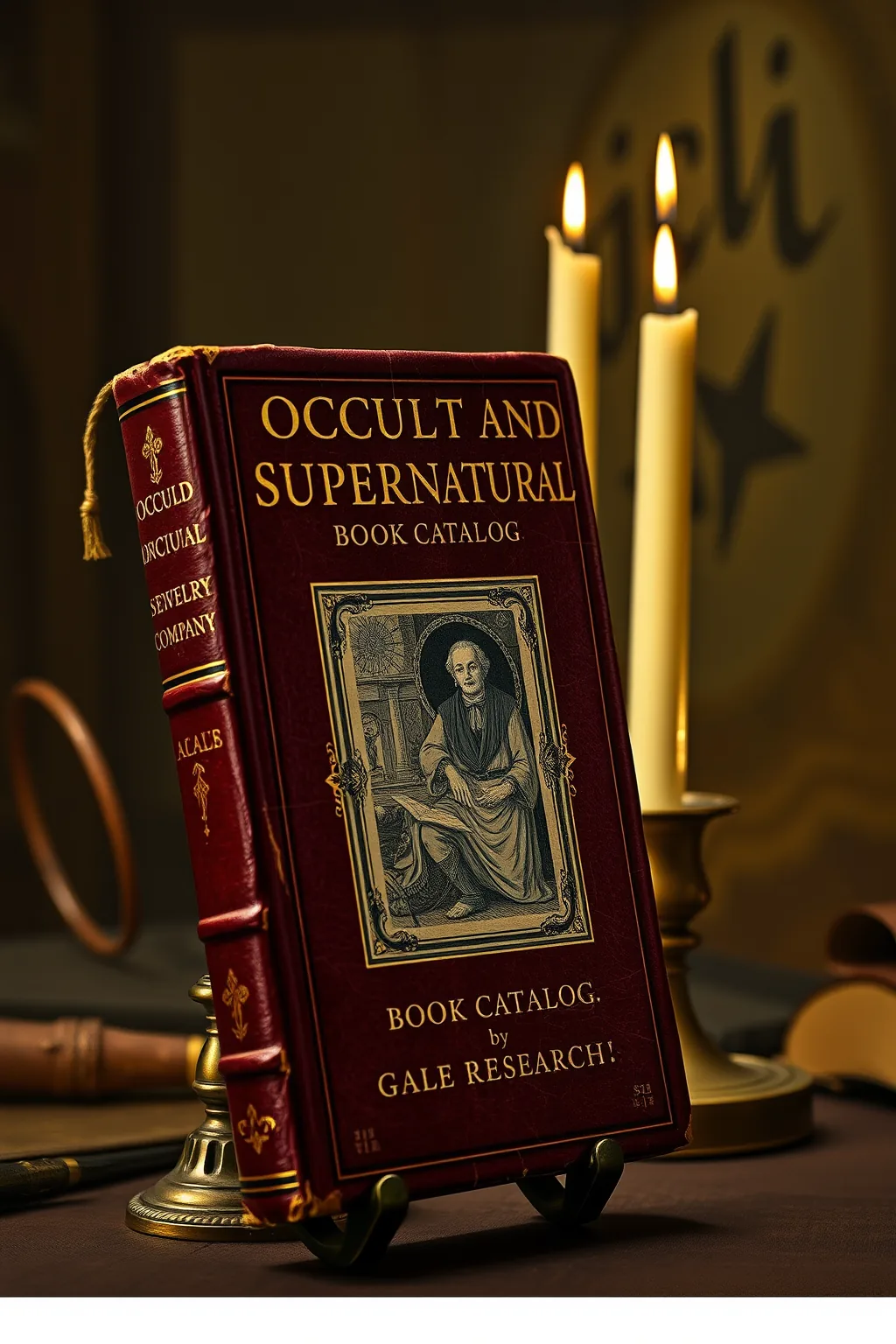
Occult and supernatural book catalog - Gale Research Company:
 75
75

Occult and supernatural book catalog - Gale Research Company:



The 'Occult Philosophy' section of Gale Research Company's catalog is a must-have for anyone serious about exploring the esoteric. This collection offers a wealth of knowledge, meticulously curated to provide both depth and breadth in the study of the occult. The texts included are not just historical artifacts but living documents that continue to inspire and inform modern esoteric seekers. Each book in the catalog is a gateway to a different facet of the supernatural, from the mystical practices of ancient civilizations to the contemporary interpretations of occult philosophy. The value of this collection lies in its ability to bridge the gap between the past and the present, making it an essential resource for anyone looking to understand the enduring fascination with the occult. The catalog's comprehensive approach ensures that readers can find exactly what they need, whether they are looking for scholarly research or personal spiritual growth.
📝 Description
75
The Gale Research Company's Occult and Supernatural Book Catalog lists thousands of titles.
This catalog compiles a vast array of books concerning the occult and supernatural. It details works on mystical traditions, esoteric philosophies, and arcane symbolism. The entries cover folklore and legends that have captured the interest of truth seekers over many years. The catalog is useful for those studying the philosophical underpinnings of various secret societies and fraternities.
It serves as a reference for individuals interested in hidden wisdom and esoteric lore. The descriptions provide summaries of content, allowing readers to identify texts relevant to their specific areas of inquiry. The scope includes a wide range of subjects within the occult and supernatural, aiming to be a thorough guide for researchers and enthusiasts alike.
This catalog is a product of the late 20th century, a period where interest in esoteric subjects saw renewed academic and popular attention. It reflects a scholarly approach to organizing and documenting the vast literature surrounding occultism, magic, and spiritual traditions that often existed outside mainstream discourse. By categorizing these diverse texts, the catalog makes them accessible to a wider audience, bridging the gap between specialized study and general curiosity about these hidden fields.
💡 Why Read This Book?
Reading the 'Occult Philosophy' section of Gale's catalog today offers a unique opportunity to explore the hidden dimensions of human experience. In an era where information is abundant but often superficial, this collection provides deep, meaningful insights into the esoteric. Whether you are a scholar, a spiritual seeker, or simply curious about the supernatural, this catalog will enrich your understanding and broaden your horizons. It is a chance to connect with ancient wisdom and apply it to modern life, gaining a deeper appreciation for the mysteries that have captivated humanity for centuries.
⭐ Reader Reviews
Honest opinions from readers who have explored this book.
❓ Frequently Asked Questions
What types of books are included in the 'Occult Philosophy' section?
The 'Occult Philosophy' section includes a diverse range of books covering alchemy, astrology, witchcraft, and other esoteric disciplines. It provides both historical and contemporary perspectives on the occult.
Is this catalog suitable for beginners in the occult?
Yes, this catalog is suitable for both beginners and experienced practitioners. It offers a comprehensive overview of occult themes, making it accessible for those new to the subject while also providing depth for more advanced readers.
How can this catalog benefit spiritual seekers?
This catalog can benefit spiritual seekers by providing a wealth of knowledge on various occult and supernatural practices. It offers insights into ancient rituals and mystical practices, helping seekers deepen their spiritual understanding and personal growth.
🔮 Key Themes & Symbolism
Occult Societies
This theme studies the secret societies and fraternities that have shaped the occult landscape. From ancient mysteries to modern lodges, the catalog provides a long history and symbolism of these enigmatic groups.
Folklore and Legends
Folklore and legends are integral to understanding the occult. This theme explores the myths and stories that have been passed down through generations, revealing the hidden truths and symbolism within.
Esoteric Symbolism
Symbolism is the language of the occult. This theme examines the key symbols and their meanings, offering readers a deeper understanding of the esoteric traditions and their significance.
💬 Memorable Quotes
Direct passages from the work, attributed to the author.
“Symbols are the keys to unlocking ancient mysteries.”
— Symbols hold profound meanings and are essential tools for understanding the occult.
💡 Key Ideas
Editorial paraphrase of the work's core concepts — not direct quotes.
The veil between worlds is thin for those who seek.
This line underscores the belief that hidden knowledge is accessible to those who are truly seeking it.
Legends and folklore are the elements of forgotten truths.
This quote highlights the importance of folklore in preserving and transmitting esoteric knowledge.
The path to enlightenment is a journey of discovery and revelation.
This line emphasizes the transformative nature of seeking occult wisdom.
The occult is a range woven with threads of symbolism and mystery.
This quote captures the intricate and complex nature of the occult and its many layers of meaning.
🌙 Esoteric Significance
Tradition
This catalog belongs to the Hermetic tradition, which emphasizes the pursuit of hidden knowledge and the understanding of the divine. It draws from various esoteric traditions, including Gnosticism and Kabbalah, to provide a holistic view of the occult.
Symbolism
Key symbols in this catalog include the pentagram, the ouroboros, and the all-seeing eye, each with profound meanings related to protection, eternity, and divine insight. These symbols are essential for understanding the deeper layers of occult philosophy.
Modern Relevance
Today, this catalog remains relevant for modern practitioners who seek to understand the roots of their traditions. It is used by scholars, spiritual seekers, and occultists to deepen their knowledge and practice.
👥 Who Should Read This Book
This catalog is ideal for a variety of readers. Beginners will find it an invaluable introduction to the world of the occult, with its rich illustrations and comprehensive bibliography. Scholars will appreciate the depth of research and historical context provided. Spiritual seekers will find inspiration and guidance in the exploration of esoteric symbols and folklore. Practitioners will benefit from the detailed insights into various occult societies and their practices.
📜 Historical Context
The 'Occult and Supernatural Book Catalog' was compiled during a time of renewed interest in the occult and supernatural. The late 20th century saw a surge in fascination with esoteric traditions, fueled by the counterculture movements and a growing desire for spiritual exploration. This catalog became an important resource for scholars and practitioners alike, offering a comprehensive overview of the occult landscape. Its influence can still be seen in modern occult studies, providing a foundation for contemporary research and practice.
📔 Journal Prompts
Reflect on a symbol that appeals to you and explore its deeper meaning.
Consider how folklore and legends have shaped your understanding of the occult.
Write about an occult society that intrigues you and why.
Explore the role of hidden knowledge in your spiritual journey.
How have your perceptions of the occult changed after reading this catalog?
🗂️ Glossary
Hermeticism
A philosophical and spiritual tradition based on the teachings attributed to Hermes Trismegistus, emphasizing the pursuit of hidden knowledge.
Gnosticism
An ancient religious movement that emphasized personal spiritual knowledge and the revelation of divine mysteries.
Kabbalah
A mystical tradition within Judaism that focuses on the hidden meanings of the Hebrew scriptures and the nature of the divine.
Pentagram
A five-pointed star often used in occult symbolism to represent protection and the elements.
Ouroboros
A symbol of a serpent or dragon swallowing its own tail, representing eternity and the cyclical nature of life.
This book appears in 4 collections
🔮 Readers Also Liked
Browse all →








From the “Occultism” Collection
View all →





More Free Occult Philosophy Books
View all →