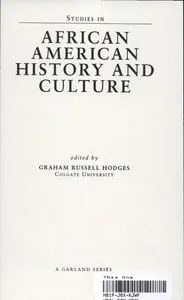
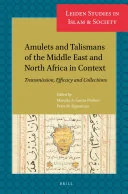
Amulets and Talismans of the Middle East and North Africa in Context
 83
83

Amulets and Talismans of the Middle East and North Africa in Context
The "Unknown" author's "Amulets and Talismans of the Middle East and North Africa in Context" presents a refreshingly interdisciplinary approach, avoiding the common pitfall of treating magical objects as isolated curiosities. Its strength lies in situating the artifacts within their lived environments, examining material, text, and social networks simultaneously. For instance, the detailed analysis of specific inscriptions on a Fatima hand amulet and their contextualization within early Islamic legal debates offers a concrete example of this method. A limitation, however, is the inherent challenge in fully reconstructing the 'activation' processes of objects used by diverse, often non-literate, populations; the author rightly hedges when discussing these aspects. The work's exploration of how similar motifs appear across different religious communities, from Jewish kabbalistic amulets to Islamic protective charms, is particularly illuminating. This is a valuable scholarly contribution for those seeking to understand the practical, social, and symbolic lives of these potent objects.
📝 Description
83
This 2016 volume analyzes the function and integration of amulets and talismans in Middle Eastern and North African belief systems.
Amulets and Talismans of the Middle East and North Africa in Context examines protective and power-imbued objects, going beyond simple descriptions to analyze their place within wider belief systems. The work investigates how these artifacts were manufactured, activated, and integrated into daily life and ritual across diverse communities. It scrutinizes the interplay of textual inscriptions, material properties, and the socio-environmental contexts in which these objects functioned.
The volume is designed for academics, researchers, and serious practitioners interested in the material culture of magic and protection in pre-modern Islamic societies. It will appeal to those who seek an understanding of religious syncretism, folk practices, and the symbolic economy of the region. Students of history, anthropology, religious studies, and art history will find it valuable.
The book situates amulets and talismans within the sociopolitical and intellectual context of the Middle East and North Africa, a region with a history of syncretic religious practices and artisanal traditions. It acknowledges the circulation of these objects among Muslims, Christians, and Jews, and examines their use from the medieval period through to the early modern era. The work engages with scholarship that has often separated religious practice from everyday material culture.
This study addresses the material manifestations of belief, specifically focusing on objects intended for protection and power. It connects the production and use of amulets and talismans to the broader spiritual and social structures of the Middle East and North Africa. By examining inscriptions, materials, and ritual activation, the book illuminates how individuals and communities interacted with these items to mediate their relationship with the unseen and the environment.
💡 Why Read This Book?
• Gain a contextualized understanding of amuletic power, learning how specific materials like lapis lazuli and textual elements from the Quran or Psalms were combined and activated within distinct socio-historical networks, as detailed in the case studies. • Explore the practical application of symbolism by examining how motifs such as the Hand of Fatima and specific geometric patterns functioned across Muslim and non-Muslim communities in pre-modern North Africa and the Middle East. • Appreciate the scholarly methodology that integrates textual analysis, material culture studies, and anthropological insights to reconstruct the complex circulation and use of talismans, moving beyond simplistic interpretations of magic.
⭐ Reader Reviews
Honest opinions from readers who have explored this book.
❓ Frequently Asked Questions
What historical periods does "Amulets and Talismans of the Middle East and North Africa in Context" cover?
The book focuses on pre-modern times, examining the use and manufacture of amulets and talismans from the medieval period through to the early modern era in the specified regions.
Are the amulets discussed only from Islamic traditions?
No, the work explicitly states that the artifacts were produced and used by Muslims and non-Muslims alike, presenting case studies that include diverse religious communities within the Middle East and North Africa.
What is the author's approach to studying these objects?
The author employs an innovative approach by studying text, material features, and environmental contexts alongside each other to understand the manifold functions of amulets and talismans.
Does the book explain how amulets were activated?
Yes, a central theme is the process of activation, explored through the manufacturing, textual inscriptions, and ritual use of these objects within their specific networks and environments.
Who is the intended audience for this book?
The book is intended for academics, researchers, and students of history, anthropology, religious studies, and esoteric traditions interested in the material culture and belief systems of the Middle East and North Africa.
What is the significance of studying amulets and talismans in context?
Studying them in context reveals their multifaceted roles beyond mere superstition, highlighting their integration into social, religious, and economic systems and their significance in pre-modern life.
🔮 Key Themes & Symbolism
Materiality and Inscription
This theme examines the physical composition of amulets and talismans, considering how specific materials like metals, stones, or paper were chosen for their inherent properties and symbolic associations. Coupled with this is the analysis of inscriptions – whether Quranic verses, prayers, geometric patterns, or names of divine entities – and how these texts were believed to imbue the object with protective or beneficial power. The interplay between the tangible form and the inscribed meaning is crucial to understanding the object's function within its cultural milieu.
Activation and Networked Use
The work stresses that amulets and talismans were not inert objects but were 'activated' through specific rituals, prayers, or social processes. This activation was intrinsically linked to the networks in which the objects circulated, involving artisans, patrons, and users. Understanding how these networks facilitated the creation, dissemination, and ongoing use of talismans provides insight into their efficacy and perceived power in pre-modern societies across the Middle East and North Africa.
Syncretism and Cross-Cultural Function
A significant focus is placed on the fact that these artifacts were utilized by diverse religious groups, including Muslims, Christians, and Jews. This highlights a rich tradition of syncretism where symbolic motifs and protective functions transcended strict religious boundaries. The book explores how similar forms or conceptual frameworks for amulets and talismans were adopted and adapted across different faith communities, demonstrating a shared material culture of protection and power.
Contextualizing Efficacy
Rather than treating amulets and talismans as mere superstition, the book contextualizes their perceived efficacy within the broader belief systems and social structures of the time. It investigates the multiple functions these objects fulfilled – from warding off the evil eye and illness to ensuring success in business or love. By examining the environments in which these artifacts circulated, the study offers a nuanced perspective on their importance in pre-modern daily life.
💬 Memorable Quotes
Direct passages from the work, attributed to the author.
“Text, material features and the environments in which these artifacts circulated, are studied alongside each other.”
— This highlights the book's methodological core: a holistic approach that refuses to isolate the study of amulets and talismans from their socio-material reality and the spaces they inhabited.
“Produced and used by Muslims and non-Muslims alike.”
— This statement underscores the book's focus on the syncretic nature of object use, demonstrating that protective symbols and practices often transcended religious divisions in the historical Middle East and North Africa.
“The many different functions these objects could fulfil in pre-modern times.”
— This points to the many-sided nature of amulets and talismans, moving beyond simple 'protection' to encompass a wide range of social, economic, and personal needs addressed by these artifacts.
“Amulets and talismans are studied within a broader system of meaning.”
— This emphasizes that the book treats these objects not as isolated magical items but as integral components of complex belief systems, requiring an understanding of their cultural and religious significance.
“How they were manufactured, activated and used in different networks.”
— This expresses the key analytical dimensions the book explores: the physical creation, the ritual or social imbuation of power, and the social mechanisms governing their circulation and application.
🌙 Esoteric Significance
Tradition
While not strictly adhering to a single esoteric lineage like Hermeticism or Kabbalah, this work engages deeply with practices that fall under the broad umbrella of folk magic and esoteric traditions within Islam and its neighboring cultures. It explores the practical application of cosmological beliefs and divine power, often drawing on concepts found in Islamic mysticism (Sufism) and earlier traditions that influenced the region. The departure from purely theoretical esotericism lies in its focus on the tangible, everyday use of these objects.
Symbolism
Key symbols explored include the Hand of Fatima (Hamsa), a protective motif widely recognized across the Middle East and North Africa, believed to ward off the evil eye. Geometric patterns, often incorporating divine names or sacred numbers, are analyzed for their role in creating sacred space or channeling specific energies. The use of specific Quranic verses or prayers as inscribed elements is also central, highlighting the Islamic tradition's emphasis on the power of the divine word.
Modern Relevance
Contemporary practitioners of various esoteric paths, including modern Islamic occultism, neo-pagan traditions incorporating Middle Eastern motifs, and scholars of material religion, draw upon the insights presented. The book's emphasis on the social and material context of magical objects informs modern approaches to understanding the efficacy and cultural embeddedness of talismans, amulets, and other ritual paraphernalia used today.
👥 Who Should Read This Book
• Researchers in Islamic studies and Middle Eastern history seeking to understand the practical application of religious beliefs through material culture. • Students of anthropology and religious studies interested in comparative magical practices and the role of amulets in society. • Practitioners of esoteric traditions who wish to deepen their understanding of the historical context and symbolic significance of objects used for protection and power.
📜 Historical Context
The study emerges from scholarship engaging with the material culture of the Middle East and North Africa, a region where religious practices have historically been deeply intertwined with everyday life and artisanal traditions. Published in 2022, it implicitly responds to earlier scholarship that may have compartmentalized religious belief from practical artifact use. It acknowledges the long-standing presence and significance of amulets and talismans across diverse communities, from the medieval Islamic period onwards. The work implicitly engages with the intellectual currents surrounding religious syncretism, particularly relevant in areas with significant Jewish, Christian, and Muslim populations. While specific reception events for this particular unknown author's work are not detailed, its approach aligns with a broader academic trend toward understanding the lived realities of religious practice through material evidence.
📔 Journal Prompts
The interplay between text and material features in amuletic activation.
Analysis of the socio-environmental context for talismanic efficacy.
Investigating the cross-cultural use of specific symbols like the Hand of Fatima.
Reconstructing the 'activation' process for a chosen artifact.
The network of production and consumption for pre-modern amulets.
🗂️ Glossary
Amulet
An object believed to offer protection against harm, danger, or disease, often worn on the body or carried.
Talisman
An object inscribed with symbols or words believed to possess magical properties, often to attract good fortune or exert influence.
Activation
The process by which an amulet or talisman is ritually or socially empowered to fulfill its intended function.
Evil Eye
A malevolent glare believed to cause misfortune or injury, against which amulets and talismans are often employed.
Material Culture
The physical objects, resources, and spaces that people use to define their culture and social practices.
Syncretism
The blending of beliefs and practices from different religions or cultures.
Network
In this context, the social and economic systems through which amulets and talismans were produced, distributed, and used.
This book appears in 1 collection
🔮 Readers Also Liked
Browse all →








From the “Talismans” Collection
View all →




More Free Esoteric History & Biography Books
View all →