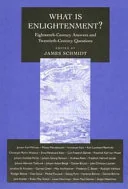
What Is Enlightenment?
 83
83

What Is Enlightenment?
James Schmidt’s curation of these 18th-century German essays on Enlightenment offers a vital, if sometimes dense, primer on a pivotal intellectual movement. The strength lies in its direct access to primary sources that defined the *Aufklärung* debate. Schmidt’s scholarly introduction, while brief, effectively contextualizes the essays, highlighting their engagement with figures like Immanuel Kant. A notable limitation, however, is the inherent difficulty of the source material itself; these are not light philosophical meditations but rigorous intellectual arguments from a specific historical context. The essays collectively probe the very definition of *Aufklärung*, questioning its scope and limits. One particularly striking passage, though paraphrased here, concerns the distinction between *erleuchten* (to enlighten) and *Aufklärung* (the Enlightenment), emphasizing the active, ongoing nature of self-emancipation rather than a static state. This collection is an indispensable, albeit challenging, resource for understanding the intellectual origins of modernity.
📝 Description
83
James Schmidt's 2015 collection gathers essays from the 1780s that debated the meaning of Enlightenment.
This volume collects essays from the 1780s that directly confronted the question of what "Enlightenment" meant. Rather than simply recount history, it shows the intellectual energy of the period. Thinkers of the time debated their own project of reason and progress. This collection is important for understanding the start of a discussion that still affects how we think today.
This book is not for those wanting easy answers. It is for students of intellectual history and anyone interested in the philosophical basis of modern times. Readers who like careful study of historical ideas and how they changed will find much here. It appeals to those wanting to know the origins of current Western thought. The essays are placed within the German Enlightenment, the *Aufklärung*. This time saw deep philosophical questions, scientific progress, and a growing public discussion. The authors engaged with common ideas about reason, faith, and changing society. They questioned old norms and proposed new ways to understand human knowledge and freedom.
While the essays originate from the heart of the 18th-century *Aufklärung*, they touch upon themes relevant to esoteric philosophy. The debate over "enlightening oneself" (*sich erleuchten*) and achieving "self-directed understanding" goes beyond purely rationalist interpretations. It hints at inner transformation and the development of a critical consciousness that is not solely dependent on external authority or societal norms. The questioning of tradition and the emphasis on individual autonomy resonate with the broader esoteric quest for direct experience and personal gnosis, moving beyond received doctrines.
💡 Why Read This Book?
• Gain a precise understanding of the 18th-century German *Aufklärung* debate, moving beyond popularized notions of the Enlightenment by examining its original philosophical discourse. • Explore the concept of *sich erleuchten* (enlightening oneself) as presented by key thinkers, revealing its emphasis on active self-emancipation and critical reasoning. • Appreciate the historical specificity of Enlightenment thought by contrasting it with contemporary interpretations, grounded in essays first published in 1996 but sourced from the 1780s.
⭐ Reader Reviews
Honest opinions from readers who have explored this book.
❓ Frequently Asked Questions
What is the original publication date of the essays collected in 'What Is Enlightenment?'
The essays themselves originate from the late 18th century, specifically the 1780s. The first English translations, compiled in this collection by James Schmidt, were first published on September 8, 1996.
Who were the key philosophers involved in the Enlightenment debate discussed in the book?
While the book features essays from various thinkers of the *Aufklärung*, it directly engages with the intellectual milieu shaped by figures like Immanuel Kant, whose essay on "What Is Enlightenment?" is a central point of reference.
What does 'Aufklärung' mean in the context of these essays?
'Aufklärung' is the German term for Enlightenment. The essays explore its meaning beyond simple progress, focusing on reason, autonomy, and the process of liberating oneself from tutelage.
Are these essays difficult to read for a general audience?
The essays are philosophical arguments from the 18th century and can be intellectually demanding. They require careful reading but offer profound insights into the era's intellectual currents.
What is the primary focus of the essays translated in this volume?
The central focus is defining and understanding the concept of 'Enlightenment' itself, as debated by German thinkers in the late 18th century, exploring its origins, significance, and implications.
Does this book discuss the Enlightenment's impact on modern society?
Yes, the collection explicitly examines the significance of the 18th-century debate on Enlightenment for the present day, prompting readers to consider its enduring legacy.
🔮 Key Themes & Symbolism
The Nature of Autonomy
The essays critically examine the concept of intellectual and moral autonomy, a core part of Enlightenment thought. They dissect the idea of *sich erleuchten* – enlightening oneself – as an active process of overcoming self-imposed immaturity. This involves shedding reliance on external authorities, be they religious, political, or intellectual, and embracing the courage to use one's own understanding. The work questions the conditions necessary for this self-governance and the societal structures that enable or hinder it, placing individual reason at the forefront of human progress and personal liberation.
Reason and Critique
Central to the discussion is the role of reason as the primary tool for understanding the world and challenging established norms. The essays advocate for a critical engagement with tradition, dogma, and unexamined beliefs. They explore how public and private use of reason differs and why the freedom to question is paramount for societal advancement. This theme underscores the Enlightenment's commitment to empirical observation and logical analysis over blind faith or tradition, laying the groundwork for modern scientific and philosophical inquiry.
Historical Significance of Aufklärung
The collection positions the 18th-century German Enlightenment (*Aufklärung*) not just as a historical period but as a dynamic intellectual project with wide implications for subsequent eras. It explores how contemporary thinkers understood their own 'enlightened' status and debated its potential and limitations. The essays consider whether Enlightenment was a singular event or an ongoing process, a question that remains relevant for understanding modernity's self-perception and its relationship with its own intellectual heritage.
The Public Sphere and Education
The essays touch upon the importance of the public sphere for the dissemination of knowledge and the practice of critical thought. They implicitly or explicitly discuss the role of education and accessible discourse in fostering an enlightened populace. The ability for individuals to engage in public debate and share their reasoned opinions is presented as crucial for collective progress. This theme highlights the Enlightenment's broader social and political aspirations beyond purely philosophical concerns.
💬 Memorable Quotes
Direct passages from the work, attributed to the author.
“Sapere aude! Have courage to use your own understanding!”
— This Latin maxim, *Sapere aude*, is a call to intellectual bravery. It represents the Enlightenment's imperative for individuals to think for themselves, challenging the fear that often keeps people reliant on others for guidance.
“A public use of one's reason must always be permitted.”
— This highlights the crucial distinction between private judgment and public discourse. It argues for the freedom to employ reason openly in one's role as a scholar or in public forums, essential for societal progress.
“The age of enlightenment is the 18th century, the century of Frederick.”
— This statement contextualizes the Enlightenment within a specific historical period and, in some interpretations, links it to rulers who fostered or tolerated intellectual freedom. It frames the era as distinct and significant.
“What is Enlightenment? It is man's exit from his minority.”
— Similar to the 'tutelage' quote, this emphasizes a transition from a state of dependence or immaturity to one of self-sufficiency and critical engagement with the world.
💡 Key Ideas
Editorial paraphrase of the work's core concepts — not direct quotes.
Enlightenment is man's emergence from his self-imposed tutelage.
This iconic paraphrase captures the essence of the Enlightenment as a liberation from intellectual dependence. It emphasizes the individual's agency in overcoming a state of immaturity not due to lack of intellect, but lack of resolve to use it.
🌙 Esoteric Significance
Tradition
While the essays are primarily philosophical and historical, they touch upon themes that resonate with esoteric traditions focused on self-knowledge and liberation. The emphasis on overcoming 'self-imposed tutelage' and achieving 'enlightenment' through one's own reason echoes Gnostic and Hermetic ideals of gnosis and inner awakening. The *Aufklärung*'s focus on reason and critique can be seen as a secularized form of seeking higher truth, departing from traditional mystical reliance on revelation but retaining the core aspiration for illumination and autonomy.
Symbolism
The primary 'symbol' explored is Enlightenment itself, often represented as light dispelling darkness – a universal motif across many traditions signifying knowledge, truth, and liberation. The concept of 'tutelage' can be seen as a symbol for ignorance or adherence to dogma, from which the enlightened individual breaks free. The 'courage to use one's own understanding' (*Sapere aude*) functions as a symbolic imperative, a call to action for the seeker of truth and self-mastery.
Modern Relevance
Contemporary movements emphasizing critical thinking, personal empowerment, and secular ethics draw heavily on the Enlightenment legacy. Thinkers in existentialism and humanism often echo the *Aufklärung*'s focus on individual responsibility and autonomy. Furthermore, discussions on media literacy, the challenge of misinformation, and the importance of independent thought in the digital age are direct continuations of the debates initiated by these 18th-century essays.
👥 Who Should Read This Book
• Students of Western philosophy and intellectual history seeking to understand the origins of modernity and the concept of the Enlightenment from primary sources. • Scholars interested in the *Aufklärung* period and its key figures, particularly Immanuel Kant and Moses Mendelssohn, to grasp the nuances of their debates. • Individuals drawn to questions of autonomy, reason, and self-emancipation who wish to explore these themes within their historical and philosophical context.
📜 Historical Context
The essays collected here emerge from the fertile intellectual ground of the late 18th-century German *Aufklärung*. This was a period dominated by figures like Immanuel Kant, whose 1784 essay directly posed the question 'What is Enlightenment?' and defined it as 'man's emergence from his self-imposed tutelage.' Other contemporary thinkers, including Moses Mendelssohn, engaged vigorously in this debate, exploring the nature of reason, autonomy, and the public sphere. The *Aufklärung* championed critical inquiry and individual liberty against the entrenched authority of church and state, though it also saw debates about its limits and potential dangers. While not facing widespread censorship at this specific moment, the broader intellectual climate was one of intense philosophical exploration and reformist zeal. This work captures that key discourse, showing how thinkers grappled with the very definition of their era's defining intellectual project.
📔 Journal Prompts
The concept of 'self-imposed tutelage' and its relevance today.
Reflecting on the public versus private use of reason in contemporary discourse.
The courage to 'use your own understanding' (*Sapere aude*) in personal decisions.
Defining 'enlightenment' beyond the 18th-century context.
The role of 'light' as a symbol of knowledge and liberation.
🗂️ Glossary
Aufklärung
The German term for the Enlightenment, a philosophical and intellectual movement in 18th-century Europe that emphasized reason, individualism, and skepticism toward traditional authority.
Sich erleuchten
Literally 'to enlighten oneself'. It refers to the active process of achieving intellectual and moral autonomy, breaking free from dependency on others for understanding.
Tutelage
A state of being under the guidance or control of another, often implying intellectual immaturity or a lack of independent judgment, as described by Kant.
Sapere aude
A Latin phrase meaning 'Dare to know' or 'Dare to be wise'. It was a motto of the Enlightenment, encouraging individuals to use their own reason.
Reason
The capacity for consciously making sense of things, establishing and verifying facts, and applying logic. Central to Enlightenment philosophy as a tool for understanding and progress.
Autonomy
Self-governance; the capacity of a rational individual to make informed, uncoerced decisions. A key ideal of the Enlightenment.
Public Use of Reason
Employing one's reason as a scholar before the reading public, engaging in open critique and discussion, as distinguished from its private use in one's professional or civic role.
This book appears in 1 collection
🔮 Readers Also Liked
Browse all →








From the “Enlightenment” Collection
View all →






More Free Esoteric History & Biography Books
View all →