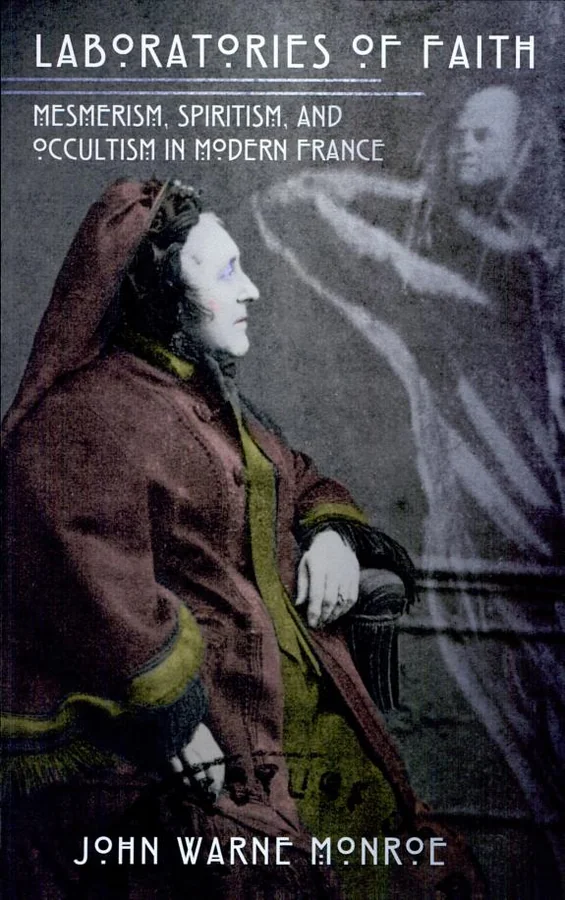
Laboratories of Faith
 79
79

Laboratories of Faith
John Warne Monroe's "Laboratories of Faith" provides a much-needed scholarly account of the intertwined spiritualist and occult revivals in France. The strength of the book lies in its meticulous archival research, effectively demonstrating the cross-pollination between Mesmerism, Spiritism, and occult circles. Monroe avoids sensationalism, instead offering a sober analysis of how these movements functioned as alternative religious systems. A notable limitation, however, is the sometimes dense prose, which can make tracing the interconnectedness of figures like Allan Kardec and figures within the occult revival a demanding task for the casual reader. The section detailing the early reception of Spiritism in Parisian salons, around the turn of the 20th century, is particularly illuminating. Despite its academic rigor, the work ultimately succeeds in painting a vivid picture of a society actively seeking new spiritual anchors. It is a vital contribution to understanding modern esoteric history.
📝 Description
79
John Warne Monroe's 2018 book examines alternative religious movements in France from 1850 to 1920.
John Warne Monroe's "Laboratories of Faith" details alternative religious movements that gained traction in France between roughly 1850 and 1920. The book connects Mesmerism, Spiritism, and Occultism, showing how these currents shaped French spiritual and intellectual life during a period of significant social change and questioning of established norms. Monroe traces Mesmerism's Enlightenment origins, Spiritism's rise after Allan Kardec, and the occult revival influenced by figures like Eliphas Lévi. These movements developed distinct doctrines, rituals, and communities, often addressing shared psychological and social needs. The work situates these spiritual currents against the backdrop of prevailing scientific materialism and institutionalized religion of the era.
This historical examination is for readers interested in how spiritual thought evolved beyond mainstream structures. It highlights the social dynamics that allowed these traditions to grow and become influential. The book focuses on how movements like Mesmerism, with its theories on vital fluid, and Spiritism, focused on communication with the deceased, created their own frameworks and followers. Occultism, drawing on magic and hidden knowledge, also carved out its space within this dynamic intellectual environment.
This book situates the French spiritual milieu of the late 19th and early 20th centuries as a fertile ground for esoteric development. It examines how movements like Mesmerism, Spiritism, and Occultism, often drawing on earlier traditions or responding to contemporary scientific and philosophical currents, formed distinct communities and belief systems. These were not isolated phenomena but interconnected responses to societal shifts and a general desire for spiritual meaning outside established religious and scientific orthodoxies. The work highlights the specific historical conditions in France that allowed these diverse forms of spiritual practice to flourish and influence cultural life.
💡 Why Read This Book?
• Understand the specific social and intellectual milieu of late 19th-century France that gave rise to movements like Spiritism, learning how Allan Kardec's codification provided a framework for spiritual communication. • Discover the intricate connections and influences between Mesmerism, Spiritism, and occult societies, recognizing how figures moved between these circles and adapted their ideas. • Gain insight into the practical organization and doctrinal development of these alternative religious practices, appreciating their function as distinct communities and belief systems.
⭐ Reader Reviews
Honest opinions from readers who have explored this book.
❓ Frequently Asked Questions
What were the main differences between Mesmerism, Spiritism, and Occultism in 19th-century France?
Mesmerism focused on "animal magnetism" and healing; Spiritism, codified by Allan Kardec, centered on communication with spirits; Occultism encompassed a broader range of esoteric practices, including magic and Hermeticism, often drawing on older traditions.
When was "Laboratories of Faith" first published?
The book was first published in 2008, providing a contemporary scholarly perspective on historical movements.
Does the book discuss specific figures involved in these movements?
Yes, the work explores the activities and influence of key figures such as Franz Mesmer (though his era predates the main focus), Allan Kardec, and various proponents of occult doctrines prevalent in late 19th-century Paris.
What historical period does "Laboratories of Faith" primarily cover?
The book focuses on the second half of the nineteenth century and the beginning of the twentieth century, a period of significant spiritual and intellectual ferment in France.
What is the significance of France as a setting for these movements?
France, particularly Paris, was a central hub for the development and dissemination of these alternative spiritual and occult practices during the late 19th and early 20th centuries, attracting widespread interest.
How does Monroe connect these different movements?
Monroe illustrates the interconnectedness by showing how individuals participated in multiple movements, how ideas were exchanged and adapted, and how these practices addressed similar societal needs for meaning and community.
🔮 Key Themes & Symbolism
Spiritism's Rise
The book details the emergence and popularization of Spiritism in France, largely through the work of Allan Kardec. It examines how Spiritism offered a structured framework for communicating with the deceased and understanding spiritual life, becoming a significant alternative religious system for many seeking solace and meaning beyond traditional doctrines during the mid-to-late 19th century.
Mesmeric Healing
Monroe traces the legacy of Mesmerism, exploring its evolution from Enlightenment theories of "animal magnetism" into practices aimed at healing and spiritual exploration. The work highlights how early Mesmerists laid groundwork for later interest in altered states of consciousness and the manipulation of unseen forces, influencing subsequent esoteric currents.
Occult Revival
The study examines the broader occult revival of the late 19th and early 20th centuries, which encompassed diverse interests like magic, alchemy, and theosophy. It shows how figures within these circles often engaged with or reacted against the more structured doctrines of Spiritism and the therapeutic claims of Mesmerism, creating a complex intellectual landscape.
Interconnected Movements
A central theme is the overlap and interaction between these distinct movements. Monroe demonstrates that the boundaries were fluid, with individuals often participating in or drawing from multiple traditions. This interconnectedness reveals a dynamic spiritual marketplace where seekers could explore various paths to understanding the unseen world.
💬 Memorable Quotes
Direct passages from the work, attributed to the author.
“The work explores how Mesmerism, Spiritism, and Occultism provided frameworks for understanding the unseen.”
— This highlights the book's core argument: these movements, though different, offered structured ways for people to engage with phenomena and beliefs that lay outside conventional scientific or religious understanding.
“Allan Kardec's codification of Spiritist doctrine attracted a broad following.”
— This points to the organizational and doctrinal clarity Kardec brought to Spiritism, making it accessible and appealing to a wide audience seeking a coherent spiritual philosophy in the mid-19th century.
“The period witnessed a significant questioning of established scientific and religious paradigms.”
— This interpretation underscores the historical context, suggesting that the rise of these alternative movements was a response to societal shifts and a growing dissatisfaction with existing explanations for life and consciousness.
“Figures involved in these currents often moved between different esoteric circles.”
— This emphasizes the interconnectedness of the movements, illustrating that practitioners and thinkers were not confined to a single tradition but often drew inspiration and participated across Mesmerism, Spiritism, and various occult disciplines.
“The book analyzes the social and psychological needs met by these alternative spiritual practices.”
— This interpretation focuses on the function of these movements, suggesting they fulfilled a vital role in providing community, meaning, and a sense of agency for individuals in a rapidly changing world.
🌙 Esoteric Significance
Tradition
This work fits within the broader study of Western Esotericism, specifically focusing on the post-Theosophical Society "occult revival" and the popularization of Spiritualism. It departs from purely doctrinal analyses by emphasizing the social history and interconnectedness of these movements, treating them as functional religious systems rather than solely esoteric philosophies.
Symbolism
While not explicitly focused on symbolism, the work implicitly engages with symbols of communication (seances, mediums) as conduits to the spirit world in Spiritism, and the symbol of the "vital fluid" or "animal magnetism" central to Mesmerism. The broader occultism discussed touches on more traditional esoteric symbols, though Monroe's focus is on the social and historical manifestation.
Modern Relevance
Monroe's examination of how alternative spiritualities gain traction and form communities remains highly relevant. Contemporary interest in mediumship, energy healing, and various forms of modern occultism often carries the historical dynamics he describes. Thinkers exploring the sociology of religion and new religious movements frequently cite this period as foundational.
👥 Who Should Read This Book
• Historians of religion and culture interested in non-mainstream spiritual movements in 19th and early 20th century France, gaining an understanding of the social forces that shaped these groups. • Students of esoteric traditions seeking to trace the lineage and development of practices like Spiritism and occultism, appreciating their historical context and interconnections. • Researchers of French intellectual history looking to understand the cultural landscape beyond official philosophical and scientific discourse, identifying alternative belief systems.
📜 Historical Context
The late 19th and early 20th centuries in France were a period of profound intellectual and social transformation. While the Third Republic solidified, it grappled with secularization, scientific positivism championed by figures like Émile Littré, and a lingering spiritual hunger. In this fertile ground, alternative spiritualities thrived. Monroe situates his analysis against this backdrop, noting how Spiritism, codified by Allan Kardec in works like "The Spirits' Book" (1857), offered a compelling alternative to traditional religion and materialistic science. He also examines the lingering influence of Mesmerism, a precursor focused on vital fluids and healing, and the burgeoning interest in broader occult traditions, influenced by figures such as Eliphas Lévi. The reception of these movements was varied; while they gained significant popular traction and attracted notable adherents, they also faced skepticism from the scientific establishment and suspicion from religious authorities. The era saw intellectuals like Gabriel Monod engaging with historical narratives, while spiritualist circles themselves developed complex internal debates and organizational structures.
📔 Journal Prompts
The interconnectedness of Mesmerism, Spiritism, and Occultism: map the overlaps.
Allan Kardec's systematization of Spiritism: assess its impact.
The appeal of "alternative religious practices" in late 19th-century France.
The role of "animal magnetism" in the transition to later spiritualist phenomena.
Analyze the social and psychological needs met by these movements.
🗂️ Glossary
Mesmerism
A theory and practice originating with Franz Mesmer in the late 18th century, involving the concept of a universal "animal magnetism" or vital fluid that could be manipulated for therapeutic purposes, often inducing trance-like states.
Spiritism
A doctrine codified by Allan Kardec in the mid-19th century, based on the belief in the plurality of inhabited worlds and the communication with spirits of deceased humans through mediums.
Occultism
A broad category of esoteric beliefs and practices concerned with hidden knowledge, magic, alchemy, astrology, and other supernatural or mystical phenomena, particularly prominent during the late 19th and early 20th centuries.
Animal Magnetism
The hypothetical fluid or force proposed by Franz Mesmer, believed to permeate all living beings and capable of being channeled by a 'magnetist' for healing or influencing others.
Medium
An individual believed to possess the ability to communicate with spirits of the deceased or other entities, acting as an intermediary between the physical and spiritual realms, particularly central to Spiritism.
Seance
A gathering, typically involving a medium, where participants attempt to communicate with spirits. Seances were a common practice in Spiritist circles.
Theosophy
A spiritual movement founded in the late 19th century by Helena Blavatsky, seeking to synthesize Eastern and Western esoteric traditions and promote universal brotherhood, which influenced broader occult circles.
This book appears in 1 collection
🔮 Readers Also Liked
Browse all →








From the “Mesmerism” Collection
View all →


More Free Esoteric History & Biography Books
View all →