The Kabbala

 62
62

The Kabbala

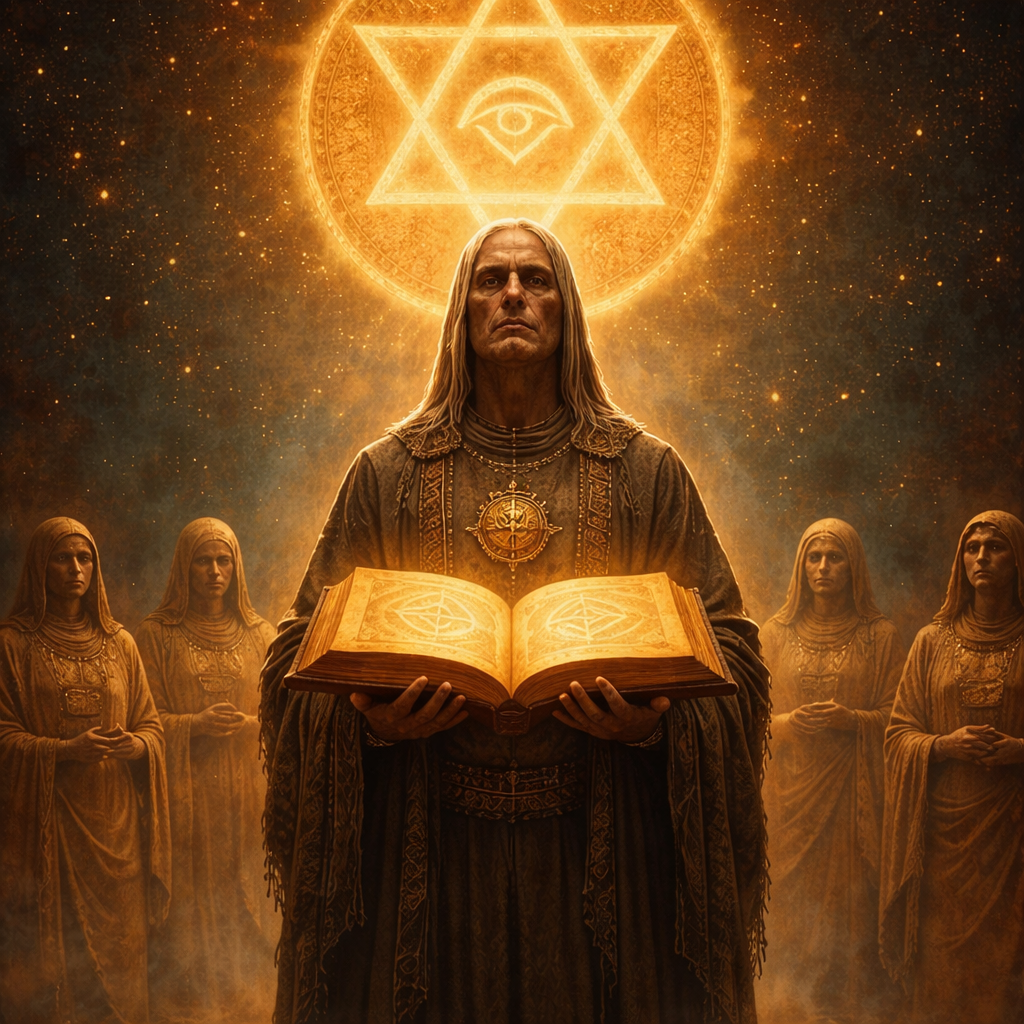

Alaric Kestrel, Metaphysical Studies Reviewer: Erich Bischoff’s 'The Kabbala' stands as a cornerstone for anyone seeking to grasp the intricate architecture of Jewish mystical thought. This work masterfully navigates the spectrum from profound theosophical speculation to the more esoteric, even magically tinged, aspects of Kabbalistic lore. Bischoff's clarity illuminates complex concepts, making the dense teachings accessible without sacrificing their inherent profundity. It’s an authoritative and invaluable resource for students of mysticism, occult philosophy, and comparative religion, offering a comprehensive gateway into one of the world's most enduring spiritual traditions.
📝 Description
62
Erich Bischoff's 'The Kabbala' was published in 1911, detailing Jewish mysticism.
Erich Bischoff's 'The Kabbala,' first published in 1911, examines the esoteric traditions within Judaism. The book traces the development of Kabbalistic thought from early mystical speculations and metaphysical inquiries. It also covers its connections to naturalistic philosophies and magical superstitions. Bischoff aims to reveal a complex system of hidden knowledge. He focuses on divine emanations, cosmic structures, and the symbolic language used to describe existence.
The text invites readers to engage with concepts that describe the unseen forces influencing reality. Bischoff's work is detailed, aiming to provide a thorough account of this mystical tradition. It is intended for those interested in understanding the deeper currents of Jewish esoteric thought.
This book engages with the Kabbalah, a body of esoteric Jewish mysticism. It emerged in the medieval period and draws on earlier mystical traditions. The Kabbalah seeks to understand the divine nature, creation, and humanity's place within the cosmos through symbolic interpretation of religious texts, particularly the Torah. Bischoff's work situates itself within this lineage, detailing its concepts and historical development.
💡 Why Read This Book?
This book is essential for unlocking the foundational principles of Jewish mysticism, revealing the intricate interplay between the divine and the mundane. It's perfect for seekers of hidden wisdom, scholars of esoteric traditions, and practitioners looking to deepen their understanding of cosmic order and spiritual ascent. Bischoff provides a clear, yet profound, exploration of Kabbalistic doctrines.
⭐ Reader Reviews
Honest opinions from readers who have explored this book.
❓ Frequently Asked Questions
What is the central aim of Kabbalistic study?
The central aim is to understand the nature of God, creation, and the universe through divine emanations and hidden symbolism, seeking spiritual union and enlightenment.
How does Bischoff approach the blend of philosophy and mysticism?
Bischoff adeptly weaves together the philosophical underpinnings of Kabbalah with its more mystical and speculative dimensions, presenting a holistic view of its doctrines.
Is prior knowledge of Judaism required to understand this book?
While some familiarity can be beneficial, Bischoff's clear exposition makes 'The Kabbala' accessible to dedicated readers new to Jewish mystical traditions.
What are the Sephirot?
The Sephirot are the ten divine emanations or attributes of God, forming the Tree of Life, a central symbolic diagram in Kabbalah representing the path of creation.
Does this book cover practical Kabbalistic applications?
While primarily focused on theoretical doctrines and speculative thought, the understanding gained from this book can inform practical contemplative practices and spiritual growth.
🔮 Key Themes & Symbolism
The Divine Emanations (Sephirot)
Central to Kabbalistic thought are the Sephirot, the ten divine attributes or emanations that bridge the infinite Godhead with the finite universe. Bischoff meticulously details their significance, illustrating how they form the Tree of Life, a cosmic map of creation and spiritual ascent. Understanding the Sephirot is key to comprehending the Kabbalistic view of God's relationship with the world, the flow of divine energy, and the potential for human connection to the sacred.
Cosmic Architecture and Creation
This work studies the Kabbalistic understanding of the universe as a divinely ordered structure, born from the interplay of primordial forces and divine will. Bischoff explores theories of creation, the nature of the celestial realms, and the interconnectedness of all existence. It reveals how the mystical doctrines offer a framework for understanding the underlying patterns and purposes behind the manifest world, inviting readers to perceive the divine imprint on reality.
The Nature of the Soul and Spiritual Ascent
Bischoff illuminates the Kabbalistic perspective on the human soul, its origins, its journey through various spiritual planes, and its ultimate destiny. The book explores concepts of reincarnation, the rectification of the soul, and the practices intended to foster spiritual growth and a deeper connection with the divine. It presents Kabbalah not just as a theoretical system but as a path for personal transformation and the realization of one's highest potential.
💬 Memorable Quotes
Direct passages from the work, attributed to the author.
“The Kabbala reveals the hidden secrets of God's creation.”
— This highlights the core purpose of Kabbalistic study: to uncover the divine blueprints and underlying truths behind the manifest world.
“Through its symbolism, the universe speaks to the initiated soul.”
— This emphasizes the rich symbolic language of Kabbalah and its capacity to communicate profound spiritual insights to those who can perceive them.
“The Sephirot are the steps by which the divine descends and man ascends.”
— This succinctly explains the dual function of the Sephirot as channels of divine energy and pathways for human spiritual progress towards the divine.
“Mystical doctrines mirror the celestial order.”
— This suggests a fundamental correspondence between the esoteric teachings of Kabbalah and the underlying structure and workings of the cosmos.
“Even in superstition, traces of divine truth may be found.”
— This acknowledges the broader spectrum of Kabbalistic expression, hinting at the possibility of discerning deeper spiritual resonances even within seemingly less orthodox elements.
🌙 Esoteric Significance
Tradition
This work is deeply rooted in the Jewish mystical tradition known as Kabbalah. It explores its theosophical, cosmological, and mystical dimensions, seeking to unveil the divine nature, the structure of reality, and the path to spiritual communion. Bischoff presents Kabbalah not merely as a historical or religious phenomenon, but as a profound esoteric system for understanding the universe and humanity's place within it.
Symbolism
Kabbalah is inherently symbolic, and Bischoff's text studies its body of signs and metaphors. Key symbols include the Sephirot (divine emanations), the Tree of Life (a cosmic diagram), Hebrew letters (as carriers of divine energy), and various mystical visions and narratives. Understanding these symbols is crucial for unlocking the deeper meanings and spiritual insights embedded within Kabbalistic teachings.
Modern Relevance
Despite its historical roots, Kabbalah continues to resonate profoundly in the modern era. Its exploration of consciousness, the nature of reality, the interconnectedness of all things, and the quest for spiritual meaning offers timeless wisdom. Bischoff's 'The Kabbala' provides a foundational understanding for contemporary seekers, philosophers, psychologists, and spiritual practitioners interested in these perennial questions and the clear insights offered by this ancient tradition.
👥 Who Should Read This Book
This book is a treasure for the dedicated seeker of esoteric knowledge, offering a comprehensive introduction to the intricate world of Jewish mysticism. Scholars of comparative religion and occult philosophy will find it an invaluable reference. Practitioners of contemplative arts and spiritual disciplines will discover new layers of understanding for their practices. While accessible to newcomers, its depth rewards earnest study, making it suitable for those ready to start a profound intellectual and spiritual journey into Kabbalistic thought.
📜 Historical Context
Erich Bischoff's 'The Kabbala' emerges from a rich tradition of scholarship and esoteric exploration that flourished particularly in the late 19th and early 20th centuries, a period marked by a resurgence of interest in mysticism and occultism across Europe. This era saw a concerted effort to compile, translate, and interpret ancient esoteric texts, making them accessible to a wider audience. Bischoff's work contributes to this movement by offering a systematic overview of Kabbalistic doctrines, drawing from a range of historical sources. The book reflects the prevailing academic and spiritual curiosity of the time, seeking to understand the philosophical and metaphysical underpinnings of Jewish mysticism in relation to other spiritual and philosophical systems.
📔 Journal Prompts
Reflect on the concept of divine emanations and how they might manifest in your own life.
Consider the Tree of Life as a map of consciousness. Where do you see yourself positioned on this map?
How does the symbolic language of Kabbalah speak to your inner understanding of the universe?
Explore the idea of spiritual ascent. What steps do you believe are essential for your own journey?
Contemplate the relationship between the material and the spiritual worlds as presented in Kabbalistic thought. Where do you perceive the divine presence?
🗂️ Glossary
Kabbalah
An esoteric tradition within Judaism that seeks to understand the nature of God, the universe, and the human soul through mystical interpretation and symbolism.
Sephirot
The ten divine emanations or attributes of God, forming the central structure of the Kabbalistic Tree of Life, representing the stages of creation and divine revelation.
Tree of Life
A symbolic diagram in Kabbalah composed of ten interconnected Sephirot, representing the pathways of divine energy, the structure of the cosmos, and the human soul.
Ein Sof
The Kabbalistic concept of the 'Infinite' or 'Without End,' representing God in His absolute, unknowable transcendence before any manifestation or emanation.
Gematria
A system of Jewish numerology that assigns numerical values to Hebrew letters, used to interpret biblical texts and uncover hidden connections and meanings.
This book appears in 1 collection
🔮 Readers Also Liked
Browse all →








More by Erich Bischoff
All books →



From the “Kabbalah” Collection
View all →









More Free Kabbalah & Jewish Mysticism Books
View all →