Strange and Secret Peoples
 72
72

Strange and Secret Peoples
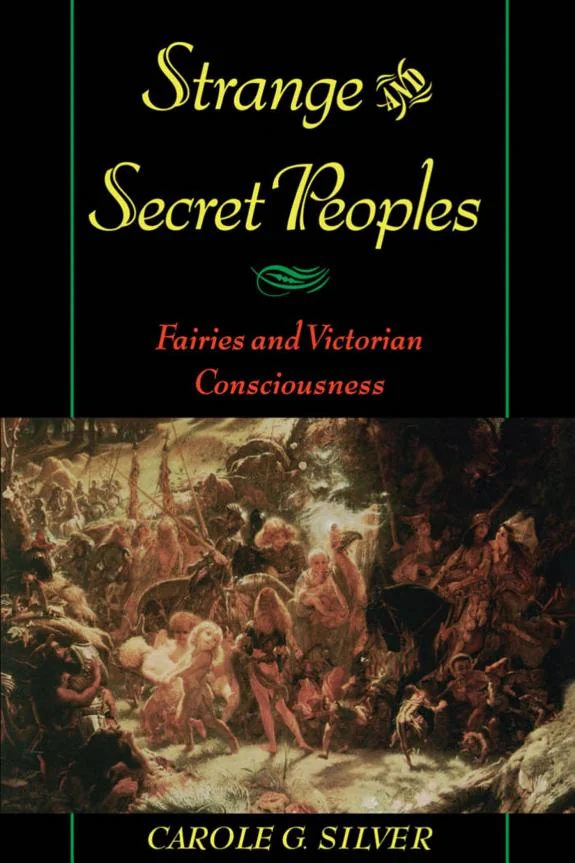
Carole G. Silver's "Strange and Secret Peoples" offers a compelling examination of how the fin-de-siècle imagination grappled with the idea of hidden human populations. The book excels in its detailed reconstruction of the intellectual and cultural currents that fueled this obsession, drawing connections between scientific discourse, popular literature, and occult speculation. Silver's analysis of the 1890s fascination with the "sub-human" and "super-human" is particularly acute, revealing how these categories served to reinforce prevailing social hierarchies. A notable strength is the book's engagement with the pseudoscientific underpinnings of these ideas, demonstrating their surprisingly pervasive influence. However, the work occasionally suffers from a dense prose style that can obscure the narrative flow. One particularly illuminating passage details the cultural reception of early anthropological studies that were readily co-opted to support pre-existing notions of racial and evolutionary hierarchy. "Strange and Secret Peoples" is an essential, if demanding, study for understanding a peculiar facet of modern Western thought.
📝 Description
72
Carole G. Silver's 2003 book examines the late 19th and early 20th century's obsession with hidden human populations.
Carole G. Silver's "Strange and Secret Peoples" analyzes the late 19th and early 20th centuries' widespread fascination with hidden human populations. This period saw scientific, pseudoscientific, and literary circles converge on ideas of the sub-human and super-human. Silver's work traces how these concepts were formed and spread.
The book places its study within the intellectual climate of the late 1800s and early 1900s. This era was shaped by Darwinian theory, the emerging field of anthropology, and a public interest in spiritualism and the occult. Figures like Arthur Conan Doyle, whose Sherlock Holmes stories touched on hidden abilities and exceptional individuals, and the broader culture that generated such tales, are part of this context.
At the core of Silver's analysis is the idea of "secret peoples." These were not simply overlooked groups but imagined communities with extraordinary or degraded characteristics. The book shows how these views of the "other" helped define what was considered normal humanity, often revealing contemporary worries about class, race, and civilization's future.
This book sits within the study of how esoteric ideas about humanity and hidden worlds took shape during a period of intense scientific and social change. The late 19th and early 20th centuries saw a surge in interest in spiritualism, the occult, and alternative theories of human development. Silver's work investigates how these currents, alongside emerging anthropology and evolutionary science, fueled imaginations about secret races and exceptional individuals, often reflecting deeper societal anxieties.
💡 Why Read This Book?
• Understand the 19th-century obsession with "hidden" human populations, learning how concepts of the "sub-human" and "super-human" were constructed and debated. • Gain insight into the intersection of early anthropology, pseudoscience, and literature during the late Victorian and Edwardian eras, particularly through the lens of figures like Arthur Conan Doyle. • Analyze how societal anxieties about race, class, and evolution in the 1890s manifested in speculative narratives about secret races and exceptional individuals.
⭐ Reader Reviews
Honest opinions from readers who have explored this book.
❓ Frequently Asked Questions
What historical period does Carole G. Silver's "Strange and Secret Peoples" primarily cover?
The book primarily focuses on the late 19th and early 20th centuries, a period marked by significant intellectual and cultural shifts, including Darwinian theory and the rise of anthropology.
What does the term "secret peoples" refer to in the context of the book?
In Silver's work, "secret peoples" denotes imagined communities or groups, often portrayed as possessing extraordinary or degenerate traits, that were central to the popular and scientific discourse of the era.
How does "Strange and Secret Peoples" connect scientific ideas with literature?
The book explores how evolving scientific concepts, such as Darwinism and early anthropology, were reinterpreted and sensationalized in popular literature and occult writings of the time.
Who were some key figures or movements influencing the ideas discussed in the book?
The book touches upon the intellectual climate shaped by Darwinian evolution, the development of anthropology, and the popular imagination, referencing figures whose works engaged with concepts of exceptionalism or degeneracy.
What is the central argument of "Strange and Secret Peoples" regarding these "secret peoples"?
Silver argues that the fascination with "strange and secret peoples" was a mechanism for defining normative humanity and reflecting contemporary societal anxieties about class, race, and the future of civilization.
Is "Strange and Secret Peoples" a work of fiction or non-fiction?
It is a work of non-fiction, specifically academic scholarship, analyzing historical cultural and intellectual phenomena, first published in 1999.
🔮 Key Themes & Symbolism
Victorian Obsession with the 'Other'
This theme examines the late 19th-century fixation on populations perceived as existing outside the mainstream of human evolution or society. Silver examines how concepts of the "sub-human" and "super-human" were not merely speculative but deeply embedded in the era's scientific discourse and popular imagination. The work highlights how these categories served to reinforce existing social stratifications and anxieties regarding progress and degeneration, particularly in light of Darwinian theories. The construction of these "secret peoples" often reflected contemporary fears about class, race, and the perceived threats to civilization, shaping both academic inquiry and fictional narratives.
The Esoteric Underpinnings of Anthropology
The book scrutinizes the permeable boundary between burgeoning scientific anthropology and more speculative, esoteric beliefs of the period. It investigates how early ethnographic studies and theories of human variation were frequently interpreted through a lens colored by spiritualism, occultism, and a desire for hidden knowledge. This section explores the ways in which writers and thinkers of the era sought to uncover "secret" truths about humanity, often imbuing their discoveries with mystical or pseudoscientific significance, thereby blurring the lines between empirical observation and occult interpretation.
Literary Manifestations of Secret Races
"Strange and Secret Peoples" analyzes how the fascination with hidden or exceptional human groups found potent expression in the literature of the late 19th and early 20th centuries. Authors and their works are examined for their role in popularizing concepts of hidden races, degenerate societies, or individuals possessing extraordinary abilities. This theme explores how fictional narratives acted as both a reflection of and a catalyst for public fascination, often drawing on contemporary scientific theories, occult lore, and social anxieties to create compelling, albeit often prejudiced, portrayals of humanity's hidden potential and peril.
Defining Normativity Through Difference
A core argument revolves around the function of "secret peoples" as a foil for defining what was considered normal, civilized, and human. By positing the existence of groups that deviated drastically from the perceived norm—whether through evolutionary advancement or regression—the era's discourse solidified its own boundaries. This theme examines how the study and imagination of the "other" became a crucial tool in the self-definition of Western civilization during a period of rapid change and questioning of established hierarchies.
💬 Memorable Quotes
Direct passages from the work, attributed to the author.
“The nineteenth century's fascination with the super- and sub-human.”
— This phrase captures the book's central focus on a specific historical period's preoccupation with extreme variations of human existence, setting the stage for an exploration of how these ideas were conceptualized and disseminated.
“Recontextualizing a forgotten obsession.”
— Silver aims to bring back into scholarly focus a cultural phenomenon that has largely faded from contemporary awareness, arguing for its significance in understanding the intellectual history of the modern era.
“The legacy of the "secret peoples" concept.”
— This highlights the enduring impact and relevance of the ideas explored in the book, suggesting that the way we understand human difference has roots in these historical obsessions.
“Recovering a legacy too precious to be lost.”
— This suggests that the study of these historical preoccupations offers valuable insights into human nature, societal development, and the evolution of thought, a legacy worth preserving and understanding.
“Worlds of the super- and sub-human.”
— This phrase points to the imaginative and scientific constructions of human beings who were considered either exceptionally advanced or regressed, forming the core subject matter of Silver's analysis.
🌙 Esoteric Significance
Tradition
While not strictly adhering to a single esoteric lineage, "Strange and Secret Peoples" engages with themes that resonate with the esoteric interest in hidden races and evolutionary spirituality common in Theosophy and various occult movements of the late 19th and early 20th centuries. It examines how scientific discourse was often reinterpreted or appropriated to support mystical notions of humanity's past and future, particularly concerning latent abilities and spiritual evolution.
Symbolism
The concept of the "sub-human" can be seen as symbolizing regression or the primal, a descent into base instincts or evolutionary dead ends, reflecting fears of societal decay. Conversely, the "super-human" symbolizes aspiration, evolution beyond current limitations, and the potential for spiritual or intellectual transcendence, often linked to hidden knowledge or superior evolution.
Modern Relevance
Contemporary discussions in transhumanism, evolutionary psychology, and even certain strands of speculative fiction continue to explore the boundaries of human potential and evolution. Silver's work provides historical context for understanding the roots of these modern fascinations, showing how anxieties and aspirations surrounding human nature have been conceptualized across different eras and intellectual paradigms.
👥 Who Should Read This Book
• Students of Victorian and Edwardian cultural history: Gain a deeper understanding of the intellectual currents, anxieties, and literary trends that shaped perceptions of humanity and its place in the world. • Researchers of pseudoscience and the history of anthropology: Analyze the complex relationship between scientific discovery, popular belief, and the construction of racial and evolutionary theories during an important period. • Literary scholars interested in Gothic, speculative fiction, and occult literature: Discover how concepts of the "other" and hidden peoples influenced narrative structures and thematic development in influential works.
📜 Historical Context
Carole G. Silver's "Strange and Secret Peoples" emerged in 1999, examining a phenomenon prevalent in the late 19th and early 20th centuries. This era was a fertile ground for such ideas, heavily influenced by Darwinian evolution and the nascent, often speculative, field of anthropology. The intellectual climate was rife with discussions about human origins, degeneration, and the potential for evolutionary leaps, often intertwined with colonialist ideologies and anxieties about social order. While figures like Sir Arthur Conan Doyle were popularizing tales of exceptional individuals and hidden societies, academic discourse was also grappling with comparative anatomy and ethnography. This period saw a complex interplay between scientific inquiry and popular fascination, where ideas about "hidden" or "other" races were readily absorbed and amplified. Competing with more sober scientific approaches were the pervasive influences of spiritualism and occultism, which provided alternative frameworks for understanding human potential and hidden realities. The reception of such works was generally within academic circles, valuing rigorous historical and cultural analysis.
📔 Journal Prompts
The construction of "super-human" and "sub-human" archetypes in the 1890s.
The influence of Darwinian theory on popular notions of secret races.
Literary portrayals of exceptional individuals versus societal norms.
The intersection of scientific inquiry and occult speculation regarding humanity.
How the concept of "otherness" defines societal progress.
🗂️ Glossary
Sub-human
A concept prevalent in the late 19th and early 20th centuries, referring to beings or groups considered to be below the accepted standard of human evolutionary or intellectual development.
Super-human
A concept referring to beings or groups perceived as having evolved beyond the current human standard, possessing superior physical, intellectual, or spiritual capacities.
Fin-de-siècle
A French term literally meaning "end of the century," used to describe the cultural, artistic, and intellectual climate of the period roughly from the 1880s to 1914, marked by decadence, innovation, and social change.
Anthropology
The scientific study of humanity, concerned with biological and behavioral aspects of people, their origins and development, their classifications, and their cultures.
Pseudoscience
A claim, belief, or practice presented as scientific but which does not adhere to the scientific method. Examples from the era include phrenology and certain interpretations of evolution.
Degeneration Theory
A late 19th-century theory that suggested that human beings were becoming less intelligent and physically weaker, often linked to social issues and perceived racial decline.
Spiritualism
A religious movement believing that the spirits of the dead can be communicated with, often through a medium, popular in the 19th and early 20th centuries.
This book appears in 1 collection
🔮 Readers Also Liked
Browse all →








From the “Fairies” Collection
View all →






More Free Esoteric History & Biography Books
View all →