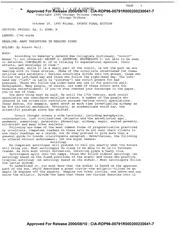
Shapes and Symbols of Sacred Geometry, A Pocket Reference Book
 76
76

Shapes and Symbols of Sacred Geometry, A Pocket Reference Book
Debbie Brewer's "Shapes and Symbols of Sacred Geometry" functions precisely as its subtitle suggests: a pocket reference. Its strength lies in its conciseness, efficiently cataloging a useful array of geometric forms without excessive embellishment. The inclusion of the Enneazetton, for instance, offers a less common but significant pattern for those familiar with more standard texts. However, its brevity also presents a limitation; while it outlines meanings, it rarely ventures into the deeper philosophical or historical debates surrounding each symbol. For example, the discussion on the Platonic Solids is functional but lacks the nuanced exploration found in works by Plato himself or later Neoplatonists. The book serves best as an introductory field guide, a quick lookup for geometric vocabulary, rather than a source for in-depth esoteric exegesis. It is a competent, if unadventurous, primer.
📝 Description
76
Debbie Brewer's 2019 pocket reference book decodes the basic shapes of sacred geometry.
Published in 2019, Shapes and Symbols of Sacred Geometry is a practical guide to the geometric patterns found across cultures and nature. Debbie Brewer details over a dozen constructs, from the common Flower of Life and Metatron's Cube to the Enneazetton and Reuleaux Triangle. Each symbol's construction and its symbolic meanings are explained. The book bridges abstract math with spiritual interpretation, making complex ideas accessible. It acknowledges the historical human interest in these forms, which appear in art, architecture, and philosophy. The reference style aids quick identification of geometric motifs. Readers are encouraged to consider the practical implications of these geometries for understanding universal order and interconnectedness. This makes it a useful companion for meditation, creative pursuits, or studying esoteric traditions.
This book fits within the long tradition of Western esotericism that views geometric forms as keys to understanding cosmic order. Thinkers from Pythagoras to modern New Age practitioners have seen in shapes like the circle, square, and triangle, as well as more complex patterns, a reflection of divine creation and universal laws. These symbols are often used in contemplative practices, ritual, and as a basis for cosmological models. Brewer's work provides a straightforward entry into this visual language, connecting it to ancient philosophical and spiritual inquiries.
💡 Why Read This Book?
• Gain immediate recognition for over a dozen sacred geometric forms, from the familiar Flower of Life to the less common Enneazetton, providing a visual lexicon for cosmic patterns. • Understand the basic interpretations of core symbols like Metatron's Cube and the Vesica Piscis, enabling you to see these forms in art, architecture, and nature with new clarity. • Discover the practical utility of this reference, first published in 2019, as a quick aid for meditation, artistic inspiration, or decoding the geometric underpinnings of various spiritual traditions.
⭐ Reader Reviews
Honest opinions from readers who have explored this book.
❓ Frequently Asked Questions
What is the primary purpose of Debbie Brewer's "Shapes and Symbols of Sacred Geometry"?
The book serves as an accessible, pocket-sized guide for identifying and understanding common sacred geometry patterns, offering quick references to their meanings and construction.
Which specific symbols are covered in this reference book?
It includes widely recognized symbols such as the Flower of Life, Tree of Life, Metatron's Cube, Platonic Solids, and Vesica Piscis, alongside others like the Enneazetton and Reuleaux Triangle.
Who is the intended audience for this book?
The book is designed for beginners and those interested in esoteric studies, art, spirituality, or mathematics who want a handy reference for geometric archetypes.
When was "Shapes and Symbols of Sacred Geometry" first published?
The book was first published on May 31, 2019, making it a contemporary guide to these ancient patterns.
Does the book provide historical context for these geometric symbols?
While primarily a reference, it implicitly connects these symbols to a long history of human fascination and their presence across cultures and spiritual traditions.
Is this book suitable for advanced practitioners of sacred geometry?
It is more of an introductory primer. Advanced practitioners might find it a useful quick reference but may seek more in-depth texts for deeper theoretical exploration.
🔮 Key Themes & Symbolism
Foundational Geometric Forms
The book meticulously catalogues fundamental shapes like the Vesica Piscis, Seed of Life, and Egg of Life, presenting them as building blocks of creation. It explains how these simple geometric relationships manifest in more complex patterns. Brewer highlights their prevalence across diverse spiritual traditions, suggesting a universal blueprint inherent in the cosmos. The emphasis is on visual recognition and basic understanding, serving as an entry point for appreciating the mathematical elegance underlying existence.
Symbolic Meanings and Energetics
Beyond their geometric construction, the book touches upon the symbolic resonance of each form. For instance, the Tree of Life is presented not just as a diagram but as a representation of interconnectedness and divine order. Metatron's Cube is linked to the underlying geometry of creation. The interpretations offered are generally aligned with New Age and esoteric understandings, focusing on the perceived energetic properties and philosophical implications these shapes hold for consciousness and the universe.
The Archetype of the Circle and Sphere
Central to many sacred geometric patterns is the circle, representing unity, wholeness, and the divine. Brewer's reference book implicitly and explicitly draws attention to the circle's role as a generative principle. Forms like the Flower of Life and the Vesica Piscis are born from the intersection of circles. This theme underscores the concept that from a single point or unity (the circle's center), all multiplicity and complexity can arise, a core tenet in many mystical cosmologies.
Geometric Patterns in Nature and Culture
The book points to the ubiquity of these geometric patterns, not just in spiritual texts but in natural phenomena and human-made structures. From the hexagonal cells of a honeycomb to the spiral of a seashell, these forms demonstrate a consistent, underlying order. This connection bridges the abstract field of geometry with the tangible world, suggesting that the study of sacred geometry is, in essence, a study of the fundamental laws governing reality.
💬 Memorable Quotes
Direct passages from the work, attributed to the author.
“The Flower of Life contains all the building blocks of the universe.”
— This interpretation suggests the Flower of Life is not merely a decorative pattern but a fundamental blueprint, encapsulating the generative principles from which all existence arises. It points to a cosmic order accessible through geometric understanding.
“Metatron's Cube is derived from the Fruit of Life and contains the Platonic Solids.”
— This highlights the interconnectedness of various sacred geometric forms. It posits Metatron's Cube as a central symbol, linking simpler patterns to the fundamental three-dimensional shapes that represent the elements.
“The Vesica Piscis represents the union of two becoming one.”
— This interpretation emphasizes the symbolic meaning of this foundational shape, often seen as the intersection of two circles. It speaks to duality, balance, and the creation of a new space or form from complementary forces.
“The Tree of Life symbolizes the path of creation and spiritual ascent.”
— This points to the Kabbalistic Tree of Life as a map of consciousness and manifestation. It suggests a journey, both outwardly in creation and inwardly towards spiritual realization, guided by its structure.
“Platonic Solids are the fundamental shapes of the elements.”
— This interpretation connects the five regular polyhedra to the classical elements (earth, air, fire, water) and the cosmos (ether). It suggests a geometric basis for the material world as understood in ancient philosophy.
🌙 Esoteric Significance
Tradition
This work fits broadly within the Western Esoteric tradition, drawing from Neoplatonic, Hermetic, and Kabbalistic streams that emphasize the mathematical and geometric underpinnings of creation. It presents these symbols as keys to understanding the divine order and the structure of the cosmos. While not strictly adhering to any single tradition, it synthesizes commonly recognized forms and interpretations, serving as an accessible gateway for those exploring these interconnected mystical philosophies.
Symbolism
Central symbols like the Flower of Life and Metatron's Cube are presented as universal archetypes representing the generative principles of the universe. The Vesica Piscis signifies the union of opposites and the creation of form from unity, while the Tree of Life acts as a map of consciousness and divine emanation. These symbols are interpreted not just aesthetically but as energetic constructs that can influence perception and understanding of reality.
Modern Relevance
Contemporary practitioners of mindfulness, meditation, and energy healing often utilize sacred geometry for its perceived ability to promote balance, harmony, and focus. Artists, designers, and architects also draw inspiration from these forms for their aesthetic and symbolic qualities. The work appeals to the modern desire to find underlying order and meaning in a complex world, offering a visual language that connects the material and spiritual realms.
👥 Who Should Read This Book
['• Newcomers to esoteric studies: Those beginning to explore concepts like Hermeticism or Kabbalah will find this book an excellent starting point for understanding fundamental geometric symbols.', '• Artists and designers: Individuals seeking visual inspiration or looking to incorporate meaningful patterns into their creative work can use this as a quick reference for archetypal forms.', '• Spiritual seekers: Anyone interested in the relationship between geometry, consciousness, and the structure of the universe will appreciate the concise explanations of key symbols.']
📜 Historical Context
Published in 2019, Debbie Brewer's "Shapes and Symbols of Sacred Geometry" enters a field with a long and varied history. The study of geometric forms in relation to the divine and the cosmos dates back to ancient Egypt and Greece, notably with Pythagoras and Plato, who posited the Platonic Solids as the fundamental building blocks of reality. This esoteric lineage continued through Hermeticism, Kabbalah, and later movements like Theosophy and the New Age. In the 20th century, authors like Manly P. Hall extensively documented these symbols. Brewer's work arrives in an era where digital tools facilitate the widespread dissemination and popularization of these concepts, often diverging from strict historical or philosophical interpretations found in earlier scholarship. While not directly engaging with academic debates, its accessible format caters to a contemporary audience seeking readily understandable guides to these ancient patterns, a contrast to the more rigorous, text-heavy analyses prevalent among specialized esoteric scholars or philosophers like Iamblichus.
📔 Journal Prompts
The geometric relationship between the Seed of Life and the Flower of Life.
Metatron's Cube as a blueprint for manifestation.
The symbolism of the Vesica Piscis in creation narratives.
Personal resonance with the patterns of the Platonic Solids.
The Tree of Life as a map for personal growth.
🗂️ Glossary
Flower of Life
A geometric pattern formed by overlapping circles, believed to contain the fundamental forms of space and time and all the building blocks of the universe.
Tree of Life
A symbolic representation, often associated with Kabbalah, depicting the interconnectedness of all creation and the path of spiritual ascent.
Metatron's Cube
A complex geometric figure derived from the Fruit of Life pattern, containing all 5 Platonic Solids, seen as a map of creation.
Platonic Solids
Five unique, regular convex polyhedra (tetrahedron, cube, octahedron, dodecahedron, icosahedron) associated with the classical elements and the structure of the cosmos.
Vesica Piscis
The shape formed by the intersection of two circles of the same radius, intersecting in such a way that the circumference of each passes through the center of the other; symbolizes union and creation.
Enneazetton
A lesser-known sacred geometric pattern composed of nine interlocking circles, representing a mandala-like structure with potential energetic properties.
Reuleaux Triangle
A curve of constant width, formed from the intersection of three circular disks whose centers are the vertices of an equilateral triangle; a unique geometric form with practical applications.
This book appears in 1 collection
🔮 Readers Also Liked
Browse all →









From the “Sacred Geometry” Collection
View all →







More Free Sacred Texts & Gnosticism Books
View all →