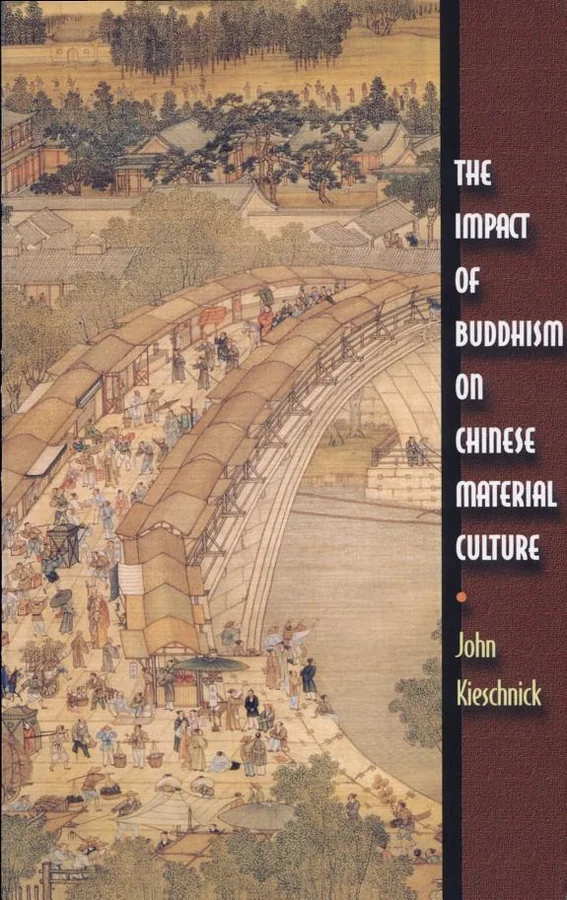
The Impact of Buddhism on Chinese Material Culture
 79
79

The Impact of Buddhism on Chinese Material Culture
John Kieschnick's examination of Buddhism's material impact in China offers a refreshing counterpoint to purely doctrinal studies. His focus on relics, monastic clothing, and prayer beads as vectors of belief and practice is particularly sharp. The assertion that Buddhism introduced new ideas about what objects could *do* is a compelling thesis, shifting the focus from passive consumption to active spiritual engagement with the material world. However, the book could benefit from a more explicit engagement with the *political* implications of these material imports, especially in the early centuries when foreign religions were often viewed with suspicion. The discussion of relics, while informative, sometimes feels like a descriptive inventory rather than a fully analyzed component of power dynamics. Nevertheless, Kieschnick successfully demonstrates that understanding Buddhism in China necessitates a thorough appreciation of its material accoutrements. It's a vital corrective for scholars and enthusiasts alike.
📝 Description
79
John Kieschnick's study begins around the first century CE, examining Buddhism's tangible impact on Chinese material culture.
This book details how Buddhism, upon its arrival in China, brought not only new philosophies and rituals but also a distinct set of objects and associated beliefs. These objects ranged from personal relics, revered as pieces of the Buddha, to communal items like monastic robes and prayer beads. Kieschnick argues that Buddhism changed how the Chinese viewed material culture, imbuing everyday items with spiritual significance and new capabilities. This perspective challenges a purely practical understanding of objects, showing how foreign religious practices reshaped the use and meaning of ordinary things.
The research traces the early centuries of Buddhist influence in China, a time of significant cultural blending and adjustment. It points to specific practices and artifacts that became central to Chinese religious life. The focus is on how these physical elements helped Buddhist doctrines spread and gain acceptance within Chinese society. By analyzing artifacts, architectural styles, and devotional objects, Kieschnick offers a concrete understanding of how religion was transmitted and took root.
While not overtly focused on mystical practices, this work situates Buddhist transmission within a broader historical and cultural context. It examines how a foreign religious system reshaped the tangible world and the perception of objects, moving beyond purely textual or doctrinal analysis. The book highlights the material dimensions of religious adoption, showing how physical artifacts and practices became conduits for spiritual beliefs and community formation, offering a grounded perspective on the integration of esoteric traditions into a new cultural setting.
💡 Why Read This Book?
• Learn how specific Buddhist artifacts, such as relics and monastic clothing, were integrated into Chinese society from the first century CE, altering everyday practices. • Understand the novel concept of objects possessing active spiritual efficacy, a key idea introduced by Buddhism that challenged existing Chinese material culture paradigms. • Gain insight into the tangible transmission of foreign religions by examining how items like prayer beads and reliquaries became central to Chinese devotional life.
⭐ Reader Reviews
Honest opinions from readers who have explored this book.
❓ Frequently Asked Questions
When did Buddhism first enter China according to historical accounts?
Buddhism is generally understood to have entered China around the first century CE, marking the beginning of its profound influence on Chinese culture and material life.
What types of objects did Buddhism introduce to China?
Buddhism introduced a wide array of objects, including sacred relics, prayer beads, monastic clothing, reliquaries, and images, each carrying specific ritualistic and devotional significance.
How did Buddhism change the perception of objects in China?
The religion introduced new ideas about the potential efficacy and spiritual power inherent in objects, moving beyond purely utilitarian or aesthetic functions to view them as active participants in religious practice.
Is this book suitable for beginners interested in Chinese Buddhism?
Yes, the book provides a unique materialist perspective that complements traditional doctrinal studies, making it accessible for those new to the subject but seeking a concrete understanding of Buddhism's impact.
What is the significance of relics in the context of Chinese Buddhism?
Relics, believed to be fragments of the Buddha's physical form, were venerated as potent objects embodying his presence and spiritual power, playing a crucial role in devotional practices and the establishment of Buddhist sites.
Does the book discuss the architecture influenced by Buddhism?
While the primary focus is on smaller objects and concepts, the work implicitly touches upon the material culture that shaped Buddhist architecture and monastic life in China.
🔮 Key Themes & Symbolism
Veneration of Relics
The book details the profound significance of relics, understood as physical remnants of the Buddha, within early Chinese Buddhism. These objects were not merely historical markers but potent focal points for devotion and spiritual connection, embodying the Buddha's presence and power. Kieschnick explores how the cult of relics shaped monastic institutions and pilgrimage practices, demonstrating how a foreign religious tradition imbued tangible fragments with immense sacred value, fundamentally altering Chinese attitudes towards the body and the afterlife.
Monastic Garb and Identity
The study highlights the role of monastic clothing as a material marker of Buddhist identity and practice in China. Beyond mere apparel, these garments signified adherence to a distinct religious order and its associated rules. The introduction of specific styles and the philosophy behind them contributed to the visual and social differentiation of monastics, influencing perceptions of religious authority and community structure within the broader Chinese society.
Prayer Beads as Tools
Kieschnick examines the adoption and adaptation of prayer beads (malas) in China. These objects served as tangible aids for devotional practices, particularly for counting mantras and facilitating meditation. Their introduction provided a concrete mechanism for engaging with Buddhist concepts, transforming abstract spiritual goals into a repeatable, tactile experience. The work illustrates how such implements became integral to the daily lives of practitioners.
New Concepts of Object Efficacy
A central argument is that Buddhism introduced novel understandings of what objects could achieve. This extended beyond their practical use to encompass spiritual potency and transformative capabilities. The book explores how items associated with Buddhist practice were perceived as capable of bestowing merit, protection, or enlightenment, thereby redefining the relationship between humans and the material world in a religious context.
💬 Memorable Quotes
Direct passages from the work, attributed to the author.
“Buddhism brought with it a vast array of objects big and small—relics treasured as parts of the body of the Buddha, prayer beads, and monastic clothing.”
— This statement captures the core thesis: Buddhism's influence was not solely abstract but deeply embedded in tangible items that became central to Chinese religious life and practice.
“new ideas about what objects could do and how they should be treated.”
— This highlights a key analytical point: Buddhism introduced a rethinking in how material possessions were viewed, imbuing them with spiritual agency and specific ritualistic functions.
“From the first century, when Buddhism entered China, the foreign religion shaped Chinese philosophy, beliefs, and ritual.”
— This establishes the historical timeframe and the pervasive nature of Buddhism's impact, setting the stage for examining its material manifestations alongside its intellectual and ritualistic contributions.
“At the same time, Buddhism had a profound effect on the material world of the Chinese.”
— This directly asserts the book's focus, indicating that the study prioritizes the concrete, physical transformations brought about by the religion's introduction, moving beyond textual or philosophical analyses.
“Kieschnick argues that Buddhism introduced a vast array of objects...”
— This signals the author's central argument, emphasizing the sheer volume and diversity of material culture that accompanied the spread of Buddhism into China.
🌙 Esoteric Significance
Tradition
While not strictly Hermetic, Gnostic, or Kabbalistic, this work appeals to esoteric traditions through its focus on the hidden power and significance embedded within mundane objects. Esoteric thought often emphasizes the material world as a symbolic language and a medium for spiritual transformation. Kieschnick’s analysis of how relics and prayer beads functioned as conduits for spiritual energy and belief aligns with esoteric principles of sympathetic magic and the sacredness of matter.
Symbolism
The relics, representing the physical presence and enlightened essence of the Buddha, serve as potent symbols of transcendence and spiritual attainment accessible through material connection. Prayer beads symbolize the cyclical nature of existence and the disciplined path to liberation, each bead a step in a meditative journey. Monastic clothing signifies detachment from worldly concerns and adherence to a higher spiritual order, transforming the wearer into a walking symbol of Buddhist ideals.
Modern Relevance
Contemporary practices in mindfulness, contemplative prayer, and the use of ritual objects in various spiritual paths echo the material engagement explored in this book. Modern esoteric practitioners often seek to imbue their environments and tools with intention and power, a concept directly illuminated by Kieschnick's study of how early Chinese Buddhists transformed everyday items into sacred instruments, demonstrating a timeless principle of material manifestation in spiritual work.
👥 Who Should Read This Book
• Students of comparative religion and East Asian studies seeking to understand the tangible impact of foreign belief systems on a host culture. • Material culture scholars interested in how objects transmit ideas, power, and identity across different societies and historical periods. • Individuals exploring the intersection of spirituality and everyday life, seeking to understand how religious practices become embodied through material objects.
📜 Historical Context
The integration of Buddhism into China, commencing around the 1st century CE, occurred during a period of significant intellectual and cultural flux, following the consolidation of the Han Dynasty. While Confucianism held official sway, Daoism offered a native spiritual alternative, creating a complex landscape for a foreign religion. Buddhism’s arrival introduced novel cosmological views, ascetic practices, and a rich iconographic tradition that gradually permeated Chinese society. This was not a passive acceptance; early engagement involved significant adaptation and syncretism. Scholars like Édouard Chavannes, working in the late 19th and early 20th centuries, laid groundwork in translating Buddhist texts, but Kieschnick's work distinguishes itself by focusing specifically on the *material* evidence of this transmission, moving beyond textual exegesis to analyze the tangible artifacts that embodied and propagated Buddhist ideas.
📔 Journal Prompts
The transformative power of relics as tangible Buddha-body fragments.
How did the introduction of prayer beads alter Chinese devotional practices?
The symbolism embedded within monastic clothing.
New conceptions of object efficacy introduced by Buddhism.
Material culture's role in the first-century CE transmission of Buddhism.
🗂️ Glossary
Relics
Objects believed to be physical remnants of enlightened beings, such as the Buddha, venerated for their sacred power and connection to the spiritual realm.
Prayer Beads (Mala)
A string of beads used by Buddhists (and other traditions) to count mantras, breaths, or repetitions of a name during meditation or devotional practice.
Monastic Clothing
Specific garments worn by Buddhist monks and nuns, often signifying their renunciation of worldly life and adherence to monastic rules and traditions.
Material Culture
The physical objects, resources, and spaces that people use to define their culture and define their beliefs, reflecting their values and practices.
Object Efficacy
The perceived ability of an object to produce a specific effect, particularly in a spiritual or ritualistic context, beyond its utilitarian function.
First Century CE
The period from 1 to 100 CE, historically significant as the approximate time Buddhism began its documented introduction and influence in China.
Veneration
The act of treating a sacred object or person with profound respect, awe, and devotion, often involving ritualistic practices.