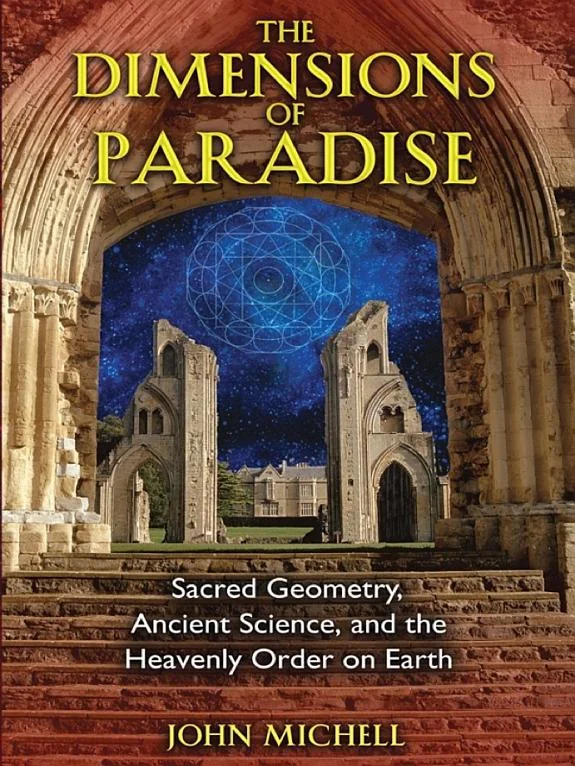
The Dimensions of Paradise
 79
79

The Dimensions of Paradise
John Michell's *The Dimensions of Paradise* attempts a grand synthesis, proposing that number is the fundamental language of creation, a bridge between the celestial and terrestrial realms. The strength of the book lies in its meticulous detail, drawing connections between ancient Egyptian canons, alchemical formulas, and the purported numerical origins of sacred names. Michell presents a compelling argument for a lost, highly ordered civilization that understood these principles. However, the work occasionally suffers from an overabundance of assertion without always providing robust, verifiable proof for its more speculative claims, particularly concerning the direct lineage of knowledge associated with the Holy Grail. A particularly striking passage discusses the geometric proportions found in ancient temples, suggesting they were not arbitrary but encoded with cosmic significance. While the ambition is admirable, the reader must navigate the dense exposition with a critical eye. Ultimately, it offers a challenging but rewarding perspective on the hidden architecture of the world.
📝 Description
79
John Michell's 2008 book argues that numerical systems were fundamental principles of reality and civilization.
The Dimensions of Paradise, published in 2008, examines the relationship between number, geometry, and the sacred. Michell posits that numerical systems were not just calculation tools but foundational principles for constructing reality and maintaining civilization. The book details how ancient cultures, particularly those influenced by Egyptian traditions, used these numerical codes in their art, architecture, and religious practices. These codes aimed to align earthly matters with celestial order, presenting number as a means to connect the mundane and the divine.
This work is for students of esoteric philosophy, sacred geometry, comparative mythology, and ancient history. Readers familiar with authors like John Dee or R.A. Schwaller de Lubicz will find relevant material. It appeals to those interested in understanding the mathematical structures of the cosmos and their conscious use by pre-modern societies for spiritual and cultural development. The book is suited for scholars and dedicated seekers interested in these subjects.
Published in 2008, The Dimensions of Paradise arrived during a resurgence of interest in ancient cosmologies and sacred sites. John Michell, known for his earth mysteries research, placed his work within a tradition of thinkers who perceived an underlying order in the universe, akin to René Guénon and the Traditionalist school. The book challenged conventional history by highlighting sophisticated ancient mathematical and cosmological understanding, often connecting it to concepts like the Holy Grail.
💡 Why Read This Book?
• Understand number as a foundational principle of cosmic order, as explored through the ancient Egyptian geometrical canon, revealing how mathematics underpinned sacred art and architecture. • Learn about alchemical principles beyond mere chemical transmutation, focusing on the numerical formulas Michell suggests were used for the fusion of elements and spiritual transformation. • Discover the potential rediscovery of knowledge associated with the Holy Grail, and how Michell proposes this unlocks the active influence of a Heavenly Order on Earth.
⭐ Reader Reviews
Honest opinions from readers who have explored this book.
❓ Frequently Asked Questions
What is the primary argument of John Michell's The Dimensions of Paradise?
The book argues that number serves as a fundamental bridge between Heaven and Earth, forming the basis of ancient high culture and art. It suggests that numerical codes were used by priests to maintain spiritual and cultural standards, and that knowledge of these principles, symbolized by the Holy Grail, can reactivate a Heavenly Order on Earth.
When was The Dimensions of Paradise first published?
The Dimensions of Paradise by John Michell was first published on January 7, 2008.
What role does alchemy play in the book?
Alchemy in *The Dimensions of Paradise* is presented as more than chemical processes; it's about the numerical formulas and principles that govern the fusion of elements. This fusion is seen as a metaphor for spiritual integration and the manifestation of divine order in the material world.
How does the book connect to the Holy Grail?
Michell suggests that the Holy Grail is not merely a relic but a vessel of lost knowledge. The book explores the rediscovery of this knowledge, which is intrinsically linked to the numerical and geometrical understanding of the cosmos, enabling the influence of a Heavenly Order.
What kind of numerical codes does the book discuss?
The book discusses numerical codes believed to have been used by ancient civilizations, particularly Egyptian priests, to establish standards in art, culture, and architecture. These codes are presented as a way to imbue structures and creations with divine proportion and celestial harmony.
Is this book suitable for beginners in esoteric studies?
While accessible to dedicated beginners, the book's dense exploration of complex numerical, geometrical, and alchemical concepts makes it particularly rewarding for those with some prior interest in esoteric philosophy, sacred geometry, or comparative mythology.
🔮 Key Themes & Symbolism
Number as Divine Blueprint
Michell posits that number is the fundamental language of creation, a divine blueprint dictating the proportions of the cosmos and earthly manifestations. The book details how ancient Egyptians and other cultures allegedly used specific numerical ratios and geometric forms in their sacred architecture and art, not just for aesthetic appeal but to align these creations with celestial harmonies. This perspective frames numbers as active agents in shaping reality and maintaining spiritual order, moving beyond mere mathematical abstraction to a living cosmic principle.
Alchemy of Elements and Spirit
The work reinterprets alchemy, extending its principles beyond metallurgical transformation to encompass the spiritual fusion of elements. Michell outlines alchemical formulas rooted in numerical relationships, suggesting these were understood by ancient initiates as methods for harmonizing material existence with divine essence. This approach views the alchemical quest as a process of spiritual refinement and integration, guided by numerical laws that govern both the physical and metaphysical realms, enabling the descent of heavenly influence.
The Holy Grail and Heavenly Order
The book explores the legend of the Holy Grail as a symbol of rediscovered esoteric knowledge. Michell connects this ancient wisdom to the understanding of numerical and geometrical principles that underpin the cosmos. The rediscovery, or activation, of this knowledge is presented as the key to making the influence of a Heavenly Order actively present on Earth. It suggests a lost tradition capable of restoring balance and spiritual integrity through a deep comprehension of universal laws.
Geometrical Canons of Antiquity
A significant focus is placed on the geometrical canons preserved by ancient civilizations, particularly the priests of Egypt. Michell argues these canons dictated precise standards for art and culture, ensuring that human endeavors reflected divine perfection. The book illustrates how these geometrical principles were applied to create sacred spaces and artifacts that acted as conduits between earthly and celestial spheres, maintaining a high level of civilization based on cosmic understanding.
💬 Memorable Quotes
Direct passages from the work, attributed to the author.
“The priests of ancient Egypt preserved a geometrical canon by which they maintained high standards of art and culture.”
— This statement expresses Michell's central thesis: that ancient societies possessed a codified system of sacred geometry. This canon wasn't merely stylistic but functional, ensuring that creations embodied divine proportion and thus served as a bridge to celestial realms.
“Number serves as the bridge between Heaven and Earth.”
— This phrase highlights the book's core theme. It suggests that numerical and geometrical relationships are not abstract concepts but active forces that connect the material world with the spiritual or divine, allowing for interaction and influence.
“The alchemical formulas are for the fusion of elements.”
— This points to Michell's view of alchemy as a process guided by specific numerical principles. The 'fusion of elements' is interpreted not just chemically but as a spiritual integration, harmonizing different aspects of existence through numerical understanding.
“The Holy Grail holds the key to activating the Heavenly Order on Earth.”
— This interpretation frames the Holy Grail as a repository of forgotten knowledge concerning cosmic order. Its rediscovery or understanding is presented as the means by which divine influence can be made manifest and effective in the material world.
“The ancients understood the numerical origins of sacred names and numbers.”
— This suggests a deep, symbolic understanding of language and number in antiquity. It implies that names and numerical values were not arbitrary but held inherent spiritual power and cosmic significance, woven into the fabric of reality.
🌙 Esoteric Significance
Tradition
This work sits firmly within the Hermetic and Pythagorean traditions, emphasizing number and geometry as fundamental principles of divine creation and cosmic order. It aligns with Neoplatonic thought and carries the Traditionalist School's critique of modernity, seeking to re-establish a connection to a lost spiritual heritage. Michell departs from purely academic historical inquiry by integrating myth, legend, and esoteric interpretations to reconstruct a worldview where the sacred is immanent in number and form, suggesting a lineage of wisdom preserved through cryptic symbols.
Symbolism
Central symbols include the geometrical canon and sacred proportions, representing the divine order imposed on the material world. Number itself is a primary symbol, acting as the bridge between the intelligible field of spirit and the sensible field of matter. The Holy Grail functions as a potent symbol of this lost, integrated knowledge, a vessel containing the wisdom necessary to restore harmony and manifest the Heavenly Order on Earth, connecting the microcosm of humanity to the macrocosm of the universe.
Modern Relevance
Contemporary practitioners of sacred geometry, architectural theorists exploring harmonic proportions, and researchers in comparative mythology find value in Michell's work. Thinkers exploring consciousness studies and the underlying structure of reality often reference his ideas on number as a fundamental organizing principle. His synthesis of ancient Egyptian cosmology, Hermeticism, and Arthurian lore continues to inspire those seeking a more holistic and spiritually informed understanding of history and the cosmos.
👥 Who Should Read This Book
• Students of sacred geometry and ancient architecture: Gain a deeper understanding of how numerical ratios and proportions were intentionally used in ancient structures to connect with celestial order. • Researchers in comparative mythology and esoteric traditions: Explore the connections Michell draws between Egyptian priesthood, alchemy, and the symbolism of the Holy Grail. • Individuals interested in earth mysteries and ancient cosmologies: Discover a framework that posits number as a fundamental organizing principle of the universe and a key to lost ancient knowledge.
📜 Historical Context
John Michell's *The Dimensions of Paradise*, published in 2008, arrived during a resurgence of interest in alternative histories and ancient cosmologies, a trend influenced by figures like Graham Hancock and the broader 'earth mysteries' movement. Michell himself was a prominent voice in this sphere, known for his work on ley lines published in the 1970s. This book situates itself within a lineage of esoteric scholarship that seeks to uncover a lost golden age of wisdom, drawing parallels with the Traditionalist School, particularly the ideas of René Guénon concerning the spiritual decline of modernity and the enduring relevance of ancient metaphysical principles. While not engaging directly with contemporary academic archaeology, Michell's work implicitly challenged prevailing historical narratives by positing a sophisticated, divinely-inspired understanding of mathematics and cosmology in antiquity, often linking these to Arthurian legend and the Holy Grail mythos. The book contributed to a discourse that values Gnostic and Hermetic traditions over purely materialist interpretations of the past.
📔 Journal Prompts
The geometrical canon of ancient Egypt and its role in maintaining cultural standards.
Alchemical formulas for the fusion of elements and their numerical origins.
The concept of number as the bridge between Heaven and Earth.
The rediscovery of knowledge associated with the Holy Grail.
The numerical origins of sacred names and numbers.
🗂️ Glossary
Geometrical Canon
A set of established rules and proportions based on geometry, believed to have been used by ancient civilizations, particularly Egyptian priests, to guide the creation of art, architecture, and sacred objects, ensuring cosmic harmony.
Numerical Code
A system of numbers and their relationships believed to underpin the structure of reality and human civilization. In the context of the book, it refers to the specific numerical principles employed by ancients to maintain high standards.
Fusion of Elements
In this context, alchemy's fusion of elements is interpreted not just chemically but spiritually. It refers to the process, guided by numerical formulas, of integrating material and spiritual aspects to achieve a higher state of being or cosmic balance.
Heavenly Order
The divine or cosmic structure and principles that govern the universe. The book suggests this order can be made active on Earth through the rediscovery and application of ancient knowledge, particularly numerical and geometrical wisdom.
Sacred Names
Names, likely of deities or cosmic principles, believed to possess inherent spiritual power and significance derived from their numerical and vibrational qualities, understood by ancient cultures.
Holy Grail
In Michell's interpretation, the Holy Grail represents a repository of lost esoteric knowledge concerning cosmic order and divine principles, the rediscovery of which is crucial for re-establishing spiritual connection.
Number as Bridge
The central concept that mathematical and geometrical relationships serve as the essential connection or medium facilitating communication and influence between the terrestrial and celestial realms.
This book appears in 1 collection
🔮 Readers Also Liked
Browse all →









From the “Sacred Geometry” Collection
View all →









More Free Occult Philosophy Books
View all →