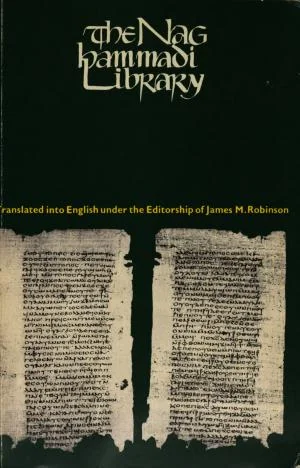
The Nag Hammadi Library in English
 80
80

The Nag Hammadi Library in English
Robinson's compilation of the Nag Hammadi texts is less a narrative and more an archaeological excavation for the mind. The sheer volume and textual variety present a challenge, yet the reward is unparalleled direct access to a suppressed stream of early religious thought. One strength is the sheer historical weight; encountering the Gospel of Thomas or the Gospel of Philip without the filter of later commentary is a bracing experience. A limitation, inherent to the source material, is the often fragmented and esoteric nature of the texts, demanding significant reader effort. The particular passage describing the aeons and their emanations in the *Apocryphon of John* exemplifies the complex, non-linear cosmogonies that define much of Gnostic literature. This is not light reading, but it is essential for anyone serious about the origins of Western esotericism. The collection stands as an indispensable, if demanding, primary source.
📝 Description
80
The 1945 discovery near Nag Hammadi unearthed early Christian and Gnostic texts excluded from the New Testament.
James McConkey Robinson compiled this collection of early Christian and Gnostic writings found near Nag Hammadi, Egypt, in 1945. These texts, dating from the 2nd to 4th centuries CE, offer access to material largely absent from the canonical New Testament. The library includes gospels, apocalypses, and treatises that reveal the theological diversity and mystical traditions active in the first few centuries CE.
This volume is of particular value to scholars of early Christianity, comparative religion, and Gnosticism. It also serves advanced students and practitioners of esoteric traditions interested in the historical development of mystical thought. Readers seeking direct engagement with primary sources, beyond secondary interpretations, will find extensive material here, including perspectives on the historical Jesus beyond the four canonical Gospels.
These texts represent a significant current within early religious life that stood apart from emerging orthodox Christianity. They provide direct evidence for Gnostic movements, which emphasized personal spiritual knowledge (gnosis) and often presented alternative cosmologies and understandings of the divine. The writings illuminate ideas about a transcendent God distinct from a lesser creator, and the presence of divine light within humanity, concepts central to many esoteric traditions.
💡 Why Read This Book?
• Gain direct exposure to texts like the Gospel of Thomas, offering alternative perspectives on Jesus' teachings, challenging conventional interpretations of early Christianity. • Understand the Gnostic concept of *gnosis* and its role in achieving salvation, as elaborated in treatises like the *Gospel of Truth*, distinct from faith-based salvation. • Explore the complex cosmogonies presented in texts such as the *Apocryphon of John*, revealing intricate mythologies of divine emanation and the creation of the material world.
⭐ Reader Reviews
Honest opinions from readers who have explored this book.
❓ Frequently Asked Questions
When were the Nag Hammadi texts discovered and what language were they originally written in?
The Nag Hammadi texts were discovered in 1945 near the town of Nag Hammadi in Upper Egypt. They were found in papyrus codices written in Coptic, a late stage of the ancient Egyptian language, though many are translations from earlier Greek originals.
What is Gnosticism and how is it represented in the Nag Hammadi Library?
Gnosticism refers to a diverse set of religious movements in the first few centuries CE emphasizing *gnosis* (spiritual knowledge) for salvation. The Nag Hammadi Library contains a significant body of Gnostic texts, including gospels and theological treatises, offering primary evidence for Gnostic beliefs and practices.
Why are these texts considered 'apocryphal'?
The term 'apocryphal' generally refers to writings considered not divinely inspired or authoritative by mainstream religious traditions. The Nag Hammadi texts were excluded from the canon of the New Testament by early Church authorities and are thus considered apocryphal by those traditions.
What is the significance of the Gospel of Thomas within the Nag Hammadi collection?
The Gospel of Thomas is a collection of sayings attributed to Jesus, presented without narrative. Its significance lies in its unique sayings and its potential to represent an early, independent tradition of Jesus' teachings, distinct from the canonical Gospels.
Who was James McConkey Robinson and what is his role in presenting these texts?
James McConkey Robinson was a scholar of early Christianity and Gnosticism who edited and translated the first comprehensive English edition of the Nag Hammadi Library, published in 1977 and revised. His work made these crucial texts accessible to a global audience.
Besides gospels, what other types of texts are found in the Nag Hammadi Library?
The library contains a variety of texts beyond gospels, including apocalypses (like the *Apocalypse of Peter*), theological treatises (such as the *Gospel of Truth*), philosophical dialogues, and mytho-historical accounts, reflecting a broad spectrum of ancient esoteric thought.
🔮 Key Themes & Symbolism
Gnosis and Salvation
A central theme is *gnosis*, a direct, experiential knowledge of the divine, which is presented as the key to salvation. This contrasts sharply with salvation through faith or works. Texts like the *Gospel of Truth* elaborate on the process of awakening this inner knowledge, often depicted as remembering one's true divine origin and escaping the illusion of the material world created by a lesser deity, the Demiurge.
Cosmology and the Divine
The library reveals intricate and often complex cosmologies that differ from orthodox accounts. It details the emanation of the divine from a transcendent, unknowable God through various spiritual beings, or Aeons. The fall of Sophia (Wisdom) is a recurring motif, explaining the origin of the material world and the entrapment of divine sparks within it. This framework provides an alternative understanding of creation and the divine order.
Alternative Christology
The figure of Jesus Christ is interpreted in diverse ways, often emphasizing his role as a revealer of *gnosis* rather than solely a salvific sacrifice. The *Gospel of Thomas*, for example, presents Jesus as a teacher of hidden sayings, empowering individuals to find the Kingdom of God within themselves. These texts explore Christ's spiritual nature and his function as a guide to awakening.
The Demiurge and the Material World
A significant concept is the Demiurge, a flawed creator of the material universe, often identified with the God of the Old Testament. Gnostic texts typically view the material world as an imperfect realm, a prison for the spirit. The texts critique the limitations and ignorance of this creator, contrasting him with the perfect, transcendent Father from whom all true spiritual beings emanate.
💬 Memorable Quotes
Direct passages from the work, attributed to the author.
“Jesus said: 'Let him who seeks continue seeking until he finds. When he finds, he will marvel; when he marvels, he will reign; and having reigned, he will rest.'”
— This saying from the *Gospel of Thomas* expresses the Gnostic path: diligent spiritual seeking leads to profound discovery, followed by spiritual mastery and ultimate peace, highlighting an internal, experiential journey.
“The kingdom of the Father is not in the future. It has not yet come, but it is here now.”
— This interpretation from the *Gospel of Thomas* emphasizes the immanent nature of the divine, suggesting that spiritual realization and the 'Kingdom' are accessible in the present moment through inner awareness, not as a future reward.
“For the aeons are the first ones who came into the Pleroma. And Sophia is the last one of them.”
— This concept from the *Apocryphon of John* illustrates the Gnostic hierarchical cosmology, where divine beings (Aeons) emanate from the ultimate God. Sophia's position as the last and her subsequent fall are crucial to the Gnostic myth of creation and the origin of evil.
“The world is a corpse, and the [human] mind is the [human] mind.”
— This stark declaration from the *Gospel of Truth* reflects the Gnostic dualism, viewing the material world as dead or illusory and highlighting the human mind's potential alienation from its divine source, urging a reawakening to true reality.
“There is no other being who created the world but he.”
— This statement, referring to the Demiurge in texts like the *Gospel of Truth*, underscores the Gnostic critique of a lesser, ignorant creator responsible for the flawed material existence, distinguishing him from the true, supreme God.
🌙 Esoteric Significance
Tradition
This collection is foundational to understanding Gnosticism, a complex set of religious movements within the broader context of Hellenistic religions and early Christianity. While distinct, Gnosticism shares thematic elements with Hermeticism and certain Neoplatonic ideas, particularly concerning emanation, divine knowledge, and the critique of the material world. The Nag Hammadi texts offer primary evidence for the Gnostic tradition's unique interpretations of creation, salvation, and the nature of the divine, departing significantly from later orthodox Christian dogma.
Symbolism
Key symbols include Sophia (Wisdom), often depicted as a divine being whose fall or desire leads to the creation of the material world and the entrapment of divine sparks. The Serpent is another significant symbol, sometimes portrayed as a revealer of knowledge or a guide, contrasting with its traditional negative depiction. Light and darkness are fundamental motifs, representing the spiritual field of the Pleroma versus the illusory or ignorant material world.
Modern Relevance
Contemporary esoteric practitioners, particularly those interested in Gnostic spirituality, draw heavily on the Nag Hammadi texts. They influence modern Gnostic churches, independent spiritual seekers, and scholars of Western esotericism. Thinkers and movements exploring consciousness, the nature of reality, and alternative spiritual paths often reference the philosophical and mythological frameworks presented in these ancient writings, seeking insights into perennial questions of existence.
👥 Who Should Read This Book
• Students of comparative religion and early Christianity seeking to understand the diversity of ancient spiritual thought beyond canonical texts. • Scholars and practitioners of Gnosticism interested in direct engagement with primary source materials that define the tradition. • Esotericists and philosophers exploring alternative cosmologies, the nature of consciousness, and the concept of *gnosis* as a path to spiritual understanding.
📜 Historical Context
The discovery of the Nag Hammadi library in 1945 was a key moment for understanding early Christianity and Gnosticism. These Coptic texts, unearthed near Nag Hammadi, Egypt, date primarily from the 2nd to 4th centuries CE. They represent a significant corpus of Gnostic literature that had been largely suppressed or destroyed by orthodox Christian authorities, such as Irenaeus of Lyons, who wrote extensively against Gnostic teachings in the late 2nd century. The library provides primary source material for movements that offered a radical alternative to the developing doctrines of the early Church. Its contents illuminate the intellectual and spiritual ferment of the period, revealing a diversity of beliefs and practices that challenged the emerging consensus. The subsequent translation and publication of these texts, notably the first complete English edition by James McConkey Robinson in 1977, revolutionized scholarship on Gnosticism and early Christian diversity.
📔 Journal Prompts
The concept of *gnosis* as direct knowledge: how does this differ from belief or faith in your experience?
The role of Sophia in the creation myths: what does her 'fall' or unintended action symbolize about imperfection?
Reflect on the sayings attributed to Jesus in the *Gospel of Thomas* that challenge conventional morality or dogma.
Consider the critique of the material world and its creator (the Demiurge) presented in these texts. What resonates or conflicts with your worldview?
The idea of the divine spark within: how might this concept inform one's understanding of self and purpose?
🗂️ Glossary
Gnosis
Greek for 'knowledge'. In Gnosticism, it refers to direct, intuitive, spiritual knowledge of the divine and of one's own true nature, seen as the key to salvation.
Demiurge
In Gnostic cosmology, a lesser creator deity, often identified with the God of the Old Testament, responsible for creating the flawed material world, distinct from the supreme, transcendent God.
Aeons
Divine beings or spiritual emanations that form the Pleroma (fullness) of the supreme God in Gnostic cosmology. They represent aspects or powers of the divine.
Pleroma
The spiritual realm or totality of divine beings (Aeons) in Gnostic theology, emanating from the supreme, unknowable God.
Sophia
Greek for 'Wisdom'. In Gnosticism, a prominent Aeon whose desire or fall from the divine realm is often seen as the cause of the creation of the material world and the origin of suffering.
Coptic
A late stage of the ancient Egyptian language, written using a modified Greek alphabet. Many Nag Hammadi texts were translated into Coptic from Greek.
Apocryphon
A type of writing, often of a religious or mystical nature, whose teachings are considered secret or esoteric. Many texts in the Nag Hammadi library are apocrypha.
🔮 Readers Also Liked
Browse all →








More by James McConkey Robinson
All books →





More Free Sacred Texts & Gnosticism Books
View all →