What is Sacred Geometry?
Sacred geometry studies the geometric shapes, patterns, and proportions found in nature and throughout the universe, often attributed with divine or mystical significance. It posits that these forms are fundamental to the structure of reality, from the atomic level to galactic formations. Concepts explored include the Golden Ratio, Platonic solids, and the Flower of Life, viewed as a universal language or blueprint.
Best Books for Complete Beginners
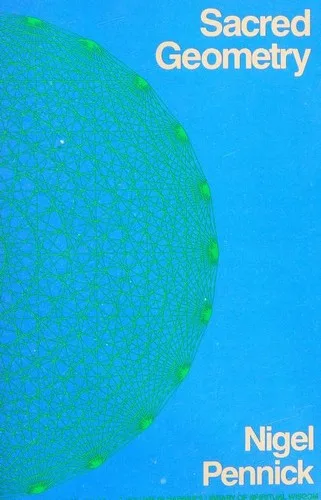
For those new to sacred geometry, 'A Beginner's Guide to Constructing the Universe' by Michael S. Schneider offers an accessible entry point, explaining complex ideas through relatable examples. Sarah Michelle Wergin's 'Awaken' provides an intuitive approach, while 'Sacred Geometry' by Nigel Pennick serves as a solid introductory overview of the field. Debbie Brewer's 'Shapes and Symbols of Sacred Geometry' acts as a practical pocket reference for identifying common forms.
Intermediate Reading
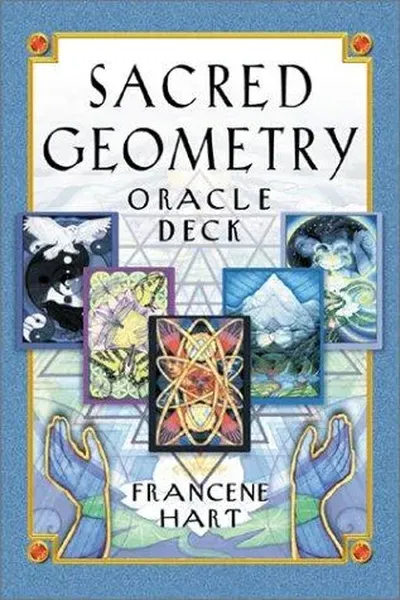
Moving beyond the basics, 'Sacred Geometry and Numerology' by Moustafa Gadalla connects geometric principles with numerical symbolism. Trisha Keel's 'Sacred Geometry and Geomancy' explores the practical application of these forms in earth-based practices. John Michael Greer's 'Sacred Geometry Oracle' offers a deck and book for divination and personal insight, while 'Sacred Geometry for Artists, Dreamers, and Philosophers' by John Oscar Lieben expands on its aesthetic and conceptual dimensions.
Classical / Advanced Texts
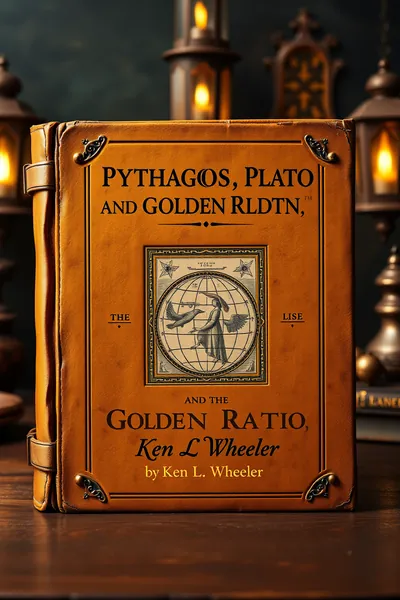
Serious students can engage with 'The Complete Magicians Tables' by Stephen Skinner, which details historical magical and geometric systems. 'Pythagoras, Plato, and the Golden Ratio' by Ken L Wheeler examines foundational philosophical and mathematical connections. 'Sacred Geometry: Language of the Angels' by Richard Heath examines esoteric interpretations and angelic correspondences, offering a deeper, more specialized perspective.
Reading Order — Step by Step
Begin with foundational overviews like Nigel Pennick's 'Sacred Geometry' or Michael S. Schneider's 'A Beginner's Guide to Constructing the Universe' (Month 1). Progress to intermediate texts such as Moustafa Gadalla's 'Sacred Geometry and Numerology' or Trisha Keel's 'Sacred Geometry and Geomancy' in Month 2, integrating practical applications. For Month 3 and beyond, explore advanced works like Stephen Skinner's 'The Complete Magicians Tables' or Ken L Wheeler's 'Pythagoras, Plato, and the Golden Ratio' to deepen theoretical and historical understanding.
Frequently Asked Questions
Which sacred geometry book should I read first?
For a strong start, consider 'A Beginner's Guide to Constructing the Universe' by Michael S. Schneider for its clear explanations, or Nigel Pennick's 'Sacred Geometry' for a broad overview of forms and concepts.
What is the difference between sacred geometry and regular geometry?
Regular geometry focuses on mathematical properties and proofs, while sacred geometry explores the symbolic, spiritual, and philosophical meanings attributed to geometric forms and patterns found in nature and the cosmos.
Are sacred geometry principles scientifically proven?
While many geometric principles are mathematically demonstrable and observed in nature (like Fibonacci sequences), the 'sacred' aspect relates to interpretation, symbolism, and metaphysical beliefs rather than empirical scientific validation.
How is sacred geometry used in practice?
It is applied in art, architecture, design, meditation, and spiritual practices. Geomancy, for example, uses geometric patterns for divination, and understanding proportions is key in creating aesthetically pleasing and harmonious structures.
What is the significance of the Golden Ratio?
The Golden Ratio (approximately 1.618) is believed to represent ideal proportion and beauty. It appears frequently in nature, art, and architecture, and is often associated with balance, harmony, and divine design.
Can I learn sacred geometry without a strong math background?
Yes, many books, such as Michael S. Schneider's 'A Beginner's Guide to Constructing the Universe', are designed to make sacred geometry accessible without requiring advanced mathematical knowledge, focusing more on conceptual understanding and visual patterns.
What are the basic shapes in sacred geometry?
Fundamental shapes include the circle, triangle, square, and pentagon, which combine to form more complex patterns like the Vesica Piscis, Seed of Life, Flower of Life, and Metatron's Cube, each carrying symbolic meaning.
How does sacred geometry relate to spirituality?
It is seen as a universal language or blueprint of creation, connecting the physical world to divine principles. Geometric patterns are often viewed as manifestations of cosmic order, consciousness, and spiritual truths.