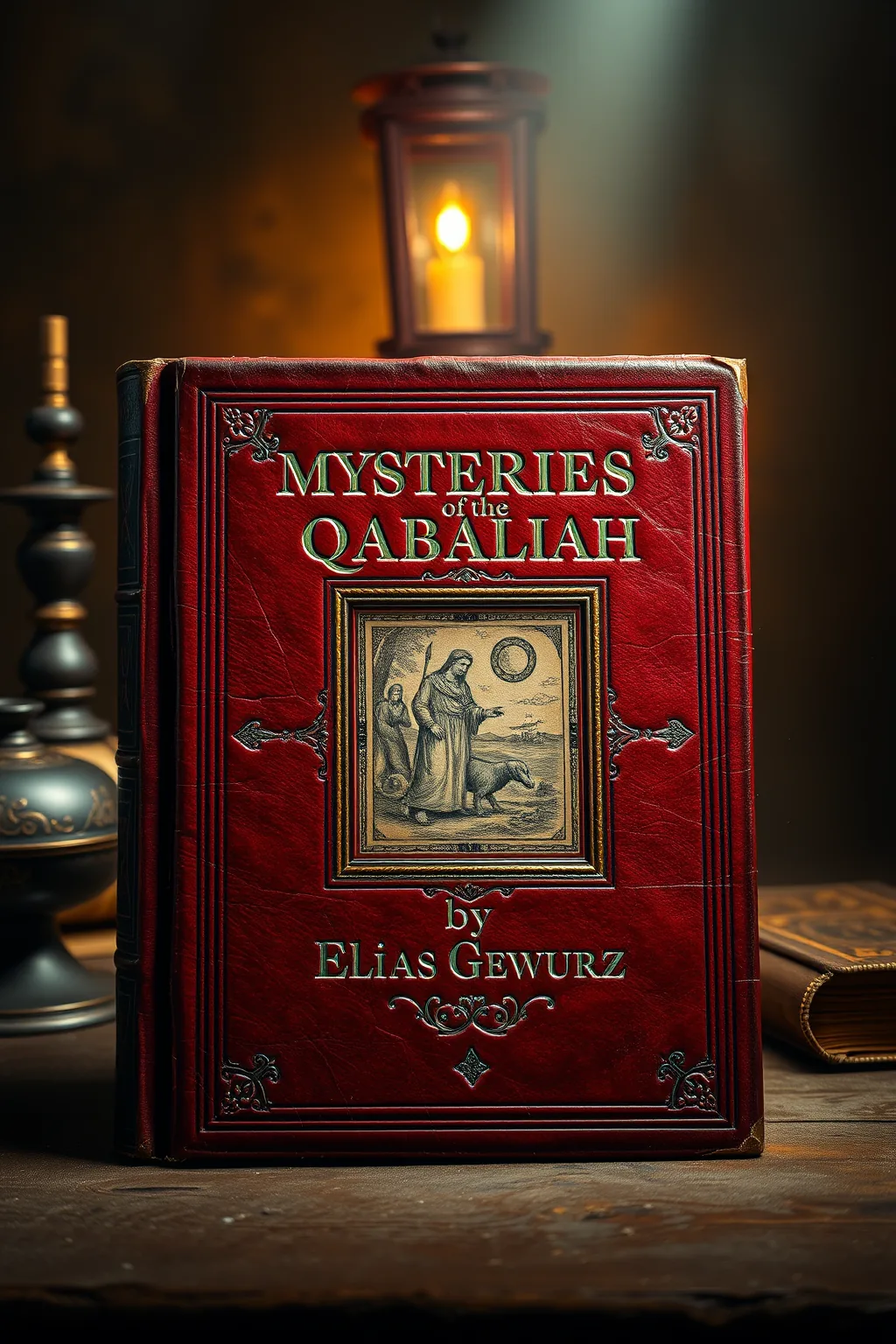
Mysteries of the Qabalah
 73
73

Mysteries of the Qabalah
Gewurz's approach to the Qabalah, particularly in its 1922 iteration, is earnest and scholarly for its time, though it inevitably reflects the era's interpretive biases. The strength lies in its attempt to systematize a dense subject for neophytes, drawing explicit parallels between Qabalistic concepts and Christian mysticism, a common practice in early Western Kabbalah studies. However, this syncretic tendency can also be a limitation, potentially obscuring the distinct origins and development of Jewish Kabbalah. The discussion of the Sephiroth as divine attributes, while clear, sometimes feels filtered through a lens that prioritizes universal symbolism over specific Jewish theological contexts. Ultimately, *Mysteries of the Qabalah* serves as a valuable historical document of Western esoteric engagement with Jewish mysticism.
📝 Description
73
Elias Gewurz published his *Mysteries of the Qabalah* in 1922, interpreting the Jewish mystical tradition for a Western audience.
First released in 1922, Elias Gewurz's *Mysteries of the Qabalah* offers an early 20th-century perspective on the Jewish mystical system. Gewurz aimed to make the Qabalah accessible to readers outside its traditional context, explaining its complex symbolism and philosophical ideas. He presented the Qabalah not simply as a historical subject, but as a means to comprehend cosmic structure and human potential.
This work is suitable for students of esoteric philosophy and comparative religion looking for texts from the early modern occult revival. Those interested in how Kabbalistic studies developed in the West, particularly through Christian and Theosophical interpretations, will find it useful. It is more appropriate for those beginning their study of Qabalistic concepts than for advanced practitioners.
Gewurz's book appeared during a time of heightened interest in Kabbalah among Western occultists, following figures like Eliphas Lévi and Helena Blavatsky. The early 1900s saw many translations and interpretations of esoteric writings, often attempting to merge them with contemporary philosophy and science. This period was characterized by a search for universal spiritual principles across different traditions.
💡 Why Read This Book?
• Gain an understanding of the Tree of Life as presented by early 20th-century occultists, noting its structural representation of divine emanation. • Explore the symbolic significance of the Hebrew alphabet, as interpreted by Gewurz, which offers insights into linguistic mysticism prevalent in esoteric traditions. • Appreciate the historical context of Western Kabbalah studies, particularly the syncretic approaches evident in works published around 1922, bridging Jewish mysticism with Christian esoteric thought.
⭐ Reader Reviews
Honest opinions from readers who have explored this book.
❓ Frequently Asked Questions
What is the historical significance of Elias Gewurz's *Mysteries of the Qabalah*?
Published in 1922, Gewurz's work is significant as an early 20th-century attempt to interpret Jewish Kabbalah for a Western esoteric audience, reflecting the era's syncretic approach to mysticism.
Does *Mysteries of the Qabalah* explain the Sephiroth?
Yes, the book systematically explains the ten Sephiroth, presenting them as divine emanations and attributes within the Qabalistic cosmology, detailing their correspondences and roles.
Is this book suitable for someone new to Kabbalah?
Yes, it is considered a foundational text for beginners interested in the historical development of Kabbalistic studies in the West, offering a structured introduction to core concepts.
What is the relationship between Gewurz's Qabalah and Christian mysticism?
Gewurz often draws parallels between Qabalistic concepts and Christian theological ideas, a characteristic approach of Western esotericists in the early 20th century seeking universal spiritual truths.
What are some key symbols discussed in *Mysteries of the Qabalah*?
The book extensively discusses the Tree of Life, the ten Sephiroth, and the mystical significance of the Hebrew alphabet, presenting them as integral to understanding Qabalistic cosmology.
When was *Mysteries of the Qabalah* first published?
The first publication date for Elias Gewurz's *Mysteries of the Qabalah* is January 1, 1922.
🔮 Key Themes & Symbolism
The Tree of Life
Gewurz presents the Qabalistic Tree of Life as a central diagram, mapping the descent of divine energy and the ascent of the soul. He details its ten Sephiroth and twenty-two paths, interpreting them not only as cosmic principles but also as stages in human spiritual development. The book emphasizes the interconnectedness of these spheres and their role in understanding creation and divine manifestation, making it a key visual and conceptual tool for the reader's exploration.
Hebrew Alphabet Mysticism
A significant focus is placed on the Hebrew alphabet, viewed as a divine language imbued with mystical power. Gewurz explores the esoteric meaning of each letter, their numerical values (Gematria), and their role in forming divine names and concepts. This section highlights the belief that the very structure of language holds keys to the universe's secrets, providing practitioners with a method for deeper contemplation and understanding of sacred texts.
Cosmic Emanation and Return
The work looks at the Qabalistic concept of Ein Sof (the Infinite) and its emanation through the Sephiroth, creating the manifest universe. Gewurz frames this not as a static creation but as a dynamic process of divine unfolding. He also touches upon the inverse journey, the soul's return or ascent through the Sephirotic levels, offering a framework for personal spiritual growth and reintegration with the divine source.
Syncretic Esotericism
Reflecting the intellectual climate of the early 20th century, Gewurz's interpretation often bridges Qabalistic concepts with Christian theological ideas and broader Western esoteric traditions. This approach seeks to demonstrate universal principles underlying diverse mystical systems, presenting the Qabalah as a component of a larger, unified esoteric wisdom tradition accessible to a non-Jewish audience.
💬 Memorable Quotes
Direct passages from the work, attributed to the author.
“The Sephiroth represent the divine attributes through which the Infinite manifests.”
— This core idea highlights Gewurz's focus on the Sephiroth as intermediaries between the unknowable Absolute and the created world, emphasizing their role in understanding God's interaction with existence.
“The Hebrew alphabet is a key to unlocking cosmic secrets.”
— This reflects the book's exploration of letter mysticism, suggesting that the very forms and sounds of Hebrew letters contain profound spiritual and cosmological information.
“The Tree of Life is a map of creation and the human soul.”
— This interpretation underscores the dual function of the Tree of Life as depicted by Gewurz: a cosmological diagram and a psychological or spiritual map for individual development.
“The Qabalah offers a path to understanding divine order.”
— This captures the essence of Gewurz's aim: to present Qabalistic teachings as a coherent system for comprehending the structure and logic of the universe and its divine governance.
💡 Key Ideas
Editorial paraphrase of the work's core concepts — not direct quotes.
Mystical knowledge requires a disciplined mind and devoted study.
This paraphrased sentiment speaks to the author's underlying belief in the rigorous nature of esoteric study, contrasting with superficial or purely intellectual pursuits.
🌙 Esoteric Significance
Tradition
Gewurz's work fits within the Western Esoteric Tradition, specifically the branch concerned with Kabbalistic studies that gained traction in the late 19th and early 20th centuries. It draws heavily from earlier interpretations by figures like Eliphas Lévi and is influenced by the Theosophical movement's interest in comparative mysticism. While rooted in Jewish Kabbalah, its presentation is syncretic, aiming to integrate Qabalistic concepts into a broader framework of universal spiritual principles understood by Western occultists.
Symbolism
The central symbol is the Tree of Life (Etz Chaim), depicted as a map of divine emanation and spiritual ascent, comprising ten Sephiroth. Gewurz also emphasizes the profound symbolism of the Hebrew alphabet, where each letter is seen as a cosmic force and a key to understanding divine names and creation itself. The interplay between these elements forms the core symbolic language through which the Qabalistic cosmos is explained.
Modern Relevance
Contemporary practitioners of Western Ceremonial Magic, particularly those influenced by lineages like the Hermetic Order of the Golden Dawn, often engage with early 20th-century interpretations like Gewurz's. It serves as a historical touchstone for understanding how Kabbalah was adapted and integrated into Western magical systems, providing foundational knowledge for students exploring these paths today.
👥 Who Should Read This Book
['• Students of Western Esotericism: Individuals seeking to understand the historical development and interpretation of Kabbalah within occult circles during the early 20th century.', '• Comparative Religion Scholars: Researchers interested in how Jewish mystical traditions were adopted, adapted, and synthesized with Christian and other esoteric philosophies in the West.', '• Aspiring Kabbalists (Western Tradition): Beginners looking for a structured, albeit historically influenced, introduction to core Qabalistic concepts like the Tree of Life and the Sephiroth from an esoteric perspective.']
📜 Historical Context
Elias Gewurz's *Mysteries of the Qabalah*, published in 1922, emerged during a vibrant period for Western esoteric thought, a time when figures like Aleister Crowley were actively reinterpreting occult traditions. The early 20th century witnessed a surge in interest in Kabbalah, often filtered through Theosophical and Hermetic lenses, diverging from its purely Jewish roots. Scholars and occultists alike sought to synthesize disparate mystical systems, aiming for a universal gnosis. While contemporaries like S.L. MacGregor Mathers were translating the Zohar, Gewurz's work offered a more didactic, perhaps less scholarly but more accessible, exposition for a burgeoning Western occult audience. This era saw Kabbalah integrated into broader systems like the Hermetic Order of the Golden Dawn, influencing how it was understood and practiced outside its original context.
📔 Journal Prompts
The Tree of Life as a map of spiritual ascent: How does its structure inform your understanding of inner development?
Reflect on the concept of divine emanations through the Sephiroth. Which Sephirah most compels your contemplation?
Consider the Hebrew alphabet's role as a divine language. What hidden meanings might letters hold in your personal lexicon?
Analyze the syncretic approach Gewurz uses, blending Qabalistic ideas with other traditions. Where do you see parallels in modern esoteric thought?
The journey from Ein Sof to manifestation: How does this concept of emanation relate to your own creative processes?
🗂️ Glossary
Ein Sof
The Kabbalistic concept for God in God's absolute essence, considered unknowable and infinite, from which all existence emanates.
Sephiroth
The ten divine emanations or attributes described in Kabbalah, forming the structure of the Tree of Life, through which the Infinite manifests.
Tree of Life
A central diagram in Kabbalah, consisting of ten Sephiroth and twenty-two paths, representing the structure of the cosmos, divine order, and the path of spiritual ascent.
Gematria
A method of Qabalistic interpretation that assigns numerical values to Hebrew letters and words to find hidden meanings and connections between concepts.
Kether
The first Sephirah on the Tree of Life, often translated as 'Crown,' representing the highest, most transcendent aspect of divinity, the primordial will.
Malkuth
The tenth and final Sephirah, 'Kingdom,' representing the material world and the manifest universe, the lowest point of divine emanation.
Da'at
Often considered a 'hidden' Sephirah, representing knowledge or gnosis, bridging the higher and lower areas of the Tree of Life.