Tarot Card Combinations
 71
71

Tarot Card Combinations
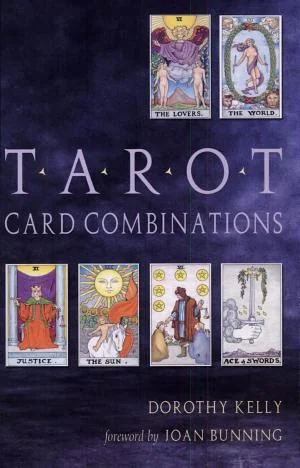
Dorothy Kelly's "Tarot Card Combinations" tackles the crucial, often overlooked, aspect of inter-card relationships in tarot readings. The strength of this 2003 publication lies in its methodical breakdown of how card pairings create new meanings, moving beyond the common pitfall of simply listing individual card definitions. Kelly’s approach provides a tangible scaffolding for developing more sophisticated readings. For instance, her discussion on how a court card’s personality traits can color the outcome indicated by a Major Arcana card offers a concrete interpretive tool. However, the book sometimes feels overly prescriptive; while structure is its aim, it occasionally risks stifling the intuitive flow that many practitioners cherish. A limitation is the lack of visual examples for every combination discussed, which would have aided comprehension significantly. Despite this, Kelly's work offers a valuable, practical supplement for anyone looking to deepen their tarot practice beyond the beginner stage.
📝 Description
71
Dorothy Kelly's 2003 book Tarot Card Combinations provides a structured method for reading card interactions.
Tarot Card Combinations, published in 2003 by Dorothy Kelly, offers a practical system for understanding how tarot cards influence each other within a spread. The book moves past the meanings of individual cards to explain how their placement and sequence create a more complex narrative. Kelly provides a framework for interpreting the dynamic relationships between multiple cards, aiming to help readers develop this skill beyond simple memorization.
This guide is suited for tarot practitioners who have a basic grasp of the Major and Minor Arcana but want to improve their reading abilities. It is for those who feel limited by simple interpretations and wish to uncover deeper messages from their decks. Students of divination, symbolic language, and occult studies will benefit from its organized approach to card synergy.
Emerging in 2003, Kelly's work arrived during a period of renewed interest in esoteric practices. While many tarot guides focus on single card meanings, this book addresses the combinatorial aspect of interpretation. This skill, historically refined through extensive personal practice or mentorship within esoteric traditions, is presented here in a systematic manner. The book's approach builds on the visual language established by earlier figures like A.E. Waite and Pamela Colman Smith.
💡 Why Read This Book?
• Gain a structured method for interpreting card pairings, moving beyond individual meanings to understand narrative flow. • Develop a more nuanced and sophisticated approach to tarot readings by learning how card interactions dynamically alter interpretations. • Acquire practical techniques for unlocking deeper layers of meaning in your spreads, enhancing both personal insight and client readings.
⭐ Reader Reviews
Honest opinions from readers who have explored this book.
❓ Frequently Asked Questions
When was Dorothy Kelly's Tarot Card Combinations first published?
Dorothy Kelly's "Tarot Card Combinations" was first published on April 1, 2003, marking its entry into the contemporary landscape of tarot literature.
What is the primary focus of Tarot Card Combinations?
The book's primary focus is on the interpretation of how tarot cards interact with each other in a spread, rather than solely on individual card meanings.
Does Tarot Card Combinations cover basic tarot definitions?
Yes, the book includes basic definitions of the Major and Minor Arcana, alongside explanations of layouts and upright/reversed card interpretation.
Who would benefit most from reading Tarot Card Combinations?
Practitioners who have a basic understanding of tarot and wish to develop more advanced interpretive skills by understanding card synergy will benefit most.
What kind of approach does Dorothy Kelly use in her tarot guide?
Dorothy Kelly employs an easy-to-understand, practical approach designed to help readers unlock the story presented by combined card draws.
Is Tarot Card Combinations suitable for absolute beginners?
While it covers basics, the book's core strength lies in interpreting combinations, making it most beneficial for those beyond the absolute beginner stage looking to deepen their practice.
🔮 Key Themes & Symbolism
Card Synergy
This theme centers on the principle that tarot cards do not exist in isolation but create emergent meanings when placed together. Kelly explores how the 'conversation' between cards—how one modifies, amplifies, or contradicts another—forms the core of advanced interpretation. It moves beyond the static definitions of individual cards to reveal the dynamic narrative potential within a spread. The work illustrates this through examining suit interactions, numerical progressions, and the influence of court cards on the Major Arcana, providing a framework for understanding the interconnectedness of the symbolic language.
Narrative Interpretation
The book emphasizes that a tarot spread tells a story, and understanding card combinations is key to deciphering this narrative. Kelly guides readers to see how sequential draws build upon each other, creating plot points, character developments, or evolving themes within the reading. This approach encourages practitioners to think like storytellers, identifying the beginning, middle, and potential outcomes suggested by the interplay of symbols. It’s about recognizing the unfolding drama and dialogue presented by the cards, rather than a simple list of pronouncements.
Practical Application
A central tenet of Kelly's work is its highly practical orientation. It is designed not just for theoretical understanding but for immediate application at the reading table. The emphasis is on providing tools and techniques that readers can implement to improve their accuracy and depth. This includes methods for clarifying ambiguous cards through their neighbors and understanding how different layouts influence the significance of combinations. The goal is to empower readers with actionable strategies to enhance their intuitive and analytical skills in real-time readings.
Structured Learning
Unlike more intuitive or freeform approaches, Kelly offers a structured system for learning and applying combinatorial tarot interpretation. This involves understanding foundational principles of card interaction and then building upon them with specific examples and guidelines. The book provides a logical progression, starting with basic pairings and moving towards more complex multi-card dynamics. This methodical approach is particularly beneficial for those who thrive on clear frameworks and seek to develop a systematic method for interpreting the nuances of a tarot spread.
💬 Memorable Quotes
Direct passages from the work, attributed to the author.
“The meaning of a card is amplified or altered by the cards surrounding it.”
— This core concept highlights that tarot interpretation is contextual. It suggests that a card's traditional meaning is not fixed but fluid, dynamically reshaped by its neighbors in a spread, forming a more complex and nuanced message.
“Court cards often act as catalysts, influencing the energy of the Major Arcana.”
— This points to the active role of the court cards (Page, Knight, Queen, King) not just as representations of people, but as dynamic forces that can initiate change or significantly color the outcome indicated by more foundational archetypal cards.
“Understanding suit harmony and discord reveals underlying emotional and mental currents.”
— This interpretation emphasizes how the interplay between the four suits (Wands, Cups, Swords, Pentacles) can illustrate the flow, conflict, or integration of different life energies, providing insight into the querent's inner state.
“A sequence of numbers in the Minor Arcana can indicate a developing process or progression.”
— This focuses on the numerical aspect of the Minor Arcana, suggesting that consecutive cards can map out a journey, a learning curve, or a phased development, akin to following steps on a path.
“Reversed cards gain new dimensions when interacting with upright companions.”
— This indicates that the interpretation of reversed cards is not solely about blockage or negation but can involve complex interactions where their 'shadow' aspect influences or is influenced by the direct energies of upright cards.
🌙 Esoteric Significance
Tradition
Kelly's work builds upon the foundation of Western Esotericism, specifically the divinatory arts that gained prominence through figures like Eliphas Lévi and later Arthur Edward Waite. While not explicitly tied to a single lineage like Kabbalah or Hermeticism, its focus on combinatorial interpretation aligns with the hermetic principle of 'As Above, So Below,' where patterns and correspondences reveal deeper truths. The systematic approach reflects a desire to codify intuitive knowledge, a common thread in the development of esoteric systems aiming for clarity and reproducibility.
Symbolism
The book engages with the detailed symbolism inherent in the Rider-Waite-Smith deck, particularly the archetypal figures of the Major Arcana and the elemental associations of the Minor Arcana suits. For instance, understanding the interaction between the Lovers card (representing choice and union) and the Three of Swords (representing heartbreak) reveals complex emotional narratives. Similarly, the synergy between the Emperor (structure and authority) and the Five of Pentacles (hardship and poverty) can illustrate struggles with established systems or societal support.
Modern Relevance
Kelly's emphasis on combinatorial interpretation remains highly relevant for contemporary tarot practitioners, especially those engaging with online communities and digital learning platforms. Its structured approach appeals to those seeking practical skills to enhance their readings beyond basic interpretations. Modern tarot schools and influential readers often incorporate principles of card synergy, echoing Kelly's foundational work in explaining how spreads create dynamic, narrative meaning, contributing to the ongoing evolution of tarot pedagogy.
👥 Who Should Read This Book
• Intermediate Tarot Students: Those familiar with individual card meanings and basic layouts who wish to move beyond simple interpretations and understand how cards influence each other. • Divination Enthusiasts: Individuals interested in developing a more sophisticated and narrative-driven approach to tarot reading for personal insight or professional practice. • Students of Symbolic Systems: Readers interested in how complex symbolic languages function dynamically, offering a practical case study in the interpretation of interconnected symbols.
📜 Historical Context
Dorothy Kelly's "Tarot Card Combinations," first published in 2003, emerged during a period of significant expansion in esoteric publishing and online spiritual communities. This era saw a renewed interest in practical applications of occult systems, moving beyond purely academic or historical study. While the Rider-Waite-Smith deck, created by Arthur Edward Waite and illustrated by Pamela Colman Smith in 1909, had long been the standard for many practitioners, guides focusing specifically on the complex interplay of cards were less common than those detailing individual meanings. Kelly's work addressed this niche, offering a structured approach to a skill traditionally honed through years of personal practice or mentorship within esoteric traditions. It arrived alongside a wave of accessible guides that democratized access to practices previously confined to smaller circles, contributing to the mainstreaming of tarot study.
📔 Journal Prompts
How does the interaction between two specific cards change your initial interpretation of each?
Identify a common card pairing and describe the narrative it seems to suggest.
Reflect on a recent reading: which card combinations offered the most clarity?
How might court cards act as 'messengers' between Major Arcana themes and Minor Arcana situations?
Consider a reversed card; how does its meaning shift when paired with an upright card of the same suit?
🗂️ Glossary
Major Arcana
The set of 22 trump cards in a tarot deck, representing significant life lessons, archetypal figures, and major spiritual or psychological themes.
Minor Arcana
The 56 cards divided into four suits (Wands, Cups, Swords, Pentacles), typically representing everyday events, challenges, and circumstances.
Spread
A specific arrangement of tarot cards laid out for interpretation, designed to address particular questions or explore specific areas of life.
Court Cards
The four face cards within each suit of the Minor Arcana (Page, Knight, Queen, King), often representing people, personality types, or specific approaches to situations.
Combinatorial Interpretation
The practice of reading tarot by analyzing the relationships, interactions, and combined meanings of multiple cards within a spread, rather than focusing solely on individual cards.
Suit Harmony
The concept describing how cards within the same suit can work together to reinforce or clarify a particular theme or energy (e.g., Wands for passion, Cups for emotion).
Suit Discord
The concept describing how cards from different suits interact, potentially creating tension, conflict, or a need for balance between different types of energy (e.g., Swords clashing with Cups).
This book appears in 1 collection
🔮 Readers Also Liked
Browse all →
From the “Tarot” Collection
View all →
![The New-England primre [sic] improved.](/img/thumb/the-new-england-primre-sic-improved.webp)
More Free Sacred Texts & Gnosticism Books
View all →