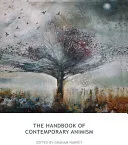
The Handbook of Contemporary Animism
 72
72

The Handbook of Contemporary Animism
Graham Harvey’s *The Handbook of Contemporary Animism* arrives not as a singular manifesto, but as a collaborative survey. The collection’s strength lies in its breadth, encompassing ethnographic, cognitive, and literary perspectives on animist thought. One limitation is the sheer density; the volume assumes a certain familiarity with academic discourse, making it less accessible to the absolute novice. The section evaluating "activist and indigenous thinking about animism" offers a particularly vital counterpoint to purely academic analyses. Harvey curates a dense, often challenging, but ultimately rewarding exploration of a worldview that underpins many human societies.
This handbook functions as an essential academic resource for understanding the resurgence and redefinition of animist concepts in the 21st century.
📝 Description
72
### What It Is ### Who It's For ### Historical Context ### Key Concepts
💡 Why Read This Book?
• Understand how scholars like Graham Harvey and contributors are reframing animism beyond simplistic "belief in spirits" through ethnographic case studies, offering a nuanced view of interconnectedness. • Explore the cognitive and material culture approaches to animism, learning how scholarly analysis in the 2010s moved beyond purely religious frameworks. • Engage with the "indigenous thinking about animism" section, gaining direct insight into how contemporary activists and communities are reasserting animist principles in their cultural and political contexts.
⭐ Reader Reviews
Honest opinions from readers who have explored this book.
❓ Frequently Asked Questions
What is the primary focus of The Handbook of Contemporary Animism?
The handbook focuses on contemporary scholarly and activist approaches to animism, examining its diverse worldviews and practices across various disciplines like anthropology, religious studies, and cognitive science.
Who is Graham Harvey, the editor?
Graham Harvey is a prominent scholar of religion, known for his extensive work on animism and its diverse manifestations, contributing significantly to the academic understanding of the subject.
When was The Handbook of Contemporary Animism first published?
The first edition of The Handbook of Contemporary Animism was published on September 11, 2014.
What academic fields are addressed in this handbook?
The handbook addresses Religion, Sociology, Anthropology, and Cognitive Science, among others, showcasing the interdisciplinary nature of animist studies.
Does the book discuss activist perspectives on animism?
Yes, the volume includes evaluations of "activist and indigenous thinking about animism," highlighting contemporary movements and their engagement with animist principles.
Is this book suitable for beginners in religious studies?
While comprehensive, the handbook is geared towards students and scholars. Beginners might benefit from foundational texts before delving into its advanced analyses.
🔮 Key Themes & Symbolism
Diverse Animist Worldviews
This handbook examines animism not as a monolithic belief system, but as a spectrum of diverse worldviews and practices. It moves beyond colonial-era definitions, presenting animism as a dynamic framework for understanding human and non-human relationships. The work explores how various cultures conceptualize sentience in the natural world, from rocks and rivers to plants and animals, challenging Western dualisms. The collection highlights that animist perspectives are not confined to small-scale societies but are being actively reinterpreted and applied in contemporary contexts.
Methodological Approaches
A core theme is the methodological diversity employed in studying animism. The book critically evaluates ethnographic, cognitive, literary, performative, and material culture approaches. This multi-faceted examination reveals how different scholarly lenses can illuminate distinct aspects of animist phenomena. By bringing these varied perspectives together, the handbook demonstrates the complexity of animist thought and practice, urging readers to consider how methods shape understanding and the types of knowledge produced about these worldviews.
Indigenous and Activist Reclamations
The volume places significant emphasis on the resurgence and reclamation of animist ideas by indigenous peoples and activists. This section moves beyond external analysis to incorporate the voices and perspectives of those actively engaged with animist traditions. It showcases how animism is being utilized as a framework for cultural revitalization, environmental activism, and political resistance in the 21st century, demonstrating its enduring relevance and adaptive capacity in contemporary global dynamics.
Cognitive and Evolutionary Perspectives
Exploring the cognitive underpinnings of animism, this handbook studies how human minds might be predisposed to perceive agency in the world. It discusses theories that suggest animistic thinking is a fundamental aspect of human cognition, potentially rooted in evolutionary processes. This perspective offers a scientific lens to understand the widespread presence of animistic beliefs across cultures, examining the psychological mechanisms that may facilitate the attribution of sentience to non-human entities.
💬 Memorable Quotes
Direct passages from the work, attributed to the author.
“Recent approaches to animism are examined.”
— This statement signals the handbook's commitment to current scholarly discourse, indicating that the work does not rely on outdated anthropological models but actively engages with 21st-century theoretical advancements.
“Evaluations of ethnographic, cognitive, literary, performative, and material culture approaches.”
— This highlights the interdisciplinary nature of the collection, showing that animism is being studied through a wide array of academic lenses, not just traditional anthropology.
“Advances in activist and indigenous thinking about animism.”
— This points to a crucial dimension of the book: the active role of communities in redefining and utilizing animist concepts for contemporary social and political purposes.
“The volume opens with an examination of recent approaches to animism.”
— This detail about the structure indicates a logical progression, beginning with contemporary theoretical frameworks before moving into specific case studies and analyses.
“Invaluable to students and scholars of Religion, Sociology and Anthropology.”
— This directly states the intended audience and the academic fields that will find the handbook particularly useful, underscoring its academic rigor and relevance.
🌙 Esoteric Significance
Tradition
While not strictly tied to a single Western esoteric lineage like Hermeticism or Kabbalah, this handbook engages with concepts that resonate with animistic underpinnings found in shamanistic and nature-based spiritualities often explored within esoteric circles. It departs from purely academic detachment by incorporating activist and indigenous voices, aligning with esoteric traditions that prioritize embodied experience and direct connection with the natural world over dogma. The work supports a re-enchantment of the world, a common goal in many esoteric paths.
Symbolism
The handbook implicitly engages with symbols of interconnectedness, such as the web of life and the sentience attributed to natural elements like rocks, rivers, and winds. These are not treated as mere metaphors but as potentially real entities within animist cosmologies. The work’s focus on the 'spirit' of place or object, a concept often found in folk magic and Western occultism, is examined through rigorous academic lenses, bridging the gap between esoteric practice and scholarly analysis.
Modern Relevance
Contemporary thinkers and practitioners in eco-spirituality, deep ecology, and certain branches of neo-paganism draw heavily on the contemporary understanding of animism presented in this handbook. Scholars like David Abram, who explore the phenomenology of perception and the non-human voice, find theoretical kinship with the ideas discussed. Furthermore, activists advocating for environmental justice and indigenous rights often utilize animist frameworks, as highlighted in the book, demonstrating its practical application in modern social movements.
👥 Who Should Read This Book
• Students of comparative religion and anthropology seeking to understand the diversity of human worldviews beyond Western frameworks. • Researchers interested in the cognitive and evolutionary bases of religious and spiritual beliefs, exploring how animism informs these discussions. • Activists and community organizers involved in environmental and indigenous rights movements looking for theoretical grounding in interconnectedness and non-human agency. • Scholars and practitioners of nature-based spiritualities who wish to engage with contemporary academic discourse on animism and its varied expressions.
📜 Historical Context
Published in 2014, *The Handbook of Contemporary Animism* emerged during a period of significant academic re-engagement with animism, moving beyond the critiques leveled by structuralists like Claude Lévi-Strauss in the mid-20th century. The intellectual climate saw a growing interest in post-humanism and new materialisms, which provided fertile ground for reconsidering animist ontologies. Harvey's work arrived alongside scholarship from figures such as Philippe Descola and Eduardo Viveiros de Castro, who were also instrumental in developing sophisticated anthropological frameworks for understanding animism. The handbook’s emphasis on indigenous and activist perspectives also reflected a broader trend in academia to decolonize knowledge and center marginalized voices. Its reception within academic circles was largely positive, acknowledged as a comprehensive survey that synthesized diverse fields and updated the discourse on animism for a new generation of scholars.
📔 Journal Prompts
The concept of sentience in non-human entities.
Examining the "material culture approaches" to animism.
Reflecting on the "indigenous thinking about animism" section.
The relationship between cognitive science and animist beliefs.
How do "recent approaches to animism" differ from older models?
🗂️ Glossary
Animism
A worldview or belief system in which natural objects, phenomena, and the universe itself possess a spirit or soul, implying sentience and agency.
Ethnographic Approach
A research method involving the in-depth study of cultures and societies, typically through participant observation and interviews, to understand their practices and beliefs.
Cognitive Approach
An approach that examines the mental processes and structures underlying religious and spiritual beliefs, including how humans perceive agency and intentionality.
Material Culture
The physical objects, resources, and spaces that people use to define and relate to one another, and how these artifacts carry meaning within a culture.
Performative Approach
An approach that analyzes religious and spiritual phenomena through the lens of ritual, action, and embodied experience, focusing on how beliefs are enacted.
Indigenous Thinking
Refers to the knowledge systems, philosophies, and perspectives originating from indigenous peoples, often emphasizing a holistic and reciprocal relationship with the environment.
Worldviews
The fundamental cognitive orientation of an individual or society encompassing the whole of the individual's or society's knowledge and point of view.