Shamanism
 78
78

Shamanism
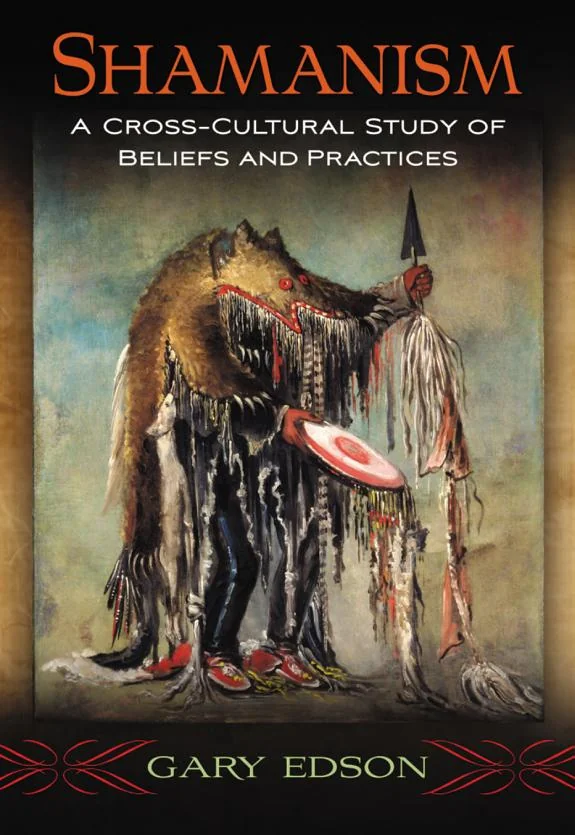
Gary Edson's "Shamanism" offers a broad overview of a practice that predates many organized religions. The book commendably illustrates the pervasive nature of shamanic thought, linking its supposed Neolithic origins to contemporary spiritual interests. Edson’s strength lies in presenting a wide array of cultural expressions under the shamanic umbrella, supported by plentiful, albeit sometimes generalized, descriptions of myths and artifacts. However, the work occasionally struggles with analytical depth, tending to catalogue rather than critically dissect the phenomenon. A notable passage discusses the shaman's role as a communally endorsed intermediary, highlighting how belief in supernatural powers solidified social cohesion. While informative, it sometimes lacks the sharp focus required for truly critical engagement. It serves as a competent, if not deeply incisive, introduction.
📝 Description
78
Gary Edson's Shamanism begins by defining the practice as a spiritual framework found across global cultures.
Shamanism, as examined by Gary Edson, details a spiritual framework present in numerous cultures worldwide. At its center is the shaman, an individual who acts as an intermediary between the ordinary world and spiritual domains. Edson shows that this practice is not uniform; instead, it is adapted by various cultures to fit their specific cosmologies and needs. The book discusses how these traditions often involve community recognition of supernatural powers, which in turn shapes societal organization and individual well-being.
This study is for anyone wanting a clear overview of shamanic practices across different societies. It will appeal to students of comparative religion, anthropology, and cultural studies interested in the history and lasting appeal of these belief systems. Readers curious about the origins of spiritual healing, altered states of consciousness, and the human connection to the unseen will find substantial information. It also addresses the roots of religious expression.
Edson traces shamanism's origins to the Neolithic Period, a time of significant societal change and the development of complex spiritual ideas. He places these early practices within their historical context, suggesting they reflect an early, community-accepted view of the supernatural. The book illustrates how these ancient beliefs continue to influence modern spiritual movements and personal searches for meaning, demonstrating their enduring presence.
Shamanism represents a direct engagement with spiritual realities, often through altered states of consciousness. It is a tradition that predates many organized religions, focusing on the individual's ability to interact with spirit helpers and the unseen world for healing and guidance. Edson's work situates this practice within a broad historical and cultural spectrum, acknowledging its roots in early human spiritual expression and its persistence in contemporary forms. It is a key area within animistic and nature based spiritual traditions.
💡 Why Read This Book?
• Gain a comprehensive overview of shamanic practices across various cultures, understanding their historical trajectory from the Neolithic Period, as detailed in the book's historical context sections. • Learn about the specific roles and believed powers of the shaman, including communication with the spirit world and healing, concepts elaborated upon in the "Key Concepts" portion. • Explore the enduring appeal of shamanism, recognizing how ancient beliefs continue to influence modern spiritual thought and practices, as demonstrated throughout the text.
⭐ Reader Reviews
Honest opinions from readers who have explored this book.
❓ Frequently Asked Questions
When was Gary Edson's book 'Shamanism' first published?
Gary Edson's "Shamanism" was first published on April 14, 2014, making it a relatively recent exploration of this ancient subject.
What period is considered the origin of shamanism according to the book?
The book suggests that shamanism, as a communally endorsed acknowledgment of the supernatural, likely evolved during the Neolithic Period.
What are the primary functions attributed to a shaman?
Shamanic figures are believed to possess powers to heal individuals and communities, and to communicate with the spirit world.
Does the book focus on a single culture's shamanic practices?
No, the book offers an in-depth look at shamanism touching many cultures and spiritual philosophies, presenting it as a widespread phenomenon.
What kind of illustrations are included in 'Shamanism'?
The work is described as heavily illustrated, likely featuring images of myths, artifacts, and legends associated with shamanic traditions.
Is 'Shamanism' by Gary Edson suitable for beginners?
Yes, the book is designed to offer an in-depth look at beliefs and practices, making it suitable for those new to the subject seeking foundational knowledge.
🔮 Key Themes & Symbolism
Mediating with Spirits
The book details the central role of the shaman as an intermediary between the human and spirit worlds. This involves understanding the nature of spirit helpers, often perceived as animal guides or ancestral presences, and the techniques employed to achieve altered states of consciousness necessary for such communication. Edson explores how these interactions are understood to influence earthly events, from healing to divination, forming the bedrock of shamanic cosmology and practice across diverse cultures.
Communal Endorsement of the Supernatural
A significant aspect highlighted is shamanism's function as a communally endorsed framework for understanding the supernatural. This suggests that shamanic beliefs and practices were not merely individualistic but integrated into the social fabric, providing explanations for the inexplicable and validating the community's relationship with unseen forces. The work posits this communal acceptance as crucial for its evolution, particularly tracing its roots to the Neolithic Period.
Shamanic Healing and Well-being
The text explores the therapeutic dimensions of shamanism, where the shaman's perceived powers are often directed towards healing. This includes spiritual, psychological, and physical ailments, often conceptualized as the result of spiritual imbalance or intrusion. The book examines various diagnostic and restorative techniques, such as soul retrieval or the removal of spiritual blockages, underscoring the shaman's vital role in maintaining the health and equilibrium of individuals and the collective.
Myths, Artifacts, and Legends
Edson's exploration is enriched by references to the myths, artifacts, and legends associated with shamanic traditions worldwide. These elements serve not only as illustrative examples but also as cultural markers, revealing the symbolic language and historical narratives that sustain shamanic worldviews. The book suggests that these cultural expressions are tangible evidence of humanity's long-standing engagement with the spiritual dimensions of existence.
💬 Memorable Quotes
Direct passages from the work, attributed to the author.
“The shaman is a person believed to have powers to heal and communicate with the spirit world.”
— This concise definition captures the essence of the shamanic role, emphasizing their dual function as healers and conduits to supernatural realms, a concept central to understanding diverse shamanic traditions.
“Shamanism is a communally endorsed acknowledgment of the supernatural or spirit world.”
— This interpretation frames shamanism not just as individual belief but as a societal construct, highlighting the collective acceptance and integration of spiritual beliefs into the fabric of community life.
“The work is heavily illustrated.”
— This statement points to the visual nature of the book, suggesting that the textual explanations of myths, artifacts, and legends are likely augmented by rich imagery, enhancing the reader's understanding and immersion.
“Shamanism evolved in the Neolithic Period.”
— This assertion places the origins of formalized shamanic practices in a specific historical epoch, linking them to the significant societal and cognitive shifts that occurred during that era.
“The practice touches many cultures and spiritual philosophies.”
— This highlights the universality and adaptability of shamanism, indicating that the book explores its manifestations across a wide geographical and cultural spectrum, rather than a single isolated tradition.
🌙 Esoteric Significance
Tradition
While not strictly aligned with a singular Western esoteric tradition like Hermeticism or Kabbalah, "Shamanism" engages with the broader currents of animism and nature-based spirituality that inform many esoteric paths. It provides a foundational understanding of practices often seen as precursors or parallel expressions to more formalized Western occult systems, particularly those focused on spirit communication and healing outside institutionalized religious frameworks.
Symbolism
Key symbols explored likely include animal totems, representing spirit guides and their associated attributes, and the shamanic journey itself, often depicted as a descent into or ascent from other realms. The book probably discusses sacred objects like drums or rattles, used as tools to induce trance and facilitate spiritual passage, and the concept of the 'axis mundi' or world tree, a common motif connecting different spiritual planes.
Modern Relevance
Contemporary Neo-shamanic movements, various forms of nature-based spirituality, and even certain therapeutic modalities drawing on altered states of consciousness often trace their lineage or inspiration back to the principles discussed in works like Edson's. Thinkers and practitioners exploring animism, ecological spirituality, and indigenous wisdom traditions frequently reference the core concepts of shamanism as relevant to modern challenges.
👥 Who Should Read This Book
• Aspiring anthropologists and comparative religion students seeking foundational knowledge on indigenous spiritual practices and their societal roles. • Individuals interested in the historical roots of spiritual healing and altered states of consciousness, looking for an overview of ancient techniques and beliefs. • Readers exploring nature-based spirituality or animistic worldviews who want to understand the historical and cross-cultural context of such perspectives.
📜 Historical Context
Gary Edson's "Shamanism," published in 2014, enters a field long explored by anthropologists and religious scholars. Its premise of tracing shamanic origins to the Neolithic Period aligns with broader academic discussions about the development of early human spirituality and social structures. While Mircea Eliade's important work "Shamanism: Archaic Techniques of Ecstasy" (1951) had previously defined much of the academic discourse, Edson's contribution seeks to synthesize and present this complex subject to a wider audience, emphasizing its pervasiveness. The book's focus on communal endorsement positions it within sociological interpretations of religion, contrasting with purely psychological or phenomenological approaches. Its reception, being a more recent overview, engages with contemporary scholarship that often critiques earlier, more generalized models of shamanism, particularly those that might homogenize diverse global practices.
📔 Journal Prompts
The shaman's role as a communally endorsed intermediary.
The perceived powers for healing and spirit communication.
The evolution of shamanism from the Neolithic Period.
The function of myths, artifacts, and legends in shamanic traditions.
The appeal of shamanism across diverse cultures and philosophies.
🗂️ Glossary
Shaman
An individual believed to possess the ability to interact with the spirit world, often acting as a mediator for healing, divination, and spiritual guidance within their community.
Spirit World
The non-physical realm or dimension inhabited by spirits, deities, ancestors, and other supernatural entities with which shamans are believed to communicate.
Altered State of Consciousness
A mental state significantly different from normal waking consciousness, often achieved through practices like drumming, chanting, or trance, enabling shamanic communication.
Neolithic Period
A prehistoric period characterized by the development of agriculture and settled communities, considered by some scholars to be a formative era for complex spiritual beliefs like shamanism.
Communal Endorsement
The acceptance and validation of shamanic beliefs and practices by the wider community, integrating them into the social and cultural fabric.
Spirit Helpers
Entities, often perceived as animals, plants, or ancestral figures, that assist the shaman in their work within the spirit world.
Supernatural
Phenomena or entities that are beyond the scope of normal scientific understanding or the natural world, often attributed with spiritual or magical qualities.
This book appears in 1 collection
🔮 Readers Also Liked
Browse all →







From the “Shamanism” Collection
View all →









More Free Esoteric History & Biography Books
View all →