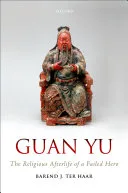
Guan Yu
 74
74

Guan Yu
Barend J. ter Haar's study of Guan Yu presents a compelling argument for the enduring power of oral culture in shaping religious iconography. The author effectively demonstrates how a third-century general, executed in 219, ascended to a level of veneration comparable to major bodhisattvas. Haar excels in detailing the mechanisms of cult formation, particularly the amplification of Guan Yu's military prowess and loyalty through popular narratives. A notable strength is the nuanced exploration of how written texts, while important, often served to codify rather than originate the widespread devotion. However, the dense academic prose, while precise, might prove challenging for readers less familiar with Sino-centric historical methodologies. The section detailing the various rituals and temples dedicated to Guan Yu provides a concrete glimpse into the tangible manifestations of his cult, offering a strong anchor point in the text. This work is a vital contribution to understanding Chinese religious history and the underappreciated role of oral traditions.
📝 Description
74
Barend J. ter Haar's 2018 book traces Guan Yu's transformation from general to deity.
This study examines Guan Yu's rise from a historical figure to a widely worshipped deity in Chinese culture. The author details the evolution of Guan Yu's cult, paying close attention to how oral traditions shaped religious beliefs and social structures, especially as literacy increased. The book offers a scholarly look at how a relatively minor general's reputation grew to such significant status.
It situates Guan Yu's deification within the chaotic Three Kingdoms period (220-280 CE) and later imperial eras. The work highlights a cultural environment where spoken stories carried substantial weight, even as written accounts became more common. This contrasts with religious developments that relied more heavily on texts.
Central to the book are concepts like deification, the role of oral transmission in forming religious canons, and the socio-political elements that elevate historical persons to divine status. It shows how accounts of Guan Yu's life, including his allegiance to Liu Bei and his death in 219, were reinterpreted and expanded through popular tales over many centuries.
While not strictly occult, this book engages with the esoteric dimensions of religious and cultural history. It investigates the processes by which historical figures are transformed into divine entities, a phenomenon found across many traditions. The focus on oral transmission and the reinterpretation of narratives touches upon how collective belief systems can shape and solidify figures of veneration, moving beyond simple historical accounts into realms of myth and spiritual significance.
💡 Why Read This Book?
• Gain an understanding of how oral traditions shaped the deification of Guan Yu, a process distinct from text-centric religious development, as explored in the historical context of the Three Kingdoms period. • Learn about the specific mechanisms and social forces that elevated a third-century general, executed in 219, to a major deity in imperial China, a phenomenon detailed throughout the book. • Discover the critical role of storytelling and popular cults in religious evolution, offering insights into how figures like Guan Yu achieved prominence comparable to figures like Guanyin.
⭐ Reader Reviews
Honest opinions from readers who have explored this book.
❓ Frequently Asked Questions
Who was Guan Yu before he became a deity?
Guan Yu was a historical general serving under Liu Bei in the early third century CE. He was known for his military support and loyalty before his capture and execution by enemy forces in 219.
How did Guan Yu become a popular deity?
His cult grew over centuries, fueled by oral traditions and popular storytelling that emphasized his loyalty, righteousness, and military prowess. Imperial endorsement further solidified his divine status.
What is the significance of Guan Yu's cult in Chinese history?
The cult of Guan Yu became one of the most influential in imperial China, with the deity achieving prominence equal to Buddhist figures like Guanyin, reflecting the power of popular devotion.
What role did oral culture play in Guan Yu's deification?
The work highlights how oral culture was crucial in disseminating stories and legends about Guan Yu, shaping his divine image and popular veneration even as written records became more prevalent.
When was Guan Yu executed?
Guan Yu was captured and executed by enemy forces in the year 219 CE.
What is the main argument of Barend J. ter Haar's book?
The book argues for the immense power of oral culture in shaping the deification of Guan Yu, demonstrating its significant role in religious and social development within imperial China.
🔮 Key Themes & Symbolism
Deity Formation
The book meticulously details the historical trajectory of Guan Yu, a military figure from the third century CE, and his eventual apotheosis into a major deity. It examines the complex interplay of historical events, popular storytelling, and imperial endorsement that facilitated this transformation, elevating him to a status comparable to established Buddhist figures like Guanyin. This theme underscores how collective belief and narrative power can reshape the perception and veneration of historical individuals over time.
Power of Oral Culture
A central thesis of the work is the profound influence of oral traditions in a world increasingly reliant on written records. The author argues that oral narratives were instrumental in disseminating and solidifying the cult of Guan Yu, preserving and enhancing his legend beyond the reach of formal historiography. This theme contrasts the enduring potency of spoken word and communal storytelling with the more static nature of written accounts in shaping religious and cultural phenomena.
Guan Yu's Historical Persona
The study begins by grounding Guan Yu in his historical context as a general who supported Liu Bei. It acknowledges his execution in 219 CE as an important point, before exploring how subsequent centuries reinterpreted his life and actions. The book analyzes the specific virtues—loyalty, righteousness, martial prowess—attributed to him, which formed the bedrock of his divine image and widespread appeal across different strata of Chinese society.
Imperial China's Religious Landscape
This work situates the cult of Guan Yu within the broader religious and social fabric of imperial China. It illustrates how the state and popular religious movements interacted, with imperial patronage often legitimizing and amplifying existing devotional practices. The book provides insight into the dynamic nature of belief systems, where figures like Guan Yu could attain official recognition and widespread popular veneration, coexisting with established Buddhist and Daoist traditions.
💬 Memorable Quotes
Direct passages from the work, attributed to the author.
“Guan Yu... eventually became one the most popular and influential deities of imperial China under the name Lord Guan or Emperor Guan.”
— This highlights the astonishing elevation of a historical figure, executed in 219 CE, to a preeminent divine status, underscoring the book's focus on deification processes.
“This is a study of his cult, but also of the tremendous power of oral culture in a world where writing became increasingly important.”
— This statement expresses the core argument: the book examines Guan Yu's religious following by emphasizing the crucial, often underestimated, role of oral traditions in shaping beliefs, even during periods of rising literacy.
“He was captured and executed by enemy forces in 219.”
— This factual anchor points to the historical reality of Guan Yu's life, serving as the starting point from which his legend and subsequent deification unfolded over centuries.
“of the same importance as the Buddhist bodhisattva Guanyin.”
— This comparison vividly illustrates the scale of Guan Yu's religious influence, positioning him as a deity of paramount significance within the Chinese spiritual landscape, rivaling established Buddhist figures.
“supported one of numerous claimants to the throne.”
— This contextualizes Guan Yu as a participant in the complex political field of his era, specifically the period of competing factions that preceded the formal establishment of the Three Kingdoms.
🌙 Esoteric Significance
Tradition
While not strictly adhering to a single Western esoteric lineage like Hermeticism or Kabbalah, this work touches upon themes relevant to comparative religion and the study of indigenous spiritual traditions. It aligns with broader esoteric interests in the manifestation of divine archetypes and the transformative power of belief systems. The book's focus on the evolution of a deity from historical figure to object of worship speaks to Gnostic and Neoplatonic ideas concerning the ascent of the soul and the creation of spiritual hierarchies, albeit within a distinct cultural context.
Symbolism
The primary symbol is Guan Yu himself, embodying loyalty, righteousness, and martial prowess – virtues highly esteemed in Chinese culture. His iconic red face is often associated with bravery and righteousness, while his weapon, the Green Dragon Crescent Blade, symbolizes his military might and status. The association with dragons further links him to imperial power and cosmic forces. These symbols, propagated through oral tradition and visual representation, imbue him with divine authority and protective qualities.
Modern Relevance
Contemporary practitioners of Chinese folk religion and martial arts continue to venerate Guan Yu as a protector and patron. His image appears in temples, businesses, and homes, symbolizing wealth, loyalty, and justice. Thinkers interested in cultural studies, the sociology of religion, and the persistence of myth in the modern era find the book's analysis of Guan Yu's enduring appeal relevant. His transition from historical general to a complex deity offers insights into modern myth-making and the adaptation of ancient figures to contemporary values.
👥 Who Should Read This Book
• Students of Chinese history and culture: They will gain a deeper understanding of how historical figures are transformed into objects of veneration and the role of popular narratives. • Scholars of comparative religion: This work offers a case study on deity formation and the dynamics of cult development, providing insights beyond Western religious frameworks. • Readers interested in folklore and mythology: They will appreciate the detailed examination of how oral traditions shape collective memory and religious beliefs over centuries.
📜 Historical Context
Barend J. ter Haar's study of Guan Yu emerges from the rich academic discourse surrounding Chinese religious history and folklore, particularly post-WWII scholarship that began re-evaluating the impact of non-elite cultural forms. It situates Guan Yu's rise within the tumultuous late Han dynasty and subsequent Three Kingdoms period (220-280 CE), a time when figures like Liu Bei, Cao Cao, and Sun Quan vied for control. The work implicitly engages with earlier sinological traditions that often prioritized textual analysis, asserting the vital, formative role of oral culture in shaping religious identities and practices. While not explicitly mentioning a contemporary rival scholar, the book's emphasis on oral transmission challenges interpretations that solely rely on canonical texts. The meticulous tracing of Guan Yu's cult from a third-century general to a major deity reflects a scholarly interest in the dynamics of popular religion and state-sponsored cults prevalent in imperial China.
📔 Journal Prompts
Guan Yu's deification process, starting from his execution in 219.
The documented power of oral culture in shaping religious figures.
The specific virtues attributed to Guan Yu as Lord Guan.
The comparison of Guan Yu's importance to Guanyin.
The historical context of Guan Yu supporting Liu Bei.
🗂️ Glossary
Deification
The process by which a human being or object is elevated to the status of a god or deity. In the context of Guan Yu, it refers to his transformation from a historical general to a widely worshipped divine figure.
Cult
A system of religious veneration and devotion directed toward a particular figure or object. The book studies the specific cult that developed around Guan Yu.
Oral Culture
A society or culture that relies primarily on spoken communication and transmission of knowledge, beliefs, and traditions, as opposed to written records.
Three Kingdoms period
A period in Chinese history (220–280 CE) following the Han dynasty, characterized by the division of China into three rival states: Wei, Shu, and Wu. Guan Yu was active shortly before and during its early stages.
Bodhisattva
In Mahayana Buddhism, an enlightened being who postpones their own nirvana to help others achieve enlightenment. Guanyin is a prominent example often compared to Guan Yu in terms of popular veneration.
Imperial China
The historical period of China ruled by emperors, from the Qin dynasty (221 BCE) to the fall of the Qing dynasty in 1912 CE. Guan Yu's cult flourished throughout much of this era.
Claimants to the throne
Individuals who asserted a right to rule as monarch, often leading to conflict and political instability, as seen during the late Han dynasty and the subsequent Three Kingdoms period.