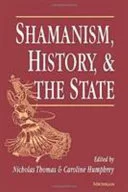
Shamanism, History, and the State
 75
75

Shamanism, History, and the State
Nicholas Thomas and Caroline Humphrey’s "Shamanism, History, and the State" provides a much-needed corrective to romanticized views of shamanism. By presenting nine distinct case studies, the book meticulously details the practical, social, and political dimensions of these practices, moving far beyond simplistic notions of ecstatic trances. A particular strength lies in the ethnographic depth, showcasing how shamanic roles are negotiated within specific state structures and cultural contexts, as seen in the analysis of Siberian communities. However, the academic tone, while precise, can occasionally feel distant, making some of the nuanced discussions on ritual efficacy challenging for a reader less familiar with anthropological theory. The work explores the intricate relationship between spiritual authority and the emergence of centralized power, particularly in its examination of how state formation can both suppress and co-opt shamanic functions.
This collection offers a vital, if demanding, perspective on shamanism's place in human history.
📝 Description
75
Published in 1996, Shamanism, History, and the State examines shamanic practices and their links to political structures.
Nicholas Thomas and Caroline Humphrey's 1996 book provides a detailed look at shamanism across various global cultures. It moves past simple ideas to examine how spiritual beliefs, rituals, and political systems connect. The authors present nine specific case studies, each showing shamanism in its own environment and historical moment.
This work is for serious students of anthropology, religious studies, and comparative mysticism. It suits readers wanting an academic, evidence-based understanding of shamanism, not just a devotional approach. Those interested in how spiritual practices change over time and relate to society will find much of value here. The book engages with academic discussions that began questioning generalized views of shamanism, influenced by earlier scholarship.
This book enters the academic study of shamanism, a field that gained significant traction in the mid-20th century. It emerged during a time when scholars were re-evaluating earlier interpretations, particularly those influenced by foundational texts like Mircea Eliade's "Shamanism: Archaic Techniques of Ecstasy" (1951). The work contributes to a scholarly effort to understand shamanic traditions not as isolated spiritual phenomena, but as practices deeply interwoven with the social, political, and historical realities of the communities that practice them. It builds on comparative studies that seek to understand diverse spiritual systems through empirical research and contextual analysis.
💡 Why Read This Book?
• Gain a nuanced understanding of shamanic practices, moving beyond generalized concepts to appreciate the specific socio-political roles shamans occupy, as detailed in the nine case studies. • Analyze the historical impact of state formation on indigenous spiritual traditions, learning how centralized power structures have interacted with shamanic authority since the early 20th century. • Explore the concept of 'shamanism' itself as a culturally situated phenomenon, challenging earlier, more universalizing theories through detailed ethnographic evidence from diverse regions.
⭐ Reader Reviews
Honest opinions from readers who have explored this book.
❓ Frequently Asked Questions
What is the primary focus of "Shamanism, History, and the State"?
The book's primary focus is on analyzing shamanic practices through detailed case studies, examining their historical development and their intricate relationship with the formation and function of states across various cultures.
Who are the authors of "Shamanism, History, and the State"?
The authors are Nicholas Thomas and Caroline Humphrey, with the book first published in 1996.
How many case studies are presented in the book?
The book presents nine distinct case studies of shamanic practice from widely different cultures.
What academic disciplines is this book relevant to?
This book is highly relevant to anthropology, religious studies, sociology, and comparative history, offering insights into spiritual practices and societal structures.
Does the book offer a romanticized view of shamanism?
No, the book aims to provide a scholarly and critical examination, moving beyond romanticized or simplistic portrayals by focusing on historical context and socio-political functions.
When was "Shamanism, History, and the State" first published?
The book was first published in 1996.
🔮 Key Themes & Symbolism
Shamanism and State Power
The work meticulously dissects the complex and often contentious relationship between shamanic authority and the rise of centralized state power. It moves beyond the notion of shamans as solely spiritual figures, highlighting their roles as social actors whose practices are shaped by, and in turn shape, the political landscape. The case studies illustrate how states have historically sought to control, co-opt, or suppress shamanic influence, and conversely, how shamanic networks can resist or adapt to state encroachment. This theme is crucial for understanding how indigenous spiritualities are negotiated within evolving political structures, particularly from the late 20th century onwards.
Cultural Specificity of Practice
A core tenet of the book is the emphasis on the unique cultural and historical contexts that define shamanic traditions. Rejecting a universalist approach, the nine case studies demonstrate the vast diversity of shamanic expressions, from Siberian communities to other global regions. Each study grounds shamanism within its specific environmental conditions, social organization, and historical trajectory. This focus underscores that there is no single, monolithic 'shamanism,' but rather a spectrum of practices deeply embedded in local realities and evolving over time.
Ritual and Social Order
The book explores how shamanic rituals function not merely as spiritual events but as crucial mechanisms for maintaining and negotiating social order. The authors investigate how these practices address societal concerns, resolve conflicts, and reinforce cultural values within their specific communities. The analysis studies the performative aspects of ritual and how they contribute to the collective understanding of the world and the individual's place within it. This perspective is vital for understanding the enduring relevance of ritual in societies facing historical change and state intervention.
Historical Evolution of Shamanic Roles
Rather than presenting shamanism as an unchanging phenomenon, the book traces its historical evolution within different societies. It highlights how the roles and functions of shamans have adapted in response to external pressures, such as colonialism, state modernization, and global economic shifts. The work implicitly engages with scholarly debates from the mid-20th century onwards concerning the impact of modernity on indigenous traditions, showing how shamanic practitioners have navigated these changes to maintain their cultural and spiritual relevance.
💬 Memorable Quotes
Direct passages from the work, attributed to the author.
“The work explores how shamanic practices are intrinsically linked to the social and political structures of the communities in which they are embedded.”
— This interpretation highlights the book's central argument that shamanism is not an isolated spiritual phenomenon but is deeply interwoven with the fabric of society and governance.
“Nine case studies detail shamanic practice in widely different cultures.”
— This factual statement underscores the book's empirical foundation, emphasizing its comparative approach and its commitment to illustrating shamanism's diverse manifestations across the globe.
“The book examines the impact of state formation on indigenous spiritual traditions.”
— This points to a key theme: how the emergence of centralized political power has influenced, constrained, or transformed shamanic roles and practices throughout history.
“Shamanism is presented as a dynamic phenomenon, shaped by historical and environmental contexts.”
— This captures the book's rejection of static definitions, framing shamanism as an adaptable set of practices responsive to changing social, political, and ecological conditions.
“The authors analyze the socio-political functions of shamans within their respective societies.”
— This interpretation emphasizes the book's focus on the practical, worldly roles shamans play, beyond purely spiritual or ritualistic aspects, in maintaining social cohesion and navigating power dynamics.
🌙 Esoteric Significance
Tradition
While not strictly adhering to a single esoteric lineage like Hermeticism or Kabbalah, this work contributes to the broader esoteric interest in animistic and nature-based spiritual systems. It offers a scholarly counterpoint to New Age interpretations of shamanism, grounding esoteric concepts in rigorous anthropological fieldwork. Its departure lies in its secular, historical, and political analysis, which provides a critical lens for practitioners and scholars engaging with indigenous cosmologies, moving beyond purely metaphysical or mystical frameworks.
Symbolism
The book implicitly engages with symbols of mediating figures and liminal states, common in many esoteric traditions. The shaman, as a bridge between worlds (the mundane and the spiritual, the living and the dead), embodies a potent archetype of intercession and transformation. The exploration of ecstatic states can be seen as a form of controlled transcendence, a concept resonant with mystical practices across various traditions, though here framed within specific cultural rituals rather than solitary contemplation.
Modern Relevance
Contemporary thinkers and practitioners in neo-shamanism, animism revival movements, and certain branches of ecopsychology draw upon the nuanced understanding of shamanic roles presented in this work. Scholars of indigenous rights and cultural preservation also find its historical and political analyses vital. It provides a scholarly foundation for understanding how these ancient practices continue to adapt and maintain relevance in the face of modern state structures and global challenges.
👥 Who Should Read This Book
• Anthropologists and sociologists: To gain in-depth case studies on the interaction between spiritual practices and state power, enriching their understanding of social organization. • Students of comparative religion: To move beyond superficial comparisons and explore the specific historical and cultural factors shaping shamanic traditions worldwide. • Academics and researchers interested in indigenous studies: To access detailed ethnographies that critically examine the impact of state formation and modernization on spiritual lifeways.
📜 Historical Context
Published in 1996, "Shamanism, History, and the State" emerged during a period of intense academic re-evaluation of non-Western spiritual traditions. The late 20th century saw scholars moving away from essentialist or purely functionalist interpretations, influenced by post-structuralist thought and a greater emphasis on ethnographic detail. This work directly engaged with, and implicitly critiqued, earlier paradigms, such as Mircea Eliade's influential but often generalized study of shamanism from 1951. The book's contributors, including scholars like Piers Vitebsky and Richard Holloway, presented detailed ethnographies that highlighted the diversity and socio-political embeddedness of shamanic practices. The era was marked by ongoing debates about cultural relativism and the impact of globalization on indigenous societies, making a nuanced study of shamanism's relationship with state power particularly relevant.
📔 Journal Prompts
The socio-political functions of shamans in Siberian communities.
Negotiating shamanic authority within a developing state structure.
The impact of historical state formation on indigenous spiritual traditions.
Examining the cultural specificity of ritual efficacy.
Comparing shamanic roles across the nine case studies.
🗂️ Glossary
Shamanism
A range of indigenous spiritual practices characterized by a practitioner, the shaman, who is believed to interact with a spirit world to acquire knowledge or power for the benefit of the community.
Ecstatic State
A non-ordinary state of consciousness, often induced through ritual, drumming, or chanting, during which the practitioner may experience visions or communicate with spirits.
State Formation
The historical process by which organized states, characterized by centralized authority and governance over a defined territory, emerge and develop.
Ethnography
The scientific description of the customs of individual peoples and cultures, based on fieldwork and direct observation.
Indigenous Spirituality
The diverse spiritual beliefs and practices of indigenous peoples, often deeply connected to land, ancestry, and community.
Ritual
A set of actions, performed mainly for their symbolic value, in a prescribed order. Rituals are often associated with religious or social events.
Cosmology
The understanding of the origin, structure, and evolution of the universe, often incorporating spiritual or mythological elements.