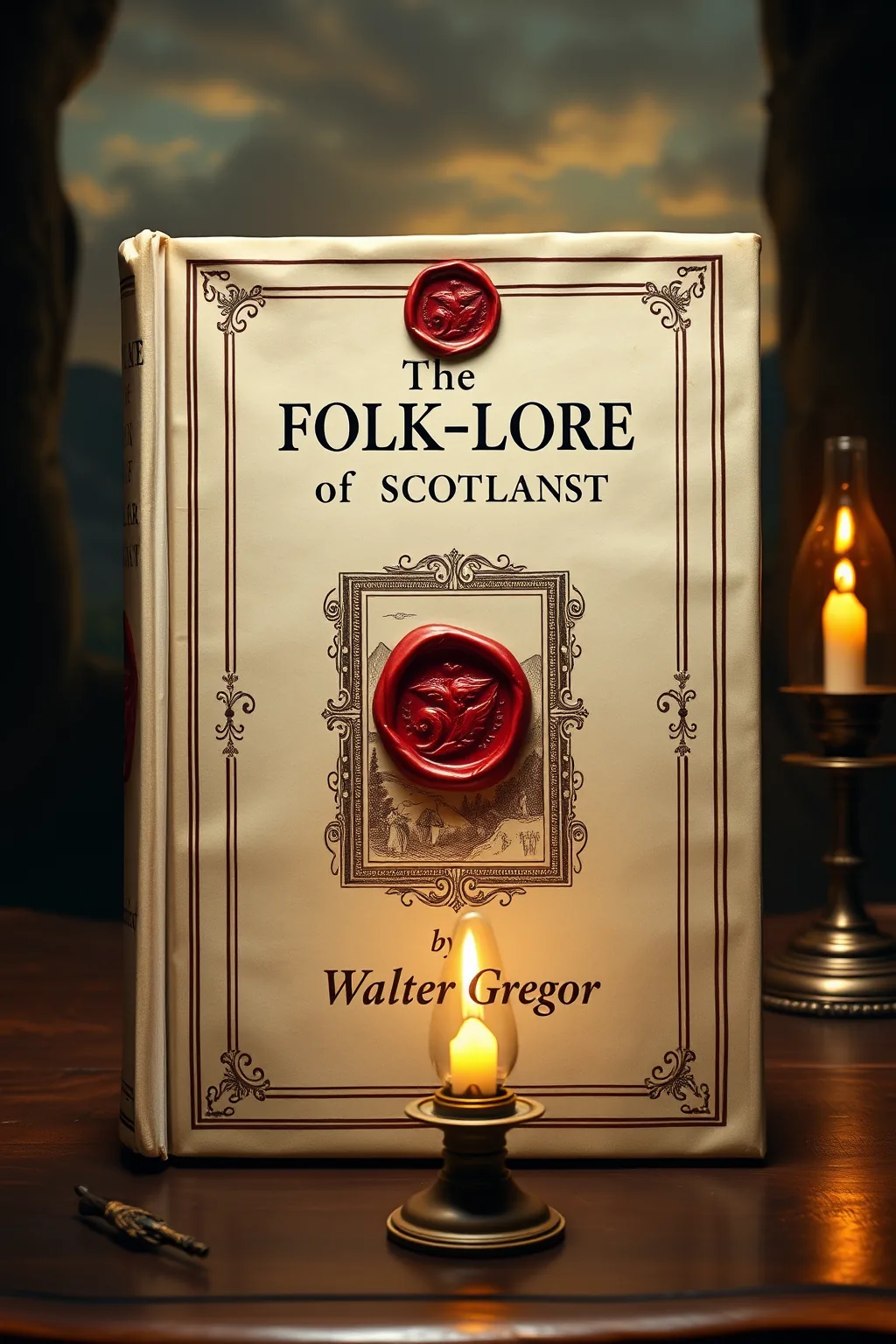
The Folk-Lore of the North-East of Scotland
 76
76

The Folk-Lore of the North-East of Scotland


Silas Hawthorne (Hermetic Studies Editor) — Walter Gregor's "The Folk-Lore of the North-East of Scotland" is an invaluable compendium for anyone interested in the esoteric underpinnings of folk belief. Gregor's scholarly yet evocative prose unveils a rich tapestry of charms, superstitions, and oral traditions that speak to a profound connection with the natural world and its unseen forces. The book offers crucial insights into the practical application of folk magic, the symbolism embedded in daily rituals, and the pervasive influence of animistic thought. It serves as a vital resource for understanding the historical roots of many modern esoteric practices and a testament to the enduring power of ancestral wisdom. Highly recommended for practitioners, historians, and seekers of hidden knowledge.
📝 Description
76
Walter Gregor's "The Folk-Lore of the North-East of Scotland" was published in 1881.
Walter Gregor's 1881 collection records the beliefs and practices of rural communities in Scotland's Northeast. He documented a world where the boundaries between the ordinary and the supernatural were indistinct, reflecting oral traditions influenced by the sea, the land, and local spiritual views. The book details charms used against misfortune, omens observed in nature, and traditions associated with witchcraft. It covers seasonal festivals, folk beliefs about animals and the ocean, and superstitions found in children's rhymes. This work serves as a record of how people perceived their world through constant connection with the unseen, preserving ancestral knowledge and the subtle magic within daily life. Gregor's careful transcription provides insight into a past era for those interested in forgotten lore.
This book belongs to the tradition of folklore collection that gained prominence in the late 19th century. Such works often sought to preserve what were perceived as disappearing indigenous beliefs and practices, frequently touching upon themes that bordered on the magical or supernatural. Gregor's focus on charms, omens, and witchcraft places his work within a broader interest in the occult and folk magic, viewed through a scholarly lens that nonetheless captured the essence of these traditions.
✍️ Author
Walter Gregor
Walter Gregor (1825–1897) was a Scottish folklorist, linguist and minister of religion. His anthropological research work won him an international reputation.
💡 Why Read This Book?
Uncover the potent, hidden wisdom of Scotland's rural past. "The Folk-Lore of the North-East of Scotland" reveals ancient charms, omens, and beliefs about witchcraft, animals, and the sea. Ideal for esoteric scholars, practitioners of folk magic, and anyone seeking to understand the deep roots of human spirituality and connection to the unseen world. A foundational text for understanding ancestral lore.
⭐ Reader Reviews
Honest opinions from readers who have explored this book.
❓ Frequently Asked Questions
What kind of beliefs are documented in this book?
The book meticulously records a wide array of beliefs, including charms for protection and healing, omens derived from nature, extensive witchcraft lore, seasonal customs, folk beliefs about animals and the sea, children's rhymes, and local superstitions.
Who was Walter Gregor?
Walter Gregor was a Scottish minister and folklorist who dedicated himself to collecting and preserving the oral traditions and folk beliefs of the North-East of Scotland. His work provides invaluable historical and anthropological insights.
What is the historical period covered by this book?
The book primarily focuses on the folk traditions prevalent in the rural North-East of Scotland during the 19th century, reflecting customs and beliefs that had been passed down through generations and were still active at the time of its publication in 1881.
Is this book relevant to modern esoteric practices?
Absolutely. The book offers a direct lineage to many folk magic traditions, providing context and practical examples of rituals, charms, and beliefs that resonate with contemporary practitioners seeking to connect with ancestral spiritual practices.
What is the cultural significance of this collection?
This collection is a vital cultural artifact, preserving the unique linguistic, social, and spiritual heritage of a specific region of Scotland. It illuminates a time when folk wisdom and superstition were deeply interwoven with daily life, offering a window into a largely vanished world.
🔮 Key Themes & Symbolism
The Symbiotic Relationship with Nature
This theme explores the profound, often mystical, connection between the people of North-East Scotland and their natural environment. It details how elements like the sea, local flora and fauna, and celestial bodies were not merely physical entities but were imbued with spiritual significance and perceived as active participants in human destiny. The folklore reveals a worldview where natural phenomena served as potent omens, sources of power for charms, and guiding forces for daily life, highlighting a deep respect and understanding that bordered on reverence.
The Ethereal Realm and Folk Magic
Gregor's work meticulously documents the pervasive belief in an ethereal realm coexisting with the tangible world. This includes the practice of folk magic, where rituals, incantations, and specific actions were employed to influence this unseen domain for protection, healing, or prosperity. The book looks at the practical application of charms, the understanding of witchcraft as a force to be reckoned with or appeased, and the subtle energies believed to permeate objects and places, offering a body of ancestral magical practices.
Oral Tradition and Collective Consciousness
A central theme is the power and resilience of oral tradition in shaping the collective consciousness of rural communities. Gregor captures the proverbs, tales, and rhymes that served as vehicles for transmitting cultural values, historical memory, and spiritual understanding across generations. This theme emphasizes how shared stories and beliefs fostered a unique sense of community identity and provided a framework for understanding the world, where wisdom was not confined to written texts but lived and breathed through shared narratives.
💬 Memorable Quotes
Direct passages from the work, attributed to the author.
“The belief in the power of the spoken word was profound.”
— This highlights the ancient understanding that carefully chosen words, uttered with intent, held tangible power to influence events and shape reality.
“Omens were read in the flight of every bird.”
— Illustrates a worldview where the natural world was a constant source of divine or mystical communication, requiring keen observation and interpretation.
“Charms were as common as bread.”
— Emphasizes the everyday integration of magical practices into daily life, showcasing their utilitarian and essential role in securing well-being.
“The sea was both a provider and a formidable entity.”
— Reveals the dualistic relationship with the ocean, acknowledging its life-sustaining bounty alongside its unpredictable and often dangerous power.
“Children's rhymes held ancient echoes.”
— Suggests that seemingly simple children's verses often contained veiled remnants of older beliefs, superstitions, and cautionary tales.
🌙 Esoteric Significance
Tradition
This work is deeply rooted in the tradition of British and Celtic folk magic, animism, and pre-Christian belief systems. It offers direct evidence of the practical application of sympathetic magic, the belief in elemental spirits, and the pervasive influence of omens and divination in everyday life. The collected lore provides invaluable insight into the grassroots evolution of esoteric practices, demonstrating how spiritual beliefs were integrated into the fabric of rural existence, often existing parallel to or in conjunction with more formalized religious structures.
Symbolism
The book is rich with symbolic meaning. Animals, particularly birds and the cat, often serve as messengers or omens. The sea symbolizes both life-giving abundance and uncontrollable primal forces. Specific plants and herbs are imbued with protective or healing properties. The act of charm-making itself is symbolic of humanity's attempt to exert agency over fate and the unseen world. Seasonal cycles and rituals represent the perpetual dance of life, death, and rebirth, reflecting a profound understanding of cosmic rhythms.
Modern Relevance
The enduring relevance of "The Folk-Lore of the North-East of Scotland" lies in its direct connection to the roots of modern esoteric and pagan practices. For contemporary practitioners, it offers a tangible link to ancestral wisdom, providing authentic charms, rituals, and belief systems that can be adapted and integrated into personal practice. It speaks to a universal human desire for connection with nature, the unseen, and a deeper understanding of our place in the cosmos, offering timeless insights into resilience, community, and the spiritual dimension of life.
👥 Who Should Read This Book
This profound collection is essential for a diverse readership. **Beginners** seeking an accessible entry into folk magic and historical spirituality will find Gregor's clear presentation useful. **Scholars and researchers** of folklore, anthropology, and religious studies will discover a primary source of immense value, offering detailed ethnographic data. **Esoteric practitioners** interested in witchcraft, charms, and traditional healing will find authentic techniques and conceptual frameworks. **Seekers of ancestral wisdom** and those drawn to the mystique of Scotland will be captivated by the rich cultural and spiritual collection woven within these pages.
📜 Historical Context
Published in 1881, "The Folk-Lore of the North-East of Scotland" emerges from a period of significant societal change in Britain, yet paradoxically captures a world deeply rooted in ancient traditions. The late Victorian era saw industrialization and scientific advancement gaining momentum, yet in remote rural areas like those Gregor studied, oral traditions, superstitions, and folk beliefs remained remarkably potent. This collection serves as a crucial counterpoint to the prevailing rationalism of the age, preserving a body of pre-modern consciousness. Gregor's work is a proof of the enduring power of ancestral knowledge and the deep spiritual connection communities maintained with their land and their history, even as the modern world began to encroach.
📔 Journal Prompts
What omens have you observed in your own surroundings, and how did you interpret them?
How do the charms described in the book reflect a desire for control or comfort in the face of uncertainty?
Reflect on a personal belief or superstition that you hold, and consider its potential origins in folk tradition.
In what ways do modern communities maintain oral traditions or shared beliefs?
Consider the relationship between the natural world and spiritual beliefs in your own culture or experience.
🗂️ Glossary
Cleek
A hook, often used in fishing or for catching small objects. In a folk context, could imply 'catching' luck or warding off misfortune.
Folk-belief
The traditional beliefs, customs, and superstitions held by a community, often passed down orally through generations, encompassing a wide range of practices and understandings.
Charm
A spoken or written invocation or object believed to possess magical properties, used to bring good luck, protection, or to influence events.
Witchcraft Lore
The body of traditional beliefs, stories, and practices associated with individuals perceived as possessing supernatural powers, often involving curses, divination, or pacts with supernatural entities.
Crofting Settlement
A small agricultural holding in the Highlands and Islands of Scotland, typically rented from a landlord and worked by a crofter and their family, often characterized by traditional farming methods and strong community ties.
This book appears in 1 collection
🔮 Readers Also Liked
Browse all →









From the “Transcendental Meditation” Collection
View all →




More Free Esoteric History & Biography Books
View all →