Bankei Zen
 73
73

Bankei Zen
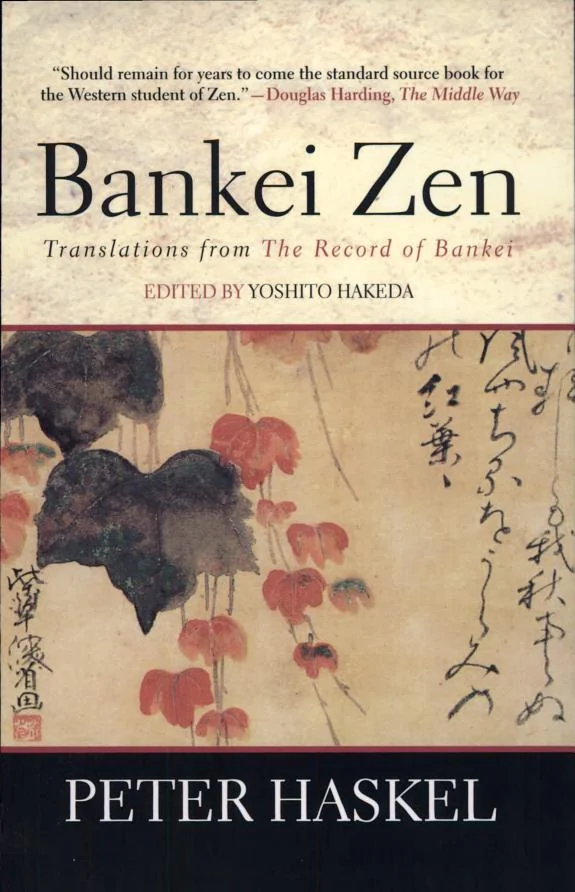
Bankei's teachings, as presented by Haskel, offer a potent antidote to spiritual over-intellectualization. The translator’s vivid account of Bankei's life, particularly his challenges to established monasticism, provides crucial context for the stark simplicity of the master's message. Haskel’s translation renders Bankei’s often blunt pronouncements with clarity, allowing the core concept of the "Unborn" to shine through. A particularly striking aspect is Bankei's insistence that the Unborn mind is not something to be attained but is, and always has been, our fundamental reality, even amidst suffering. However, the book occasionally feels like a series of pronouncements rather than a sustained argument, which might leave some readers yearning for more connective tissue between Bankei's ideas. The illustrations, while present, are somewhat sparse and could have been more extensively integrated to visually support the text. Ultimately, Bankei Zen provides a compelling, if sometimes stark, vision of immediate spiritual liberation.
📝 Description
73
Published in 1994, Bankei Zen translates the discourses of a controversial 17th-century Japanese master.
This volume presents the teachings of Bankei Yōtaku (1622-1693), an unconventional Zen master from Japan's Edo period. Peter Haskel's translation of Bankei's discourses aims to make his radical emphasis on naturalness and spontaneity accessible. Bankei's teachings arose during a time of increasing cultural standardization, and he reacted against what he saw as a drift toward ritualism and intellectualism within Zen Buddhism. He stressed the inherent Buddha-nature, which he believed was accessible through direct experience, setting him apart from more orthodox interpretations. The book includes biographical details and historical context for those interested in Bankei's life and the era in which he taught.
The work is suited for individuals interested in applying Zen principles outside of strict institutional frameworks. It will appeal to those seeking direct spiritual guidance and those intrigued by historical figures who challenged established norms. Students of comparative religion and philosophy, particularly those studying Japanese Buddhism, will also find value in its examination of Bankei's unique approach. The focus is on a direct, intuitive understanding rather than reliance on scriptures or complex meditative techniques.
Bankei Yōtaku's teachings emerge from the Rinzai school of Zen Buddhism during Japan's Edo period. His emphasis on the "Unborn" – the original, uncreated nature of mind always present and untouched by experience – represents a direct challenge to the scholastic and ritualistic tendencies he observed. By advocating for a return to naturalness and cessation of conceptual thought, Bankei sought to demystify spiritual realization, grounding it in everyday awareness rather than complex meditative systems or scriptural study. This focus on inherent, unconditioned awareness offers an alternative interpretation within the broader landscape of East Asian contemplative traditions.
💡 Why Read This Book?
• Gain a direct understanding of the "Unborn" (fusho) as presented by Bankei, a concept central to his iconoclastic Zen, and learn how this relates to everyday consciousness. • Explore Bankei Yōtaku's (1622-1693) unique approach to Zen, which emphasized naturalness and spontaneity over formalized practice, offering an alternative perspective from the Edo period. • Benefit from Peter Haskel's fluent translation and biographical context, which illuminate Bankei's challenging teachings and their relevance to contemporary seekers of authentic spiritual experience.
⭐ Reader Reviews
Honest opinions from readers who have explored this book.
❓ Frequently Asked Questions
Who was Bankei Yōtaku and when did he live?
Bankei Yōtaku (1622-1693) was a Japanese Zen Buddhist monk and master who taught during the Edo period. He is known for his unconventional approach, emphasizing naturalness and spontaneity in spiritual practice.
What is the central concept of "Bankei Zen"?
The central concept is the "Unborn" (fusho), which Bankei described as the original, uncreated nature of the mind that is always present and untouched by life's experiences.
What makes Bankei's teachings different from other Zen traditions?
Bankei stressed the immediate accessibility of the Unborn mind in everyday life, contrasting with Zen traditions that might emphasize complex meditative techniques or scriptural study.
Who translated Bankei's teachings in this book?
The teachings of Bankei in this volume are translated by Peter Haskel, who also provides a vivid account of Bankei's life and times.
When was the first English publication of Bankei Zen?
The first English publication of Bankei Zen, featuring Peter Haskel's translation, was on January 23, 1994.
What historical period does Bankei's life and teachings belong to?
Bankei lived and taught during Japan's Edo period (1603-1868), a time of significant cultural and political development in Japan.
🔮 Key Themes & Symbolism
The Unborn Mind
Central to Bankei's philosophy is the concept of the 'Unborn' (fusho), representing the original, unconditioned state of consciousness. This isn't something to be achieved but is the fundamental nature of mind, always present and unaffected by the flux of existence. Bankei argued that all sentient beings possess this inherent Buddha-nature, which is pure and untainted. The challenge lies in recognizing and resting in this awareness, free from conceptual overlay and the dualities of thought. This theme underscores the immediacy and directness of his spiritual path, aiming to cut through elaborate practices to the core of being.
Naturalness and Spontaneity
Bankei fiercely advocated for a return to naturalness (jinen) and spontaneity in spiritual practice, a direct counterpoint to the increasingly formalized Zen of his era. He believed that forcing the mind or adhering to rigid rules obscured the very clarity it sought. True realization, for Bankei, arises organically when the mind is allowed to function without artificial contrivance or intellectual striving. This theme highlights his iconoclastic stance, urging practitioners to trust their innate intelligence and the effortless flow of existence rather than imposing external structures.
Direct Experience over Doctrine
A persistent thread in Bankei's discourses is the primacy of direct, unmediated experience over scriptural study or dogmatic adherence. He often challenged his followers to question intellectual constructs and rely instead on the immediate reality of their own consciousness. This emphasis on experiential insight is a hallmark of his teaching, aiming to dismantle the conceptual barriers that prevent individuals from recognizing their inherent enlightenment. The book showcases Bankei’s directness, cutting through philosophical complexities to point towards the simple truth of the present moment.
The Present Moment Awareness
Bankei's teachings consistently redirect attention to the present moment as the locus of reality and spiritual awakening. He argued that dwelling on the past or anticipating the future only serves to obscure the ever-present Unborn mind. By anchoring awareness in the immediate experience of 'what is,' individuals can transcend the limitations of discursive thought and habitual patterns. This theme is critical for understanding Bankei's practical approach, suggesting that liberation is not a future attainment but a present realization, accessible through simple, unadorned attention.
💬 Memorable Quotes
Direct passages from the work, attributed to the author.
“The Unborn is not something you have to do anything about. It is. When you know this, you are free.”
— This statement expresses Bankei's core message: liberation isn't an effortful achievement but a recognition of an ever-present reality. It challenges the conventional pursuit of spiritual goals, suggesting that freedom lies in understanding the nature of mind as it already is.
“Don't cling to the past, don't chase the future. Rest in the present, and you'll find the Unborn.”
— This highlights Bankei's emphasis on present-moment awareness. By letting go of temporal preoccupations, one can access the fundamental, unconditioned nature of consciousness, which he identified as the Unborn.
“When you don't think, you are the Buddha. When you think, you are not.”
— This concisely illustrates Bankei's view on the role of conceptualization. He saw discursive thought as a veil obscuring the inherent enlightened nature, suggesting that pure awareness, free of thought, is the true self.
“The practice is simply to be natural, just as you are, without forcing anything.”
— This reflects Bankei's rejection of artificial spiritual disciplines. He promoted a path of effortless authenticity, where spiritual growth occurs through embracing one's natural state rather than through strenuous effort or conformity.
“See things as they are, without adding your own opinions or judgments.”
— This points to Bankei's advocacy for clear, unadorned perception. By observing reality directly, without the filter of personal biases and conceptual frameworks, one can begin to perceive the Unborn.
🌙 Esoteric Significance
Tradition
While rooted in Zen Buddhism, Bankei's teachings possess an esoteric quality due to their radical emphasis on direct, unmediated realization of the 'Unborn' mind. This speaks to certain strains of mystical traditions that posit an inherent divine spark or ultimate reality within the individual, accessible beyond conventional religious structures. His focus on the unconditioned, the primordially pure state of consciousness, aligns with concepts found in non-dual philosophies and certain Gnostic ideas of an uncreated source.
Symbolism
The primary symbolic concept is the 'Unborn' (fusho) itself, representing the primordial void, the unmanifest source from which all phenomena arise. It symbolizes purity, completeness, and the absence of duality. Another subtle motif is the contrast between 'thinking' and 'not-thinking.' 'Thinking' symbolizes the conditioned, dualistic mind bound by concepts and illusions, while 'not-thinking' represents the direct, unadorned awareness of the Unborn, a state of pure presence.
Modern Relevance
Bankei's emphasis on naturalness, spontaneity, and the direct realization of the Unborn mind finds echoes in contemporary mindfulness practices, non-dual inquiry (such as Advaita Vedanta and Dzogchen), and certain Western psychological approaches focused on self-acceptance. Thinkers and practitioners interested in transcending intellectual constructs to access direct experience of consciousness often reference Bankei's teachings as a concise and powerful expression of ultimate reality accessible here and now.
👥 Who Should Read This Book
• Students of Zen Buddhism seeking an alternative to more conventional or formal approaches, particularly those intrigued by historical figures who challenged orthodoxy. • Individuals interested in comparative mysticism and non-dual philosophies, looking for accessible expressions of ultimate reality beyond complex doctrines. • Seekers of direct spiritual insight who are drawn to teachings that emphasize immediacy, naturalness, and the inherent potential for awakening within everyday consciousness.
📜 Historical Context
Bankei Yōtaku (1622-1693) lived and taught during Japan's Edo period, a time characterized by Tokugawa shogunate rule, relative peace, and a flourishing of distinct cultural forms. While Zen Buddhism, particularly Rinzai and Sōtō schools, was established, Bankei emerged as a maverick figure within the Rinzai lineage. He challenged the prevailing trend towards formalized Zen, which he felt had become overly scholastic and ritualistic, losing touch with its essential spirit. His teachings emphasized the inherent Buddha-nature accessible through direct experience and naturalness, a stance that sometimes put him at odds with more orthodox monks and abbots. He faced opposition and was even expelled from Daitoku-ji temple, a significant center of Rinzai practice, illustrating the tensions his radical approach generated. His focus on the 'Unborn' offered a potent alternative to the prevailing intellectual and devotional practices of the era, resonating with those seeking a more immediate and less doctrinal path.
📔 Journal Prompts
The Unborn: Reflect on moments when you felt your mind was completely clear and without thought.
Naturalness in Practice: Consider how Bankei's emphasis on spontaneity challenges your current spiritual or daily routines.
Recognizing the Unborn: Explore the difference between conceptual understanding and direct experience of your own mind.
The Edo Period Context: How might Bankei's teachings have provided a radical alternative to the spiritual range of 17th-century Japan?
Bankei's Directness: Identify a personal belief or habit that could be seen as an 'artificial contrivance' hindering your own natural awareness.
🗂️ Glossary
Unborn (fusho)
The central concept in Bankei's teachings, referring to the original, uncreated, and primordial nature of the mind. It is the state of pure awareness that exists prior to and independent of any thought, feeling, or experience.
Naturalness (jinen)
A key principle in Bankei's Zen, emphasizing spontaneity and acting in accordance with one's innate nature without artificiality or forced effort. It signifies a state of being unconstrained by conceptualizations or external rules.
Buddha-nature
The inherent potential for enlightenment present in all sentient beings. Bankei asserted that this nature is identical to the Unborn and is not something to be attained but recognized.
Edo period
The historical period in Japan from 1603 to 1868, during which the Tokugawa shogunate ruled. Bankei lived and taught during this era of relative peace and cultural development.
Discursive thought
The process of thinking sequentially, involving reasoning, analysis, and the formation of concepts. Bankei often contrasted this with the direct, non-conceptual awareness of the Unborn.
Rinzai Zen
One of the major schools of Zen Buddhism in Japan, known for its emphasis on koan study and sudden enlightenment. Bankei was a prominent figure within the Rinzai tradition.
Daitoku-ji
A significant Zen Buddhist temple complex in Kyoto, Japan, historically a major center for Rinzai Zen. Bankei was associated with this temple early in his career but faced challenges there.
This book appears in 1 collection
🔮 Readers Also Liked
Browse all →









From the “Zen Buddhism” Collection
View all →









More Free Esoteric History & Biography Books
View all →