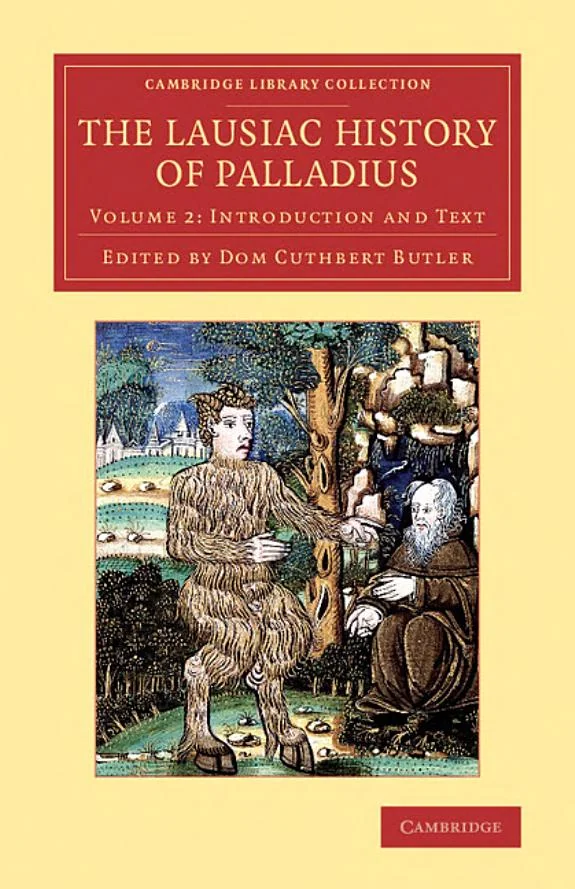
The Lausiac History of Palladius
 76
76

The Lausiac History of Palladius
Palladius's Lausiac History, particularly in its 1898-1904 English iteration, is an indispensable, if dense, resource for understanding the origins of Christian monasticism. The dual Greek and English presentation, coupled with rigorous scholarly notes, offers unparalleled access to the source material. However, its scholarly apparatus, while a strength for specialists, can present a barrier to entry for general readers. The detailed exploration of figures like Antony and Pachomius, and their distinct approaches to ascetic life, remains a powerful illustration of early spiritual dedication. The work's value lies in its unfiltered presentation of these foundational texts. It is a vital, if demanding, scholarly achievement.
📝 Description
76
Palladius's Lausiac History, compiled in the 5th century CE, documents early Christian ascetics in Egypt.
This work by Palladius offers a collection of biographies and anecdotes about the desert fathers and mothers of early Christian monasticism. Originally written in Greek in the 5th century CE, it captures a pivotal moment in the development of ascetic spirituality within the Roman Empire. The 1898-1904 English edition presents the original Greek text alongside critical notes and commentary. This edition is intended for scholars engaged in the serious study of early Christian history, Coptic monastic traditions, and the evolution of asceticism. It is not a general introduction but a tool for in-depth textual analysis and historical contextualization. The book details the spiritual movement that emerged during a time of religious and social change, where figures sought purity through disciplined living in desert regions.
The Lausiac History emerges from the early Christian tradition of hagiography and monastic literature. It chronicles the lives of ascetics who pursued spiritual perfection through extreme discipline and detachment from the world. The text details practices such as solitude, communal living, and the struggle against inner demons, reflecting a desire for direct experience of the divine. This tradition of seeking spiritual wisdom through asceticism and contemplation was a significant current within late antiquity and influenced later mystical thought.
💡 Why Read This Book?
• Gain direct textual access to the lives and teachings of Egyptian desert ascetics, such as the detailed accounts of Antony the Great's solitary life, offering unparalleled historical authenticity. • Understand the foundational principles of early monasticism, including the concept of *apatheia* as described in Palladius's biographical sketches, providing a concrete framework for spiritual discipline. • Appreciate the historical context of 4th and 5th-century Egyptian monasticism, evidenced by the specific geographical locations and communities mentioned, illuminating the movement's societal impact.
⭐ Reader Reviews
Honest opinions from readers who have explored this book.
❓ Frequently Asked Questions
What is the original language of The Lausiac History?
The original text of The Lausiac History was written in Koine Greek by Palladius of Galatia in the 5th century CE. This edition provides the original Greek alongside its English translation.
Who was Palladius of Galatia?
Palladius of Galatia was a church historian and bishop who lived in the late 4th and early 5th centuries. He was a disciple of Evagrius Ponticus and a friend of John Chrysostom, and his historical writings focus on the early monastic movement.
What period does The Lausiac History cover?
The history primarily covers the lives and practices of Christian ascetics and monks in Egypt, Palestine, and Syria during the 4th and 5th centuries CE, detailing the rise of monasticism.
What does 'Lausiac' refer to in the title?
The title 'Lausiac' refers to Lausus, a chamberlain in the court of Emperor Theodosius II, to whom Palladius dedicated the work. Lausus had requested an account of the holy men of the era.
Is this edition suitable for beginners in monastic studies?
While valuable, this edition is best suited for scholars and serious students due to its inclusion of the original Greek text and extensive critical notes, making it a scholarly resource rather than a casual introduction.
What is the significance of Egyptian monasticism discussed in the book?
The book highlights Egyptian monasticism as a pivotal force in early Christianity, establishing models of asceticism, communal living (cenobitism), and solitary devotion (eremitism) that profoundly influenced subsequent religious traditions.
🔮 Key Themes & Symbolism
The Desert Ascetic Ideal
The text meticulously chronicles the lives of early Christian monks and nuns who retreated to the deserts of Egypt, seeking spiritual purity through extreme asceticism. It details their rigorous practices, including fasting, prayer, and the renunciation of worldly possessions and pleasures. This pursuit of spiritual perfection in isolation, often framed as a battle against demonic forces, became a central to early monastic ideals, heavily influencing the development of Christian spirituality beyond the 5th century.
Forms of Monastic Life
Palladius differentiates between various expressions of the monastic life. He documents the solitary hermits (*eremites*) who lived in extreme isolation, often in desert wildernesses, and the communal monks (*cenobites*) who lived together in organized monasteries under a rule. The book provides vivid portraits of both lifestyles, showcasing the diverse ways individuals sought to dedicate their lives to God through disciplined spiritual practice and detachment from secular society.
Spiritual Warfare and Providence
A recurring theme is the constant spiritual struggle faced by the ascetics against temptations and demonic influences. Palladius recounts numerous anecdotes where holy men and women overcome these trials through prayer, vigilance, and divine assistance. This emphasis on spiritual warfare highlights the belief that the ascetic life was a direct confrontation with evil, requiring constant spiritual discipline and unwavering faith in God's protective providence.
The Role of the Lausiac History
The compilation itself serves as a proof of the burgeoning interest in monastic biographies in the late Roman period. Intended for a lay patron, Lausus, the work aimed to provide edifying examples of spiritual heroism. Its preservation and later translation, particularly this scholarly 1898-1904 edition, underscore its enduring significance as a primary source for understanding the foundational period of Christian monasticism.
💬 Memorable Quotes
Direct passages from the work, attributed to the author.
“Concerning the great Antony, and his manner of life and his virtue.”
— This introductory phrase signals the importance given to Antony, a key figure in early monasticism. It sets the stage for detailed biographical accounts that would serve as archetypes for ascetic devotion and spiritual struggle in the desert.
“And he was a man of prayer and spent the whole night in prayer, and when the sun rose, he began his work.”
— This describes the disciplined routine of a monastic figure, emphasizing the balance between intense prayer and manual labor. It reflects the ascetic ideal of integrating spiritual devotion with practical, daily life in a structured manner.
“The monks of Egypt were exceedingly strict in their fastings.”
— This observation highlights the extreme ascetic practices common among Egyptian monks. It points to fasting not merely as a discipline but as a central element in their pursuit of spiritual purity and detachment from bodily needs.
“He taught them that they should not be disturbed by the demons, nor be terrified of them.”
— This illustrates the spiritual guidance provided by experienced ascetics. It conveys the understanding that overcoming fear and maintaining inner peace in the face of perceived demonic influence was a key aspect of spiritual maturity.
“And he departed to the Lord on the seventh day of January.”
— This precise dating of a holy man's death signifies the historical and biographical focus of the text. It treats the passing of these figures not just as an end, but as a culmination of a life dedicated to spiritual pursuits.
🌙 Esoteric Significance
Tradition
The Lausiac History is a foundational text for Christian monasticism, a tradition that, while orthodox, developed many practices and spiritual insights that resonate with broader esoteric currents. Its emphasis on inner transformation, the struggle against lower desires (passions), and the pursuit of direct spiritual experience aligns with perennial philosophical and mystical quests found across various traditions. While not Gnostic or Hermetic, its focus on the ascetic path as a means to achieve a higher spiritual state and union with the divine shares common ground with esoteric disciplines aiming for deification or spiritual liberation.
Symbolism
The desert itself functions as a potent symbol, representing a space of purification, solitude, and direct encounter with the divine, stripped bare of worldly distractions. Water, often scarce, symbolizes spiritual nourishment and divine grace. The struggle against demons symbolizes the internal battle against ego, lower desires, and psychological impediments to spiritual growth. Ascetic practices like fasting and vigils symbolize the mortification of the flesh and the discipline required to elevate the spirit.
Modern Relevance
Contemporary contemplative traditions, mindfulness practices, and certain strands of New Age spirituality often draw inspiration from the principles of early monasticism documented by Palladius. Thinkers and practitioners interested in intentional community, radical simplicity, and the psychological dimensions of spiritual discipline find relevance in these ancient accounts. Modern ecumenical dialogues also often revisit these early Christian figures as exemplars of universal spiritual striving, transcending sectarian divides.
👥 Who Should Read This Book
['• Scholars of Late Antiquity and early Christian history seeking primary source material on monastic origins and ascetic practices.', '• Students of comparative religion interested in the development of spiritual disciplines and the lives of religious exemplars across traditions.', '• Individuals exploring contemplative practices and the history of Christian mysticism looking for foundational texts on spiritual struggle and desert spirituality.']
📜 Historical Context
Palladius's *Lausiac History*, compiled in the early 5th century CE, emerged during a transformative period for Christianity within the Roman Empire. The Edict of Milan in 313 CE had legalized Christianity, paving the way for its rapid expansion and institutionalization, which paradoxically spurred a counter-movement seeking radical spiritual purity in the desert. Asceticism, particularly in Egypt, became a dominant force, attracting thousands who sought to emulate Christ through rigorous self-denial. This movement diverged significantly from the more integrated, and sometimes compromised, church structure emerging in urban centers. Palladius himself was deeply connected to the spiritual currents of the time, having been a disciple of Evagrius Ponticus, a prominent ascetic theologian whose teachings on *apatheia* and contemplation were influential, though later controversial. Contemporaries like John Cassian, who also wrote extensively on monasticism, were engaged with similar spiritual traditions. The *Lausiac History* provided a vital, if sometimes hagiographic, record of these foundational figures and practices, offering a spiritual counter-narrative to the increasingly secularized imperial church.
📔 Journal Prompts
The desert as a symbol of spiritual purification, as depicted in the lives of the monks.
The concept of *apatheia* and its practical application in overcoming personal disturbances.
The balance between solitude and community in the lives of the ascetics described.
The nature of spiritual warfare as presented through the temptations faced by the holy men.
The legacy of Antony and the enduring influence of his ascetic model.
🗂️ Glossary
Asceticism
A practice of rigorous self-discipline and self-denial, often for religious or spiritual reasons. In early Christianity, it involved extreme fasting, prayer, solitude, and renunciation of worldly comforts.
Eremite (or Hermit)
A religious recluse, typically one who lives in solitude in a desert or remote place for purposes of prayer and spiritual devotion. Palladius documents many such figures.
Cenobite
A member of a religious community living under a monastic rule and vows. This contrasts with the eremite, who lives in solitude. Early monasteries often housed cenobites.
Apatheia
A Greek term often translated as 'impassivity' or 'freedom from passion.' In early Christian monasticism, it referred to a state of inner tranquility and detachment from disturbing emotions and desires.
Spiritual Warfare
The concept that the Christian life involves a constant struggle against the forces of evil, particularly demons and temptations. Ascetics were seen as actively engaged in this battle.
Thebaid
The region in Upper Egypt through which the Nile River flows. It was a major center for early Christian monasticism, home to many prominent ascetics described by Palladius.
Koine Greek
The common dialect of Greek spoken and written in the Hellenistic and Roman periods. It was the lingua franca of the eastern Mediterranean and the language in which the New Testament and Palladius's work were originally written.
This book appears in 1 collection
🔮 Readers Also Liked
Browse all →







From the “Desert Fathers” Collection
View all →









More Free Esoteric History & Biography Books
View all →