Time and the Highland Maya
 82
82

Time and the Highland Maya
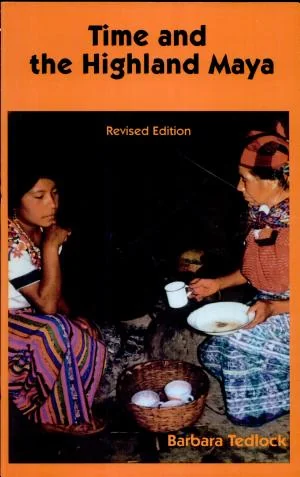
Barbara Tedlock's Time and the Highland Maya is an arresting ethnographic account, particularly for its detailed exploration of the Quiché Maya's temporal cosmology. The strength of the book lies in its meticulous documentation of ritual practices and the sophisticated calendrical systems that underpin them. Tedlock offers a compelling argument for the vitality of these traditions, even as she acknowledges the pressures of modernity. A notable limitation, however, is the inherent difficulty in fully conveying the lived, experiential dimension of these complex belief systems through written text alone. The passage discussing the divinatory use of the *cholq’ij* calendar, for instance, illustrates the profound way time itself is perceived as an active, spiritual force rather than a neutral construct. This work is essential for understanding Maya thought, though it demands careful attention from the reader. It stands as a significant contribution to the ethnography of time and ritual.
📝 Description
82
Barbara Tedlock's 1992 book examines the Quiché Maya's ritual practices and cosmological understandings.
Time and the Highland Maya documents the living traditions of the Quiché Maya in highland Guatemala as they existed in the late 20th century. Barbara Tedlock's work provides a detailed account of their worldview, with a specific focus on their ritual practices and how they perceive time. The book is a significant record of cultural knowledge, especially concerning the Quiché calendrical systems and their spiritual importance.
This study is relevant to anthropologists, ethnographers, and scholars of Mesoamerican cultures and religions. It will also interest those studying comparative cosmology, indigenous spiritual traditions, and the relationship between timekeeping and ritual. Anyone wanting to grasp the complexities of non-Western temporal frameworks and their social effects will find this volume particularly useful. The book emerged during a time of growing academic attention to indigenous cosmologies and the ethnography of ritual.
This book situates itself within the study of indigenous cosmologies, particularly those of Mesoamerica. It details the Quiché Maya's sophisticated understanding of time, which is not a separate concept but is woven into their spiritual beliefs, agricultural cycles, and social structures. The central role of the *cholq’ij*, the 260-day sacred calendar, illustrates how Mayan life and ceremony are ordered by ancient systems. Tedlock's work highlights how these temporal frameworks are a vital part of their living traditions and worldview.
💡 Why Read This Book?
• Gain a practical understanding of the 260-day *cholq’ij* calendar, learning how its cyclical nature structures Quiché Maya ritual and daily life, a concept detailed in the book's ethnographic accounts. • Appreciate the intricate relationship between timekeeping, cosmology, and agricultural cycles as depicted in the book's analysis of highland Guatemalan indigenous practices. • Understand the academic context of Maya studies following its 1992 publication, recognizing how Tedlock's work engaged with then-current anthropological discussions on ritual and indigenous belief systems.
⭐ Reader Reviews
Honest opinions from readers who have explored this book.
❓ Frequently Asked Questions
What is the primary focus of Barbara Tedlock's Time and the Highland Maya?
The book's primary focus is the ritual practices and cosmological understandings of the contemporary Quiché Maya people in highland Guatemala, with a particular emphasis on their complex relationship with time and calendrical systems.
When was Time and the Highland Maya first published?
Time and the Highland Maya was first published in March 1992.
What is the 'cholq'ij' calendar mentioned in the book?
The *cholq’ij* is the 260-day sacred calendar used by the Quiché Maya. It is central to the book's exploration of their cosmology, ritual, and divination practices.
Who are the contemporary Quiché Indians?
The Quiché Indians are an indigenous Maya people residing in the highland regions of Guatemala, known for maintaining many of their traditional cultural and spiritual practices.
What makes this book a landmark in ethnographic study?
It is considered a landmark for its detailed, respectful, and in-depth ethnographic account of the Quiché Maya's living ritual and cosmology, particularly their sophisticated understanding of time.
Does the book discuss changes in Maya culture over time?
Yes, the updated editions of the book address changes that have occurred in the decade following its initial publication, offering a perspective on cultural evolution.
🔮 Key Themes & Symbolism
Calendrical Cosmology
The book meticulously details the Quiché Maya's sophisticated engagement with time, primarily through the 260-day *cholq’ij* calendar. This is not merely a tool for tracking days but a profound cosmological framework that dictates ritual timing, agricultural cycles, and divination. Tedlock illustrates how the Maya perceive time as cyclical and imbued with spiritual significance, where specific days carry inherent energies and influences that shape events and human destiny. The work emphasizes that understanding this calendrical system is key to understanding the Maya worldview itself, demonstrating a deep integration of temporal awareness into every facet of life and spiritual practice.
Ritual Practice and Performance
Time and the Highland Maya offers an in-depth look at the ritual life of the Quiché people, documenting ceremonies, prayers, and divinatory practices. Tedlock's ethnographic approach captures the performance of ritual as a living tradition, connecting contemporary practices to ancient Maya beliefs. The book details how rituals are enacted to maintain cosmic balance, honor spiritual forces, and work through the complexities of daily existence. It highlights the role of various practitioners, such as daykeepers, and the importance of specific offerings and incantations in these sacred performances, providing a rich ethnographical record.
Ethnographic Documentation
As a landmark work in ethnography, this book provides a detailed and respectful account of the Quiché Maya culture, particularly their spiritual and temporal systems. Tedlock's research, conducted over extended periods, allows for an intimate portrayal of community life and belief structures. The book serves as a vital record of traditions that may be subject to change or erosion due to external influences. Its meticulous documentation offers scholars and interested readers a window into a complex indigenous worldview, emphasizing cultural resilience and the enduring power of ancestral knowledge systems.
Indigenous Worldviews
The core of Tedlock's study lies in presenting the indigenous worldview of the Quiché Maya, particularly their unique perception of time. It challenges Western linear notions of temporality by illustrating a cyclical, divinely ordered understanding. The book explores how this worldview shapes social relations, agricultural practices, and spiritual beliefs, demonstrating a holistic integration of the sacred into the mundane. By focusing on the living traditions of highland Guatemala, it offers a powerful counterpoint to colonial narratives and highlights the depth and complexity of non-Western philosophical and spiritual systems.
💬 Memorable Quotes
Direct passages from the work, attributed to the author.
“The Quiché calendar is not a passive record but an active force shaping destiny.”
— This interpretation highlights the book's central argument that the Mayan *cholq’ij* calendar is not simply a way to measure time but a dynamic system believed to influence events and individual fates, deeply embedded in their spiritual cosmology.
“Daykeepers interpret the energies of specific calendar days for guidance.”
— This interpretation points to the specific role of diviners (daykeepers) within Quiché society, as described in the book, who use the sacred calendar to understand the spiritual implications of particular days.
“The Maya understanding of time is fundamentally cyclical, not linear.”
— This interpretation captures a key distinction presented in the work: the contrast between the Western linear perception of time and the Quiché Maya's cyclical, recurring view, which is central to their worldview and spiritual practices.
💡 Key Ideas
Editorial paraphrase of the work's core concepts — not direct quotes.
Ritual acts are performed to align human life with cosmic cycles.
This paraphrased concept emphasizes the book's depiction of Quiché Maya rituals as purposeful actions aimed at harmonizing daily existence and community activities with the perceived rhythms and energies of the cosmos.
Cosmology dictates the timing and form of Quiché ceremonies.
This paraphrased concept underscores the direct link established in the book between the Quiché Maya's understanding of the universe (cosmology) and the practical execution of their religious and social ceremonies.
🌙 Esoteric Significance
Tradition
While not strictly adhering to a Western esoteric lineage like Hermeticism or Kabbalah, *Time and the Highland Maya* offers clear insights relevant to esoteric studies by documenting an indigenous cosmological system. It aligns with esoteric traditions that emphasize the sacredness of time, the interconnectedness of the cosmos, and the power of divination and ritual. The work provides empirical grounding for concepts explored in esoteric philosophy regarding cyclical time, celestial influences, and the human relationship to universal order, demonstrating these principles in a vibrant, living culture.
Symbolism
The central symbol is the *cholq’ij*, the 260-day sacred calendar, which functions as a complex symbolic system. Each day is a combination of a number (1-13) and a glyph (20), creating 260 unique energies. These combinations are not arbitrary but are interpreted as carrying specific spiritual qualities, influences, and destinies. The act of divination, interpreting these daily energies, is itself a symbolic practice aimed at understanding divine will and cosmic patterns.
Modern Relevance
Contemporary esoteric practitioners and scholars interested in comparative cosmology, shamanism, and the sacredness of time find Tedlock's work invaluable. It provides a living example of a sophisticated calendrical and ritual system that offers an alternative to Western linear time perception. Thinkers and practitioners exploring syncretic spiritual paths, or those seeking to understand indigenous wisdom traditions, draw upon its detailed ethnography to inform their own explorations of cyclical time and esoteric symbolism.
👥 Who Should Read This Book
• Anthropologists and ethnographers specializing in Mesoamerican cultures, seeking detailed field research on Quiché Maya ritual and cosmology. • Students and practitioners of comparative religion and indigenous spiritual traditions, looking for in-depth accounts of non-Western temporal frameworks and belief systems. • Scholars of Hermeticism and esoteric studies interested in indigenous cosmologies, particularly concerning the sacredness of time and calendrical divination.
📜 Historical Context
Published in 1992, Barbara Tedlock's *Time and the Highland Maya* arrived at an important moment for Mesoamerican ethnography and the study of indigenous cosmologies. The late 20th century saw a burgeoning academic interest in the persistence of pre-Columbian worldviews within contemporary indigenous communities, often challenging earlier theories of assimilation or inevitable cultural loss. Tedlock’s work contributed significantly to this field by providing a granular, detailed account of the Quiché Maya's living ritual and temporal systems, particularly their sophisticated 260-day *cholq’ij* calendar. This detailed ethnography offered a powerful counterpoint to more generalized or historically-focused studies of Maya culture. It engaged with anthropological debates concerning the nature of time and the relationship between cosmology and social practice, offering rich empirical data. Contemporary scholars like Dennis Tedlock (Barbara Tedlock's husband and frequent collaborator) were also producing significant works on Maya shamanism and cosmology during this period, creating a fertile intellectual environment for studies like this.
📔 Journal Prompts
The *cholq’ij* calendar's structure and its daily influences.
How the Quiché Maya's perception of time differs from a linear Western model.
The role of ritual in maintaining cosmic balance within the Quiché worldview.
Interpreting the symbolic meaning of specific day-names and numbers in the *cholq’ij*.
The relationship between agricultural cycles and ritual timing among the highland Maya.
🗂️ Glossary
Quiché Maya
An indigenous group of Maya people residing primarily in the highland regions of Guatemala, known for preserving distinct cultural traditions and a complex cosmology.
Cholq’ij
The 260-day sacred calendar used by the Quiché Maya, formed by the combination of 20 day signs and 13 numbers, central to their ritual and divination practices.
Cosmology
The understanding or theory of the origin and development of the universe; in this context, the specific worldview and spiritual beliefs of the Quiché Maya concerning the structure and order of the cosmos.
Ritual
A set of actions, performed mainly for their symbolic value, in a prescribed order; in the book, referring to the ceremonies, prayers, and practices of the Quiché Maya.
Ethnography
The scientific description of the customs of individual peoples and cultures; the book itself is an ethnographic study of the Quiché Maya.
Daykeeper
A specialist within Quiché Maya society who is trained in interpreting the *cholq’ij* calendar and its divinatory significance, often serving as a spiritual guide or healer.
Mesoamerica
A historical and cultural region encompassing central and southern Mexico and northern Central America, where various indigenous civilizations flourished, including the Maya.
This book appears in 1 collection
🔮 Readers Also Liked
Browse all →









From the “Shamanism” Collection
View all →






More Free Occult Philosophy Books
View all →