Positive Imaging
 82
82

Positive Imaging
Norman Vincent Peale’s "Positive Imaging" offers a direct, actionable methodology for harnessing the mind's creative potential. The book's strength lies in its clear articulation of the "imaging" process—a technique for imprinting desired outcomes onto the subconscious. Peale’s pragmatic tone, devoid of excessive jargon, makes complex psychological concepts accessible to a broad audience. One particularly effective passage details how to "outwit worry" by replacing anxious thoughts with pre-formed positive images of success. However, the work occasionally leans towards oversimplification, presenting challenges as solely a matter of mental discipline without fully acknowledging external systemic factors. Despite this, the enduring appeal of Peale’s optimistic framework remains. "Positive Imaging" serves as a practical guide for mental reorientation.
📝 Description
82
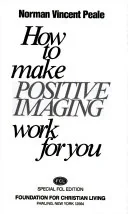
Norman Vincent Peale's 1982 book, Positive Imaging, details a method for mental cultivation.
Peale outlines a structured technique for mental cultivation centered on visualization. The core practice involves creating a vivid mental picture of a specific goal, infusing it with emotional energy, and sustaining this internal "image." Peale proposed that this consistent mental focus allows the unconscious mind to absorb the image, thereby activating latent psychological forces that can promote personal achievement and general well-being.
This work is directed towards individuals seeking practical strategies to overcome personal challenges and improve their lives. It addresses common concerns such as financial worries, loneliness, health issues, relationship problems, and difficulties in social interactions. The book provides a systematic approach for anyone prepared to actively participate in their own mental and emotional growth to attain concrete outcomes.
Published in 1982, "Positive Imaging" aligns with the New Thought movement's emphasis on mental science and spiritual healing. This tradition, which gained prominence in the late 19th and early 20th centuries through figures like Wallace D. Wattles and Napoleon Hill, posits that an individual's thoughts and beliefs directly influence their external reality. Peale's method of "imaging" fits within this framework, suggesting that by consciously directing one's mental focus and emotional state, one can shape circumstances and manifest desired outcomes, connecting psychological practices with spiritual belief.
💡 Why Read This Book?
• Learn the specific "imaging" technique to consciously impress desired outcomes onto your unconscious mind, a method detailed throughout the book. • Discover how to replace specific anxieties, such as those related to money problems, by using the "positive imaging" process as described in its pages. • Understand the synergistic relationship between mental visualization and spiritual practice, a core tenet of Peale's approach since his earlier works like "The Power of Positive Thinking" (1952).
⭐ Reader Reviews
Honest opinions from readers who have explored this book.
❓ Frequently Asked Questions
What is the core technique of Positive Imaging?
The core technique is "imaging," which involves vividly picturing a desired goal or objective in your mind and holding that mental image until it is absorbed by your unconscious mind, thereby releasing untapped energies.
When was Norman Vincent Peale's Positive Imaging first published?
Positive Imaging by Norman Vincent Peale was first published in 1982, reflecting a continuation of his work on positive thinking and mental application.
How does Positive Imaging address financial issues?
The book suggests using the imaging technique to visualize solutions to money problems. By holding a clear mental picture of financial security or abundance, individuals are guided to unlock their unconscious resources to achieve these goals.
Can Positive Imaging help with loneliness?
Yes, the book proposes that "imaging" can be used to banish loneliness. This involves visualizing fulfilling relationships and positive social interactions, thereby influencing one's mindset and attracting more congenial connections.
What role does the unconscious mind play in Positive Imaging?
The unconscious mind is central to Positive Imaging. It is considered a powerful reservoir of untapped energies that can be accessed and directed by consistently holding positive mental images of desired outcomes.
Is Positive Imaging related to earlier works by Peale?
Yes, Positive Imaging builds upon the foundational principles found in Norman Vincent Peale's earlier influential works, such as "The Power of Positive Thinking" (1952), extending his philosophy of mental application to specific visualization techniques.
🔮 Key Themes & Symbolism
The Power of Visualization
This book posits that the human mind possesses a potent faculty for visualization, termed "imaging." This is not mere daydreaming but a disciplined mental practice of vividly creating and holding a desired outcome in the mind's eye. Peale asserts that when this image is sustained with emotional conviction, it bypasses conscious skepticism and impresses itself upon the unconscious mind. This imprint, he explains, acts as a blueprint, directing one's energies and actions towards the realization of that visualized goal, effectively shaping reality through mental focus.
Unlocking the Unconscious
A central tenet of "Positive Imaging" is the belief in a vast, untapped reservoir of power residing within the unconscious mind. Peale presents the unconscious not as a Freudian repository of repressed trauma, but as a dynamic source of energy and creativity that can be deliberately accessed and utilized. The "imaging" technique serves as the key to this access; by consistently feeding the unconscious with positive, goal-oriented images, individuals can purportedly mobilize these latent forces to overcome obstacles and achieve their aspirations.
Mind-Body Synergy
The work emphasizes a profound connection between mental states and physical well-being, as well as success in external life. Peale argues that negative thought patterns can manifest as physical ailments or interpersonal difficulties, while positive mental cultivation, through "imaging," can lead to improved health, stronger relationships, and greater overall success. This perspective integrates psychological techniques with a holistic view of human experience, suggesting that mental focus directly influences one's tangible reality.
Faith as an Amplifier
While "Positive Imaging" focuses on a specific psychological technique, Peale consistently integrates spiritual elements, particularly faith and prayer, as crucial components for amplifying the effectiveness of visualization. He suggests that belief in the possibility of achieving the visualized goal, coupled with a sense of divine support, lends greater power to the "imaging" process. This blend of psychological discipline and spiritual conviction forms a core part of his approach, aiming for comprehensive personal transformation.
💬 Memorable Quotes
Direct passages from the work, attributed to the author.
“Hold the image of your goal in your mind until it sinks into your unconscious.”
— This statement captures the core directive of the "imaging" technique. It stresses the active and sustained nature of the visualization, emphasizing that the mental picture must be imprinted deeply enough to influence subconscious processes and subsequent actions.
“The unconscious mind releases great untapped energies.”
— This highlights the foundational belief that individuals possess immense, dormant potential within their subconscious. The "imaging" process is presented as the method to unlock and channel these powerful, latent energies for personal benefit and achievement.
“Solve your money problems through positive imaging.”
— This illustrates a practical application of the technique. It suggests that by visualizing financial solutions and abundance, one can influence their circumstances and attract the resources needed to overcome monetary difficulties.
“Banish loneliness with a vivid mental picture of companionship.”
— This offers another concrete application, demonstrating how the "imaging" technique can be applied to social and emotional challenges. Visualizing desired connections is presented as a means to attract and foster meaningful relationships.
“Improve your health by picturing yourself well.”
— This points to the psychosomatic aspect of Peale's philosophy. By using "positive imaging" to create a mental model of good health, individuals are encouraged to influence their physical state and promote healing.
🌙 Esoteric Significance
Tradition
While not explicitly aligned with a single esoteric lineage, "Positive Imaging" draws heavily from the principles of New Thought and the broader Western Esoteric tradition, particularly its Hermetic roots emphasizing the power of the mind to shape reality ('As Above, So Below'). It shares common ground with visualization practices found in various spiritual disciplines, including some forms of meditation and affirmation used in Theosophy and later New Age movements, though Peale's approach is distinctly pragmatic and Christian-oriented.
Symbolism
The primary "symbol" in this work is the mental image itself, acting as a seed or blueprint for manifestation. The "unconscious mind" functions as a symbolic representation of a hidden, potent realm within the psyche, akin to the alchemical concept of the prima materia or the Jungian collective unconscious, a source of untapped power. The desired goal, once visualized, becomes a symbolic representation of future fulfillment, guiding the individual's energetic trajectory.
Modern Relevance
The principles of "Positive Imaging" continue to influence contemporary self-help, motivational speaking, and positive psychology. Concepts like visualization, affirmation, and the focus on mindset are foundational in fields such as sports psychology, neuro-linguistic programming (NLP), and various mindfulness-based stress reduction techniques. Modern practitioners often adapt Peale's core ideas, sometimes secularizing them or integrating them with other modalities, demonstrating the enduring appeal of his approach to mental cultivation.
👥 Who Should Read This Book
• Individuals seeking practical, step-by-step methods for personal goal achievement, particularly those interested in the psychological power of focused visualization. • Readers grappling with specific life challenges such as financial stress, relationship issues, or persistent worry, who are open to a faith-informed approach to problem-solving. • Students of 20th-century self-help literature and the New Thought movement, looking to understand the foundational techniques that influenced later motivational and personal development strategies.
📜 Historical Context
Published in 1982, Norman Vincent Peale's "Positive Imaging" arrived at a moment when the self-help industry was booming, building on the momentum of earlier New Thought and positive psychology movements. Peale, already a prominent figure following the immense success of "The Power of Positive Thinking" (1952), tapped into a widespread cultural desire for practical, optimistic approaches to life's challenges. His work offered a more structured, actionable version of the mind-over-matter principles championed by contemporaries like Napoleon Hill. While not facing overt censorship, Peale's brand of optimistic psychology and its emphasis on faith sometimes drew criticism from more secular psychological circles, which favored psychoanalytic or behavioral approaches, viewing his methods as potentially simplistic or lacking empirical rigor. Nevertheless, the book resonated with millions seeking accessible tools for personal empowerment.
📔 Journal Prompts
The practice of "imaging" a desired outcome.
Cultivating faith to amplify the effectiveness of "Positive Imaging."
Visualizing solutions to overcome specific obstacles.
The role of the "unconscious mind" in manifestation.
Developing a consistent "imaging" routine.
🗂️ Glossary
Imaging
The core technique of vividly picturing a desired goal or objective in one's mind and holding that image with emotional conviction until it is absorbed by the unconscious.
Unconscious Mind
Referred to as a vast reservoir of untapped energies and creative power that can be accessed and directed through consistent positive mental imaging.
Positive Imaging
The systematic application of the "imaging" technique to achieve specific goals related to finances, health, relationships, and personal well-being.
Faith
Belief in the possibility of achieving the visualized goal, considered by Peale to be a crucial element that amplifies the power of mental imaging.
Goal Objective
The specific desired outcome or end-state that an individual aims to achieve through the practice of positive imaging.
Mental Picture
A clear, detailed, and emotionally charged visualization held in the mind as part of the "imaging" process.
Untapped Energies
The latent psychological forces and potential believed to reside within the unconscious mind, which "imaging" aims to release and direct.
This book appears in 1 collection
🔮 Readers Also Liked
Browse all →









From the “Visualization” Collection
View all →









More Free Sacred Texts & Gnosticism Books
View all →