What is Visualization?
Visualization is the practice of forming mental images or representations, often used to achieve specific outcomes. It involves engaging the mind's eye to create detailed scenarios, feelings, and sensations associated with desired goals or experiences. This mental rehearsal can influence perception, behavior, and even physiological responses, making it a tool for personal growth, skill development, and spiritual exploration.
Best Books for Complete Beginners
Beginners seeking to understand visualization can start with accessible guides. 'The Complete Idiot's Guide to Creative Visualization' by Shari L. Just and Carolyn Flynn offers a straightforward introduction to core concepts and exercises. David Joseph Schwartz's 'The Magic of Thinking Big' (1959) provides practical strategies for using mental imagery to overcome limitations and achieve success. 'Visualización creativa' by Shakti Gawain is a classic that explains how to use visualization for personal transformation and goal attainment, emphasizing positive thinking and intention.
Intermediate Reading
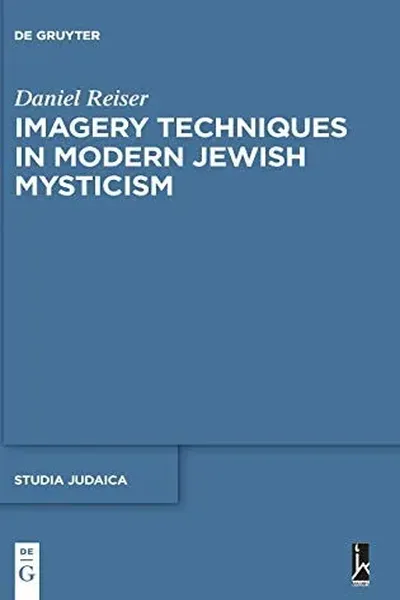
For those ready to deepen their practice, several books offer more nuanced approaches. Daniel Reiser's 'Imagery Techniques in Modern Jewish Mysticism' examines the specific applications within a mystical tradition. Louis Komjathy's 'Daoist Meditation: Theory, Method, Application' explores visualization within a contemplative framework, detailing theoretical underpinnings and practical methods. 'Practical Kabbalah' by Laibl Wolf introduces visualization as a tool for spiritual development and understanding esoteric principles.
Classical / Advanced Texts
Advanced study involves exploring visualization within complex systems and scholarly contexts. Alexandra David Neel's 'Magic & Mystery In Tibet' offers insights into Tibetan Buddhist practices, including advanced visualization techniques. 'Shingon: Japanese Esoteric Buddhism' by Taiko Yamasaki provides a scholarly examination of visualization within this specific Buddhist lineage. For a broader, interdisciplinary perspective, 'The Cambridge Handbook of Visuospatial Thinking' by Priti Shah and Akira Miyake examines cognitive aspects of mental imagery.
Reading Order — Step by Step
Begin with foundational texts in Month 1, such as 'The Complete Idiot's Guide to Creative Visualization' or 'The Magic of Thinking Big' to grasp basic principles. In Month 2, explore specific applications with 'Visualización creativa' and 'Practical Kabbalah'. Month 3 can be dedicated to more specialized traditions or theoretical underpinnings, choosing from works like 'Imagery Techniques in Modern Jewish Mysticism' or 'Shingon: Japanese Esoteric Buddhism'. Advanced readers can then tackle texts like 'Magic & Mystery In Tibet' or scholarly handbooks.
Frequently Asked Questions
Which visualization book should I read first?
For a gentle introduction, start with 'The Complete Idiot's Guide to Creative Visualization' or 'The Magic of Thinking Big'. They offer accessible techniques for beginners to grasp core concepts.
How is visualization used in different traditions?
Visualization appears in various forms: in Tibetan Buddhism for deity yoga, in Daoism for energy cultivation, and in Jewish mysticism for contemplating divine attributes, as explored in specialized texts.
Can visualization help with practical goals?
Yes, books like 'The Magic of Thinking Big' and '101 Keys to Your Prosperity' demonstrate how visualization can be applied to achieve success in career, finances, and personal development.
What's the difference between visualization and imagination?
Imagination is the faculty of forming mental images, while visualization is the deliberate and focused use of imagination, often with specific intention, to achieve a particular outcome.
Are there scientific aspects to visualization?
Yes, cognitive psychology explores visuospatial thinking, as seen in 'The Cambridge Handbook of Visuospatial Thinking', examining how the brain processes and manipulates mental imagery.
Where can I learn about advanced visualization techniques?
Advanced techniques are often found in texts on specific esoteric traditions, such as Alexandra David Neel's 'Magic & Mystery In Tibet' or scholarly works on Buddhist practices.
Is visualization a form of meditation?
Visualization can be a component of meditation, particularly in contemplative practices like Daoist meditation or certain Buddhist techniques, where mental imagery guides the meditative state.
What is 'creative visualization'?
Creative visualization, popularized by authors like Shakti Gawain, is a method that uses focused mental imagery and intention to bring about desired changes or achieve goals in one's life.