Visualizing Music
 79
79

Visualizing Music
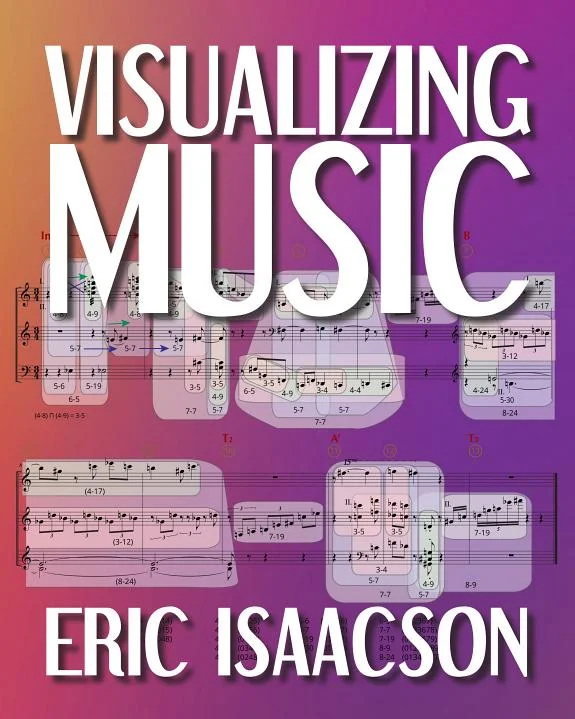
Eric Isaacson’s *Visualizing Music* offers a compelling argument for the visual dimension of musical understanding. Instead of merely describing musical elements, Isaacson constructs a framework for seeing them. His engagement with perceptual psychology, particularly the principles of gestalt, provides a solid foundation for his graphical proposals. A strength lies in his detailed analysis of historical attempts at music visualization, showing their conceptual evolution. However, the book occasionally leans heavily on technical jargon from information science, which might present a barrier for readers less familiar with the field. The section discussing the representation of polyphony through layered graphical elements, while conceptually sound, could benefit from more varied practical examples beyond standard Western classical scores. Ultimately, *Visualizing Music* successfully champions a visual literacy for sound, urging a reconsideration of how we perceive and analyze music.
📝 Description
79
Eric Isaacson's 2009 book Visualizing Music examines how graphical images articulate musical comprehension.
Visualizing Music investigates the connection between auditory experience and visual representation. Eric Isaacson shows how graphical images can articulate and deepen our understanding of music. The book moves beyond subjective appreciation to provide analytical tools for understanding musical structures, dynamics, and emotional currents through sight. It suggests that visual aids can effectively complement aural perception, translating the ephemeral nature of sound into tangible forms.
This work is for anyone intrigued by the science and art of perception, particularly those interested in how different sensory inputs inform one another. Musicians seeking new ways to analyze their craft, composers exploring novel methods of notation, and listeners wanting a richer understanding of musical composition will find value. It also appeals to students and practitioners of information visualization, graphic design, and cognitive science curious about applying their fields to artistic expression. The inquiry into visually representing music has roots stretching back centuries, with early attempts like Athanasius Kircher's synesthetic diagrams in his 1650 work Musurgia Universalis. Isaacson's contemporary approach benefits from advances in cognitive psychology and digital information design.
This book engages with a long-standing tradition of seeking correspondences between sound and vision, a practice often found in esoteric thought. From early synesthetic attempts like Athanasius Kircher's diagrams in the 17th century to Wassily Kandinsky's exploration of visual equivalents for musical tones in the early 20th century, thinkers have pursued ways to bridge sensory modalities. Isaacson's work, informed by modern cognitive psychology and information design, extends this lineage. It addresses the esoteric impulse to find underlying unity or shared structures across different forms of experience, translating the intangible realm of music into observable, visual patterns.
💡 Why Read This Book?
• Learn how principles from vision science, such as gestalt principles, can be applied to decipher musical structures, moving beyond purely aural analysis. This offers a concrete method for understanding music's architecture. • Discover the historical trajectory of music visualization, from early attempts in the 17th century to modern digital applications, providing context for Isaacson's contemporary theories. • Gain practical insights into designing effective visual representations of music, enabling you to create or interpret graphical scores and analyses that enhance musical comprehension.
⭐ Reader Reviews
Honest opinions from readers who have explored this book.
❓ Frequently Asked Questions
What is the primary goal of Eric Isaacson's 'Visualizing Music'?
The book's primary goal is to explore how graphical images can aid in understanding music, drawing on vision science and information visualization to translate auditory experiences into visual forms.
What historical context does 'Visualizing Music' provide for its subject?
It traces the lineage of music visualization back to figures like Athanasius Kircher in 1650 and Wassily Kandinsky, placing Isaacson's modern approach within a long-standing intellectual tradition.
Which scientific fields inform the concepts presented in 'Visualizing Music'?
The book heavily draws upon principles from vision science, cognitive psychology, and information visualization to explain how visual representations can illuminate musical concepts.
What are some key concepts discussed regarding the visual representation of music?
Key concepts include perceptual mapping and gestalt principles, examining how visual perception of patterns and spatial relationships can be applied to musical analysis.
Who would benefit most from reading 'Visualizing Music'?
Musicians, composers, listeners interested in deeper analysis, and professionals in information visualization, graphic design, and cognitive science would find the book particularly beneficial.
When was 'Visualizing Music' first published?
The book was first published on May 2, 2023.
🔮 Key Themes & Symbolism
Auditory-Visual Synesthesia
This theme examines the potential for translating sonic qualities into visual phenomena. Isaacson explores how elements like pitch, rhythm, and timbre can be mapped onto visual attributes such as color, shape, and spatial arrangement. It moves beyond simple aesthetic pairings to investigate how the brain’s processing of visual information can be leveraged to gain deeper analytical insights into music's structure and emotional content, proposing that a visual representation can reveal patterns imperceptible to the ear alone.
Information Design for Music
The work examines the practical application of information design principles to musical data. It scrutinizes existing methods of musical notation and graphical representation, proposing more effective ways to convey complex musical information. Isaacson discusses how principles of clarity, hierarchy, and user cognition, standard in data visualization, can be adapted to make musical scores and analyses more accessible and comprehensible, thereby enhancing learning and performance.
Perceptual Cognition in Art
This theme centers on how human perception and cognition shape our experience and understanding of art, specifically music. Isaacson applies theories from psychology, such as gestalt principles of perceptual organization, to explain why certain visual representations of music are more effective than others. The exploration suggests that by understanding the innate ways our minds process visual stimuli, we can design better tools for appreciating and analyzing music.
Historical Visualization Methods
The book provides a historical survey of attempts to visualize music, tracing a lineage from early theoretical diagrams to modern digital interfaces. It examines the conceptual frameworks and technological limitations faced by pioneers who sought to render music visible. By analyzing these historical efforts, Isaacson contextualizes his own contributions and highlights the evolution of thought regarding the relationship between sound and sight in artistic representation.
💬 Memorable Quotes
Direct passages from the work, attributed to the author.
“Graphical images can help us understand music.”
— This core assertion frames the book's central thesis: that visual aids are not merely decorative but functional tools for musical analysis and comprehension, bridging the gap between sensory perception and intellectual understanding.
“The history of music visualizations through the lens of human perception and cognition.”
— This highlights the book's methodological approach, suggesting that understanding how we see and think is crucial to evaluating and developing effective methods for visualizing sound.
“Communicating about music through images.”
— This points to the practical outcome of Isaacson's research, emphasizing the potential for visual media to serve as a distinct language for discussing, teaching, and analyzing musical compositions.
“Drawing on principles from the fields of vision science and information visualization.”
— This specifies the academic disciplines that underpin the book's arguments, indicating a rigorous, research-based approach to exploring the visual representation of music.
“How can we convey musical understanding visually?”
— This question captures the problem statement that drives the entire work, setting the stage for Isaacson's exploration of solutions and methodologies.
🌙 Esoteric Significance
Tradition
While not explicitly framed within a single esoteric tradition, *Visualizing Music* touches upon themes resonant with Hermeticism and Neoplatonism, particularly the idea of correspondence between different domains of existence (sound and sight) and the search for underlying universal principles. The Hermetic axiom "As Above, So Below" finds a modern echo in the attempt to represent the 'unseen' world of music through visible structures. It aligns with esoteric pursuits that seek to reveal hidden orders and connections within the cosmos through symbolic representation and analytical frameworks.
Symbolism
The book implicitly engages with symbolism by discussing how abstract concepts (musical elements) are mapped onto concrete visual forms (graphs, diagrams). The choice of visual metaphors – lines for melody, color for timbre, shape for rhythmic patterns – acts as a form of symbolic language. These visual symbols are not arbitrary but are designed to leverage cognitive biases and perceptual habits, aiming for a universal or near-universal understanding, akin to how esoteric traditions use archetypal symbols to convey profound truths.
Modern Relevance
Contemporary artists, composers, and technologists exploring generative art, interactive music installations, and advanced music analysis software often grapple with the visual representation of sound. Isaacson's work provides a theoretical and practical framework for these endeavors. Thinkers in fields like digital humanities and computational creativity can utilize his insights to develop more effective interfaces and analytical tools, bridging the gap between human perception and algorithmic processing of musical data.
👥 Who Should Read This Book
• Composers and musicians seeking innovative methods for notating, analyzing, or communicating musical ideas beyond traditional scores. • Students and practitioners of information visualization and graphic design interested in applying their skills to the unique challenges of representing temporal and auditory data. • Academics and enthusiasts of music theory, cognitive science, and aesthetics interested in the perceptual and cognitive underpinnings of how we understand and interact with music.
📜 Historical Context
Published in 2023, Eric Isaacson's *Visualizing Music* emerges in an era where digital tools have democratized complex data representation. Its inquiry into visual music echoes early 20th-century avant-garde movements and figures like Wassily Kandinsky, who explored synesthetic correspondences between color and sound in works like his 1911 *Concerning the Spiritual in Art*. Isaacson’s approach, however, is grounded in contemporary cognitive science and information visualization, fields that have matured significantly since Kandinsky’s explorations. Unlike purely aesthetic or theoretical pursuits of visual music, Isaacson’s work emphasizes analytical utility, drawing on scientific research into human perception. Its reception within academic circles of musicology and design studies will likely focus on its integration of empirical research with artistic application, contrasting with earlier, more intuitive or philosophical approaches.
📔 Journal Prompts
The application of gestalt principles to musical understanding.
Visual metaphors for representing musical polyphony.
The historical evolution of music visualization techniques.
Designing graphical representations for specific musical elements like rhythm or timbre.
The role of human perception in interpreting visual music representations.
🗂️ Glossary
Perceptual Mapping
The process of translating data or abstract concepts into a visual format that aligns with how humans naturally perceive and interpret visual information, making complex data more accessible.
Gestalt Principles
A set of theories from psychology describing how humans tend to perceive visual elements as unified wholes rather than discrete parts, focusing on principles like proximity, similarity, and closure.
Information Visualization
The practice of representing data and information graphically to facilitate understanding, discovery, and communication of complex patterns and relationships.
Synesthesia
A neurological phenomenon where stimulation of one sensory or cognitive pathway leads to involuntary experiences in a second sensory or cognitive pathway, such as 'hearing colors'.
Aural Perception
The process by which sound is received, processed, and understood by the auditory system and the brain.
Musical Timbre
The quality of a musical note, sound, or tone that distinguishes different types of sound production, such as voices and musical instruments, often described as 'color' or 'texture'.
Graphical Score
A form of musical notation that uses visual symbols other than, or in addition to, traditional musical notation to convey instructions for performance.
This book appears in 1 collection
🔮 Readers Also Liked
Browse all →









From the “Visualization” Collection
View all →








More Free Occult Philosophy Books
View all →