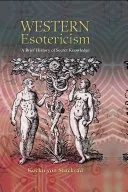
Western Esotericism
 84
84

Western Esotericism
Nicholas Goodricke-Clarke’s ‘Western Esotericism’ provides a sweeping, authoritative account of the hidden currents in Western thought. Rather than offering a mere catalog of beliefs, the book excels at detailing the historical interactions between esoteric movements and dominant cultural forces. A notable strength is its methodical tracing of specific lineages, such as the reception of Hermetic texts, from antiquity to the 20th century. However, the sheer breadth can sometimes lead to a feeling of survey over depth; for instance, the complex philosophical underpinnings of figures like Giordano Bruno are touched upon but not fully unpacked. The passage discussing the impact of Eliphas Lévi on 19th-century occult revivalism offers a concrete illustration of how esoteric ideas gain traction and influence. This volume serves as an indispensable scholarly reference for understanding the persistent, often subterranean, spiritual traditions of the West.
📝 Description
84
Nicholas Goodricke-Clarke's 2008 book surveys Western civilization's hidden knowledge traditions.
This historical survey examines traditions of hidden knowledge within Western civilization. It defines esotericism as a pursuit of concealed wisdom, often gained through mystical insight or personal experience. The book tracks the development of these practices and beliefs from antiquity to modern times, noting their frequent conflicts with mainstream religious and intellectual groups. It is written for students and scholars of religious studies, history, and philosophy, and for anyone interested in the less visible currents of Western thought. The work provides an academic yet understandable overview of occultism, Gnosticism, Hermeticism, magic, and alchemy. Readers will find its wide scope useful, as well as its consideration of how esoteric ideas have shaped art, literature, and social movements over centuries.
The text places Western esotericism within its long historical context, starting with ancient Greek and Egyptian mysteries. It considers the impact of Neoplatonism, Gnosticism, and Hermeticism in the Hellenistic period, their survival and changes through the Middle Ages, and their revival during the Renaissance and Enlightenment. It details the growth of figures and groups like Kabbalah, Rosicrucianism, and Freemasonry, linking them to broader intellectual and cultural shifts. Central to the discussion is the concept of 'occult sciences' and their historical figures, along with the ongoing search for a unified spiritual worldview, often contrasted with empirical science. Recurring themes such as correspondences between the macrocosm and microcosm, the transformative power of initiation, and belief in hidden cosmic laws are discussed.
This book stands as a scholarly overview of Western esotericism, a field concerned with hidden knowledge and spiritual traditions distinct from mainstream religion and philosophy. It traces lineages from ancient mystery cults and Hellenistic philosophies like Neoplatonism, through medieval mystical and alchemical currents, to the Renaissance and Enlightenment figures and movements. Goodricke-Clarke maps how these traditions, often labeled 'occult' or 'esoteric,' have persisted and evolved, interacting with and often challenging dominant intellectual and religious frameworks throughout Western history. The work acknowledges the diverse manifestations, from Gnosticism and Hermeticism to later developments like Rosicrucianism and Freemasonry.
💡 Why Read This Book?
• Learn about the historical suppression and resurgence of esoteric ideas, exemplified by the detailed account of Renaissance Hermeticism, understanding their relationship with dominant religious doctrines. • Gain insight into the philosophical frameworks of key figures like Giordano Bruno, appreciating how their ideas challenged prevailing Aristotelian and Christian orthodoxies. • Discover the evolution of occult symbolism and practice, such as the detailed explanation of Kabbalistic concepts, and their enduring influence on modern spiritual movements.
⭐ Reader Reviews
Honest opinions from readers who have explored this book.
❓ Frequently Asked Questions
What is the primary definition of esotericism presented in Nicholas Goodricke-Clarke's book?
The book defines esotericism as the pursuit of absolute, hidden knowledge accessed through mystical vision, the mediation of higher beings, or personal experience, often in opposition to established religious practices.
When was Nicholas Goodricke-Clarke's 'Western Esotericism' first published?
'Western Esotericism' by Nicholas Goodricke-Clarke was first published on July 5, 2017.
Does the book cover esoteric traditions beyond the Renaissance?
Yes, the work presents a broad history spanning from antiquity to the present day, covering movements and ideas that shaped occult history through various epochs.
Which ancient traditions are discussed in relation to Western esotericism?
The book explores ancient Greek and Egyptian mysteries, as well as Neoplatonism, Gnosticism, and Hermeticism, tracing their foundational impact.
What kind of relationship does the book highlight between esotericism and established religion?
It emphasizes that esoteric approaches have frequently been in conflict with, and sometimes suffered at the hands of, more established forms of religious belief and practice.
Who is the intended audience for 'Western Esotericism'?
The book is aimed at students and scholars of religious studies, history, philosophy, and anyone interested in the historical development of occult and mystical traditions in the West.
🔮 Key Themes & Symbolism
The Perennial Search for Hidden Knowledge
This theme centers on the fundamental human drive to access concealed wisdom, often through non-rational means. Goodricke-Clarke illustrates this by tracing the lineage of Hermetic texts, believed to contain ancient Egyptian secrets, from their Hellenistic reception through medieval alchemical interpretations to Renaissance Neoplatonism. The book shows how this quest, whether for gnosis or for understanding cosmic laws, consistently positioned practitioners outside mainstream intellectual discourse, seeking a direct connection to the divine or ultimate reality.
Conflict with Orthodoxy
A significant thread is the historical tension between esoteric traditions and dominant religious and philosophical systems. The work details periods where occultists faced persecution, such as the witch trials or condemnations by Church authorities. It examines how figures like Giordano Bruno were intellectually marginalized and ultimately executed for ideas that blended Hermeticism, Kabbalah, and cosmology, highlighting the precarious position of heterodox thought within Western history.
The Evolution of Occult Sciences
The book chronicles the development and transformation of various 'occult sciences'—magic, alchemy, astrology, and divination. It tracks how these practices, originating in ancient syncretic traditions, evolved through distinct historical phases. For instance, the shift from medieval alchemy focused on transmutation to Renaissance alchemy's emphasis on spiritual transformation and its later interpretations by figures like Paracelsus demonstrates this dynamic evolution.
Symbolism and Correspondences
Central to many esoteric systems is the belief in a symbolic language and a network of correspondences linking the microcosm (human) to the macrocosm (universe). Goodricke-Clarke explores how symbols, such as the Ouroboros in alchemy or specific divine names in Kabbalah, are not mere decorations but keys to understanding hidden realities. The concept of the 'Emerald Tablet' and its interpretations exemplifies this focus on symbolic transmission of profound truths.
💬 Memorable Quotes
Direct passages from the work, attributed to the author.
“Esotericism is the search for an absolute but hidden knowledge accessed through mystical vision, the mediation of higher beings, or personal experience.”
— This foundational definition establishes the core pursuit of esoteric traditions as seeking truths beyond empirical or conventional religious understanding, emphasizing direct apprehension of the divine or ultimate reality.
“In Western cultural history esoteric approaches to religion have often been in conflict with - and suffered at the hands of - more established forms of religious belief and practice.”
— This highlights the historical marginalization and persecution faced by esoteric practitioners, framing their development as an ongoing struggle against dominant orthodoxies throughout Western history.
“Western Esotericism presents a very broad and engaging history of the people and ideas which have shaped occult history from antiquity to today.”
— This statement underscores the book's comprehensive scope, promising a detailed exploration of influential figures and concepts across the entire span of Western esoteric thought.
“The work explores the influence of Neoplatonism, Gnosticism, and Hermeticism in the Hellenistic period.”
— This indicates the book's commitment to tracing the origins of Western esotericism back to classical antiquity, identifying key philosophical and religious currents that laid its groundwork.
“Throughout the history of Western civilization, esoteric traditions have persisted as a counter-current to dominant rational and religious paradigms.”
— This interpretation emphasizes the enduring nature of esoteric thought, presenting it as a persistent alternative or challenge to the prevailing intellectual and spiritual frameworks of Western society.
🌙 Esoteric Significance
Tradition
This work falls broadly within the study of Western Esotericism as an academic discipline, rather than adhering to a single esoteric lineage. It synthesizes elements from Hermeticism, Kabbalah, Gnosticism, alchemy, and various forms of magic and occultism. Goodricke-Clarke’s contribution lies in providing a coherent historical narrative that connects these diverse traditions, showing their mutual influences and shared underlying principles of seeking hidden knowledge.
Symbolism
Key symbols explored include the Ouroboros, representing cyclicality, self-creation, and the unity of opposites in alchemy; the Tree of Life from Kabbalah, symbolizing the structure of the cosmos and divine emanation; and the concept of the 'divine spark' or inner light, prevalent in Gnostic and Hermetic thought, signifying the potential for spiritual awakening within the human soul.
Modern Relevance
Contemporary thinkers and practitioners in fields ranging from depth psychology (e.g., Jungian analysis) to various New Age and neo-pagan movements often draw upon the historical and symbolic frameworks detailed in this book. The academic study of Western esotericism itself, which Goodricke-Clarke significantly contributed to, continues to inform comparative religion and cultural studies, highlighting the persistent human interest in alternative spiritualities.
👥 Who Should Read This Book
• Students of Religious Studies and History: Gain a structured academic overview of the diverse and often misunderstood esoteric traditions that have shaped Western civilization. • Aspiring Occultists and Mystics: Understand the historical roots and intellectual context of practices like Hermeticism, Kabbalah, and alchemy before engaging with them directly. • Comparative Religion Scholars: Find a detailed examination of heterodox spiritual currents that existed alongside, and often in opposition to, mainstream Christianity and other established faiths.
📜 Historical Context
Published in 2017, Nicholas Goodricke-Clarke’s 'Western Esotericism' arrived at a time of renewed academic interest in the field, building upon decades of scholarship. The work situates itself within a landscape shaped by predecessors like Frances Yates, whose studies on Hermeticism and the Renaissance were foundational. Goodricke-Clarke's approach offers a comprehensive survey, contrasting with more focused studies. While academic discourse on esotericism had gained traction, it often competed with skepticism from traditional religious historians and philosophers. The book implicitly addresses this by providing rigorous historical documentation, demonstrating the significance of these traditions. Its comprehensive scope allows it to engage with developments from the Hellenistic period through to the 20th century, implicitly arguing for esotericism's continuous, if often marginalized, presence.
📔 Journal Prompts
The conflict between esoteric approaches and established religion, as described in the book's historical context.
The concept of hidden knowledge and its pursuit through mystical vision or personal experience.
Giordano Bruno's intellectual challenges to Renaissance orthodoxy.
The symbolic meaning of the Ouroboros in alchemical traditions.
The influence of Hellenistic traditions like Neoplatonism on later esoteric thought.
🗂️ Glossary
Esotericism
A broad category of Western traditions characterized by the pursuit of hidden knowledge, often accessed through mystical experience, initiation, or symbolic interpretation, and typically existing in tension with mainstream religious or philosophical systems.
Hermeticism
A philosophical and religious tradition based primarily upon writings attributed to Hermes Trismegistus, a syncretic figure combining Greek Hermes and Egyptian Thoth. It emphasizes divine knowledge, astrology, alchemy, and the interconnectedness of the cosmos.
Gnosticism
A diverse set of religious ideas and systems, prominent in the 2nd and 3rd centuries CE, emphasizing salvation through knowledge (gnosis). Gnostic cosmologies often posit a flawed creator god and a transcendent supreme deity, with humans possessing a divine spark capable of liberation.
Kabbalah
A system of Jewish mysticism that explores the relationship between the divine, the universe, and humanity. It involves mystical interpretations of the Torah and employs concepts like the Sephirot (divine emanations) and the Tree of Life.
Alchemy
An ancient practice and proto-science that sought to purify, mature, and perfect certain materials. Historically, it involved both physical transmutation (e.g., lead to gold) and spiritual transformation of the practitioner.
Neoplatonism
A philosophical system derived from Plato, most prominently developed by Plotinus in the 3rd century CE. It posits a hierarchical reality emanating from a single, transcendent source (The One), with the goal of spiritual return to this source.
Occultism
A general term for the study and practice of hidden or secret knowledge and phenomena, often encompassing magic, divination, astrology, and other esoteric disciplines. It frequently overlaps with or draws from other esoteric traditions.