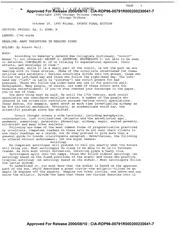
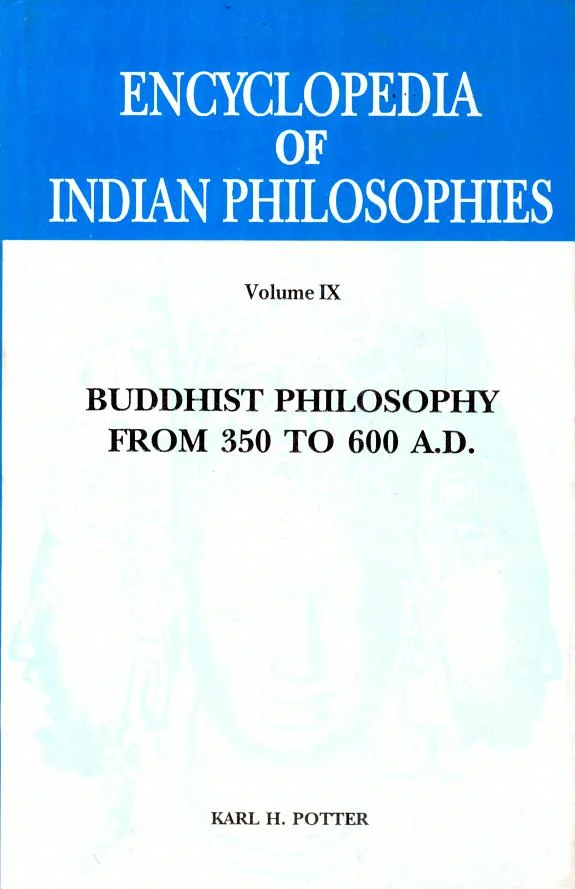
Buddhist Philosophy from 350 to 600 A.D.
 73
73

Buddhist Philosophy from 350 to 600 A.D.
Karl H. Potter's "Buddhist Philosophy from 350 to 600 A.D." offers a concentrated look at a crucial period of Indian philosophical development. The series' commitment to citing experts on contentious issues is commendable, providing a solid academic foundation. I found the detailed breakdown of sources in Volume One particularly useful for tracing intellectual lineages. However, the dense academic style, while appropriate for specialists, might prove challenging for readers new to the subject matter. The discussion on the evolving interpretations of *dharma* across different schools during this period is especially illuminating, highlighting the nuanced shifts in doctrine. This work serves as a valuable, albeit demanding, resource for serious students of Buddhist thought.
📝 Description
73
Karl H. Potter's multi-volume work, first published in 1970, analyzes Buddhist philosophy from 350 to 600 AD.
Published in 1970, Karl H. Potter's multi-volume series meticulously examines Buddhist philosophy between 350 and 600 AD. It offers a scholarly survey of primary Indian philosophical texts, aiming to increase awareness of this rich intellectual tradition. The series is notable for its inclusion of expert analyses on points of philosophical debate. This work is for scholars of Indian philosophy, comparative religion, and Buddhist studies. It will also interest advanced students who want a rigorous, source-based understanding of a critical period in Buddhist thought. Readers interested in how philosophical concepts develop historically and in the methods of textual analysis will find considerable value here.
This period, 350 to 600 AD, was a significant time in Indian thought. Buddhist philosophy developed within a broader context of Indian philosophical inquiry. During these centuries, vigorous debate and development occurred within various Indian schools. This era saw the rise of Mahayana Buddhism and the consolidation of earlier traditions. Potter's book engages with this intellectual activity by surveying primary sources, detailing the evolution of core Buddhist doctrines as they were interpreted and debated.
This work is situated within the study of Indian philosophical traditions, specifically the development of Buddhist thought during a crucial four-century span. It focuses on the intellectual ferment and doctrinal debates that shaped Mahayana Buddhism and consolidated earlier philosophical systems. By examining primary texts and scholarly interpretations, Potter's study connects the evolution of concepts like emptiness and consciousness to the broader landscape of Indian philosophical inquiry. It provides a detailed look at how these ideas were articulated and contested by key schools during a formative period.
💡 Why Read This Book?
• Gain a precise understanding of how Buddhist philosophical concepts like *dharma* were debated and redefined between 350 and 600 AD, moving beyond generalized interpretations. • Access a curated list of primary Indian philosophical texts and secondary literature, specifically compiled by Karl H. Potter for deeper scholarly exploration. • Appreciate the scholarly methodology used to analyze philosophical arguments, learning how to evaluate differing expert opinions on specific doctrines from this historical period.
⭐ Reader Reviews
Honest opinions from readers who have explored this book.
❓ Frequently Asked Questions
What specific time frame does "Buddhist Philosophy from 350 to 600 A.D." cover?
The book focuses on the philosophical developments within Buddhism specifically between the years 350 and 600 AD, a critical period for the evolution of Indian philosophical thought.
What is the primary goal of this multi-volume work?
The series aims to increase awareness of Indian philosophical thought by presenting the contents of different philosophical streams, supported by expert analyses on debated points.
Does Volume One provide resources for further study?
Yes, Volume One includes a comprehensive list of surveyed sources and a guide to secondary literature, serving as a valuable starting point for deeper engagement with Indian philosophy.
Who is the author of "Buddhist Philosophy from 350 to 600 A.D."?
The author is Karl H. Potter, a significant scholar in the field of Indian philosophy whose work has contributed substantially to understanding these texts.
What kind of approach does the book take to presenting Indian thought?
It adopts a scholarly, multi-volume approach, presenting philosophical texts with citations from experts to address points of contention and debate within the tradition.
Is this book suitable for beginners in Buddhist philosophy?
While comprehensive, its academic rigor and focus on specific historical debates might be more suited for advanced students and scholars rather than absolute beginners.
🔮 Key Themes & Symbolism
Evolution of Doctrine
This work meticulously traces the doctrinal shifts within Buddhist philosophy from 350 to 600 AD. It examines how core tenets, such as the nature of the self (*anatman*) and the path to liberation, were reinterpreted and debated by various schools. The analysis hinges on primary texts, showing the development from earlier formulations to more complex philosophical systems that emerged during this era, reflecting a dynamic intellectual environment.
Methodology of Textual Analysis
A significant aspect of this series is its rigorous approach to analyzing Indian philosophical texts. Potter emphasizes citing experts on contentious points, demonstrating a scholarly commitment to critical evaluation. This method allows readers to understand not just the philosophical positions but also the interpretive challenges and debates surrounding them, fostering a deeper appreciation for the hermeneutic process in religious studies.
Mapping Philosophical Streams
The series aims to map the diverse streams of Indian philosophical thought, with a specific focus on Buddhism during a crucial period. By surveying primary sources and providing guides to further study, it helps readers work through the complex range of Indian intellectual history. This systematic presentation clarifies the relationships between different philosophical schools and their contributions to the broader tradition.
The Role of Scholarly Debate
Central to understanding Buddhist philosophy from 350 to 600 AD is the recognition of ongoing scholarly debate. Potter highlights instances where different philosophical schools offered contrasting interpretations of key concepts. By presenting these debates and citing the scholars involved, the work underscores the dynamic and argumentative nature of philosophical inquiry in ancient India, crucial for grasping its intellectual vitality.
💬 Memorable Quotes
Direct passages from the work, attributed to the author.
“The aim of this series is to present the contents of different streams of Indian philosophical texts.”
— This statement frames the work as an academic endeavor to disseminate knowledge about diverse Indian philosophical traditions, emphasizing breadth and accessibility for scholarly audiences.
“Volume one provides a list of sources which are surveyed in the subsequent volumes.”
— This highlights the foundational role of Volume One as a bibliographical and methodological guide, essential for readers who wish to follow the textual basis of the entire study.
“This multi volume work presents Indian thought, citing experts on the point that seem debatable.”
— This indicates the work's commitment to scholarly rigor, acknowledging that philosophical understanding requires engaging with differing interpretations and expert opinions on complex issues.
“The series seeks to make more and more people aware about Indian philosophical thought.”
— This expresses an underlying educational mission, suggesting the authors hope to bridge the gap between specialized academic knowledge and a wider readership interested in philosophical traditions.
“Volume 2 provides...”
— This fragmented quote suggests that subsequent volumes examine specific philosophical schools or concepts, building upon the foundational material presented in Volume One.
🌙 Esoteric Significance
Tradition
While ostensibly a work of academic philosophy, the study of Buddhist thought from this era inherently touches upon esoteric lineages. Mahayana Buddhism, with its emphasis on advanced meditative states, subtle perceptions of reality (like *sunyata*), and the nature of consciousness, contains profound elements that resonate with esoteric traditions globally. This work provides the philosophical underpinnings for practices and beliefs that, in some interpretations, transcend purely intellectual understanding.
Symbolism
The concept of *sunyata* (emptiness) is a central motif, representing the lack of inherent existence in all phenomena. This idea, explored philosophically, can be seen as a symbolic representation of the ultimate ground of reality or the void from which all forms arise, a concept found in various mystical traditions. The 'path' itself functions symbolically, representing a transformative journey of consciousness toward liberation or enlightenment.
Modern Relevance
Contemporary mindfulness practices, contemplative traditions, and philosophical explorations of consciousness often draw implicitly or explicitly on the concepts meticulously detailed in this period of Buddhist thought. Thinkers and practitioners engaging with non-dual philosophies, the nature of subjective experience, and the critique of fixed self-identity find foundational arguments and historical context within the Mahayana philosophical developments covered here.
👥 Who Should Read This Book
• Scholars of comparative religion and Buddhist studies seeking a rigorous, source-based examination of philosophical evolution between 350 and 600 AD. • Advanced philosophy students needing to understand the historical development of key Buddhist doctrines and the methodologies for their textual analysis. • Researchers interested in the intellectual history of India and the complex interplay between different philosophical schools during a formative period.
📜 Historical Context
The period from 350 to 600 AD was a dynamic era for Indian philosophy, marked by intense intellectual activity and the refinement of major schools of thought. Buddhism, while already established, underwent significant philosophical development, particularly with the flourishing of Mahayana traditions. This context saw vigorous engagement with competing philosophical systems, including Hindu Vedanta and Jainism, each offering distinct metaphysical and epistemological frameworks. Karl H. Potter's work emerges during a period of growing academic interest in non-Western philosophies, following scholars like Surendranath Dasgupta, who had already begun monumental surveys of Indian philosophy. The reception of such detailed textual analyses was generally positive within academic circles, providing essential resources for comparative studies, though the dense scholarly nature often limited broader public engagement.
📔 Journal Prompts
The mapping of philosophical streams between 350 and 600 AD.
The methodology of citing experts on debatable points in Indian philosophy.
The evolution of *anatman* (no-self) interpretations during this period.
The concept of *sunyata* as presented in the texts surveyed.
The specific textual sources listed in Volume One for further study.
🗂️ Glossary
*Anatman*
A fundamental Buddhist doctrine asserting the absence of a permanent, unchanging self or soul. Its interpretation and philosophical implications evolved significantly during the period 350-600 AD.
*Dharma*
A complex term in Indian religions, often referring to the teachings of the Buddha, cosmic law, or the fundamental constituents of reality, depending on the context.
*Sunyata*
Often translated as 'emptiness,' this is a key concept in Mahayana Buddhism, signifying the lack of inherent existence or self-nature in all phenomena.
Mahayana
A major branch of Buddhism that developed significantly between 350 and 600 AD, characterized by its emphasis on the bodhisattva ideal and a broader range of philosophical and doctrinal developments.
Primary Texts
Original source materials written by the philosophers themselves, as opposed to secondary commentaries or analyses. This work heavily relies on the examination of such texts.
Secondary Literature
Scholarly works written about primary texts or philosophical traditions. Volume One provides a guide to this type of resource for further study.
Epistemology
The branch of philosophy concerned with the theory of knowledge, including its scope, limits, and validity. This is often a subject of debate within Indian philosophical systems.
This book appears in 1 collection
🔮 Readers Also Liked
Browse all →







From the “Buddhism” Collection
View all →





More Free Sacred Texts & Gnosticism Books
View all →