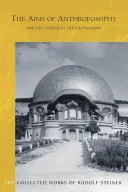
The AIMS OF ANTHROPOSOPHY
 76
76

The AIMS OF ANTHROPOSOPHY
Rudolf Steiner’s "The AIMS OF ANTHROPOSOPHY" offers a starkly direct exposition of his intentions for the Anthroposophical movement during a period of profound crisis. The clarity with which he addresses the necessity of spiritual science, especially following the destructive fire at the first Goetheanum in 1917, is remarkable. He avoids platitudes, instead focusing on the practical and ethical imperatives of his work. A particular strength lies in his articulation of the Goetheanum's purpose beyond mere architecture, presenting it as a living crucible for artistic and spiritual innovation. However, the lectures, by their nature, assume a certain familiarity with Steiner's broader cosmological and anthropological frameworks. For newcomers, the dense conceptual landscape might prove challenging without supplementary material. The discussion on the necessity of rebuilding the Goetheanum, linking it directly to the spiritual needs of post-war Europe, offers a compelling historical and philosophical anchor. This collection serves as a vital, albeit demanding, window into Steiner’s vision for a spiritually revitalized 20th century.
📝 Description
76
Rudolf Steiner delivered these lectures in 1917-1918, following the destruction of the first Goetheanum.
Rudolf Steiner's "The AIMS OF ANTHROPOSOPHY" collects his public lectures from 1917 and 1918. These talks were given after a fire destroyed the first Goetheanum building. Steiner aimed to clarify the purpose and necessity of the Anthroposophical Society and its spiritual scientific worldview.
He articulated the driving forces behind his work, stressing the need for a new comprehension of human evolution and consciousness. This was in response to the prevailing materialism of the time. The lectures also sought to define the Goetheanum's intended role as a hub for artistic and spiritual renewal. The book is for those interested in Steiner's core ideas, the origins of Anthroposophy, and its stated objectives.
These lectures belong to the tradition of spiritual science initiated by Rudolf Steiner. Emerging in the early 20th century, Anthroposophy sought to establish a path for understanding the spiritual world through disciplined inner development and empirical observation, distinct from traditional religion or purely intellectual philosophy. Steiner's work aimed to address the challenges posed by modern scientific materialism by offering a complementary spiritual perspective on human nature, history, and the cosmos. The context of the lectures, immediately following World War I and the destruction of the first Goetheanum, highlights a period of intense social and spiritual searching.
💡 Why Read This Book?
• Understand the foundational purpose of the Goetheanum as a center for arts and spiritual renewal, as articulated by Steiner himself in the context of its 1917 destruction. • Grasp the concept of "spiritual science" as a vital response to 20th-century materialism, learning how Steiner saw it as essential for human evolution. • Gain insight into the organizational aims of the Anthroposophical Society during a critical post-WWI period, understanding its role in fostering conscious spiritual development.
⭐ Reader Reviews
Honest opinions from readers who have explored this book.
❓ Frequently Asked Questions
When were the lectures in 'The AIMS OF ANTHROPOSOPHY' originally given?
The lectures compiled in 'The AIMS OF ANTHROPOSOPHY' were delivered by Rudolf Steiner in 1917 and 1918, a critical period following the destruction of the first Goetheanum building.
What is the significance of the Goetheanum in Steiner's work?
The Goetheanum, as discussed in these lectures, represents more than an architectural structure; it is envisioned as a living center for artistic, scientific, and spiritual expression, embodying the principles of Anthroposophy.
What does Rudolf Steiner mean by 'spiritual science'?
In Steiner's context, 'spiritual science' refers to a method of investigating the spiritual world with the same rigor and clarity applied to the natural sciences, aiming to understand human and cosmic evolution.
How does this book relate to the Anthroposophical Society?
The book addresses the core purpose and necessity of the Anthroposophical Society, particularly in the wake of the first Goetheanum's destruction, outlining its role in fostering spiritual development.
Is this book suitable for beginners in Anthroposophy?
While foundational, the lectures assume some familiarity with Steiner's concepts. It offers direct insight into his aims but might be best approached after some introductory reading on Anthroposophy.
What historical events surround the delivery of these lectures?
These lectures were given during the final year of World War I and immediately after the fire that destroyed the first Goetheanum building in Dornach, Switzerland, a time of immense global upheaval.
🔮 Key Themes & Symbolism
Necessity of Spiritual Science
Steiner posits spiritual science not as an alternative belief system but as an essential cognitive and developmental tool for humanity in the 20th century. He argues that the dominance of materialism has led to a spiritual deficit, impacting individual consciousness and societal progress. These lectures articulate the urgent need to develop faculties for perceiving the spiritual world, thereby counterbalancing the one-sidedness of physical science and fostering a more complete understanding of human nature and destiny. The work presents this spiritual investigation as a path to overcoming the crises of the modern era.
The Goetheanum's Role
The book elaborates on the vision for the Goetheanum, particularly in the wake of its destruction in 1917. It is presented not as a static monument but as a dynamic, living center dedicated to the renewal of art, science, and religion through the lens of Anthroposophy. Steiner emphasizes its function as a place for artistic creation and for developing new forms of expression that reflect a spiritual understanding of the world. The rebuilding effort is framed as a concrete manifestation of the Anthroposophical impulse, vital for fostering a new cultural epoch.
Anthroposophical Society Aims
Steiner clarifies the fundamental objectives of the Anthroposophical Society, particularly during the challenging period of WWI and the aftermath of the Goetheanum fire. He defines the Society as an association of individuals dedicated to the study and practice of spiritual science, aiming to foster individual spiritual growth and contribute to the positive evolution of humanity. The lectures highlight the Society's role in providing a framework for exploring consciousness, understanding cosmic and human development, and manifesting spiritual insights into practical life.
Consciousness and Evolution
Central to these lectures is the concept of human consciousness as a subject of evolution. Steiner discusses how modern humanity stands at a crossroads, facing the potential for both spiritual awakening and profound alienation due to materialistic influences. The work explores the development of higher states of consciousness as a means to navigate this evolutionary path consciously. Understanding these developmental stages is presented as crucial for individuals seeking to actively participate in the spiritual transformation of the earth and humanity.
💬 Memorable Quotes
Direct passages from the work, attributed to the author.
“The Anthroposophical Society seeks to awaken forces in humanity that can bring about a spiritual renewal.”
— This statement captures Steiner's view of the Society as an active agent for positive change, aiming to cultivate inner spiritual capacities within individuals that can then manifest outwardly in society and culture.
“The Goetheanum must be a center where spiritual knowledge is lived out artistically.”
— This highlights the integrated approach Steiner envisioned, where abstract spiritual concepts are not merely studied but are actively expressed and experienced through artistic creation and practice.
“The rebuilding of the Goetheanum is tied to the spiritual needs of the post-war era.”
— This interpretation reflects the idea that the physical construction and symbolic meaning of the Goetheanum were intrinsically linked to the collective spiritual and cultural healing required after World War I.
“Anthroposophy aims to provide clarity regarding the spiritual nature of man and the cosmos.”
— This signifies the core objective of Anthroposophy as presented by Steiner: to offer a coherent, spiritually informed understanding of both individual human beings and the universe they inhabit.
💡 Key Ideas
Editorial paraphrase of the work's core concepts — not direct quotes.
We must counter the overwhelming materialism of our time with a genuine spiritual science.
This paraphrase captures Steiner's urgent call for a balanced perspective, arguing that a purely materialistic worldview is insufficient for understanding human existence and requires the complementary insights of spiritual investigation.
🌙 Esoteric Significance
Tradition
The work is firmly rooted in the modern esoteric tradition initiated by Helena Blavatsky's Theosophical Society, from which Steiner initially emerged. However, Steiner sought to develop a more rigorous, individualized, and psychologically grounded form of spiritual inquiry, which he termed Anthroposophy. It departs from Theosophy's more dogmatic or purely intellectual approach by emphasizing direct inner experience and verifiable spiritual perception, aligning with a Western Hermetic emphasis on self-knowledge and inner transformation.
Symbolism
The book frequently engages with the symbolism of the Goetheanum, not just as a building but as a representation of the union of art and spiritual science. The architectural forms themselves are imbued with meaning, intended to express spiritual realities. Another key motif is the concept of 'spiritual science' itself, symbolizing a new organ of perception and understanding necessary for humanity's evolution, standing in contrast to purely materialistic scientific methods.
Modern Relevance
Contemporary movements in Waldorf education, biodynamic agriculture, and anthroposophical medicine draw directly from the principles articulated by Steiner, including those in these lectures. Thinkers and practitioners in integral spirituality and consciousness studies often reference Steiner's work as a precursor to modern transpersonal psychology and integral theory, seeking to bridge the gap between science and spirituality.
👥 Who Should Read This Book
• Students of Rudolf Steiner's work seeking clarity on the core aims and historical context of Anthroposophy, particularly concerning the purpose of the Goetheanum and the Anthroposophical Society. • Researchers of early 20th-century esoteric movements interested in the development of spiritual science as a response to materialism and societal upheaval. • Individuals exploring the intersection of art, science, and spirituality who wish to understand a foundational text outlining a comprehensive worldview.
📜 Historical Context
Rudolf Steiner delivered the lectures compiled in "The AIMS OF ANTHROPOSOPHY" in 1917 and 1918, a period defined by the cataclysm of World War I and the devastating fire that consumed the first Goetheanum building in Dornach on New Year's Eve 1917. This was a time of profound societal crisis and spiritual searching across Europe. Steiner's efforts to reorganize the Anthroposophical Society and articulate its purpose were directly influenced by these events. He sought to provide a spiritual counter-impulse to the pervasive materialism and destructive forces of the era. His work was contemporary with figures like Carl Jung, who was also exploring the depths of the human psyche and symbolic language during this time, albeit from a different psychological perspective. The reception of Steiner's ideas, while influential within certain circles, often faced skepticism from mainstream academic and religious institutions, highlighting the challenging nature of his spiritual-scientific initiatives.
📔 Journal Prompts
The necessity of spiritual science in countering materialism.
Reflecting on the Goetheanum as a living expression of spiritual understanding.
The role of the Anthroposophical Society in fostering human evolution.
Articulating the relationship between consciousness development and societal progress.
Considering the practical application of spiritual insights in modern life.
🗂️ Glossary
Anthroposophy
A spiritual philosophy founded by Rudolf Steiner, aiming to investigate the spiritual dimensions of existence and their relationship to the physical world through a method called 'spiritual science'.
Spiritual Science
A term used by Rudolf Steiner to describe a rigorous, methodical approach to investigating the spiritual world, intended to complement and balance traditional natural science.
Goetheanum
A center for spiritual-scientific activity founded by Rudolf Steiner, envisioned as a living expression of the arts and sciences, particularly significant in its architectural and symbolic representation.
Materialism
A philosophical viewpoint that matter is the fundamental substance in nature, and that all phenomena, including mental states and consciousness, are results of material interactions.
Spiritual Evolution
The concept, central to Anthroposophy, that human beings and the cosmos undergo a continuous process of development on spiritual as well as physical planes.
Consciousness
In Steiner's context, consciousness encompasses not only waking awareness but also deeper states of being and perception, seen as capable of evolving through specific practices and understanding.
Anthroposophical Society
An organization founded by Rudolf Steiner to provide a platform for the study and practice of Anthroposophy, fostering individual spiritual development and contributing to cultural renewal.