Nostradamus
 78
78

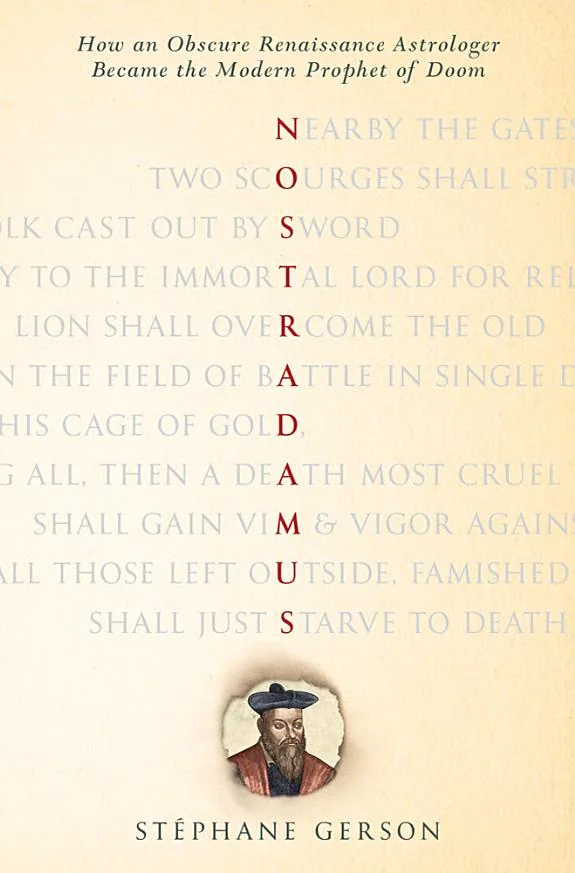
Nostradamus
Stéphane Gerson’s "Nostradamus" attempts a scholarly dissection of a figure often relegated to sensationalism. The book’s strength lies in its grounded approach, moving past facile pronouncements of fulfilled prophecy to examine the socio-cultural forces that elevate Nostradamus to his peculiar pantheon. Gerson is adept at detailing the interpretive gymnastics employed by believers, particularly in how quatrains are retrofitted to events like the rise of Napoleon or the French Revolution. However, the work occasionally feels like it’s fighting a ghost; the sheer volume of popular material on Nostradamus means Gerson’s academic analysis, while valuable, might struggle to capture the fervent imagination that fuels the legend. A notable section discusses the impact of the 1999 'end of the world' predictions, demonstrating how even misinterpretations fuel continued belief. While Gerson provides a necessary corrective to pseudohistory, the book’s critical distance sometimes overshadows the sheer, undeniable cultural persistence of Nostradamus’s mystique.
📝 Description
78
Stéphane Gerson's "Nostradamus" (2016) critically examines Michel de Nostredame's enduring legacy.
Stéphane Gerson's "Nostradamus" scrutinizes the 16th-century French astrologer and seer, moving past simple admiration to analyze the persistent appeal of his quatrains. The book details their historical setting and the wide range of interpretations they have generated. Gerson demonstrates how predictions, often obscure and figurative, have been applied retrospectively to events like World War II and contemporary political crises. He investigates the psychological and cultural factors that allow these prophecies to retain their hold.
This study is for readers interested in the history of prophecy, occult studies, and how beliefs form. It will appeal to those who question the basis of Nostradamus's fame, aiming to understand the cultural phenomenon instead of accepting the predictions at face value. Students of Renaissance esotericism, comparative mythology, and the psychology of divination will appreciate Gerson's analytical method. The book offers a balanced view for both skeptics and believers.
Gerson places Nostradamus within the intellectual currents of the European Renaissance, a time of renewed interest in astrology, alchemy, and Hermetic philosophy. The book acknowledges the political and religious unrest of the 16th century, which likely shaped Nostradamus's writings and the anxieties of his era. Gerson contrasts the historical figure with the myth that developed, noting how later generations have imposed their own concerns onto his cryptic verses. The work recognizes the circulation of prophetic writings and the growth of print culture during this period.
💡 Why Read This Book?
• Learn how prophecies are retroactively applied to historical events, a process Gerson details by analyzing interpretations of quatrains concerning figures like Napoleon Bonaparte. • Understand the cultural phenomenon of Nostradamus by examining the historical context of his work, particularly the intellectual currents of the Renaissance in the 16th century. • Analyze the mechanisms of belief that sustain Nostradamus's legend, exploring concepts like oracular ambiguity and the power of narrative as presented in Gerson's critical framework.
⭐ Reader Reviews
Honest opinions from readers who have explored this book.
❓ Frequently Asked Questions
When was Nostradamus alive and practicing?
Michel de Nostredame lived from 1503 to 1566. He was a physician and astrologer during the French Renaissance, a period of significant intellectual and social change in Europe.
What is the primary focus of Stéphane Gerson's book on Nostradamus?
Gerson's book focuses on the interpretation and cultural influence of Nostradamus's prophecies, rather than validating them. It examines how his quatrains have been analyzed and applied to historical events.
How does Gerson address the 'fulfilled prophecies' associated with Nostradamus?
Gerson critically evaluates claims of fulfilled prophecies by exploring the ambiguity of the quatrains and the human tendency to find patterns, often through retroactive interpretation.
What historical period is relevant to understanding Nostradamus?
The book highlights the 16th-century European Renaissance, a time of interest in astrology, alchemy, and Hermetic philosophy, which provides context for Nostradamus's work and its reception.
Is Stéphane Gerson's book a biography of Nostradamus?
No, while it discusses Michel de Nostredame, the book is primarily an analysis of his prophecies, their interpretations, and his enduring cultural impact, rather than a traditional biography.
What does 'oracular ambiguity' mean in the context of Nostradamus's prophecies?
Oracular ambiguity refers to the intentionally vague and open-ended nature of Nostradamus's quatrains, allowing them to be interpreted in multiple ways to fit various future or past events.
🔮 Key Themes & Symbolism
The Cult of the Seer
Gerson examines the archetype of the prophet and seer, tracing how Michel de Nostredame, a 16th-century physician, evolved into a global icon of predictive power. This theme explores the human desire for certainty and the construction of a legendary figure through centuries of interpretation and myth-making, often detached from the historical individual.
Retroactive Prophecy and Belief
A central concept is how Nostradamus's quatrains are frequently applied retrospectively to historical events. The book dissects the psychological and cultural mechanisms that enable this, focusing on oracular ambiguity and the selective perception that allows individuals to perceive fulfilled predictions where none were explicitly intended.
Renaissance Esotericism
The work situates Nostradamus within the intellectual milieu of the 16th-century Renaissance, characterized by a renewed interest in astrology, alchemy, and Hermetic philosophy. It contrasts the era's esoteric traditions with the later, often sensationalized, interpretations of his prophecies, highlighting the shift from learned speculation to popular divination.
Cultural Transformation of Legend
This theme tracks the evolution of Nostradamus from a historical figure to a pervasive cultural symbol. Gerson analyzes how different eras have adopted and adapted his prophecies to suit their own anxieties and aspirations, demonstrating the dynamic and often self-serving nature of legend.
💬 Memorable Quotes
Direct passages from the work, attributed to the author.
“The quatrains’ enduring appeal stems largely from their calculated ambiguity.”
— This highlights a core argument: the prophecies' vagueness is not a flaw but a feature that allows them to be applied to a wide range of events across different historical periods, fueling their longevity.
“The transformation from physician to prophet is a narrative shaped by popular reception.”
— This points to the re-casting of Michel de Nostredame's historical identity. His original profession as a doctor is overshadowed by the legend of his prophetic abilities, a change driven by how the public and subsequent interpreters have framed his legacy.
“Interpreters often impose meaning rather than discover it within the verses.”
— This emphasizes the active role of the reader or interpreter in Nostradamus studies. It suggests that perceived predictions are often a result of the interpreter's own biases and desires, rather than inherent clarity in the text.
“The 16th century provided fertile ground for astrological and prophetic inquiry.”
— This statement grounds Nostradamus's work in its historical context, the European Renaissance. It acknowledges the widespread interest in divination and esoteric sciences during that period, which legitimized such pursuits.
💡 Key Ideas
Editorial paraphrase of the work's core concepts — not direct quotes.
Nostradamus became a mirror reflecting the preoccupations of successive generations.
This paraphrased concept suggests that the seer's prophecies are less about foretelling the future and more about revealing the anxieties, hopes, and interpretive frameworks of those who read them.
🌙 Esoteric Significance
Tradition
While Michel de Nostredame was rooted in Renaissance Hermeticism and medical astrology, Gerson's work analyzes the *reception* of his prophecies, which often veer into popular esotericism detached from strict Hermetic principles. The book examines how Nostradamus's cryptic verses became a touchstone for later esoteric movements seeking predictive validation, even if his original intent was more aligned with astrological prognostication and philosophical allegory.
Symbolism
The quatrains themselves are laden with symbolic language drawn from astrology, biblical prophecy, and classical mythology. Symbols like 'the great king of terror' or references to specific celestial conjunctions are not merely decorative but are interpreted by believers as indicators of specific eschatological or historical events, forming a complex, albeit often obscure, symbolic lexicon.
Modern Relevance
Contemporary New Age movements and amateur astrologers still reference Nostradamus, often selectively quoting verses to support theories about global events, political shifts, or impending crises. The work's relevance today lies in its function as a case study for understanding how ancient texts are reinterpreted through modern lenses, particularly in online communities dedicated to conspiracy theories and eschatology.
👥 Who Should Read This Book
• Students of Renaissance history and intellectual currents: Gain insight into the era's blend of science, magic, and religious fervor through the lens of Nostradamus's life and work. • Skeptics and critical thinkers: Understand the methods used to interpret prophetic texts and the psychological appeal of prediction, moving beyond sensational claims. • Researchers of esoteric traditions: Analyze how a 16th-century astrological physician's writings became a foundational text for later popular divination practices and conspiracy theories.
📜 Historical Context
Stéphane Gerson's "Nostradamus" emerges from a scholarly tradition seeking to demythologize figures of occult renown. Published in 2012, it engages with a long history of Nostradamus scholarship that began shortly after his death in 1566. The 16th century, Nostradamus's era, was a crucible of change, marked by religious wars, the Reformation, and a burgeoning interest in astrology and Hermeticism, fueled by the rediscovery of classical texts. This intellectual climate, where figures like Paracelsus also blended science and esotericism, provided a receptive audience for prophetic works. Gerson’s analysis implicitly contrasts with earlier, more credulous interpretations, such as those popularized in the 20th century by figures like Erika Cheetham, who championed the idea of Nostradamus as a genuine seer. The book's critical stance aligns with modern historical approaches that analyze the social and psychological functions of prophecy.
📔 Journal Prompts
The calculated ambiguity of Nostradamus's quatrains: How does vagueness facilitate belief?
Michel de Nostredame's transition from physician to prophet: What role does cultural narrative play?
Analyzing a specific quatrain's interpretation: What does it reveal about the interpreter's era?
The Renaissance fascination with astrology: How did this context shape prophetic literature?
Nostradamus as a cultural mirror: What contemporary anxieties are reflected in modern interpretations?
🗂️ Glossary
Quatrain
A stanza or poem consisting of four lines, especially one with a specific rhyme scheme. Nostradamus famously published his prophecies in quatrains.
Hermeticism
A religious, philosophical, and esoteric tradition based primarily upon writings attributed to Hermes Trismegistus. It flourished during the Renaissance and influenced alchemy and astrology.
Astrology
The study of the movements and relative positions of celestial bodies interpreted as having an influence on human affairs and the natural world. Nostradamus was trained as an astrologer.
Oracular Ambiguity
The quality of being unclear or inexact in prophetic statements, allowing for multiple interpretations. This is a key characteristic of Nostradamus's prophecies.
Retroactive Interpretation
The practice of applying past predictions or texts to subsequent events, often by finding coincidental similarities. This is central to how Nostradamus's prophecies are often 'proven'.
Renaissance
The period in European history, roughly from the 14th to the 17th century, marked by a revival of classical art, architecture, and literature, and a flourishing of intellectual inquiry.
Divination
The practice of seeking knowledge of the future or the unknown by supernatural means. Nostradamus's work is often studied within the context of divination.
This book appears in 1 collection
🔮 Readers Also Liked
Browse all →







From the “Nostradamus” Collection
View all →




More Free Esoteric History & Biography Books
View all →