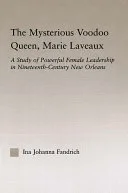
The Mysterious Voodoo Queen, Marie Laveaux
 73
73

The Mysterious Voodoo Queen, Marie Laveaux
Fandrich's "The Mysterious Voodoo Queen, Marie Laveau" is a commendable effort to demystify a figure often shrouded in legend. The author’s strength lies in her meticulous research, grounding the narrative in historical fact rather than folklore. The examination of the socio-political factors contributing to female leadership in New Orleans Voodoo, particularly the economic and demographic shifts of the 19th century, is exceptionally detailed. However, the academic tone, while accurate, can sometimes make the narrative feel dry, particularly for readers less familiar with dense historical analysis. A passage discussing Laveau's purported "altars" and their public versus private functions offers a particularly compelling glimpse into the negotiation of spiritual power and public image. Despite its academic rigor, the book occasionally struggles to fully convey the lived spiritual experience of the tradition. It is a vital resource for understanding the historical context, though less so for experiencing the spiritual essence.
📝 Description
73
Ina J. Fandrich's 2006 book examines the rise of female spiritual leaders in 19th-century New Orleans Voodoo.
Ina J. Fandrich's "The Mysterious Voodoo Queen, Marie Laveau" offers a scholarly examination of New Orleans Voodoo, focusing on the historical and cultural forces that shaped its practices, particularly the prominent role of women. The book moves past sensationalism to show how religious and social structures were connected. It traces Voodoo's development in the American South, detailing the conditions that allowed influential women to hold spiritual leadership positions.
The study is relevant for scholars of religious studies, African American history, and gender studies, as well as those interested in Voodoo and New Orleans cultural history. It provides a fact-based, historically grounded account, avoiding speculation. Readers interested in the sociology of religion, the effect of sociopolitical climates on spiritual movements, and female empowerment within religious traditions will find significant material.
Fandrich places Marie Laveau and her time within the complex social and political context of 19th-century New Orleans. The book looks at the city's unique Creole culture, its French and Spanish colonial roots, and the large African diaspora populations. It highlights economic and demographic changes, including immigration and the post-Civil War era, that affected Voodoo's perception and growth. These outside factors created an environment where powerful female spiritual leaders like Laveau could emerge.
This work places Marie Laveau and New Orleans Voodoo within the broader context of African diaspora religions and their adaptation in the Americas. It examines how syncretic practices developed under specific sociopolitical pressures, demonstrating how marginalized communities used spiritual traditions for social cohesion and empowerment. The book details the historical formation of a distinct American spiritual practice, influenced by West African beliefs, Catholicism, and local cultural elements, underscoring the agency of women within these traditions.
💡 Why Read This Book?
• Understand the specific historical conditions in 19th-century New Orleans that fostered powerful female spiritual leaders, moving beyond myth to factual analysis of socio-political factors. • Gain insight into the concept of "feminization" within religious traditions as a form of adaptation and authority, as examined through the lens of Voodoo. • Explore the syncretic nature of New Orleans Voodoo by learning how African spiritual practices blended with Catholic iconography and local beliefs, as detailed in the book's analysis of the tradition's evolution.
⭐ Reader Reviews
Honest opinions from readers who have explored this book.
❓ Frequently Asked Questions
What historical period does "The Mysterious Voodoo Queen, Marie Laveau" primarily focus on?
The book primarily focuses on the 19th century, detailing the life and influence of Marie Laveau and the socio-cultural environment of New Orleans during that era.
Does the book present Marie Laveau as a magical figure or a historical person?
Ina J. Fandrich's work emphasizes Marie Laveau as a historical figure, meticulously examining the cultural, economic, and political factors that contributed to her prominence and the Voodoo tradition.
What is meant by the "feminization" of Voodoo discussed in the book?
The book uses "feminization" to describe the significant rise and dominance of female leaders within New Orleans Voodoo, exploring the social and religious reasons behind this phenomenon.
Is this book suitable for someone with no prior knowledge of Voodoo?
While academically rigorous, the book provides historical context for New Orleans Voodoo. Readers interested in history and sociology will find it accessible, though some familiarity with religious studies concepts may enhance the experience.
What role does New Orleans play in the book's narrative?
New Orleans is central to the narrative, serving as the unique cultural and historical crucible where Voodoo developed and where Marie Laveau established her influence amidst its specific Creole society and diaspora.
When was "The Mysterious Voodoo Queen, Marie Laveau" first published?
The book was first published on April 21, 2005.
🔮 Key Themes & Symbolism
Female Spiritual Authority
The work scrutinizes the emergence and consolidation of female leadership within New Orleans Voodoo, moving beyond simplistic notions of power. Fandrich analyzes how social, economic, and demographic conditions in 19th-century New Orleans created a unique space for women like Marie Laveau to attain significant spiritual and social influence, challenging patriarchal structures within and outside the religious sphere. This theme highlights the agency and strategic maneuvering employed by these women.
Syncretism in Voodoo
Fandrich details the syncretic nature of New Orleans Voodoo, emphasizing its amalgamation of West African spiritual traditions, Roman Catholic practices, and indigenous folk beliefs. This blending was not merely passive but an active process of adaptation and resistance, allowing the tradition to thrive under external pressures. The book illustrates how symbols and rituals were reinterpreted, creating a distinct spiritual landscape shaped by the city's diverse cultural heritage.
Socio-Political Determinants
A core focus is how external socio-political and economic factors directly influenced the development and leadership structures of Voodoo. The book connects events such as immigration, urban development, and post-Civil War societal changes in New Orleans to the practice and perception of Voodoo. It argues that these conditions were instrumental in both the "feminization" of the tradition and the rise of figures like Marie Laveau, demonstrating religion's deep entanglement with worldly affairs.
Historical Methodology
The book exemplifies a rigorous historical research methodology, prioritizing verifiable facts and scholarly analysis over sensationalism or pure folklore. Fandrich carefully examines primary and secondary sources to construct a nuanced portrait of Marie Laveau and her milieu. This commitment to factual grounding provides a solid foundation for understanding the complexities of Voodoo history and its key figures.
💬 Memorable Quotes
Direct passages from the work, attributed to the author.
“The feminization of Voodoo in New Orleans was not an accident but a product of specific historical circumstances.”
— This statement captures the book's central thesis: that the prominence of women in Voodoo leadership was a direct consequence of the social, economic, and political realities of 19th-century New Orleans, rather than a spontaneous or inherent characteristic.
“Marie Laveau navigated the complex social strata of New Orleans with remarkable skill.”
— This highlights Laveau's adeptness at interacting with diverse populations, from enslaved people and free people of color to white elites, demonstrating her influence extended across racial and class lines through her spiritual and social networks.
“Voodoo's adaptability allowed it to persist and evolve within the American South.”
— This points to the syncretic nature of Voodoo, its ability to incorporate elements from other traditions (like Catholicism) and adapt to new environments, which was crucial for its survival and transformation in a challenging cultural landscape.
“Economic factors played a significant role in the rise of spiritual practitioners.”
— This emphasizes how certain economic conditions and opportunities, or lack thereof, within New Orleans may have channeled individuals, particularly women, towards spiritual work as a means of social mobility and influence.
“The historical record requires careful interpretation to separate fact from enduring myth.”
— This underscores the book's methodological approach, acknowledging the difficulty in researching figures like Laveau due to layers of folklore and legend, and stressing the need for critical analysis of available evidence.
🌙 Esoteric Significance
Tradition
This work fits within the study of African diasporic religions, a lineage that draws from West African spiritual practices, Catholicism, and indigenous American beliefs. While not strictly a practitioner's guide, it examines the historical formation of a specific branch of this tradition, New Orleans Voodoo, highlighting its unique syncretic development and the socio-cultural forces that shaped its leadership structures, particularly the prominent role of women.
Symbolism
The book implicitly touches upon Voodoo symbolism by discussing the spiritual practices and influences that shaped Marie Laveau's authority. While not deeply symbolic in an esoteric interpretive sense, it references the blend of Catholic saints (e.g., Saint Patrick, Saint John) with African deities (Loa) and local folk beliefs, illustrating how these combined elements formed the symbolic language and spiritual framework of the tradition.
Modern Relevance
Contemporary practitioners and scholars of Voodoo and Hoodoo continue to draw on historical accounts like Fandrich's to understand the roots of their traditions. The focus on female leadership and the socio-cultural dynamics of Voodoo in New Orleans remains relevant for modern discussions on gender roles in religion, cultural preservation, and the historical resilience of African diasporic spiritual systems.
👥 Who Should Read This Book
• Students of African American history: Those seeking a detailed, fact-based account of a significant cultural and religious figure in 19th-century New Orleans and the socio-political context that shaped her. • Researchers of religious studies: Scholars interested in syncretism, the sociology of religion, and the historical development of spiritual traditions outside the Western mainstream. • Enthusiasts of New Orleans culture: Individuals fascinated by the unique history and folklore of New Orleans, looking for an academic perspective that separates historical fact from popular legend.
📜 Historical Context
Published in 2005, Ina J. Fandrich's "The Mysterious Voodoo Queen, Marie Laveau" entered the discourse on African diasporic religions at a time when academic interest in Voodoo was growing, yet still often mired in sensationalism. The book emerged within a scholarly milieu increasingly focused on gender, power, and the complexities of religious syncretism in the Americas. It directly engaged with the historical reality of 19th-century New Orleans, a city with unique French, Spanish, and African cultural influences, shaped by events like the Louisiana Purchase (1803) and the Civil War. Fandrich's work contrasts with earlier, more folklore-driven accounts by scholars like Robert Tallant, offering a more critical, socio-historically grounded perspective. While not directly engaging with specific contemporary authors in its public-facing material, its detailed analysis of socio-political factors implicitly builds upon and refines scholarship concerning the African diaspora's religious expressions.
📔 Journal Prompts
The socio-political factors contributing to the feminization of Voodoo.
Marie Laveau's navigation of New Orleans' complex social strata.
The syncretic blend of African, Catholic, and folk beliefs in practice.
The impact of economic conditions on spiritual leadership in the 19th century.
Distinguishing historical fact from enduring myth surrounding Voodoo figures.
🗂️ Glossary
Voodoo
A syncretic religion that originated in colonial Haiti from West African spiritual traditions, Catholicism, and indigenous Caribbean beliefs, with distinct regional variations like that in New Orleans.
New Orleans Voodoo
A specific regional variant of Voodoo, heavily influenced by the unique cultural, historical, and demographic makeup of New Orleans, particularly its Creole heritage and African diaspora.
Syncretism
The merging or attempted merging of different religions, cultures, or schools of thought, often seen in Voodoo's incorporation of Catholic saints and imagery.
Creole
Refers to people of mixed European and African ancestry, particularly in the Caribbean and Southern United States, and their distinct culture, language, and cuisine.
Free People of Color
A social class in the antebellum South composed of individuals who were neither enslaved nor entirely white, often possessing property and sometimes education, holding a unique social position.
Loa
Spirits or deities in Haitian Vodou, analogous to the Orishas in Yoruba religion or saints in Catholicism, serving as intermediaries between humans and the supreme creator deity.
Feminization (of Voodoo)
The book's term to describe the historical prominence and leadership roles occupied by women within the New Orleans Voodoo tradition during specific periods.