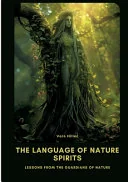
The Language of Nature Spirits
 74
74

The Language of Nature Spirits
Vera Hiller’s *The Language of Nature Spirits* attempts to revitalize archaic notions of animism for a modern, often alienated, audience. The book’s strength lies in its accessible presentation of complex ideas, framing nature spirits as vital participants in planetary health. Hiller avoids overly academic jargon, making the subject matter approachable. However, the work occasionally treads a fine line between inspired interpretation and unsubstantiated assertion. A particular passage discussing the 'whispers of stone spirits' might feel more poetic than empirically verifiable to some readers. The limitation is a lack of rigorous methodology for verifying subjective experiences, a common challenge in this genre. Despite this, the book offers a compelling perspective on ecological interconnectedness.
Hiller's work is a sincere invitation to reconsider our relationship with the Earth.
📝 Description
74
Vera Hiller's 2024 book argues nature spirits are active forces governing ecological balance.
The Language of Nature Spirits examines animistic beliefs and the supposed communication between people and the elemental entities of the natural world. Hiller's work positions nature spirits not as mere folklore, but as conscious forces that maintain ecological equilibrium and can offer direction to attentive individuals. The book aims to connect ancient, indigenous views of nature with contemporary spiritual searching.
This text is for individuals interested in animism, folk magic, shamanism, and ecospirituality. It speaks to those feeling a disconnect from their environment and desiring a more profound, reciprocal connection. Readers of modern paganism, nature based spiritualities, or anyone curious about the perceived awareness of plants, animals, and geological features will find relevant material.
Hiller's book arrives during a resurgence of interest in animism. Anthropologists like E.B. Tylor first discussed animism in the late 19th century, often framing it within an evolutionary model. However, contemporary scholars, including Philippe Descola and Eduardo Viveiros de Castro, now recognize animism as a complex worldview. Hiller aligns with these modern interpretations, suggesting that direct experience with nature spirits can enhance ecological awareness and foster a sense of interconnectedness with the world.
💡 Why Read This Book?
• Learn practical methods for attuning to subtle environmental cues, such as interpreting the 'language of rustling leaves' as described in the book, to foster a deeper connection with the living world. • Gain an understanding of elemental intelligences, a concept Hiller elaborates on, which offers a framework for perceiving the unique energies and spirits associated with earth, air, fire, and water. • Discover guided meditations and exercises designed to enhance your perception of nature spirits, building on techniques potentially inspired by 20th-century nature mysticism movements.
⭐ Reader Reviews
Honest opinions from readers who have explored this book.
❓ Frequently Asked Questions
What is the primary focus of Vera Hiller's 'The Language of Nature Spirits'?
The book explores the concept of nature spirits as sentient beings in the natural world, detailing how humans can learn to perceive and communicate with them to foster ecological harmony and personal connection.
When was 'The Language of Nature Spirits' first published?
The book by Vera Hiller was first published on December 9, 2024.
What kind of exercises does the book offer?
It provides practical guidance and meditative exercises designed to help readers develop their ability to sense and understand the subtle communications from nature spirits.
Who would benefit most from reading this book?
Individuals interested in animism, ecospirituality, folk magic, and those seeking a deeper, more reciprocal relationship with the natural environment would find this book beneficial.
Does the book discuss specific types of nature spirits?
Yes, the book covers various categories, including elemental spirits (associated with earth, air, fire, water) and localized land spirits.
What is the author's approach to nature spirits?
Vera Hiller presents nature spirits as active, conscious forces crucial for ecological balance, blending ancient wisdom with modern insight to encourage receptivity and respect for the non-human world.
🔮 Key Themes & Symbolism
Animism and Elemental Forces
The book posits that the natural world is imbued with conscious spirit entities, extending beyond simple personification. Hiller details distinct categories, including the four classical elementals (earth, air, fire, water) and localized land spirits tied to specific geographical features. This perspective aligns with animistic traditions found globally, suggesting that these forces actively maintain planetary equilibrium and can be perceived through focused attention and respectful engagement, challenging a purely mechanistic view of nature.
The 'Spirit Language' of Nature
Hiller explores the idea that nature communicates through a complex 'language' discernible to humans. This communication is conveyed not through literal words, but through observable phenomena: the patterns of wind, the behavior of animals, the growth cycles of plants, and even geological formations. The work guides readers on how to interpret these signs, fostering a sense of dialogue with the environment and understanding its needs and states of being.
Cultivating Receptivity
A central theme is the development of human consciousness to become more receptive to the presence and messages of nature spirits. This involves practices like meditation, mindful observation, and cultivating a sense of reverence for the non-human world. The book suggests that by quieting the rational mind and opening to intuitive perception, individuals can build a reciprocal relationship with these entities, moving from passive observation to active participation in ecological harmony.
Modern Ecospirituality
The Language of Nature Spirits positions itself within contemporary ecospiritual movements, offering a framework for those seeking to reconnect with nature in a meaningful, spiritual way. It addresses the perceived disconnect in modern society, providing tools and perspectives that encourage environmental stewardship rooted in a sense of kinship with nature spirits. This approach seeks to integrate ancient wisdom with the urgent need for ecological consciousness in the 21st century.
💬 Memorable Quotes
Direct passages from the work, attributed to the author.
“Every rustle of leaves carries a message from the unseen guardians.”
— This phrase expresses the core premise: nature is not silent or inanimate, but actively communicates its state and wisdom through natural phenomena, accessible to those who learn to perceive it.
“Elemental intelligences shape the balance of our world.”
— This highlights the book's focus on specific categories of nature spirits, the elementals, and their an important role in maintaining the equilibrium of the planet's ecosystems.
“The whispers of stone spirits offer lessons in endurance.”
— This illustrates the concept of localized spirits tied to specific natural features and the unique wisdom they can impart, using geological formations as an example of ancient, enduring entities.
“To hear nature, one must first learn to listen with the heart.”
— This emphasizes the importance of emotional and intuitive receptivity over purely rational understanding when attempting to connect with the spirit world of nature.
“The vitality of the land is reflected in its spirit.”
— This suggests a direct correlation between the health and vibrancy of a natural place and the presence or well-being of its associated nature spirits.
🌙 Esoteric Significance
Tradition
This work fits within the broader stream of modern ecospirituality and animistic resurgence, drawing parallels with nature-based practices found in various shamanic traditions and certain branches of Western esotericism that emphasize elemental magic and communion with nature. It departs from more rigid, ritualistic esoteric systems by emphasizing intuitive perception and direct, personal experience with the phenomena of the natural world.
Symbolism
Key symbols include the four elements (earth, air, fire, water), representing fundamental forces and their associated spirits. The 'rustling of leaves' and 'whispers of wind' serve as recurring motifs symbolizing the subtle, often overlooked, language of nature spirits. The concept of 'vitality' itself acts as a symbol for the presence and health of these spirits and the environment they inhabit.
Modern Relevance
Contemporary thinkers and practitioners in ecopsychology, deep ecology, and neo-paganism often reference animistic perspectives. Hiller's work provides accessible language and practical exercises for individuals engaging with these fields, fostering a direct, experiential understanding of interconnectedness that informs modern environmental activism and spiritual seeking.
👥 Who Should Read This Book
• Individuals feeling alienated from the natural world and seeking a deeper, more spiritual connection through direct engagement with its perceived sentience. • Students of comparative religion and anthropology interested in contemporary interpretations of animism beyond historical, evolutionary frameworks. • Practitioners of folk magic, nature-based spirituality, or modern paganism looking for methods to enhance their communion with elemental and land spirits.
📜 Historical Context
Vera Hiller's 2024 publication arrives during a resurgence of interest in animistic thought, a field historically examined by anthropologists like E.B. Tylor, whose 1871 work 'Primitive Culture' explored animism as a foundational religious belief. However, Hiller's approach diverges significantly from Tylor's evolutionary perspective, aligning more with contemporary thinkers like Graham Harvey who advocate for a 'new animism' that takes indigenous ontologies seriously. This contemporary current views animism not as a relic of the past, but as a valid worldview. The work emerges in an era where ecological crises prompt a re-evaluation of humanity's relationship with nature, moving beyond anthropocentrism. Unlike the more academic discourse surrounding animism, Hiller's book offers practical guidance for personal engagement, distinguishing it from purely theoretical explorations and potentially finding resonance with practitioners of contemporary paganism and nature-based spiritualities.
📔 Journal Prompts
Reflect on the 'spirit language' of a specific natural element you encounter daily.
Consider the 'elemental intelligences' present in your immediate environment.
How might the 'vitality of the land' be perceived through sensory observation?
What messages might the 'unseen guardians' of your local ecosystem be conveying?
Explore the concept of 'listening with the heart' in relation to nature.
🗂️ Glossary
Animism
A worldview that posits spirits inhabit natural objects and phenomena, suggesting that the world is alive and conscious, extending beyond human perception.
Nature Spirits
Entities believed to be conscious inhabitants of the natural world, encompassing elemental forces and localized spirits tied to specific geographical features.
Elemental Intelligences
Spirits associated with the fundamental classical elements: earth, air, fire, and water, believed to influence and govern these aspects of the natural world.
Land Spirits
Spirits believed to be intrinsically connected to specific geographical locations, such as mountains, rivers, forests, or even individual trees.
Spirit Language
The concept that nature communicates not through human language, but through observable phenomena like weather patterns, animal behavior, and the cycles of plant life.
Receptivity
The state of being open and sensitive to subtle energies and communications from the natural world, often cultivated through mindfulness and intuition.
Ecospirituality
A spiritual or religious movement that emphasizes the sacredness of nature and advocates for ecological awareness and stewardship.
This book appears in 1 collection
🔮 Readers Also Liked
Browse all →






From the “Nature Spirits” Collection
View all →






More Free Esoteric History & Biography Books
View all →