Oracles of Nostradamus
 82
82

Oracles of Nostradamus
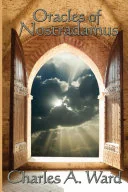
Charles A. Ward's 'Oracles of Nostradamus' presents a compelling case for the historical and linguistic underpinnings of Nostradamus' cryptic verses. Ward, an academic rather than a mere enthusiast, meticulously unpacks the quatrains, drawing connections to the tumultuous events of the 16th century and beyond. His strength lies in grounding the prophecies within their era, demonstrating an impressive command of historical facts. A particular passage, discussing the linguistic nuances of Nostradamus' use of anagrams and place names, reveals the depth of Ward's research. However, the book occasionally leans towards an apologetic tone, sometimes asserting Nostradamus' prescience rather than allowing the evidence to speak entirely for itself. Despite this, the scholarly rigor applied makes it a valuable resource for serious students of prophecy. Ward's work persuades through detailed analysis, not rhetorical flourish.
📝 Description
82
Charles A. Ward's 2013 study examines the prophecies of Nostradamus through linguistic and historical analysis.
Charles A. Ward's "Oracles of Nostradamus" offers a scholarly examination of the prophecies attributed to Michel de Nostredame. Ward, an academic, applies linguistic and historical analysis to interpret the quatrains. He presents Nostradamus not as a simple seer, but as a figure whose pronouncements require careful decoding, situating his predictions within the political and social upheavals of his era. The book seeks to demonstrate the interconnectedness of Nostradamus' visions. This volume is suited for students of esotericism, history, and prophecy who seek a rigorous approach to the subject. It appeals to those interested in the intersection of medieval thought and predictive systems, as well as individuals curious about the historical context that shaped Nostradamus' work. Readers looking for sensationalized accounts will find this analysis more grounded in research and historical fact.
Published in 2013, Ward's work engages with a long tradition of interpreting Nostradamus, a figure whose prophecies first appeared in the mid-16th century. The book situates Nostradamus' writings amidst the Renaissance, a period of significant scientific and philosophical exploration alongside religious turmoil. Ward's approach contrasts with more mystical or purely speculative interpretations prevalent in earlier centuries, aligning with a 20th century academic trend to contextualize prophetic figures within their specific historical circumstances. The work addresses the enduring fascination with Nostradamus, a phenomenon that has spanned centuries and influenced figures from royalty to occultists.
Ward's work enters the long tradition of interpreting Nostradamus, a figure whose prophecies have fascinated scholars and mystics since the mid-16th century. While earlier centuries saw more mystical or speculative readings, Ward aligns with a 20th-century academic trend of contextualizing prophetic figures within their specific historical circumstances. His analysis focuses on the linguistic and historical dimensions of the quatrains, situating Nostradamus' writings within the Renaissance's intellectual and religious ferment, rather than treating them as purely mystical pronouncements.
💡 Why Read This Book?
• Gain a structured method for interpreting prophetic texts, specifically by understanding Charles A. Ward's approach to Nostradamus' quatrains as detailed in the book's analytical sections. • Appreciate the historical context of Nostradamus' predictions, learning how events like the French Revolution might be encoded within the verses as discussed by Ward. • Develop critical thinking skills regarding historical prophecy by examining Ward's linguistic and factual evidence, moving beyond speculative interpretations.
⭐ Reader Reviews
Honest opinions from readers who have explored this book.
❓ Frequently Asked Questions
What historical period does Charles A. Ward focus on when analyzing Nostradamus?
Ward situates Nostradamus' prophecies within the context of the 16th century, his lifetime, and examines how these predictions allegedly relate to subsequent historical periods, including the French Revolution and Napoleonic era.
Is 'Oracles of Nostradamus' primarily a biography or an interpretation of prophecies?
The book is primarily an interpretation of Nostradamus' prophecies, using historical facts and linguistic analysis to support Ward's arguments about their meaning and relevance.
What are the main challenges in interpreting Nostradamus' quatrains, according to Ward?
Ward highlights the challenges of archaic language, potential symbolic or allegorical meanings, and the difficulty in definitively linking specific quatrains to precise historical events without extensive contextual research.
Does Ward claim Nostradamus predicted specific future events beyond his own era?
Yes, Ward marshals historical and linguistic evidence to argue for Nostradamus' ability to foresee events in subsequent centuries, such as major political upheavals and conflicts.
What distinguishes Charles A. Ward's approach from other Nostradamus interpreters?
Ward's approach is distinguished by its academic rigor, focusing on linguistic analysis and historical evidence rather than purely mystical or speculative interpretations, aligning with scholarly efforts to contextualize prophetic figures.
Can this book help understand the political climate of Nostradamus' time?
Yes, Ward's analysis inherently connects the prophecies to the political and social landscape of the 16th century, offering insights into the anxieties and power structures of that era.
🔮 Key Themes & Symbolism
Linguistic Decryption
Ward emphasizes the critical role of language in understanding Nostradamus' quatrains. He examines the archaic French, Greek influences, and potential use of anagrams and coded phrasing. This section highlights how precise word choice and etymology are presented as keys to unlocking the intended meanings of the prophecies, moving beyond surface-level interpretations. The work suggests that the very structure and vocabulary of the verses are as significant as their purported subject matter.
Historical Event Correlation
A central theme is the correlation between Nostradamus' verses and documented historical events across centuries. Ward meticulously examines specific quatrains, linking them to occurrences such as the French Revolution, the rise of Napoleon, and other major geopolitical shifts. This approach aims to demonstrate a verifiable pattern of foresight, presenting the prophecies as a coded historical record rather than vague pronouncements.
Renaissance Worldview
The book contextualizes Nostradamus within the intellectual and spiritual milieu of the Renaissance. Ward explores how contemporary beliefs about astrology, alchemy, and divine inspiration likely shaped Nostradamus' prophetic visions. This theme positions Nostradamus not as an anomaly, but as a product of his time, reflecting the era's mix of scientific inquiry and mystical thought.
The Nature of Prophecy
Ward engages with the fundamental question of what constitutes prophecy and how it functions. He presents Nostradamus' work as an example of predictive literature that requires scholarly interpretation to reveal its depth. The book implicitly argues for a structured, evidence-based approach to understanding prophecies, distinguishing it from purely faith-based or sensationalist viewpoints.
💬 Memorable Quotes
Direct passages from the work, attributed to the author.
“He marshals an impressive array of linguistic and historical facts to back up his position on these enigmatic predictions.”
— This observation highlights Ward's academic methodology. It suggests that his analysis of Nostradamus relies on concrete evidence and scholarly research, rather than unsupported speculation, making his arguments more persuasive to critical readers.
“Charles Ward was a believer and once you've read his book you will be too.”
— This statement reflects the author's conviction and the intended persuasive power of his work. It suggests that Ward's detailed analysis and presentation of evidence are so compelling that they are likely to convert even skeptical readers to a belief in Nostradamus' prophetic abilities.
💡 Key Ideas
Editorial paraphrase of the work's core concepts — not direct quotes.
Since governments, sects, and countries will undergo such sweeping changes, diametrically opposed to what now obtains...
This passage captures the scope of Nostradamus' alleged foresight. It points to prophecies concerning radical transformations in global power structures and societal orders, suggesting that the seer foresaw periods of profound upheaval and change.
Interpretations of Nostradamus' quatrains often require understanding archaic language and historical context.
This is a paraphrased concept reflecting Ward's approach. It underscores that deciphering Nostradamus is not a simple task; it demands specialized knowledge of 16th-century French and the historical events relevant to the prophecies.
Ward applies linguistic and historical facts to explain Nostradamus' predictions.
This paraphrased concept summarizes Ward's core analytical strategy. It emphasizes his commitment to using academic tools—language study and historical research—to clarify the enigmatic verses attributed to Nostradamus.
🌙 Esoteric Significance
Tradition
Ward's work sits within the Western esoteric tradition, particularly in its engagement with divination and predictive systems. While not strictly Hermetic or Kabbalistic, it draws from the historical currents that informed these traditions, such as astrology and numerology, which were integral to Renaissance thought. The book explores how Nostradamus' method, even if grounded in historical observation, taps into a desire for cosmic order and foreknowledge that speaks to Gnostic or Neoplatonic ideas of hidden truths.
Symbolism
The quatrains themselves are rich with symbolic language. Ward likely explores motifs such as astrological conjunctions (e.g., specific planetary alignments mentioned as portents), animal symbolism (e.g., lions representing kings or empires), and geographical references used allegorically. These symbols function not just as poetic devices but as coded indicators of historical figures, nations, or eras, requiring a symbolic lexicon to interpret.
Modern Relevance
Contemporary interest in Nostradamus persists, fueled by events like world wars and geopolitical shifts that many believe align with his predictions. Modern interpreters and enthusiasts, often found in online communities and esoteric study groups, continue to reference Ward's work for its detailed analysis. The book's structured approach influences how contemporary practitioners of divination or historical prophecy study engage with predictive texts.
👥 Who Should Read This Book
• Students of Western Esotericism seeking to understand historical prophetic traditions through an academic lens. • History enthusiasts interested in the Renaissance period and how contemporary figures interpreted and consumed predictive literature. • Critical thinkers and researchers analyzing the methods and evidence used to support claims of precognition and prophecy.
📜 Historical Context
Michel de Nostredame published his prophecies, the 'Centuries', beginning in 1555, a period steeped in religious conflict and political intrigue across Europe. The Renaissance was a time of burgeoning humanism alongside deep-seated anxieties about the future, making prophetic literature both popular and controversial. Ward's work, appearing in the 21st century, engages with a long lineage of interpreters, from Catherine de' Medici's court advisors to later occultists. His scholarly approach contrasts with the more mystical traditions that often enveloped Nostradamus studies. Key contemporaries like Agrippa von Nettesheim explored occult sciences, contributing to an intellectual climate where such works could emerge. While Nostradamus faced some scrutiny, his work gained widespread acceptance, unlike overtly heretical texts of the era, partly due to its cryptic nature and patronage.
📔 Journal Prompts
Nostradamus' use of linguistic ambiguity in the quatrains.
The historical context of the Renaissance impacting prophetic writing.
Ward's correlation of specific quatrains to later historical events.
The role of symbolic language in coded predictions.
Personal reflection on the academic versus mystical interpretation of prophecy.
🗂️ Glossary
Quatrain
A stanza or poem consisting of four lines, typically with a specific rhyme scheme. Nostradamus famously organized his prophecies into quatrains.
Michel de Nostredame
The 16th-century French astrologer, physician, and reputed seer, widely known by his Latinized name, Nostradamus, author of the 'Centuries'.
The Centuries
The primary collection of Nostradamus' prophecies, published in installments starting in 1555, organized into groups of 100 quatrains ('centuries').
Esotericism
Belief systems or practices that are concerned with the ultimate spiritual reality, often involving hidden knowledge, mystical experience, and esoteric symbolism.
Linguistic Analysis
The critical examination of language, including its structure, vocabulary, and historical development, used here to interpret Nostradamus' writings.
Renaissance
The period in European history from the 14th to the 17th century, marked by a revival of classical learning and artistic achievement, alongside significant social and political change.
Divination
The practice of seeking knowledge of the future or the unknown by supernatural means, often through rituals or the interpretation of omens and symbols.
This book appears in 1 collection
🔮 Readers Also Liked
Browse all →








From the “Nostradamus” Collection
View all →



More Free Occult Philosophy Books
View all →