Mary Magdalene
 75
75

Mary Magdalene
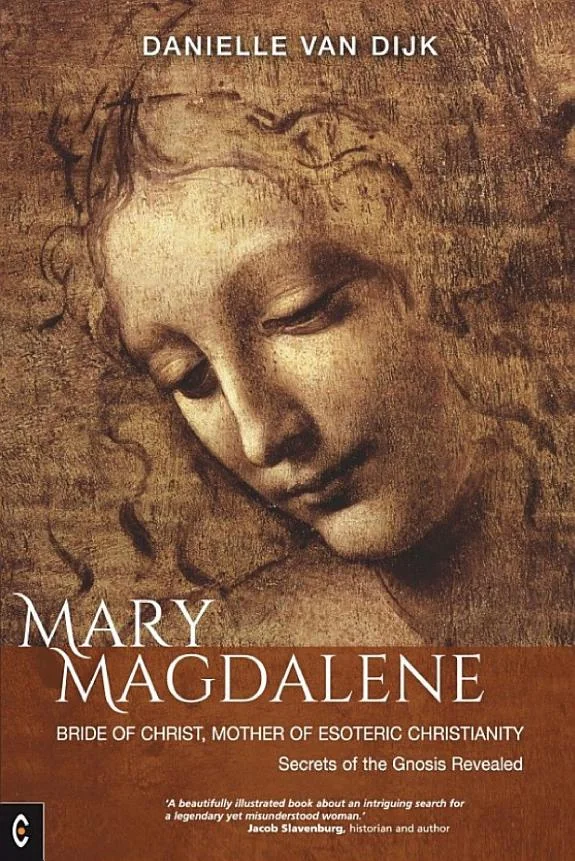
Danielle van Dijk's "Mary Magdalene" offers a compelling cartography of a figure often relegated to the margins of hagiography. The strength of this work lies in its meticulous tracing of Magdalene-associated sites, connecting them through a lens informed by Rudolf Steiner's spiritual science and the insights from the Nag Hammadi discoveries. Van Dijk skillfully avoids hagiographical pitfalls, instead presenting a nuanced exploration of how the Magdalene archetype has been perceived and memorialized across diverse cultures and eras. A particular triumph is the chapter discussing the Magdalene's presence in Southern France, linking it to Cathar traditions and the concept of the Grail. However, the book occasionally feels overly reliant on Steiner's interpretations, which, while illuminating, can sometimes overshadow other potential readings of the historical and symbolic data. The integration of Celtic Christianity is handled with less depth than the Gnostic and Steinerian threads. Despite this, "Mary Magdalene" provides a valuable, if specialized, reconceptualization of this pivotal spiritual figure.
📝 Description
75
Danielle van Dijk's 2005 book reinterprets Mary Magdalene through esoteric traditions and archaeology.
Danielle van Dijk's "Mary Magdalene" examines the figure beyond standard biblical accounts, drawing on archaeology, esoteric traditions, and Rudolf Steiner's philosophy. The book traces Mary Magdalene's presence and impact across historical locations in Palestine, France, England, Italy, and Spain. It is written for readers interested in Gnosticism, early Christian history, and the development of feminine spiritual archetypes. Those who study the Nag Hammadi library and seek to understand the Magdalene as a symbol of wisdom and inner knowing will find this work engaging. Familiarity with Celtic Christianity or Steiner's anthroposophy will enhance the reading experience.
Van Dijk places her study within the context of the early Christian era and later medieval traditions that honored Mary Magdalene. The book acknowledges the renewed interest in Gnostic texts following the 1945 Nag Hammadi discoveries, a time when many scholars and spiritual seekers reassessed early Christian heterodoxies and women's roles within them. The core concept presented is "Gnosis – the Wisdom of the Heart," understood as direct, intuitive knowledge gained through spiritual practice and inner awareness. Van Dijk also discusses the "hidden geography" linked to the Magdalene, suggesting a network of sacred sites and lost histories reflecting her spiritual legacy, alongside an examination of how Celtic traditions merged with early Christian mysticism.
This book sits within the Theosophy and Anthroposophy traditions, particularly referencing Rudolf Steiner's work. It engages with Gnostic interpretations of early Christianity, a field often explored by these esoteric movements. The focus on Mary Magdalene as a figure of inner wisdom and spiritual knowledge aligns with anthroposophical attempts to understand historical and spiritual figures through a more mystical lens. The exploration of sacred sites and symbolic geography also reflects esoteric practices of finding spiritual meaning in physical locations and historical narratives.
💡 Why Read This Book?
• Gain a new perspective on Mary Magdalene by understanding her presence across sacred landscapes in Palestine, France, England, Italy, and Spain, as detailed in Chapter 3. • Uncover the meaning of "Gnosis – the Wisdom of the Heart" by exploring its connection to the Magdalene archetype, as presented in the book's concluding sections. • Integrate insights from Rudolf Steiner's spiritual science with historical and archaeological evidence concerning the Magdalene, offering a unique synthesis not found elsewhere.
⭐ Reader Reviews
Honest opinions from readers who have explored this book.
❓ Frequently Asked Questions
What are the primary sources Danielle van Dijk uses in "Mary Magdalene"?
The book draws upon Celtic Christianity traditions, the Nag Hammadi discoveries from 1945, and the spiritual insights of Rudolf Steiner. It also incorporates contemporary spiritual understanding and historical site analysis.
Which geographical locations are central to the exploration of Mary Magdalene in this book?
Van Dijk traces the Magdalene's presence across ancient Palestine, and later traditions in France, England, Italy, and Spain, focusing on sites where she has been memorialized.
What is the concept of "Gnosis" as presented in "Mary Magdalene"?
Gnosis is presented as the "Wisdom of the Heart," an intuitive, direct knowing that goes beyond intellectual understanding, explored through the Magdalene archetype.
How does the book connect Mary Magdalene to Rudolf Steiner?
It utilizes Rudolf Steiner's spiritual-scientific perspective to interpret the Magdalene's significance and historical presence, viewing her as a key figure in spiritual evolution.
What is the significance of "hidden geography" in the context of this book?
Hidden geography refers to the spiritual landscapes and forgotten histories woven through sacred sites that memorialize the Magdalene, revealing layers of Gnostic wisdom.
When was "Mary Magdalene" by Danielle van Dijk first published?
The book was first published on April 14, 2026.
🔮 Key Themes & Symbolism
The Magdalene Archetype
This theme explores Mary Magdalene not merely as a historical figure but as a potent spiritual archetype representing Gnosis, the Wisdom of the Heart. Van Dijk examines how this archetype has been perceived and memorialized across different eras, from early Christianity through medieval traditions, particularly in Southern France. The book investigates her role as a bearer of esoteric knowledge and a symbol of direct spiritual insight, moving beyond traditional patriarchal interpretations.
Sacred Geography and Pilgrimage
Van Dijk maps a "hidden geography" linked to Mary Magdalene, identifying specific sites in Palestine, France, England, Italy, and Spain that hold spiritual significance. This theme examines the concept of pilgrimage, both physical and spiritual, as a means of connecting with the Magdalene's legacy. The book suggests that these locations form a network, embodying forgotten histories and esoteric wisdom, inviting readers to see the landscape through a mystical lens.
Gnosis and Inner Wisdom
Central to the book is the exploration of "Gnosis – the Wisdom of the Heart." This theme focuses on the direct, intuitive knowing that the Magdalene is said to embody and transmit. Van Dijk connects this Gnostic principle to the Nag Hammadi discoveries, suggesting a lineage of esoteric knowledge that emphasizes inner experience over dogma. The book posits that understanding the Magdalene involves accessing this profound inner wisdom and its liberating potential.
Celtic Christianity and Steinerian Interpretation
The work integrates elements of Celtic Christianity, particularly its emphasis on nature and feminine divine principles, with the spiritual science of Rudolf Steiner. Van Dijk uses Steiner's insights to interpret the historical and spiritual significance of the Magdalene, viewing her within a broader cosmic evolutionary framework. This synthesis offers a unique perspective, bridging ancient traditions with modern esoteric thought and highlighting the Magdalene's enduring spiritual relevance.
💬 Memorable Quotes
Direct passages from the work, attributed to the author.
“The Magdalene embodies Gnosis – the Wisdom of the Heart.”
— This core statement expresses the book's thesis: that Mary Magdalene represents a direct, intuitive spiritual knowledge, distinct from purely intellectual or dogmatic understanding, accessible through inner connection.
“A hidden geography is woven through sacred landscapes and forgotten histories.”
— This suggests that significant spiritual sites connected to the Magdalene are not merely historical locations but form a network of energetic and symbolic importance, revealing concealed layers of wisdom.
“Drawing on Celtic Christianity and the Nag Hammadi discoveries...”
— This highlights the book's interdisciplinary approach, synthesizing ancient mystical traditions (Celtic) with rediscovered Gnostic texts (Nag Hammadi) to illuminate the Magdalene's complex significance.
“Retracing the footsteps of Mary Magdalene across ancient Palestine, France, England, Italy and Spain.”
— This indicates the book's structure as a spiritual journey, following the historical and legendary paths associated with the Magdalene, grounding esoteric concepts in tangible geographical exploration.
“Contemporary spiritual insight, particularly the work of Rudolf Steiner.”
— This points to the book's interpretive framework, utilizing Rudolf Steiner's anthroposophical perspective to understand the Magdalene's role in human spiritual evolution and consciousness.
🌙 Esoteric Significance
Tradition
This work sits firmly within the Western Esoteric Tradition, drawing heavily from Gnostic streams, particularly as illuminated by the Nag Hammadi discoveries. It also incorporates elements of Christian Hermeticism and anthroposophy, a modern esoteric system developed by Rudolf Steiner. Van Dijk's approach departs from purely historical or theological analysis, instead seeking the inner, spiritual meaning of the Magdalene figure and her associated landscapes, aligning with Gnostic emphasis on direct experience of the divine.
Symbolism
The primary symbols explored include Mary Magdalene herself, representing Gnosis (Wisdom of the Heart) and the divine feminine principle. Sacred geography functions symbolically, with specific locations in Palestine, France, and elsewhere acting as nodes of spiritual energy and historical memory. The concept of the "hidden geography" symbolizes the unveiling of esoteric truths embedded within the earth and human history, accessible through a receptive, heart-centered consciousness.
Modern Relevance
The book's exploration of Gnosis, the Wisdom of the Heart, and the archetype of the divine feminine finds resonance with contemporary movements emphasizing embodied spirituality, intuitive knowing, and the integration of psychological and spiritual development. Thinkers and practitioners in fields like archetypal psychology, depth spirituality, and esoteric Christianity, particularly those influenced by Steiner's work or seeking non-dogmatic spiritual paths, will find Van Dijk's synthesis relevant to their understanding of spiritual evolution and feminine wisdom.
👥 Who Should Read This Book
• Students of Gnosticism and early Christian heterodoxies seeking to understand the Magdalene beyond canonical narratives, benefiting from the analysis of Nag Hammadi texts. • Explorers of sacred geography and pilgrimage interested in how historical sites embody spiritual traditions, particularly those linked to the Magdalene in France and the Mediterranean. • Followers of Rudolf Steiner's anthroposophy looking for detailed applications of his spiritual-scientific methods to figures of spiritual history and esoteric symbolism.
📜 Historical Context
Published in 2026, Danielle van Dijk's "Mary Magdalene" emerges in an era marked by continued academic and popular interest in early Christian history, Gnosticism, and the re-evaluation of feminine spiritual figures. The book builds upon the scholarly and spiritual discourse ignited by the discovery of the Nag Hammadi library in 1945, which brought suppressed Gnostic texts into wider circulation. Van Dijk's work engages with a lineage of thinkers who sought to understand figures like Mary Magdalene beyond orthodox interpretations, including the theosophical and anthroposophical movements. Her specific reliance on Rudolf Steiner positions her within a particular stream of esoteric interpretation, one that often views biblical figures through a lens of cosmic evolution and spiritual science. While not directly engaging with immediate contemporaries in a polemical fashion, the work implicitly responds to ongoing debates about the historical Jesus and the role of women in early Christianity, contrasting with more secular historical-critical approaches.
📔 Journal Prompts
The hidden geography of Mary Magdalene: What sacred sites in your locale might hold similar veiled significance?
Gnosis as the Wisdom of the Heart: How can you cultivate direct inner knowing in your daily life?
Reflecting on Celtic Christianity's feminine principles: How do these contrast or align with other spiritual traditions you know?
Rudolf Steiner's perspective on spiritual figures: What new questions does this approach raise about historical spiritual teachers?
The Magdalene archetype: In what ways does this archetype manifest in contemporary culture or your personal journey?
🗂️ Glossary
Gnosis
In esoteric traditions, particularly Gnosticism, gnosis refers to direct, intuitive knowledge of spiritual truths, often understood as a liberating insight into the divine nature of reality and the self.
Nag Hammadi Library
A collection of Gnostic religious texts discovered near the town of Nag Hammadi in Upper Egypt in 1945. These texts provide invaluable insight into early Christian and Gnostic beliefs.
Anthroposophy
A spiritual philosophy founded by Rudolf Steiner, seeking to connect the spiritual in the human being with the spiritual in the universe through a method of thinking and spiritual training.
Celtic Christianity
A branch of Christianity that developed in Ireland, Scotland, and Wales, often characterized by a strong connection to nature, a more egalitarian structure, and distinct mystical traditions.
Sacred Geography
The study of the spiritual significance of places and landscapes, viewing them not just physically but as imbued with divine energy, historical memory, or symbolic meaning.
Archetype
In Jungian psychology and later esoteric thought, an archetype is a universal, archaic pattern and image that derives from the collective unconscious and is the structural counterpart to the history of the species.
Wisdom of the Heart
A concept emphasizing intuitive understanding, emotional intelligence, and direct spiritual perception as pathways to truth, often contrasted with purely intellectual or rational knowledge.
This book appears in 1 collection
🔮 Readers Also Liked
Browse all →









From the “Esoteric Christianity” Collection
View all →



More Free Esoteric History & Biography Books
View all →