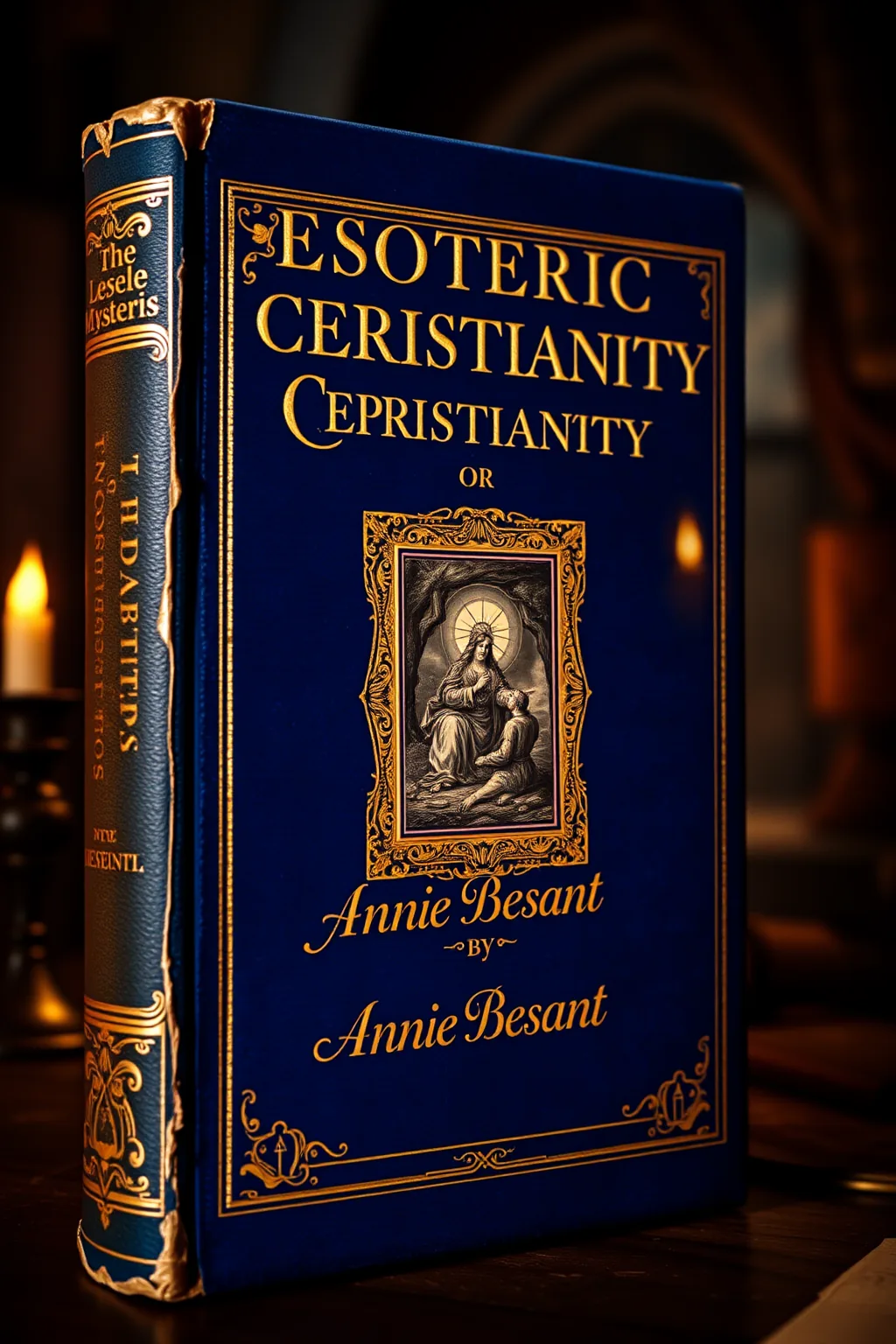
Esoteric Christianity Or The Lesser Mysteries
 71
71

Esoteric Christianity Or The Lesser Mysteries


Annie Besant's 'Esoteric Christianity Or The Lesser Mysteries' is a seminal work that continues to resonate with modern esoteric seekers. Published over a century ago, the book's insights into the hidden dimensions of Christian mysticism remain as relevant today as they were in 1905. Besant's ability to weave together Eastern and Western spiritual traditions creates a compelling narrative that challenges conventional understandings of Christianity. For those interested in the occult and esoteric traditions, this book offers a wealth of knowledge that can deepen one's spiritual practice and intellectual understanding. The text is rich with symbolism and mystical interpretations, making it a valuable resource for both novice and experienced seekers. Besant's writing style is engaging and accessible, despite the complexity of the subject matter. Overall, 'Esoteric Christianity Or The Lesser Mysteries' is a must-read for anyone interested in the deeper, more mystical aspects of Christianity and the occult.
📝 Description
71
Annie Besant published 'Esoteric Christianity Or The Lesser Mysteries' in 1901.
Annie Besant's 1901 book, 'Esoteric Christianity Or The Lesser Mysteries,' examines Christian teachings through an occult lens. She argues that the outer forms of Christianity conceal a deeper, symbolic meaning. Besant discusses how the gospel narratives and sacraments can be understood as allegories representing spiritual development. She posits that these hidden meanings were known to early Christians and form a system of spiritual instruction. The book aims to reveal this inner structure, suggesting it is accessible to those who study it carefully.
Besant draws parallels between these esoteric interpretations and other mystical traditions. She writes about the Christ principle as a universal force rather than solely a historical figure. The text also touches upon concepts like reincarnation and the evolution of consciousness as part of this Christian esoteric tradition. It is written for individuals interested in uncovering a symbolic layer of meaning within Christian theology and practice.
This book belongs to the Theosophical movement's interpretation of world religions. Annie Besant, a prominent figure in Theosophy after Helena Blavatsky, sought to reinterpret Christianity from an esoteric viewpoint. Theosophy commonly views exoteric religions as outer shells for profound inner teachings that have been preserved in various traditions. 'Esoteric Christianity' applies this framework specifically to the Christian faith, suggesting its core message is mystical and relates to universal spiritual laws rather than solely historical events.
💡 Why Read This Book?
Reading 'Esoteric Christianity Or The Lesser Mysteries' today offers a unique opportunity to explore the hidden depths of Christian mysticism. This book provides readers with a deeper understanding of the spiritual evolution of the soul and the inner teachings of the early Christian Church. It is particularly valuable for those interested in comparative religion and esoteric studies, as it bridges Eastern and Western spiritual traditions. Besant's insights can enrich one's spiritual practice and intellectual understanding, making it a worthwhile read for both novice and experienced seekers.
⭐ Reader Reviews
Honest opinions from readers who have explored this book.
❓ Frequently Asked Questions
What is the main focus of 'Esoteric Christianity Or The Lesser Mysteries'?
The main focus of the book is the esoteric and mystical dimensions of Christianity, revealing hidden symbolism and spiritual teachings within Christian scriptures and practices.
Who is the intended audience for this book?
This book is intended for spiritual seekers, theologians, and anyone interested in the deeper, more mystical aspects of Christianity and the occult.
How does Annie Besant's background influence her writing?
Annie Besant's background as a prominent Theosophist influences her writing by integrating Eastern and Western mystical traditions, providing a unique perspective on Christian esotericism.
🔮 Key Themes & Symbolism
The Hidden Symbolism of Christianity
Annie Besant looks at the detailed symbolism of Christianity, revealing the esoteric meanings behind familiar religious icons and rituals. This theme explores how symbols can serve as gateways to deeper spiritual understanding and enlightenment.
The Mystical Underpinnings of Faith
This book examines the mystical foundations of Christian faith, offering insights into the lesser mysteries that have been passed down through the ages. Besant's exploration of these mystical underpinnings provides a profound understanding of the spiritual dimensions of Christianity.
The Philosophical Significance of Esoteric Teachings
Besant's work highlights the philosophical significance of esoteric teachings within Christianity, challenging readers to think beyond conventional religious practices and explore the deeper meanings of faith. This theme invites contemplation and introspection, encouraging readers to explore the philosophical aspects of their spiritual journey.
💡 Key Ideas
Editorial paraphrase of the work's core concepts — not direct quotes.
The path to spiritual enlightenment often lies hidden beneath the surface of conventional wisdom.
This quote underscores the esoteric nature of spiritual seekers who must look beyond the obvious to find deeper truths.
Symbols are the language of the soul, speaking to us in ways that words cannot.
This line emphasizes the power of symbolism in conveying spiritual and mystical insights.
The lesser mysteries of Christianity offer a glimpse into the divine wisdom that has been passed down through the ages.
This passage highlights the enduring value of esoteric teachings in understanding the spiritual dimensions of Christianity.
Faith is not merely belief; it is a journey into the depths of the human spirit.
This quote invites readers to explore the mystical and philosophical aspects of their faith.
The true seeker of spiritual truth will find that the path is often hidden and the journey is one of self-discovery.
This line encourages readers to embrace the esoteric and mystical dimensions of their spiritual quest.
🌙 Esoteric Significance
Tradition
This book belongs to the Hermetic and Theosophical traditions, which emphasize the study of hidden knowledge and the exploration of spiritual mysteries. Besant's work is deeply rooted in the esoteric teachings of these traditions, offering insights into the mystical dimensions of Christianity.
Symbolism
Key symbols in this book include the cross, the Holy Grail, and various religious icons, each of which is explored for its esoteric meanings. These symbols serve as gateways to deeper spiritual understanding and enlightenment.
Modern Relevance
This book remains relevant today for modern practitioners of esoteric and mystical studies, as well as for those seeking a deeper understanding of the spiritual dimensions of Christianity. Its insights into the lesser mysteries of Christianity continue to inspire and guide spiritual seekers.
👥 Who Should Read This Book
Beginners in esoteric studies will find this book to be a valuable introduction to the mystical dimensions of Christianity. Scholars of religious and philosophical studies will appreciate Besant's meticulous research and clear insights. Spiritual seekers will be inspired by the esoteric teachings and symbols that lie beneath the surface of conventional religious practices. Practitioners of the mystical arts will find this book to be a rich resource for their spiritual journey.
📜 Historical Context
Written in the late 19th and early 20th centuries, 'Esoteric Christianity Or The Lesser Mysteries' emerged during a time of significant spiritual and intellectual ferment. Annie Besant, a leading figure in the Theosophical Society, sought to bridge the gap between Eastern and Western spiritual traditions, emphasizing the universal truths that underlie all religions. This book was important because it challenged conventional religious narratives and offered a deeper, more mystical understanding of Christianity. Its influence can be seen in the works of later esoteric and mystical writers, as well as in the development of modern spiritual and philosophical thought.
📔 Journal Prompts
How do the esoteric teachings in this book challenge your understanding of Christianity?
What symbols in this book resonate with your spiritual journey?
How does Besant's exploration of the lesser mysteries of Christianity inspire your own spiritual practices?
In what ways does this book bridge the gap between Eastern and Western spiritual traditions?
How can the insights from this book be applied to your daily life and spiritual quest?
🗂️ Glossary
Esoteric
Relating to knowledge that is hidden or mysterious, often requiring special initiation or study to understand.
Mysticism
The belief in the possibility of union with the divine, often through contemplation and spiritual practices.
Theosophy
A philosophical and religious movement that seeks to understand the divine wisdom and the spiritual nature of the universe.
Hermetic
Relating to the teachings of Hermes Trismegistus, which emphasize the study of hidden knowledge and the exploration of spiritual mysteries.
Symbolism
The use of symbols to represent abstract ideas or qualities, often in a religious or mystical context.
This book appears in 5 collections
🔮 Readers Also Liked
Browse all →








More by Annie Besant
All books →




From the “Occultism” Collection
View all →


More Free Occult Philosophy Books
View all →