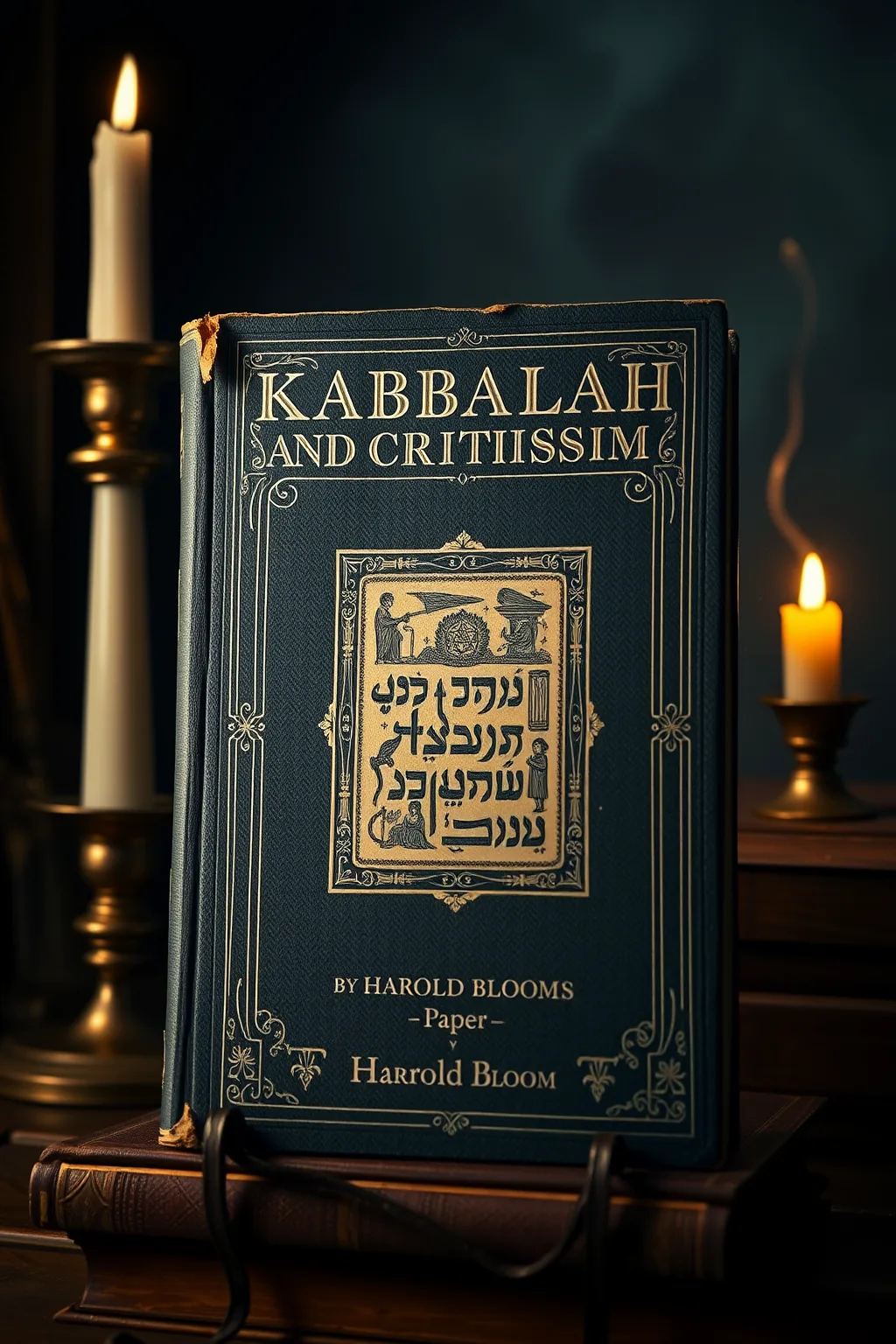
Kabbalah & Criticism (Kabbalah & Criticism Paper)
 62
62

Kabbalah & Criticism (Kabbalah & Criticism Paper)



Harold Bloom's 'Kabbalah & Criticism' is an indispensable key for unlocking the esoteric heart of Jewish mysticism. Bloom, with his characteristic intellectual rigor, meticulously traces the evolution of Kabbalistic thought and its profound impact on critical theory. He brilliantly demonstrates how the Kabbalists' own methods of textual interpretation, their engagement with divine secrets, and their wrestling with the limitations of language serve as a powerful metaphor for contemporary critical endeavors. This work is a treasure trove for scholars of Jewish mysticism, literary critics, and anyone fascinated by the enduring power of hidden knowledge and symbolic systems. Its insights are both illuminating and deeply resonant.
📝 Description
62
Harold Bloom published 'Kabbalah & Criticism' in 1975, analyzing its mystical texts.
In 'Kabbalah & Criticism,' Harold Bloom examines the Jewish mystical tradition through the lens of literary theory. He focuses on how Kabbalistic texts were interpreted and reinterpreted over time, a process he terms 'revisionary ratios.' Bloom argues that Kabbalah is not just a historical phenomenon but a model for understanding critical interpretation itself. The book traces the pursuit of divine knowledge and the challenges of expressing the ineffable within mystical discourse.
Bloom connects the esoteric practices of Kabbalah with the anxieties of influence found in poetic tradition. He shows how Kabbalists engaged in a form of literary wrestling with their predecessors, seeking to create new meaning from established texts. This approach offers a unique perspective on how interpretive traditions develop and transform, impacting later thought.
This work places Kabbalah within the broader spectrum of esoteric thought, particularly its engagement with scripture and mystical experience. Bloom's analysis highlights how Kabbalistic interpretations, often dense with symbolism and allegory, sought a direct connection to the divine. The book acknowledges the tradition's historical development and its distinctive methods of textual exegesis, which aimed to reveal hidden layers of meaning. It frames Kabbalah not merely as a set of beliefs but as an active interpretive system that influenced generations of thinkers and writers.
💡 Why Read This Book?
Embark on a transformative journey into the esoteric foundations of interpretation. 'Kabbalah & Criticism' offers a unique lens through which to view the lineage of mystical thought and its surprising relevance to modern critical discourse. Ideal for scholars, contemplative seekers, and practitioners of esoteric traditions, this book illuminates the profound connection between hidden knowledge, symbolic language, and the enduring human quest for meaning.
⭐ Reader Reviews
Honest opinions from readers who have explored this book.
❓ Frequently Asked Questions
What is the primary focus of Harold Bloom's 'Kabbalah & Criticism'?
The book primarily focuses on the study of Kabbalah itself, its key commentators, and the 'revisionary ratios' they employed. It also explores Kabbalah's significance as a model for contemporary literary criticism, highlighting its esoteric and symbolic dimensions.
Is this book suitable for beginners in Kabbalah?
While Bloom's work is intellectually rigorous, it offers a valuable introduction to the critical and philosophical underpinnings of Kabbalah. Beginners may find it beneficial to have some foundational knowledge, but the book's insights into interpretation are broadly accessible.
What are 'revisionary ratios' in the context of Kabbalah?
Revisionary ratios, as Bloom uses the term, refer to the complex and often adversarial ways in which Kabbalists reinterpreted and engaged with earlier mystical texts. It's a concept that highlights the dynamic and transformative nature of their exegesis.
How does Kabbalah relate to literary criticism according to Bloom?
Bloom posits that the Kabbalists' sophisticated methods of textual interpretation, their quest for hidden meanings, and their wrestling with divine paradoxes offer a potent framework for understanding the challenges and strategies of modern literary criticism.
What is the esoteric significance of this book?
The book reveals the esoteric significance of Kabbalah as a system of divine revelation and symbolic interpretation. It underscores how this mystical tradition sought to access hidden truths and how its structures of meaning can be applied to understanding the deeper layers of text and consciousness.
🔮 Key Themes & Symbolism
The 'Revisionary Ratios' of Mystical Interpretation
Bloom dissects the profound interpretive strategies employed by Kabbalists, termed 'revisionary ratios.' These are not mere academic analyses, but potent methods of engaging with divine texts, seeking hidden layers of meaning, and actively transforming tradition. This theme examines how Kabbalists wrestled with the ineffable, creating new theological and philosophical frameworks through their intricate exegesis, demonstrating a lineage of critical thought that transcends mere commentary and enters the area of mystical revelation.
Kabbalah as a Model for Contemporary Criticism
This theme explores the surprising parallels between the esoteric practices of Kabbalah and the challenges faced by modern literary critics. Bloom argues that the Kabbalistic pursuit of hidden meanings, their understanding of symbolic density, and their engagement with textual paradoxes offer a rich conceptual toolkit for contemporary analysis. It suggests that the very act of deciphering divine secrets shares fundamental similarities with the critic's endeavor to uncover the profound depths of human expression.
The Quest for Divine Knowledge and Hidden Truths
Fundamentally, , 'Kabbalah & Criticism' illuminates the enduring human drive to access divine knowledge and uncover hidden truths. Bloom traces how Kabbalah, as a system of mystical thought, provided a framework for understanding the emanation of the divine, the structure of the cosmos, and the potential for human connection to the ultimate reality. This theme emphasizes the esoteric pursuit of gnosis and the symbolic language developed to articulate the ineffable aspects of existence.
💬 Memorable Quotes
Direct passages from the work, attributed to the author.
“The Kabbalah is a profound system of interpretation.”
— This highlights the central argument that Kabbalah is not just a set of beliefs, but a dynamic methodology for understanding the divine and the world.
“The 'revisionary ratios' are key to understanding its growth.”
— This points to the innovative and transformative nature of Kabbalistic exegesis, where earlier texts are not just preserved but actively reimagined.
“Kabbalah offers a model for how we read.”
— This emphasizes the book's thesis on the relevance of Kabbalistic interpretive practices to broader critical and philosophical thought.
“The search for hidden meaning is eternal.”
— This speaks to the universal human impulse to seek deeper significance, a drive central to both mysticism and critical inquiry.
“Symbolism is the language of the divine.”
— This underscores the crucial role of symbolic language in Kabbalistic thought and its power to convey profound, often ineffable, truths.
🌙 Esoteric Significance
Tradition
This work is deeply rooted in the rich and complex tradition of Kabbalah, a form of Jewish mysticism that seeks to understand the divine nature and its relationship to the created world. It examines the symbolic language, the cosmological structures, and the mystical practices developed within this esoteric lineage to achieve direct experience of the divine.
Symbolism
Kabbalah is inherently symbolic, utilizing concepts like the Sefirot (divine emanations), the Hebrew alphabet as a cosmic blueprint, and gematria (numerical interpretation of words) to unlock hidden meanings. Bloom explores how these symbols function not just as decorative elements but as conduits to profound spiritual truths and as tools for understanding the very fabric of reality.
Modern Relevance
Bloom argues that the Kabbalistic approach to interpretation, with its emphasis on textual layers, paradox, and the transformative power of symbolic engagement, offers clear insights for contemporary critical thought. The book suggests that by studying these ancient methods, we can gain new perspectives on how meaning is constructed, how traditions evolve, and how the search for hidden knowledge continues to shape human understanding.
👥 Who Should Read This Book
This book is essential for scholars of Jewish mysticism and comparative religion seeking a sophisticated analysis of Kabbalistic thought. Literary critics will find Bloom's innovative application of Kabbalistic principles to critical theory particularly informative. Contemplative seekers and students of esoteric traditions will benefit from its exploration of hidden knowledge and symbolic interpretation. Even those new to Kabbalah but interested in the philosophical underpinnings of interpretation and the quest for deeper meaning will find its arguments compelling and its insights transformative.
📜 Historical Context
Published in the latter half of the 20th century, Harold Bloom's 'Kabbalah & Criticism' emerged during a period of intense intellectual ferment in literary theory and religious studies. The post-structuralist era, with its focus on deconstruction and the instability of meaning, provided fertile ground for Bloom's exploration of how ancient mystical traditions grappled with similar complexities. His work also engaged with the burgeoning interest in esoteric traditions and their potential to offer alternative frameworks for understanding human consciousness and creativity. This book sits at the intersection of traditional scholarship and avant-garde critical thought, seeking to bridge the perceived divide between ancient wisdom and modern intellectual inquiry.
📔 Journal Prompts
How does Bloom's concept of 'revisionary ratios' resonate with your own experiences of interpreting texts or ideas?
In what ways can the symbolic language of Kabbalah offer new perspectives on contemporary issues?
Reflect on a time you felt you uncovered a 'hidden truth' in a text or experience. How did that process unfold?
Consider the relationship between divine knowledge and human understanding. Where do you see overlap or tension?
How might the act of critical analysis be seen as a form of mystical engagement with the subject matter?
🗂️ Glossary
Kabbalah
A body of esoteric Jewish mysticism that explores the nature of God, the creation of the universe, and the spiritual significance of the Torah, often employing symbolic and allegorical interpretations.
Revisionary Ratios
Harold Bloom's term for the complex, often adversarial, processes by which later writers and thinkers reinterpret and transform earlier works, particularly evident in the history of Kabbalistic exegesis.
Sefirot
In Kabbalah, the ten divine emanations or attributes through which God interacts with the universe. They represent a mystical map of divine unfolding and the structure of reality.
Gematria
A Kabbalistic interpretive method that assigns numerical values to Hebrew letters, used to find hidden meanings and connections between words and concepts.
Esoteric
Intended for or likely to be understood by only a small number of people with a specialized knowledge or interest; relating to or characteristic of mysticism.
This book appears in 1 collection
🔮 Readers Also Liked
Browse all →








More by Harold Bloom
All books →





From the “Kabbalah” Collection
View all →







More Free Kabbalah & Jewish Mysticism Books
View all →