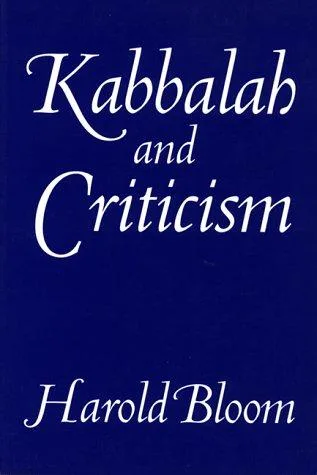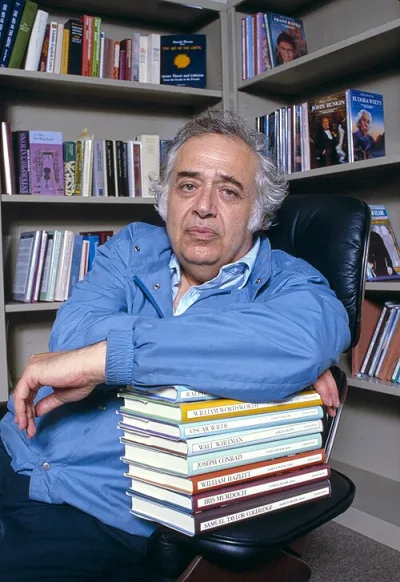
Harold Bloom
Harold Bloom was a prominent literary critic known for his theories on poetic influence and defense of the Western canon.
Harold Bloom was an influential American literary critic and professor, widely recognized in the English-speaking world. Throughout his extensive career, he authored over 50 books, including more than 40 works of literary criticism, several on religious themes, and one novel. His writings, translated into numerous languages, often defended the traditional Western literary canon against contemporary critical trends he termed the "School of Resentment." Bloom's academic journey included studies at Yale, Cambridge, and Cornell universities. He was a lifelong educator, associated with Yale University for the majority of his career, and also taught at New York University. His critical work explored the psychological struggles of poets in establishing their unique voices against the weight of literary predecessors, a concept he termed "poetic influence."
Early Life and Education
Born in New York City, Harold Bloom was raised in an Orthodox Jewish, Yiddish-speaking household, learning literary Hebrew before acquiring English at age six. His parents emigrated from Eastern Europe. Bloom's early exposure to poetry, particularly Hart Crane, sparked a lifelong passion. He attended the Bronx High School of Science and pursued higher education, earning a B.A. in classics from Cornell University, where M. H. Abrams was his mentor, and a Ph.D. from Yale University. He also studied as a Fulbright Scholar at Pembroke College, Cambridge. During his time at Yale, he engaged in intellectual disputes with the New Critics.
Literary Criticism and Influence Theory
Bloom's early critical work focused on Romantic poets like Shelley, Blake, Yeats, and Stevens, often challenging existing interpretations. Following a personal crisis in the late 1960s, his work became deeply informed by figures like Ralph Waldo Emerson, Sigmund Freud, and esoteric traditions such as Gnosticism, Kabbalah, and Hermeticism, leading him to describe himself as a "Jewish Gnostic." This period saw the development of his influential theory of "poetic influence," detailed in works like "The Anxiety of Influence." He posited that poets grapple with the overwhelming presence of their predecessors, engaging in "strong misreadings" and "revisionary strife" to forge their own distinct literary identities. He distinguished between "strong poets" who creatively reinterpret tradition and "weak poets" who merely echo it, outlining a system of "revisionary ratios."
Later Work and Religious Criticism
Bloom continued to develop his influence theory throughout the 1970s and 80s, with later works like "A Map of Misreading" refining his concepts. He also ventured into fiction with "The Flight to Lucifer," a sequel to David Lindsay's fantasy novel "A Voyage to Arcturus." A significant phase of his career involved "religious criticism," beginning with "Ruin the Sacred Truths." In "The Book of J," he and David Rosenberg explored the biblical Jahwist source as the work of a distinct literary artist, speculating on the author's identity. His later book, "Jesus and Yahweh: The Names Divine," examined biblical figures as literary characters, critically assessing historical approaches.
Key Ideas
- Poetic influence as a struggle against precursor poets.
- Strong misreading and revisionary strife as essential for poetic originality.
- Defense of the Western literary canon.
- The "School of Resentment" as a critique of contemporary literary theories.
- "Jewish Gnostic" self-identification, blending cultural heritage with philosophical inquiry.
Notable Quotes
“No, no, I'm not an atheist. It's no fun being an atheist.”
“I am using 'Gnostic' in a very broad way. I am nothing if not Jewish... I really am a product of Yiddish culture. But I can't understand a Yahweh, or a God, who could be all-powerful and all-knowing and would allow the Nazi death camps and schizophrenia.”
“Poetic influence, as I conceive it, is a variety of melancholy or the anxiety-principle.”
“cannot be Adam early in the morning. There have been too many Adams, and they have named everything.”
“Initial love for the precursor's poetry is transformed rapidly enough into revisionary strife, without which individuation is not possible.”
Books by Harold Bloom
7 free public domain books · Read online or download