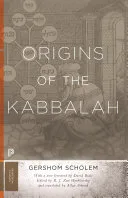
Origins of the Kabbalah
 79
79

Origins of the Kabbalah
Gershom Scholem’s 'Origins of the Kabbalah' remains an indispensable resource, even decades after its initial publication. Scholem’s formidable intellect and unparalleled command of primary sources allow him to reconstruct the complex intellectual currents that gave rise to Jewish mysticism. His detailed analysis of figures like Isaac the Blind and the milieu of thirteenth-century Gerona offers a scholarly bedrock for understanding Kabbalah's early formation. A particular strength lies in his careful distinction between nascent Kabbalistic ideas and later, more systematized doctrines, preventing anachronistic readings. However, the sheer density of Scholem’s scholarship can be challenging for readers unfamiliar with medieval Jewish philosophy or Kabbalistic terminology, requiring significant intellectual investment. The book's rigorous academic tone, while accurate, may not appeal to those seeking purely devotional or immediately accessible mystical texts. Despite this, 'Origins of the Kabbalah' provides a definitive historical and conceptual framework for its subject.
📝 Description
79
Gershom Scholem published 'Origins of the Kabbalah' in 1950, examining Kabbalah's early development.
Gershom Scholem's 'Origins of the Kabbalah,' first published in 1950, meticulously traces the initial stages of Jewish mystical thought. The book reconstructs the intellectual and spiritual climate of twelfth- and thirteenth-century Provence and Spain, the regions where Kabbalistic ideas first coalesced. Scholem, a leading figure in the academic study of Jewish mysticism, focuses on the human desire for a direct connection with the divine. This work is not an introduction but a scholarly analysis for those interested in the historical genesis of Kabbalistic concepts. It provides a crucial counterpoint to earlier interpretations by situating Kabbalah within its specific historical and intellectual environment. Scholem's research challenged prevailing scholarship, which had often overlooked or misunderstood this tradition. The book moves beyond purely theological or philosophical discussions to offer a grounded historical perspective.
Readers will find substantial material on the medieval period's intellectual currents and the evolution of mystical traditions. The book is aimed at serious students of Western esotericism, comparative religion, and Jewish history. It is particularly valuable for scholars and advanced practitioners seeking to understand Kabbalistic concepts before later, more widely known interpretations. Those interested in the complex intellectual history of the medieval era will find this a significant resource.
This book belongs to the study of Western esotericism, specifically focusing on Jewish mysticism. It examines the historical roots of Kabbalah, a tradition concerned with esoteric knowledge of God and the cosmos, originating in medieval Europe. Scholem's work situates Kabbalah within its historical context, distinguishing its early development from later, more popular forms. It connects Kabbalistic thought to broader currents in medieval philosophy and mystical practice, including influences from Gnosticism and Neoplatonism.
💡 Why Read This Book?
• Gain a precise understanding of Kabbalah's formative period in 12th- and 13th-century Southern France and Spain, moving beyond later interpretations. • Learn about the early development of the *Sefirot* doctrine and its conceptual precursors, as detailed in Scholem's analysis of key texts. • Grasp the historical context of early Kabbalists' attempts to experience God directly, a central theme Scholem meticulously examines.
⭐ Reader Reviews
Honest opinions from readers who have explored this book.
❓ Frequently Asked Questions
When was Gershom Scholem's 'Origins of the Kabbalah' first published?
Gershom Scholem's 'Origins of the Kabbalah' was first published in 1950, marking a significant early contribution to the academic study of Jewish mysticism.
What historical period and regions does 'Origins of the Kabbalah' focus on?
The book concentrates on the origins of Kabbalah in twelfth- and thirteenth-century southern France and Spain, examining the specific intellectual and spiritual environments of these regions.
Who was Gershom Scholem in the field of esoteric studies?
Gershom Scholem was a preeminent scholar of Jewish mysticism and Kabbalah, pioneering its academic study and bringing its complex history to a wider audience.
What is the 'Sefer ha-Bahir' mentioned in relation to this book?
The *Sefer ha-Bahir* (Book of Brightness) is an early Kabbalistic text from Provence, discussed by Scholem as a crucial document reflecting nascent Kabbalistic ideas and symbolism.
Does this book explain Kabbalah for beginners?
No, 'Origins of the Kabbalah' is a scholarly work aimed at advanced students and researchers. It requires familiarity with the subject matter and medieval intellectual history.
What does Scholem mean by 'direct experiences of God' in early Kabbalah?
Scholem refers to the early Kabbalists' intense focus on achieving mystical union or ecstatic states, aiming for a profound, personal encounter with the divine presence.
🔮 Key Themes & Symbolism
Nascent Kabbalistic Thought
Scholem meticulously reconstructs the intellectual environment from which Kabbalah emerged. He details early explorations of divine emanations, the nature of God's hiddenness, and the methods by which mystics sought to approach the divine. This section emphasizes the experimental and experiential aspects of early Jewish mysticism, distinguishing it from purely philosophical speculation. The work highlights how concepts like the *Sefirot* were not static doctrines but evolved through intense contemplation and textual interpretation in medieval Spain and France.
Mystical Experience and Divine Encounter
A central thread in Scholem's analysis is the Kabbalists' persistent drive to attain direct experience of God. This involved various contemplative practices and the interpretation of scripture and liturgy through a mystical lens. The book examines how early Kabbalists envisioned the divine realm and the pathways available to the human soul for communion, often through ecstatic states or visionary experiences. This focus on immanent divine presence and the pursuit of *devekut* (cleaving to God) is crucial to understanding the tradition's core.
Influence and Syncretism
Scholem explores the intellectual currents that influenced early Kabbalah, including Neoplatonism, Gnosticism, and possibly Islamic mysticism. He carefully analyzes texts like the *Sefer ha-Bahir* to trace the integration of these diverse ideas into a uniquely Jewish framework. This theme addresses how Kabbalah absorbed and transformed external philosophical and mystical concepts, adapting them to Jewish theological and cosmological understandings. It highlights the dynamic, syncretic nature of esoteric traditions in the medieval period.
Early Kabbalistic Cosmology
The book examines the foundational cosmological models developed by early Kabbalists. This includes the initial conceptualizations of the *Sefirot*, the ten divine attributes or emanations, and their role in the creation and ongoing sustenance of the universe. Scholem also discusses early ideas concerning divine anthropomorphism, particularly through concepts like *Shi'ur Qomah*, and how these were reinterpreted within the developing Kabbalistic framework. Understanding these early cosmologies is key to appreciating later developments.
💬 Memorable Quotes
Direct passages from the work, attributed to the author.
“The Kabbalah is not a system that was handed down from antiquity, but one that was gradually developed.”
— This interpretation emphasizes Scholem's historical approach, stressing that Kabbalah emerged and evolved over time, rather than being a static, ancient doctrine. It highlights the dynamic nature of mystical traditions.
“The medieval Kabbalists sought to portray direct experiences of God.”
— This succinctly captures the core motivation Scholem identifies in early Kabbalistic practice: the active pursuit and expression of profound, personal encounters with the divine.
“The *Sefer ha-Bahir* represents a crucial early stage in Kabbalistic literature.”
— This highlights the significance Scholem places on the *Sefer ha-Bahir* as a foundational text, offering key insights into the nascent stages of Kabbalistic symbolism and theological development.
“The origins of Kabbalah are found in twelfth- and thirteenth-century southern France and Spain.”
— This factual anchor pinpoints the geographical and temporal locus of Scholem's study, establishing the specific historical context for the emergence of this mystical tradition.
“Scholars must differentiate early Kabbalistic ideas from later, more systematized doctrines.”
— This reflects Scholem's methodological rigor, urging careful historical analysis to avoid anachronism and to appreciate the distinct developmental phases within Kabbalah.
🌙 Esoteric Significance
Tradition
This work is central to the academic study of the Kabbalistic tradition, a lineage within Western esotericism focused on Jewish mystical interpretation. Scholem's scholarship defines how Kabbalah is understood historically and theologically outside of purely religious contexts. He positions early Kabbalah as a unique synthesis of Jewish thought with influences from Neoplatonism and potentially Gnosticism, charting its departure from earlier Merkabah mysticism.
Symbolism
Key symbols explored include the *Sefirot*, the ten divine emanations that represent God's attributes and the structure of reality. Scholem also examines the anthropomorphic symbolism associated with concepts like *Shi'ur Qomah* (Divine Measure of the Body) and the mystical significance attributed to Hebrew letters and names, demonstrating how these elements formed a complex symbolic language for expressing ineffable divine realities.
Modern Relevance
Scholem's foundational research continues to inform contemporary scholars and practitioners of Kabbalah and Western esotericism. Thinkers and groups exploring consciousness, meditation, and comparative mysticism often draw upon his historical analyses. His work provides the essential scholarly framework for understanding the roots of modern Kabbalistic adaptations and spiritual practices, influencing fields from religious studies to depth psychology.
👥 Who Should Read This Book
• Advanced students of religious studies and Jewish history seeking to understand the historical genesis of Kabbalistic thought. • Scholars of Western esotericism requiring a rigorous, source-based examination of early Kabbalistic texts and concepts. • Mystics and practitioners interested in the historical development of contemplative practices and the theoretical underpinnings of Jewish mysticism.
📜 Historical Context
Gershom Scholem's 'Origins of the Kabbalah,' first published in 1950, emerged during an important moment in the academic study of Jewish mysticism. The mid-20th century saw a growing interest in esoteric traditions, yet Kabbalah was often misunderstood or relegated to folklore. Scholem, a German-born Israeli scholar, dedicated his career to establishing Kabbalah as a legitimate field of historical and religious inquiry. He meticulously researched the intellectual milieu of twelfth- and thirteenth-century southern France and Spain, challenging prevailing notions that viewed Kabbalah as solely a medieval aberration or purely derivative of earlier mystical practices. His work provided a critical counter-narrative to earlier, less rigorous accounts. Contemporaries like Martin Buber engaged with Jewish mysticism, but Scholem's rigorous historical methodology set a new standard. His work faced initial resistance from some traditionalists but was quickly recognized by scholars like Harry Austryn Wolfson as a monumental achievement in Jewish studies.
📔 Journal Prompts
Early Kabbalistic attempts at direct divine experience.
The role of the *Sefer ha-Bahir* in shaping Kabbalistic cosmology.
Gershom Scholem's methodology in reconstructing historical esoteric traditions.
The conceptual evolution of the *Sefirot* in 12th- and 13th-century Spain.
Distinguishing between historical Kabbalah and later interpretations.
🗂️ Glossary
Kabbalah
A system of Jewish mysticism focused on understanding the hidden nature of God and the creation of the universe through esoteric interpretations of religious texts and traditions.
Sefirot
The ten divine emanations or attributes described in Kabbalah, understood as channels through which God interacts with the created world and as fundamental structures of reality.
Sefer ha-Bahir
An influential early Kabbalistic text, likely originating in Provence around the late 12th century, known for its symbolic language and exploration of divine concepts.
Devekut
A Hebrew term meaning 'cleaving' or 'attachment,' referring to a state of intense communion or devotion between the individual and God sought by mystics.
Shi'ur Qomah
Literally 'measure of the body,' an early Jewish mystical concept involving anthropomorphic descriptions of God, later reinterpreted within Kabbalah.
Gnosticism
A diverse set of religious movements prevalent in the early centuries CE, characterized by belief in salvation through secret knowledge (gnosis) and often featuring a dualistic worldview.
Neoplatonism
A philosophical system derived from Plato's teachings, emphasizing a transcendent, ultimate reality (The One) from which all existence emanates.












![[Zohar]](/img/thumb/zohar-jerry-winston.webp)