Kabbalah and contemporary spiritual revival
 61
61

Kabbalah and contemporary spiritual revival


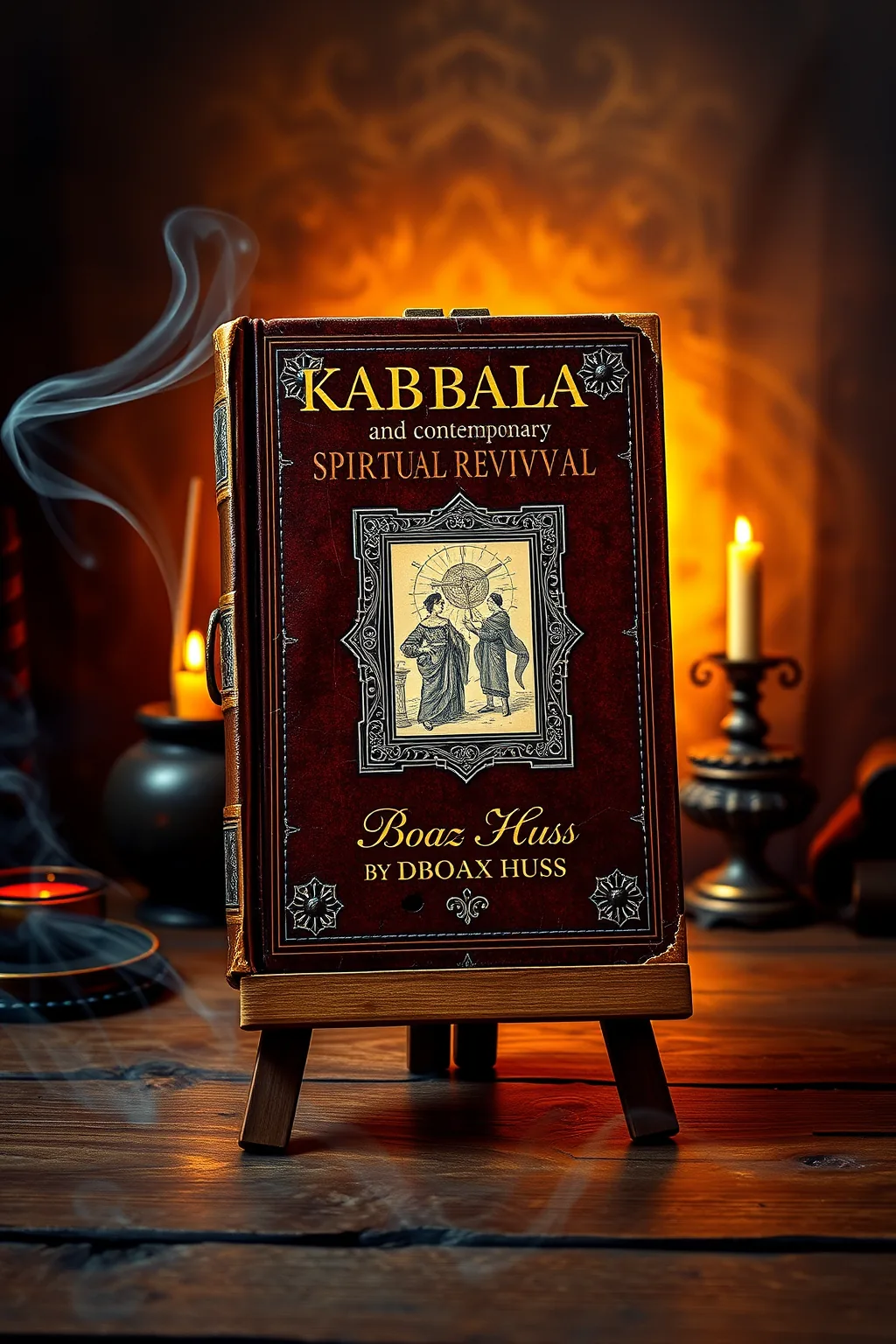
Boaz Huss's 'Kabbalah and Contemporary Spiritual Revival' is an indispensable scholarly investigation into the enduring appeal of Jewish mysticism. Huss meticulously traces the complex lineage of Kabbalistic ideas, demonstrating their remarkable adaptability and profound influence on contemporary spiritual landscapes. His analysis, rich with historical nuance and insightful interpretation, illuminates how ancient esoteric doctrines are being re-contextualized and embraced by seekers worldwide. The book offers a sophisticated understanding of the psychological and spiritual dimensions at play, making it a vital resource for anyone interested in the evolution of mystical thought and its practical application in modern life. A truly illuminating and authoritative study.
📝 Description
61
Boaz Huss's 2007 book traces Kabbalah's modern spiritual revival.
This study examines the contemporary resurgence of Kabbalistic thought and its influence on modern spiritual movements. Boaz Huss analyzes how elements of Jewish mysticism, from its ancient textual roots to its current expressions, attract individuals seeking meaning. The book deciphers Kabbalistic symbolism and philosophical concepts, including divine emanation, cosmic structure, and spiritual union.
Huss shows how these ideas connect with people in a secular world looking for deeper personal and spiritual fulfillment. The work aims to make the complex aspects of Kabbalah understandable and its transformative potential evident to those interested in existential questions and a renewed spiritual life. It addresses the human desire for hidden knowledge and personal transformation.
This book situates Kabbalah within the broader history of esoteric traditions, particularly those focused on mystical interpretation of religious texts and cosmology. It follows scholarly work that looks beyond purely theological or historical accounts to understand the appeal and application of esoteric doctrines in different eras. Huss specifically tracks how a tradition historically tied to specific Jewish communities has found resonance with a wider, often secularized, audience seeking spiritual experience and personal development.
💡 Why Read This Book?
This book is essential for understanding the vibrant resurgence of Kabbalah in contemporary thought. It offers profound insights into Jewish mysticism, its historical roots, and its adaptation for modern spiritual seekers. Ideal for those exploring esoteric traditions, seeking psychological depth, or interested in the historical evolution of spiritual movements, this work provides a compelling bridge between ancient wisdom and contemporary consciousness.
⭐ Reader Reviews
Honest opinions from readers who have explored this book.
❓ Frequently Asked Questions
What is Kabbalah?
Kabbalah is a mystical tradition within Judaism that explores the divine nature, the creation of the universe, and the spiritual purpose of existence through symbolic interpretation of sacred texts and esoteric teachings.
Is this book for beginners?
Yes, while offering depth for scholars, Huss's accessible prose makes it suitable for those new to Kabbalah, providing a solid foundation and insightful overview of its contemporary relevance.
How does Kabbalah relate to psychology?
The book explores how Kabbalistic concepts of the soul, self, and spiritual development offer frameworks for psychological integration and personal growth, resonating with modern therapeutic approaches.
What is Hasidism's connection to Kabbalah?
Hasidism is a significant movement that emerged from Kabbalistic teachings, emphasizing ecstatic devotion, the immanence of God, and the spiritual potential within everyday life.
Can non-Jews study Kabbalah?
Historically, Kabbalah was an esoteric tradition primarily for Jewish scholars. However, in contemporary times, its wisdom is explored by individuals of various backgrounds seeking spiritual insight and personal transformation.
🔮 Key Themes & Symbolism
The Enduring Mystical Core
This theme looks at the timeless esoteric principles of Kabbalah, such as the Sefirot, the Tree of Life, and the nature of divine emanation. It emphasizes how these ancient concepts continue to offer clear insights into the structure of reality, the human soul, and the pathways to spiritual enlightenment. The discussion highlights the symbolic language and hidden knowledge that have sustained the tradition for centuries and continue to captivate seekers of deeper understanding.
Kabbalah's Modern Metamorphosis
This section examines the dynamic adaptation of Kabbalistic thought in the contemporary spiritual landscape. It explores how historical Kabbalah, particularly Hasidic teachings, has been reinterpreted and integrated into diverse spiritual movements, psychological theories, and personal development practices. The focus is on how these ancient mystical traditions are being made accessible and relevant to a modern audience grappling with existential questions and seeking authentic spiritual experiences.
The Psychology of the Sacred
Here, the book investigates the profound psychological resonance of Kabbalistic teachings. It explores how concepts like tikkun (rectification), the inner divine spark, and the journey of spiritual ascension offer powerful metaphors and practical guidance for self-understanding, emotional healing, and the cultivation of a meaningful spiritual life. The theme highlights the intersection of ancient mystical wisdom and contemporary psychological inquiry, demonstrating Kabbalah's capacity to foster inner transformation.
💬 Memorable Quotes
Direct passages from the work, attributed to the author.
“Wisdom flows from the hidden to the manifest.”
— This highlights the esoteric principle of divine revelation, suggesting that true understanding emerges from concealed sources and gradually unfolds into conscious awareness.
“The Tree of Life is a map of the soul's journey.”
— This interpretation positions the central Kabbalistic diagram as a symbolic representation of human consciousness, spiritual ascent, and the path towards divine union.
“The spark of the divine resides within all beings.”
— This emphasizes the immanent nature of the divine, pointing to the inherent sacredness and potential for spiritual awakening within every individual.
💡 Key Ideas
Editorial paraphrase of the work's core concepts — not direct quotes.
The Kabbalah is not merely a theological system, but a living path.
This quote underscores Kabbalah's practical and experiential nature, emphasizing its role as a guide for spiritual practice and personal transformation rather than just abstract doctrine.
In every moment, the universe is being created anew.
This quote speaks to the dynamic and ever-present nature of divine creation, inviting contemplation on the continuous unfolding of existence and our role within it.
🌙 Esoteric Significance
Tradition
This work is deeply rooted in the esoteric tradition of Kabbalah, a mystical branch of Judaism that seeks to understand the divine nature, the creation of the cosmos, and the spiritual purpose of existence. It looks at the symbolic language, meditative practices, and philosophical concepts that characterize this ancient lineage, exploring its hidden layers of meaning and transformative potential for the individual soul.
Symbolism
The book intricately deciphers the detailed symbolism of Kabbalah, focusing on key elements such as the ten Sefirot (divine emanations), the Tree of Life, Hebrew letters as cosmic forces, and the concept of divine light. These symbols are presented not as mere illustrations, but as profound conceptual tools for understanding the universe, human consciousness, and the pathways to spiritual realization and connection.
Modern Relevance
Huss demonstrates the striking relevance of Kabbalistic teachings to contemporary spiritual seekers. He highlights how the tradition's exploration of consciousness, self-discovery, divine immanence, and the interconnectedness of all things resonates deeply with modern individuals seeking meaning, psychological integration, and a more profound connection to the sacred in a secularized world.
👥 Who Should Read This Book
This useful work is essential for a diverse audience. Scholars of religious studies, Jewish mysticism, and comparative spirituality will find its historical depth and analytical rigor invaluable. Spiritual seekers and practitioners interested in esoteric traditions, personal growth, and the exploration of consciousness will discover clear insights and practical relevance. Beginners to Kabbalah will appreciate Huss's clear exposition of complex ideas, while those already familiar with the tradition will gain a fresh perspective on its contemporary manifestations and enduring power.
📜 Historical Context
Boaz Huss's 'Kabbalah and Contemporary Spiritual Revival' emerges from a rich historical collection, tracing the lineage of Kabbalistic thought from its medieval roots through its dissemination and adaptation over centuries. The book situates the modern spiritual awakening within broader historical trends, including the Enlightenment's impact on traditional religious structures, the rise of Romanticism's emphasis on interiority and mysticism, and the post-war proliferation of alternative spiritualities. Huss masterfully navigates the complex intellectual and social currents that have allowed Kabbalistic ideas, once confined to select circles, to permeate global consciousness. This historical grounding allows for a nuanced understanding of how the esoteric wisdom of Kabbalah continues to find fertile ground in the modern quest for meaning.
📔 Journal Prompts
Reflect on a time you felt a deep sense of connection to something larger than yourself. How might Kabbalistic concepts like divine emanation or interconnectedness illuminate this experience?
Consider the symbolism of the Tree of Life. How does its structure mirror your own inner journey or the challenges you face in your life?
Explore the concept of 'Tikkun' (rectification). In what areas of your life do you feel a need for spiritual or personal repair, and what steps can you take?
How do the Kabbalistic ideas of hidden knowledge and divine revelation relate to your personal quest for understanding and truth?
Meditate on the idea of the divine spark within. How does recognizing this inherent sacredness change your perception of yourself and others?
🗂️ Glossary
Kabbalah
A mystical tradition within Judaism that explores the divine nature, the creation of the universe, and the spiritual purpose of existence through symbolic interpretation of sacred texts and esoteric teachings.
Sefirot
Ten divine emanations or attributes through which God is said to have created the universe and through which God is revealed to humanity. They form the structure of the Tree of Life.
Tree of Life (Etz Chaim)
A central diagram in Kabbalah, representing the Sefirot and their interconnections, symbolizing the structure of the cosmos, divine emanations, and the path of spiritual ascent.
Hasidism
A spiritual movement within Orthodox Judaism that arose in 18th-century Eastern Europe, emphasizing ecstatic devotion, joy in serving God, and the immanence of the divine in all aspects of life.
Tikkun
Literally 'rectification' or 'repair.' In Kabbalah, it refers to the process of mending the cosmic disharmony caused by the creation, often understood as the spiritual work of humanity to restore the divine order.
This book appears in 1 collection
🔮 Readers Also Liked
Browse all →









More by Boaz Huss
All books →


From the “Kabbalah” Collection
View all →








More Free Kabbalah & Jewish Mysticism Books
View all →